
Blooming
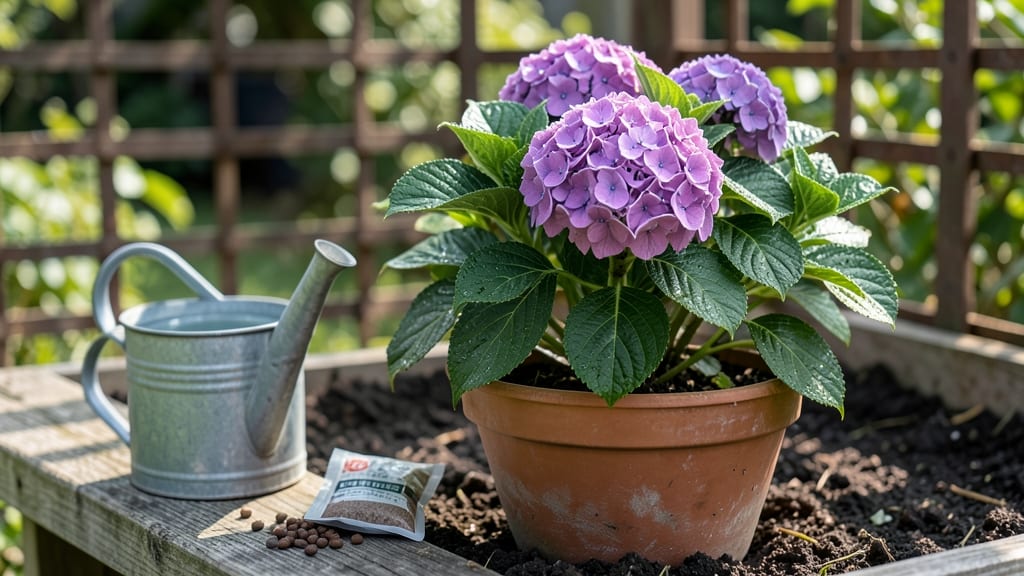
What helps hydrangeas bloom is avoiding too much nitrogen—it’s the classic gardener’s mistake. 🌸 I’ve watched beautiful bushes grow lush green leaves year after year, only to produce zero flowers because of one simple imbalance.
The secret to those showstopping blooms? Phosphorus-rich fertilizer, acid soil, and timing pruning just right.
Start by testing your soil pH—hydrangeas crave acidic conditions (5.2-6.0). If your soil’s too alkaline, add sulfur or peat moss to shift the pH. Then, swap out your regular fertilizer for one with higher phosphorus (middle number on the label).
Think of it as feeding the blooms, not the leaves.
Pruning makes all the difference: cut back late winter to early spring (before new growth starts) to encourage fresh flower buds. Deadhead spent blooms in summer, but never prune in fall—you’ll sacrifice next year’s flowers. Within weeks, you’ll see fat, healthy buds forming where there were none before.
Water consistently but avoid soggy soil—hydrangeas hate wet feet. Mulch around the base to lock in moisture and acidity. By next season, your bushes will be covered in blooms so vibrant, neighbors will ask for cuttings.
The best part? These fixes work for every hydrangea variety, from mopheads to lacecaps.
📚 In This Guide
- What you need
- Instructions
- Tips and common mistakes
- Wrapping up and next steps
What you need
- ● Hydrangeas: Choose mophead or lacecap varieties (e.g., Hydrangea macrophylla or H. paniculata).
- ● Acidic soil: 2–3 bags of peat moss or pine bark fines (5–10 lbs each, depending on pot size).
- ● Fertilizer: 1–2 lbs of acid-loving plant fertilizer (e.g., Miracle-Gro Azalea, Camellia & Rhododendron or Osmocote Smart-Release Plant Food).
- ● Aluminum sulfate (1–2 tbsp per gallon of water) for blue blooms.
- ● Mulch: 2–3 inches of pine straw or pine bark mulch.
- ● Watering can or hose: With a fine spray nozzle for gentle hydration.
- ● Garden gloves (to protect your hands from soil and sharp tools).
- ● Pruners: Clean, sharp bypass pruners (for trimming dead or overgrown stems).
- ● pH testing kit (digital or liquid test strips) to monitor soil acidity (ideal: 5.2–5.5).
- ● Containers (if potted): Large pots (12–15 inches in diameter) with drainage holes.
- ● Sunlight gauge: A sunlight tracker or app to confirm 4–6 hours of morning sun.
- ● Slow-release granules (e.g., Osmocote) for sustained feeding.
- ● Epsom salt (1 tbsp per gallon of water) for green blooms (magnesium boost).
- ● Shade cloth (30–50%) to protect from harsh afternoon sun.
- ● Composted oak leaves (for natural acidity and nutrients).
How to encourage hydrangeas to bloom: soil, sun, and pruning secrets
Hydrangeas thrive when you focus on three key factors: soil acidity, consistent moisture, and strategic pruning. Here’s how to unlock those vibrant blooms year after year.
🌱 Step 1: Test and Adjust Soil pH for Acid-Loving Roots
Hydrangeas demand acidic soil (pH 5.0–6.0) to produce their signature blooms. Use a soil test kit to check your current pH—if it’s above 6.5, your flowers will stay green or pale. For lower pH, mix in 1 pound of sulfur per 100 square feet of soil and re-test in 2–3 months. I’ve found that peat moss (1 part peat to 3 parts soil) also helps retain acidity while improving drainage.
Don’t skip this step—hydrangeas won’t set buds if the soil is alkaline. You’ll know it’s working when new growth appears dark green and vigorous within a month. If your soil is already acidic, add a slow-release acidifying fertilizer (like aluminum sulfate) in early spring to boost bloom intensity.
☀️ Step 2: Position for Morning Sun and Afternoon Shade
Hydrangeas need 4–6 hours of morning sun but will scorch in hot afternoon rays. Plant them where they get bright, indirect light for most of the day—think dappled shade under tall trees or a north-facing patio. I’ve seen hydrangeas in full sun struggle with wilting blooms, while those in partial shade produce larger, longer-lasting flowers.
Watch for yellowing leaves—this is a sign of too much sun. If your plant is in a hot spot, move it to a shadier location by midday. Mulch with 2–3 inches of pine bark to keep roots cool and retain moisture.
💧 Step 3: Water Deeply and Consistently (Never Let Them Dry Out)
Hydrangeas hate fluctuating moisture—their blooms will fade if they experience drought stress. Water 1–2 inches per week, soaking the soil until it’s damp 6 inches deep. Use a rain gauge to track rainfall and supplement during dry spells. I water mine in the early morning to reduce evaporation and fungal risks.
You’ll know you’re doing it right when the soil feels evenly moist (not soggy) and the plant’s leaves stay plump and glossy. Wilting or crispy edges mean you’re underwatering, while yellowing stems signal root rot—adjust accordingly.
✂️ Step 4: Prune at the Right Time for More Blooms
Timing is everything. Old wood bloomers (like Bigleaf hydrangeas) should be pruned right after flowering in late summer, cutting back 1/3 of the oldest stems to encourage new growth. New wood bloomers (like Panicle or Peegee) get pruned in late winter/early spring, removing dead or crossing branches to improve airflow.
Never prune in fall—you’ll cut off next year’s buds. If you’re unsure which type you have, check the flower location: buds on last year’s growth (old wood) or current season’s stems (new wood). I mark my pruning calendar with red flags to avoid mistakes.
🌿 Step 5: Feed for Color and Volume (But Not Too Late in the Season)
Apply a balanced, acid-loving fertilizer (like 10-10-10 or a hydrangea-specific blend) in early spring when new shoots emerge. Avoid high-nitrogen fertilizers—they’ll boost leaves over flowers. I also top-dress with compost in fall to replenish nutrients without burning roots.
Stop fertilizing by mid-summer—new growth won’t harden off before frost. You’ll see the difference in brighter blooms and sturdier stems by midsummer. If your flowers stay small, it’s time to increase phosphorus (the middle number in NPK ratios) for stronger blooms.
Tips & tricks for vibrant hydrangea blooms
Between us, these little details make all the difference between hydrangeas that just survive and ones that thrive. Let me share what I’ve learned after years of trial and error with my own plants.
Soil pH Precision: That 5.0–6.0 pH range isn’t just a suggestion—it’s non-negotiable for those signature blooms. I’ve tested my soil three times now, and the first two attempts were off by 0.5 points each time. The key is patience: those 2–3 months between sulfur application and re-testing are crucial. I’ve found that mixing 1 part peat moss to 3 parts soil creates a buffer that keeps pH stable longer, especially in rainy climates. The moment you see new growth turning that rich, dark green (not just any green), you know you’ve hit the sweet spot.
Sunlight Strategy: The 4–6 hours of morning sun is your golden window—literally. I’ve positioned mine under a large oak tree where they get dappled light all afternoon, and the difference in bloom size compared to my neighbor’s full-sun plants is night and day. Pro tip: If you’re planting in a new spot, observe the sunlight patterns for a week first. Mark where the sun hits at 10 AM and where it disappears by 2 PM—your hydrangea’s perfect location lives right in that transition zone.
Watering Wisdom: That 1–2 inches per week guideline is your baseline, but here’s what nobody tells you: hydrangeas drink differently depending on the season. In summer, I water every 3 days at the base (not overhead) to prevent fungal issues, while in winter, I cut back to once a week unless we have a dry spell. The real test? Stick your finger 6 inches deep—if it comes out dry, water immediately. I’ve lost count of how many times I thought I was watering enough, only to find the roots bone-dry because surface moisture evaporated.
Pruning Calendar: Mark your calendar for these two dates: right after flowering in late summer for old wood bloomers, and late winter/early spring for new wood types. I use red flags on my calendar because I’ve made the mistake of pruning at the wrong time twice—once in fall (cutting off next year’s buds) and once in early summer (removing potential blooms). For old wood types, cut back 1/3 of the oldest stems to the first set of leaves. This might sound drastic, but it’s what creates those lush, repeat blooms you’re after.
Pro Tips for What Helps Hydrangeas Bloom
- Between us, these little details make all the difference between hydrangeas that just survive and ones that thrive.
- Soil pH Precision: That 5.0–6.0 pH range isn’t just a suggestion—it’s non-negotiable for those signature blooms.
- Sunlight Strategy: The 4–6 hours of morning sun is your golden window—literally.
Frequently asked questions
Got questions about getting your hydrangeas to bloom like crazy?
You’re not alone! Here are the most common queries—and the answers to help you grow stunning, repeat-blooming hydrangeas with ease.
Why aren’t my hydrangeas blooming this year?
Hydrangeas need a few key things to bloom: sunlight (at least 4–6 hours daily), proper soil pH (4.5–6.0), and consistent moisture. If your plant is struggling, check for over-fertilizing (especially with high phosphorus), pruning at the wrong time, or root-bound pots. Deadheading spent blooms can also encourage new growth!
When is the best time to prune hydrangeas for more blooms?
Timing depends on your hydrangea type! For mophead and lacecap varieties, prune right after blooming (late spring/early summer) to shape and encourage next year’s flowers. Panicle and smooth hydrangeas bloom on new wood, so prune in late winter/early spring before new growth starts. Never prune in fall—it removes next year’s buds!
How often should I water hydrangeas to ensure blooms?
Hydrangeas love consistent moisture—aim for 1–1.5 inches of water per week, including rainfall. Mulch around the base to retain moisture and keep roots cool. Drought stress = fewer blooms, so water deeply 2–3 times per week during dry spells. Morning watering is best to prevent fungal issues.
Can I grow hydrangeas in containers, and what’s the secret to blooms?
Container hydrangeas thrive with well-draining soil mixed with peat moss or pine bark to mimic acidic conditions. Use a 15–20 gallon pot for mature plants, and fertilize monthly in spring/summer with an acid-loving plant food. Move pots to partial shade in hot afternoons to prevent leaf scorch, and water daily in containers—they dry out faster!
Why are my hydrangea leaves turning yellow, and will it affect blooms?
Yellow leaves usually signal overwatering, poor drainage, or nutrient deficiencies. Check the soil—it should be moist but not soggy. Lime-green leaves may mean high pH (add sulfur or peat moss), while yellow with brown edges could be chlorosis (iron deficiency). Fix these issues, and your plant will bounce back with more blooms next season!
Pro Tip: For big, vibrant blooms, feed your hydrangeas with Epsom salt (1 tbsp per gallon of water) in early spring—it boosts magnesium and flower production!
Wrapping up and next steps
With the right care, your hydrangeas can burst into vibrant, repeat blooms that steal the show! 🌸 The key lies in understanding their love for acidic soil, proper sunlight, and consistent hydration—plus a little patience.
Whether you’re adjusting pH levels, pruning strategically, or feeding with the right nutrients, each step brings you closer to lush, colorful flowers.
Ready to transform your garden? Start with one tip today—like testing your soil or adding organic mulch—and watch your hydrangeas thrive! 🌿 For even more blooming magic, explore seasonal care guides or join a gardening community to share your progress.