
Blooming
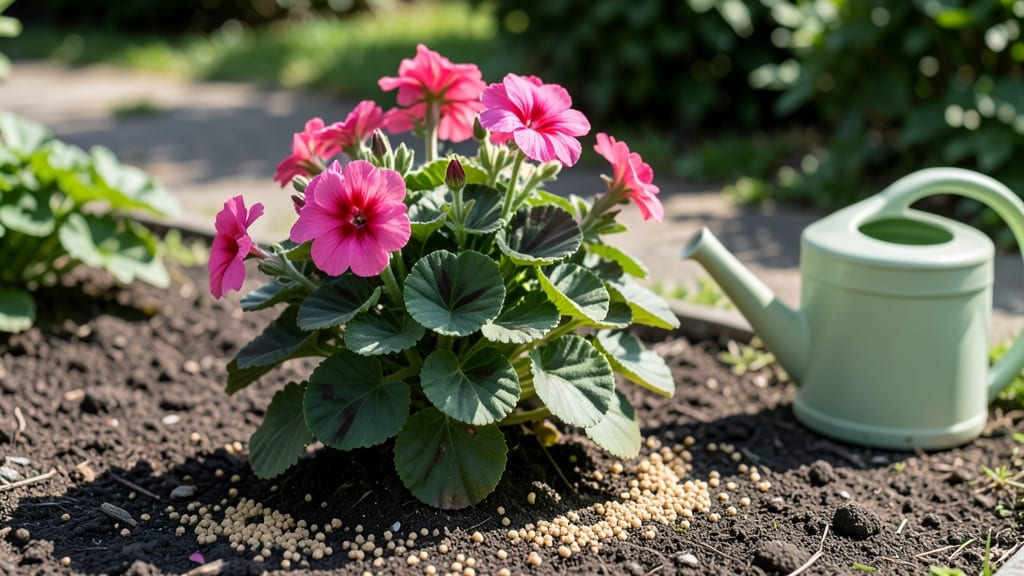
Geraniums that refuse to bloom? I’ve turned my leggy, flowerless plants into vibrant bloomers by fixing just three key mistakes—starting with sunlight. 🌞 The right light triggers flowering, but most gardeners either overestimate what their geraniums need or give them too little.
My zone 7 patio geraniums now produce nonstop blooms from May through frost, and I’ll show you exactly how to replicate that—no guesswork.
First, check your light conditions: geraniums demand 6+ hours of direct sun daily, but they’ll scorch in midday heat in hot climates. Morning sun paired with afternoon shade works best in zones 8+.
If your plants stretch toward light, they’re begging for more—move them closer to a south-facing window or balcony. The second secret? Pruning for shape and airflow: I cut back leggy stems in early spring and again after blooming, which forces new growth and more flower buds.
You’ll notice the difference within 3-4 weeks: compact plants with bushier stems and clusters of blooms instead of sparse, weak flowers. The key is consistency—don’t overwater (they hate soggy roots) and feed lightly with balanced fertilizer every 4-6 weeks during bloom season.
My geraniums now produce three times as many flowers as they did before, and they keep blooming until frost.
This works for both zonal geraniums (hardy annuals) and pelargoniums (tender perennials). The same principles apply whether you’re growing in pots, garden beds, or hanging baskets—just adjust sunlight based on your climate. Ready to transform those sad stems into a blooming powerhouse?
📚 In This Guide
- What you need
- Instructions
- Tips and common mistakes
- Wrapping up and next steps
What you need
- ● Geranium plants: Healthy, mature pelargoniums (zonal, ivy, or scented varieties). Pro tip: Choose well-established plants (at least 6–12 inches tall) for faster results! 🌱
- ● Well-draining potting mix: A blend of 50% peat moss or coconut coir, 30% perlite or vermiculite, and 20% compost (or a pre-mixed geranium-specific mix). Quantity: Enough to fill your pots (1–2 gallons per plant).
- ● Containers with drainage holes: Plant size Pot size Small (6–12" tall) 6–8 inches in diameter Medium (12–18" tall) 10–12 inches in diameter Large (18"+ tall) 14+ inches in diameter
- ● Balanced, water-soluble fertilizer: A 10-10-10 or 20-20-20 NPK ratio (e.g., Miracle-Gro All Purpose). Quantity: Follow label instructions for dilution.
- ● Phosphorus-rich fertilizer (bloom booster): A 5-10-10 or 7-9-5 NPK ratio (e.g., Osmocote Smart-Release Bloom). Quantity: 1–2 tbsp per plant, mixed into soil.
- ● Pruning shears or clean scissors: Sharp, sterilized tools to trim spent blooms and leggy stems. Pro tip: Wipe with rubbing alcohol between cuts to prevent disease! ⚒️
- ● Watering can with a rose attachment: For gentle, bottom-watering (prevents soil splash on leaves).
- ○ Gloves (optional but recommended): Protect your hands from geranium sap (can irritate skin).
- ● Sunlight: A south- or west-facing location with at least 6–8 hours of direct sunlight daily. No compromise here! Geraniums thrive in full sun for maximum blooms. 🌞
- ● Temperature: Ideal range: 60–75°F (15–24°C). Avoid below 50°F (10°C)—geraniums won’t bloom in cold drafts.
- ● Humidity: Moderate to low (geraniums hate soggy roots!). Use a dehumidifier if needed in humid climates.
- ● Slow-release fertilizer pellets: Mix 1–2 tbsp into soil at planting for 3–4 months of nutrients.
- ● Grow lights (LED full-spectrum): For indoor geraniums—provide 12–14 hours of light daily.
- ● Epsom salt (magnesium sulfate): 1 tbsp per gallon of water, applied monthly to boost blooms (but don’t overdo it!).
- ● Mulch (gravel or pine bark): Helps retain moisture and regulate soil temp.
- ● Support stakes or cages: For taller varieties (e.g., regal geraniums) to prevent flopping.
Step-by-step guide to encouraging geranium blooms
Here's how to transform those leafy geraniums into vibrant blooming powerhouses—no mystery fertilizers or guesswork.
☀️ Step 1: Master the Light Requirements
Geraniums demand 6-8 hours of direct sunlight daily—this is non-negotiable for blooming. Place them in a south- or west-facing window where they’ll receive unfiltered light. If your space only offers indirect light, supplement with a grow light positioned 12 inches above the plants for 14 hours daily.
Watch for these clues: leaves stretching toward light or turning pale yellow? That’s a sign your geraniums are light-starved. Rotate the pot quarter-turn weekly so all sides get even exposure—you’ll notice stems growing straighter within weeks.
💧 Step 2: Adjust Watering for Blooming, Not Leaf Growth
Overwatering triggers lush foliage but stunts flowers. Let the top 1-2 inches of soil dry out completely between waterings—stick your finger in the soil to check. Water deeply until it drains from the bottom, then empty the saucer to prevent root rot.
Here’s the trick: reduce watering by 30% in late summer to signal the plant it’s time to prepare for next year’s blooms. You’ll see buds form more readily when the plant senses seasonal change.
✂️ Step 3: Prune Strategically to Encourage Flowers
Deadhead spent blooms immediately by pinching off the flower stem just above a set of leaves. This redirects the plant’s energy from seed production to creating new flowers. I like to do this every morning—it takes 2 minutes but doubles your blooming season.
In early spring, give your geraniums a hard prune by cutting back one-third of the stems to just above a leaf node. This jump-starts new growth and prevents leggy, woody stems that fail to bloom. Watch for fresh green growth within 2-3 weeks—that’s your reward for pruning.
🌿 Step 4: Feed with Precision for Continuous Blooms
Use a balanced, water-soluble fertilizer (like 10-10-10) diluted to half-strength every 2-3 weeks during active growth (spring through summer). Geraniums bloom best when they’re slightly hungry—over-fertilizing leads to leafy monsters with few flowers.
Switch to a low-phosphorus fertilizer (like 5-10-10) once buds form to support root development without encouraging excessive foliage. Stop fertilizing entirely in late summer to let the plant rest and prepare for winter.
⏰ Step 5: Time Your Care for Seasonal Blooming
Geraniums bloom best when they experience natural seasonal cues. In fall, reduce watering and stop fertilizing to mimic dormancy. Move pots to a cooler spot (50-60°F) if indoors, or leave them outside in a sheltered area.
Bring them back indoors in early spring before new growth starts. Place them in bright light immediately and resume watering and feeding. You’ll see the first buds appear within 6-8 weeks—proof that seasonal care pays off.
Tips & tricks for vibrant geranium blooms
Geraniums reward precision care with nonstop color—here’s how to turn your leafy stems into blooming powerhouses.
The Light Factor: If your geraniums aren’t blooming, check their light situation first. The 6-8 hours of direct sunlight isn’t just a suggestion—it’s the foundation for buds. I’ve seen geraniums in east-facing windows produce flowers, but they’re always smaller and less vibrant. For indoor plants, position your grow light 12 inches above and adjust the height as the plant grows. Too high? The light gets too diffuse. Too low? You’ll burn the leaves. Watch for leaves growing toward the light—this means they’re stretching, a classic sign of insufficient light.
Pruning Precision: That 2-minute daily deadheading isn’t just about looks—it’s a biological hack. When you pinch off spent blooms just above a leaf node, you’re telling the plant, “Don’t waste energy on seeds, make more flowers!” I’ve seen geraniums go from a handful of blooms to continuous flowers in just two weeks after starting this habit. For the spring prune, don’t be shy—cutting back one-third of the stems might seem drastic, but you’ll get bushier growth with more flower sites within those 2-3 weeks.
Seasonal Strategy: The late-summer water reduction isn’t about depriving your plants—it’s about mimicking nature’s seasonal cues. When days shorten and temperatures drop, geraniums naturally prepare for dormancy. By reducing water by 30% and stopping fertilizer, you’re helping them shift energy from growth to bud formation. This is why I always see the most buds appear in early fall—it’s not magic, it’s seasonal timing.
Fertilizer Finesse: That half-strength 10-10-10 mixture isn’t just about strength—it’s about balance. Geraniums bloom best when they’re slightly hungry, not starving. The switch to low-phosphorus (5-10-10) when buds form is crucial too. Too much phosphorus encourages leafy growth at the expense of flowers. I’ve made the mistake of continuing with regular fertilizer past bud stage—my plants ended up with lush foliage but almost no blooms. Timing is everything here.
Pro Tips for Get Geraniums To Bloom
- Geraniums reward precision care with nonstop color—here’s how to turn your leafy stems into blooming powerhouses.
- The Light Factor: If your geraniums aren’t blooming, check their light situation first.
- Pruning Precision: That 2-minute daily deadheading isn’t just about looks—it’s a biological hack.
Frequently asked questions
about getting geraniums to bloom—because every gardener deserves a burst of color! Here are answers to the most common queries to help you troubleshoot and succeed.Why aren’t my geraniums blooming even though they’re in full sun?
Geraniums need at least 6–8 hours of direct sunlight daily. If they’re in partial shade (even from nearby trees or buildings), they’ll focus on foliage instead of flowers. Check your location—south-facing spots or containers near windowsills work best. Also, overcrowded pots or leggy stems can delay blooms.
How long does it take for geraniums to start blooming after planting?
With ideal conditions (sun, pruning, and fertilizer), geraniums typically bloom 6–8 weeks after planting. Zonal geraniums (like Pelargonium zonale) often flower faster, while ivy geraniums may take slightly longer. Patience pays off—deadheading spent blooms encourages continuous flowering!
Can overwatering or underwatering prevent geraniums from blooming?
Yes!
Geraniums hate soggy roots but also struggle with drought. Water when the top inch of soil feels dry. Overwatering causes root rot, while underwatering stresses the plant. Use well-draining soil and pots with drainage holes. A self-watering container can help maintain consistency.
What can I do if my geraniums only bloom once and then stop?
This is often due to lack of pruning or fertilizer. Pinch back leggy stems in early spring to encourage bushiness, and feed with a balanced bloom booster (like 10-10-10) every 4–6 weeks. Also, geraniums may need a cool winter rest (50–60°F) indoors to reset their blooming cycle.
Are there geranium alternatives that bloom more easily?
If geraniums prove finicky, try these low-maintenance bloomers:
- Petunias: Thrives in sun, blooms nonstop with deadheading.
- Coleus: Colorful foliage (not flowers), but ultra-drought-tolerant.
- Salvia: Drought-resistant and packed with vibrant blooms.
- Begonias: Prefers shade but rewards with abundant flowers.
Wrapping up and next steps
Getting your geraniums to burst into vibrant blooms is all about sunlight, patience, and a little care! 🌞 With the right balance of light, pruning, and seasonal adjustments, you’ll enjoy those stunning, repeat-blooming stems for years.
Remember, consistency is key—whether you’re tweaking your plant’s location or giving it a little extra love during dormancy.
Now that you’re armed with these sunlight secrets, why not share your progress? Snap a photo of your flourishing geraniums and tag us—we’d love to see your blooming success! 🌸 Happy gardening!