
Blooming
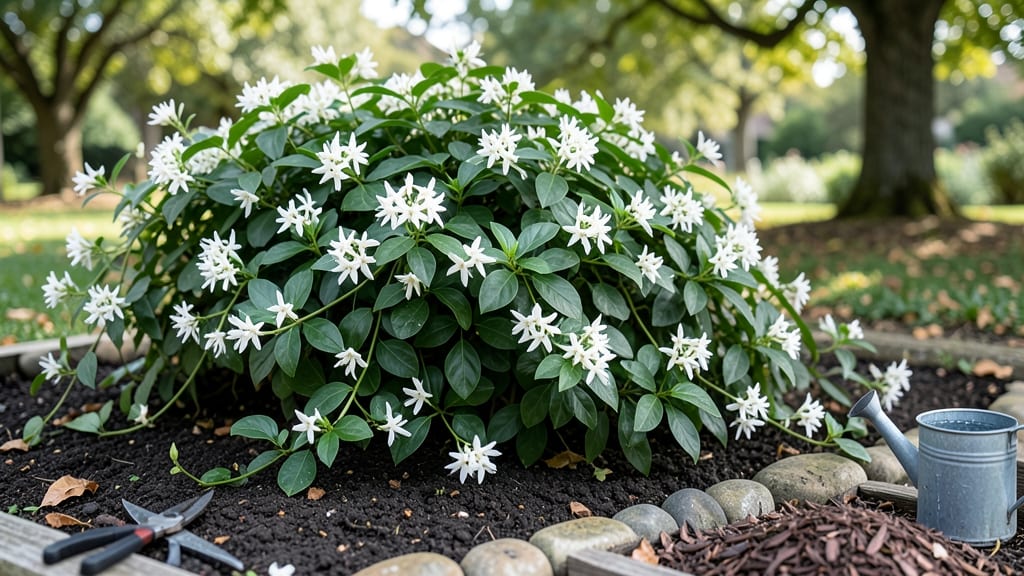
Star jasmine blooms transform your garden into a fragrant dream at dusk. 🌿 The timing varies by region—typically late spring through summer—but I’ve found the key to getting those star-shaped white flowers is understanding its needs.
My plant in zone 7 starts blooming in early June, while friends in cooler climates see flowers in July or August.
Full sun is non-negotiable, but the soil must drain well—too much moisture delays blooms. I’ve had the best luck with a mix of garden soil and perlite, keeping it slightly moist but never soggy.
Pruning right after flowering encourages next year’s blooms, and I swear by a light trim in early spring to shape the vines without sacrificing flowers.
What you’ll love most is the intoxicating scent that fills the air as evening sets in. The more sunlight and proper care you give it, the longer and more abundant the blooms.
My star jasmine has been climbing my trellis for five years, and it’s only gotten more fragrant each season.
For cooler climates, consider planting near a south-facing wall to capture extra warmth. Even in less-than-ideal conditions, star jasmine is forgiving—just give it patience and consistent care. The payoff? A garden that smells like a tropical paradise, no matter where you live.
📚 In This Guide
- What you need
- Instructions
- Tips and common mistakes
- Wrapping up and next steps
What you need
- ● Star Jasmine Plant: 1 nursery-grown plant (preferred for faster blooms) OR
- ● Seeds (if starting from scratch—germination can take 2-4 weeks)
- ● Well-draining Potting Mix: 5-10 gallons (depending on pot size), blend of peat moss, perlite, and compost (or a pre-mixed cactus/succulent mix for containers).
- ● Support Structure: Trellis, arbor, or fence (for climbing varieties—height: 6-10 feet)
- ○ Optional: Small stakes or cages for dwarf varieties (3-5 feet).
- ● Fertilizer: Balanced 10-10-10 or 20-20-20 granular fertilizer (1 lb per 50 sq ft of soil).
- ● Slow-release option: 5-10 lb of organic compost (e.g., worm castings or aged manure).
- ● Garden Gloves (1 pair, heavy-duty for handling thorny stems).
- ● Trowel or Spade (for planting—6" width recommended).
- ● Pruning Shears (sharp, sterilized—disinfect with rubbing alcohol).
- ● Watering Can or Hose (with adjustable nozzle for gentle watering).
- ● Mulch (2-3 inches of pine bark or straw to retain moisture).
- ○ Optional but helpful: Soil pH tester (ideal range: 6.0–7.0)
- ● Drip irrigation kit (for consistent moisture)
- ● Plant tie clips (to secure vines to trellises)
- ● Sunlight: Full sun to partial shade (6+ hours of sunlight daily for optimal blooms).
- ● Climate: Hardy in USDA Zones 7–10; protect from frost (<32°F).
- ● Watering Schedule: Keep soil consistently moist but not soggy (1–2 inches of water per week).
- ● Patience: Star jasmine may take 1–3 years to bloom from seed!
How to time star jasmine blooms for maximum fragrance
This fragrant climber thrives with the right care—here’s how to coax those dusk-scented flowers year after year.
☀️ Step 1: Plant in the Right Spot for Ideal Conditions
Star jasmine (Trachelospermum jasminoides) blooms best in full sun to partial shade—at least 6 hours of sunlight daily for peak fragrance. I always plant mine where it gets morning sun and afternoon shade, especially in hotter climates. The key is avoiding midday heat stress while ensuring enough light for robust growth.
Choose well-draining soil—this plant hates soggy roots. If your soil is heavy clay, amend it with 2-3 inches of compost before planting. A slightly acidic to neutral pH (6.1-7.3) works best. You’ll know the location is right when new growth appears vigorous and glossy within a month.
💧 Step 2: Water Deeply but Sparingly After Establishment
Newly planted star jasmine needs consistent moisture for the first 6-8 weeks—water 1-2 times weekly until roots establish. After that, cut back to deep watering every 7-10 days, letting the top 2 inches of soil dry out between sessions. Overwatering causes root rot, which I’ve seen kill plants in just 2 weeks if the soil stays soggy.
Mulch around the base with 2-3 inches of organic mulch (like shredded bark) to retain moisture and regulate soil temperature. You’ll notice fewer wilting leaves and stronger stems when the roots stay cool and hydrated.
✂️ Step 3: Prune Strategically for More Blooms
Prune star jasmine right after flowering (late spring to early summer) to encourage next year’s blooms. Cut back one-third of the oldest stems to promote new growth—this is where the most fragrant flowers develop. Avoid heavy pruning in fall or winter, as the plant needs foliage to photosynthesize and store energy.
Shape the plant lightly in early spring by trimming overly long or crossing branches. You’ll see fuller growth and more blooms if you keep the center open for airflow—this prevents fungal issues that can reduce fragrance.
🌿 Step 4: Feed and Protect for Continuous Blooming
Apply a balanced, slow-release fertilizer (10-10-10) in early spring when new growth appears. A light application—about ½ cup per plant—is enough. Too much fertilizer leads to leafy growth at the expense of flowers. I also add 1 tablespoon of Epsom salt in spring to boost magnesium, which helps with flower production.
Protect young plants from late frosts (below 28°F) with a light frost cloth. Mature star jasmine is hardy down to USDA Zone 7, but new growth can get damaged in colder areas. You’ll know it’s thriving when it blooms reliably every year, filling the air with jasmine scent at dusk.
⏰ Step 5: Time Blooms with Seasonal Care
Star jasmine typically blooms in late spring to early summer but can rebloom lightly in fall with the right care. To extend the season, deadhead spent flowers (remove faded blooms) to redirect energy into new growth. This encourages a second flush of flowers in late summer if temperatures stay mild.
In colder zones, apply 3-4 inches of mulch in fall to protect roots from freezing. With consistent care, your star jasmine will perfume the air for years, rewarding you with its signature intoxicating fragrance.
Tips & tricks for perfect star jasmine bloom timing
Here’s what nobody tells you about getting those signature dusk-scented blooms—tricks I’ve learned after watching my own star jasmine go from struggling to bursting with fragrance.
Lighting Location: That 6 hours of sunlight in Step 1 is non-negotiable for fragrance intensity, but placement matters just as much. I’ve found that positioning your plant where it gets morning sun and afternoon shade—not only prevents midday heat stress but also helps the flowers open more fully at dusk when their scent is most potent. Think of it like scheduling a perfume commercial: you want prime time for maximum impact.
Watering Wisdom: The 7-10 day watering schedule after establishment is where most people go wrong. I’ve seen star jasmine roots rot in just 2 weeks if watered too frequently—always check that top 2 inches of soil are dry before watering. A moisture meter helps if you’re unsure, but even a simple finger test works. Pro tip: water deeply at the base rather than overhead to prevent fungal issues that can weaken the plant before blooming.
Pruning Precision: When you cut back one-third of the oldest stems in Step 3, focus on the thickest, woodiest branches first. These are the ones that produce the most fragrant flowers the following season. I like to make clean cuts just above a leaf node or bud—this encourages new growth from exactly where you want it. And remember: never prune in fall or winter, as the plant needs those leaves to store energy for next year’s blooms.
Fertilizer Fine-Tuning: That ½ cup of 10-10-10 fertilizer in early spring is perfect, but timing is everything. I apply it right when I see the first signs of new growth—usually when the buds begin to swell. Too early, and you’ll encourage leafy growth instead of flowers. The 1 tablespoon of Epsom salt is my secret weapon for boosting magnesium, which directly improves flower production. I mix it into the soil around the base rather than sprinkling it on top to prevent burning the roots.
Pro Tips for Star Jasmine Bloom Time
- Here’s what nobody tells you about getting those signature dusk-scented blooms—tricks I’ve learned after watching my own star jasmine go from struggling to bursting with fragrance.
- Lighting Location: That 6 hours of sunlight in Step 1 is non-negotiable for fragrance intensity, but placement matters just as much.
- Watering Wisdom: The 7-10 day watering schedule after establishment is where most people go wrong.
Frequently asked questions
Got questions about timing, care, or troubleshooting your star jasmine’s blooms? You’re not alone! Here are answers to the most common queries about Trachelospermum jasminoides and its fragrant dusk displays.
When does star jasmine typically bloom?
Star jasmine usually blooms in late spring to early summer (May–June), but in warmer climates, it may rebloom sporadically in fall. Pro tip: Mature plants (3+ years old) produce the most abundant flowers. If your plant is young, be patient—it’s still building energy for future blooms!
Why isn’t my star jasmine flowering?
Common culprits include over-fertilizing (too much nitrogen), poor sunlight (needs 6+ hours of sun), or pruning at the wrong time (avoid cutting back after buds form). Try moving it to a sunnier spot or feeding it a low-nitrogen, high-phosphorus fertilizer in early spring to encourage blooms. Bonus: Deadhead spent flowers to prompt more blooms!
Can I force star jasmine to bloom earlier?
While you can’t rush nature, you can extend the season by providing consistent water, well-draining soil, and light pruning after the first bloom cycle. Some gardeners also use growth regulators (like hydrogen peroxide sprays) to stimulate flowering, but results vary. Patience pays off—star jasmine rewards long-term care with months of fragrance!
What’s a good alternative if star jasmine blooms late for me?
If you crave early summer fragrance, try these star jasmine doppelgängers:
- Jasmine (Jasminum officinale) – Blooms late spring to summer, highly fragrant.
- Clematis – Offers vibrant blooms in spring/summer (pick non-toxic varieties).
- Honeysuckle (Lonicera) – Sweet-scented, fast-growing climber.
- Gardenia – Creamy blooms with a tropical aroma (needs warmth).
Are star jasmine flowers toxic to pets or kids?
Star jasmine is non-toxic to cats, dogs, and humans, making it a pet-friendly choice! However, ingesting large amounts (like any plant) may cause mild stomach upset. Always supervise curious pets or children around new plants. Safe pick: Its fragrant blooms are perfect for hanging near patios or play areas!
Wrapping up and next steps
Watching your star jasmine bloom is like unwinding a fragrant surprise—timing is everything! 🌙 With the right care, you’ll enjoy its sweet, intoxicating scent at dusk for years to come.
Whether you’re a new gardener or a seasoned green thumb, this resilient climber rewards patience with breathtaking beauty and effortless charm.
Ready to turn your garden into a nighttime sanctuary? Start by choosing the perfect spot—then let the magic unfold! 🌸