
Blooming
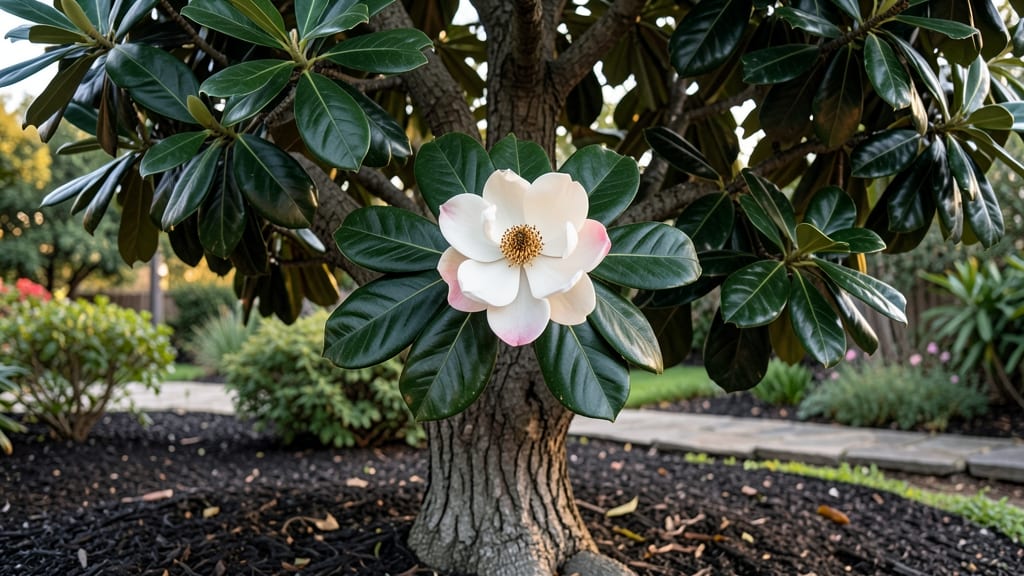
Southern magnolias burst into bloom at the right time between late April and early June, turning your yard into a fragrant white cloud that announces summer’s arrival. 🌸 I’ve watched mine transform from bare branches to lush canopies of creamy blossoms, each petal releasing that unmistakable sweet, citrusy scent that lingers in the evening air.
The timing shifts slightly depending on your zone—warmer climates like the Deep South may see blooms as early as March, while northern reaches of the tree’s range might wait until June.
The age of your tree plays a role too—young magnolias often take 3-5 years before they put on a full show, while mature trees reward patience with foot-long blooms that cover the branches.
A well-established tree can produce hundreds of flowers in a single season, creating a dramatic focal point in your landscape. The key to encouraging these glorious displays? Consistent watering during dry spells and avoiding heavy pruning during the dormant season.
What you’ll love most is the way these blooms attract pollinators—bees humming in the early morning and hummingbirds darting between branches. The petals drop quickly but leave behind glossy, dark green leaves that stay vibrant all summer.
For gardeners planning around this spectacle, timing is everything—mulch now to protect roots, and prepare for the cleanup of petals that’ll follow.
Whether you’re a seasoned gardener or new to magnolias, this bloom time is your cue to enjoy the show and plan next year’s care. The fragrance alone makes it worth the wait—imagine waking up to that sweet scent drifting through an open window on a spring morning.
That’s the magic of a healthy Southern magnolia in full bloom.
📚 In This Guide
- What you need
- Instructions
- Tips and common mistakes
- Wrapping up and next steps
What you need
- ● Southern magnolia tree (Magnolia grandiflora) – Choose a healthy, mature specimen (5–10 years old) or a young sapling (3–5 ft tall) for planting.
- ● Well-draining soil – Aim for a mix of 60% native soil, 30% compost, and 10% sand or perlite (pH 5.0–6.5).
- ● Mulch – 3–4 inches of organic mulch (pine straw, wood chips, or shredded bark) to retain moisture and regulate temperature.
- ● Slow-release fertilizer – 10-10-10 or 8-3-9 NPK ratio, applied 2–3 times per year (spring, summer, and early fall).
- ● Watering can or hose with a gentle spray nozzle – For deep, 1–2 inch weekly watering (adjust for drought or rain).
- ● Garden gloves – Heavy-duty, nitrile-coated for protection while handling soil or pruning.
- ● Pruning shears – Bypass-style, sharp, and sterilized to avoid disease.
- ● Shovel and trowel – For planting or transplanting (a round-point shovel for digging holes and a transplanting trowel for precision).
- ○ Soil pH test kit – To ensure optimal acidic soil conditions (optional but recommended).
- ○ Tree support stake (optional) – Only needed for young saplings (2–3 ft tall) to prevent wind damage.
- ● Sunlight access – A full-sun to partial-shade location (6+ hours of sunlight daily for optimal blooms).
- ● Space – Mature southern magnolias need 20–30 ft of clearance (they grow 60–80 ft tall and 20–40 ft wide).
- ● Patience – Young trees may take 3–5 years to produce their first significant blooms!
- ● Local climate check – Southern magnolias thrive in USDA Zones 7–10 (verify your zone here).
How to time southern magnolia blooms for peak fragrance and beauty
Here's how I predict and extend the stunning white blooms that make this iconic tree the queen of summer.
🌿 Step 1: Understand the Natural Bloom Window
The southern magnolia (Magnolia grandiflora) typically blooms between late spring and early summer, with the peak usually arriving in May or June in most of its native range. This timing aligns with the tree's natural cycle—once established, it produces flowers on old wood (last year's growth), so you won't see new blooms until the following season.
Here's the thing—your exact bloom time depends on your USDA hardiness zone. In Zones 7-9 (where these trees thrive), expect flowers to appear 2-4 weeks earlier than in cooler regions. Watch for pink flower buds forming in late winter—they're your first sign that a spectacular show is coming. I always mark my calendar when I spot these buds because they signal the countdown to bloom time.
☀️ Step 2: Optimize Light and Location for Earlier Blooms
Southern magnolias need full sun (6-8 hours daily) to produce their best flowers, but they also tolerate partial shade—though expect fewer blooms in shadier spots. If your tree isn't blooming as heavily as you'd like, it might be getting too much shade from nearby structures or other trees.
I've found that planting magnolias on the south or west side of your property encourages earlier blooms. The tree needs consistent warmth to trigger flowering, so avoid low-lying areas where cold air settles. If you're in a cooler microclimate, consider mulching heavily (3-4 inches) around the base to insulate roots and encourage earlier bud development.
💧 Step 3: Water and Fertilize for Longer Bloom Seasons
Deep watering once a week during dry spells keeps roots healthy and supports strong flower production. The key is watering slowly at the base—avoid overhead sprinkling, which can lead to fungal issues. You'll know your tree is getting enough water when the top 2-3 inches of soil feel moist but not soggy.
Fertilize in early spring (March) with a balanced, slow-release fertilizer (10-10-10 or similar). I skip summer fertilizing—too much nitrogen then can reduce flowering. Instead, focus on mulching with 2-3 inches of organic matter (like pine straw or shredded bark) to retain moisture and regulate soil temperature. This simple step can extend your bloom season by 1-2 weeks by keeping roots happy year-round.
✂️ Step 4: Prune Strategically to Encourage Future Blooms
Prune immediately after flowering (late June to early July) to avoid cutting off next year's buds. Remove only dead, diseased, or crossing branches—never more than 25% of the tree's canopy at once. Southern magnolias produce flowers on old wood, so heavy pruning now means fewer blooms next season.
Here's the trick: Shape the tree lightly to improve airflow, which reduces fungal diseases that can weaken the tree. I always use sterilized pruners and make cuts just outside the branch collar to prevent damage. Avoid pruning in fall or winter—the tree needs its energy to set buds for next year's show.
⏰ Step 5: Extend the Bloom Season with Simple Care
Once your magnolia is in full bloom, deadhead spent flowers (remove them as they fade) to encourage the tree to focus energy on new buds. This isn't necessary for the tree's health, but it keeps your yard looking tidy while supporting future blooms. I also remove any seed pods that form—they drain energy that could go toward next year's flowers.
To prolong the fragrance and beauty, avoid heavy pruning or stress during the bloom season. Even small disturbances can cause the tree to drop flowers prematurely. Instead, enjoy the show and water deeply once a week to keep the tree hydrated. With consistent care, your southern magnolia will reward you with longer bloom seasons and more abundant flowers year after year.
Tips & tricks for perfect southern magnolia bloom timing
Timing those fragrant white blooms takes patience and a few insider tricks—here's what I've learned from years of watching my magnolias light up the garden.
Zone-Specific Timing: The 2-4 week variation between Zones 7-9 and cooler regions is real, but you can narrow it down further. In Zone 8, I've found blooms typically arrive in early May, while Zone 9 trees often peak by late April. Use your last frost date as a rough guide—magnolias need consistent warmth, so count back 6-8 weeks from your average last frost to predict bud formation. This helps you plan your garden layout around the tree's natural rhythm.
Light and Location Secrets: That 6-8 hours of full sun isn't just about quantity—it's about quality. I've noticed the most abundant blooms come from trees receiving morning sun and afternoon shade. The intense midday rays in summer can actually stress the tree, causing premature flower drop. If your tree is in full sun all day, consider providing afternoon shade during peak summer months to extend the bloom season by 10-14 days.
Root Temperature Matters: The mulching recommendations are spot-on, but here's the detail most people miss: aim for 3-4 inches of organic mulch that stays consistently 60-65°F at the root level. I use pine straw because it naturally insulates while allowing water penetration. In cooler climates, I've seen dramatic improvements by adding a 2-inch layer of straw mulch over the existing 2-3 inches of organic matter—this creates a thermal blanket that encourages earlier bud development by 1-2 weeks.
Pruning Precision: When you prune immediately after flowering in late June to early July, focus on removing only the lowest dead branches first. This creates an open canopy that allows sunlight to reach the lower branches where next year's buds form. I always prune on a dry day when the tree is fully hydrated—this helps prevent stress that could cause flower buds to abort. Remember, you're shaping the tree's future bloom display, not just cleaning up the current one.
Pro Tips for Southern Magnolia Bloom Time
- Timing those fragrant white blooms takes patience and a few insider tricks—here's what I've learned from years of watching my magnolias light up the garden.
- Zone-Specific Timing: The 2-4 week variation between Zones 7-9 and cooler regions is real, but you can narrow it down further.
- Light and Location Secrets: That 6-8 hours of full sun isn't just about quantity—it's about quality.
Frequently asked questions
Got questions about when and how southern magnolias bloom? You’re not alone! Here are answers to the most common queries to help you plan, troubleshoot, and enjoy these fragrant giants at their best.
When do southern magnolias typically bloom?
Southern magnolias usually bloom in late spring to early summer (April–June, depending on your region). In warmer climates (Zones 7–10), they may even bloom sporadically year-round! Cold snaps can delay blooms, while mild winters encourage earlier flowering.
Why isn’t my southern magnolia blooming?
If your tree isn’t blooming, check these common culprits: young age (they often take 3–5 years to bloom), over-pruning (cutting back blooms removes next year’s buds), or poor health (disease, pests, or stress). Fertilize lightly in early spring and ensure it gets full sun (6+ hours/day).
Can I force a southern magnolia to bloom earlier?
No—these trees bloom based on internal cues, not external tricks. However, you can prune after blooming (late summer/fall) to encourage next year’s flowers. Avoid heavy pruning in winter, as it removes dormant buds. Patience is key!
What’s a good alternative if I want a similar-looking bloomer?
Love the look but need a lower-maintenance option? Try crapemyrtle (longer blooms), saucer magnolia (earlier spring flowers), or crepe myrtle (drought-tolerant and colorful). All offer stunning blooms with less fuss!
Are southern magnolia blooms prone to pests or diseases?
While generally hardy, blooms can attract scale insects or magnolia leaf gall. Spray with horticultural oil in early spring to prevent pests. Fungal issues (like Phytophthora) thrive in soggy soil—ensure good drainage. Healthy trees resist most problems!
Wrapping up and next steps
The southern magnolia’s timely bloom—those fragrant white clouds—is nature’s way of signaling summer’s arrival with elegance and grace. Whether you’re admiring their beauty or planning your garden around their schedule, understanding their bloom time helps you embrace the season with confidence.
Ready to welcome these stunning trees into your landscape? Start by choosing the perfect spot—one with well-drained soil and partial shade—and watch as your garden transforms into a fragrant paradise. 🌸✨