
Blooming
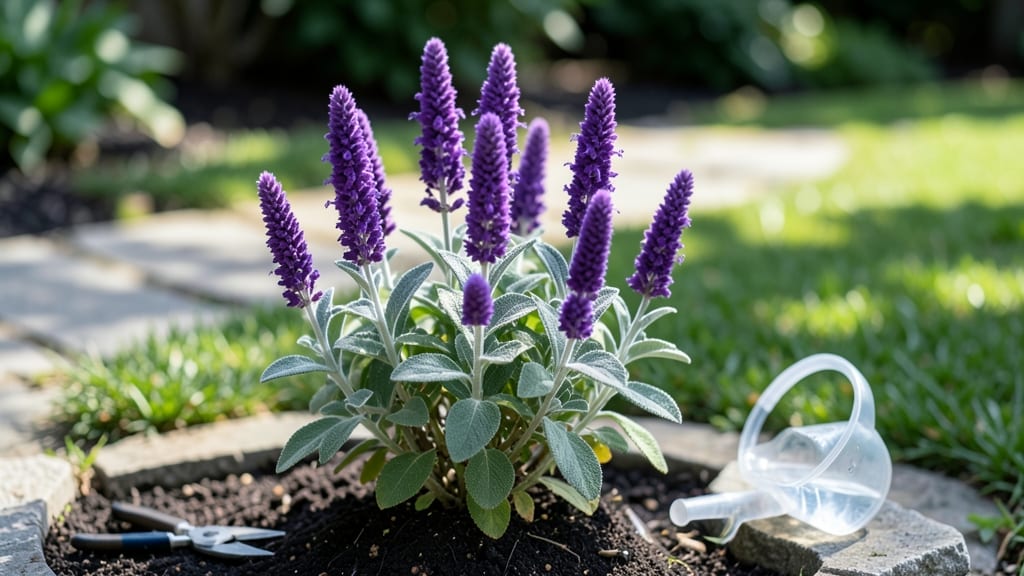
Salvias that bloom purple are the drought-proof superstars of any garden bed, offering velvety spikes of color that last from summer through fall. 🌿 I’ve designed countless borders with these perennials, and their deep purples—from Salvia leucantha’s velvety blooms to Salvia nemorosa’s upright spikes—create a striking contrast against silver foliage or golden grasses.
These plants thrive in full sun, need little water once established, and attract hummingbirds like magnets. The secret to their reblooming magic lies in deadheading spent blooms and choosing the right companions.
Pair them with lavender for a Mediterranean vibe or contrast their purple with the chartreuse of Artemisia for a bold, modern look. In containers, their vertical growth adds height, while their fragrant foliage adds sensory appeal even when not in bloom.
You’ll end up with a garden that stays lush all season, requires minimal care, and becomes a pollinator hotspot. The key is spacing them 18-24 inches apart to allow airflow and prevent mildew, while mixing textures with grasses or ornamental onions for depth.
Their drought tolerance means fewer watering trips and more time enjoying the view. For maximum impact, plant them in odd-numbered groupings—three or five plants create natural focal points. Their late-season blooms also provide structure when other perennials fade, keeping your garden vibrant until frost.
Perfect for borders, containers, or mixed beds, these salvias deliver low-maintenance beauty with high rewards.
📚 In This Guide
- What you need
- Instructions
- Tips and common mistakes
- Wrapping up and next steps
What you need
- ● Salvia plants: Choose Salvia nemorosa (perennial sage) or Salvia officinalis (culinary sage) varieties like 'May Night,' 'Purple Majesty,' or 'Berggarten' for vibrant purple blooms.
- ● Quantity: 3–5 plants per 5–6 ft. of garden space (adjust for container gardening).
- ● Well-draining soil: Mix 1 part native soil with 1 part compost and 1 part coarse sand or perlite (salvias hate soggy roots!).
- ● Sunlight access: Full sun (6+ hours daily) for optimal blooming.
- ● Watering can or hose with a gentle spray nozzle (salvias prefer deep but infrequent watering).
- ● Garden trowel or transplanting spade (for digging).
- ● Pruning shears (sterilized with rubbing alcohol) for deadheading and shaping.
- ● Mulch (gravel or organic): 2–3 inches to retain moisture and deter weeds (salvias love rock gardens!).
- ○ Slow-release fertilizer (5-10-5): 1 tbsp per plant at planting time (optional but boosts early growth).
- ● Container pots (if gardening in pots): 5–7 gallon size with drainage holes.
- ● Plant labels & markers (to track varieties and care notes).
Step-by-Step instructions for planting and maintaining purple salvias
These drought-proof perennials thrive with minimal fuss once you nail their three key needs.
🌱 Step 1: Choose the Right Location and Prepare the Soil
Salvias adore full sun—at least 6 hours daily—and well-draining soil. I always pick a spot with afternoon shade in hot climates to prevent leaf scorch. Before planting, loosen the soil to a depth of 12 inches using a garden fork. Amend heavy clay with 3 inches of compost or sand to improve drainage.
Here's the thing—salvias hate soggy roots. If your soil drains poorly, create raised beds or plant on mounds. Test drainage by digging a 6-inch hole, filling it with water, and timing how long it takes to drain. If it takes more than 4 hours, you need to improve drainage before planting.
🪴 Step 2: Plant at the Correct Depth and Spacing
Dig holes twice as wide as the root ball but no deeper. Place each plant so the top of the root ball sits level with the surrounding soil—burying too deep suffocates stems. For 4 plants, space them 2-3 feet apart in rows 3 feet apart to allow airflow and prevent fungal diseases.
Gently backfill with native soil, pressing lightly to eliminate air pockets. Water deeply right after planting to settle the soil and encourage root contact. You'll see new growth within 2-3 weeks if conditions are right—watch for the first true leaves to emerge from the crown.
☀️ Step 3: Water Deeply and Establish a Drought-Proof Routine
Salvias are drought-tolerant once established, but young plants need 1 inch of water weekly during their first growing season. Water deeply at the base—never overhead—to avoid fungal issues. I use a soaker hose to deliver water slowly and evenly, keeping the soil 2-3 inches deep moist but not soggy.
After the first year, reduce watering to every 2-3 weeks unless your region experiences extreme heat. The key is deep, infrequent watering. You'll know you're doing it right when the soil between waterings feels dry 2-3 inches down—stick your finger in to check.
✂️ Step 4: Prune for Longer Blooms and Prevent Overcrowding
Deadhead spent blooms weekly during the growing season to encourage continuous reblooming. Use clean, sharp pruners to cut back stems to the first set of healthy leaves below the flower cluster. This redirects energy to new growth rather than seed production.
In early spring, prune back any dead or damaged stems to 6 inches from the ground. For woody salvias, trim back one-third of the oldest stems each year to maintain vigor. Avoid heavy pruning in fall—it removes next year's flower buds. You'll see fresh, vibrant blooms within 4-6 weeks of proper pruning.
🌿 Step 5: Fertilize Lightly and Mulch for Year-Round Care
Feed salvias once in early spring with a balanced, slow-release fertilizer (10-10-10) at half the recommended rate. Over-fertilizing leads to lush foliage but fewer blooms. Water the area before applying fertilizer to prevent root burn, and avoid fertilizing in late summer or fall.
Spread 2-3 inches of organic mulch around each plant, keeping it 2 inches away from the stem to prevent rot. I use wood chips or straw because they improve soil moisture retention and suppress weeds. Replenish mulch annually in early spring—you'll notice healthier soil and fewer weeds as the season progresses.
Tips & tricks for perfect purple salvias planting
Took me years to figure out these key details—here's how to avoid the most common mistakes with these vibrant plants.
Soil Test Tip: That 4-hour drainage test in Step 1 is critical. If water drains slower, mix in sand or perlite to create a fast-draining medium. I've seen salvias fail within weeks when planted in heavy clay without this adjustment. The goal is sandy-loam texture—think of how water runs through a coffee filter.
Planting Depth Secret: When placing your plants in Step 2, use a small stick or pencil as a reference to keep the root ball level with the soil surface. Burying too deep suffocates stems by preventing oxygen flow to the crown. I've lost entire plants this way—don't make my mistake!
Watering Wisdom: The 2-3 inches deep moisture check in Step 3 is more important than you think. Use a screwdriver to test depth—if it comes out dry, water again. In hot climates, I water in the early morning to prevent evaporation and fungal growth from overnight moisture.
Pruning Precision: For that weekly deadheading in Step 4, always cut just above a leaf node where new growth emerges. I use clean pruners dipped in rubbing alcohol between cuts to prevent spreading any potential diseases. This simple step extends your blooming season by 4-6 weeks compared to ignoring it completely.
Pro Tips for Purple And Bloom Salvias
- Took me years to figure out these key details—here's how to avoid the most common mistakes with these vibrant plants.
- Soil Test Tip: That 4-hour drainage test in Step 1 is critical.
- Planting Depth Secret: When placing your plants in Step 2, use a small stick or pencil as a reference to keep the root ball level with the soil surface.
Frequently asked questions
Got questions about growing purple and bloom salvias? You’re not alone! These stunning perennials are a gardener’s dream—but they do have their quirks. Here are answers to the most common queries to help you cultivate a thriving, drought-resistant display.
When is the best time to plant purple salvias for continuous blooms?
Plant Salvia nemorosa or Salvia officinalis varieties in early spring (after the last frost) or early fall for best results. This gives roots time to establish before summer heat. If planting in late spring, prioritize watering deeply for the first 2–3 weeks to reduce transplant shock.
How do I keep my salvias blooming all season long?
Deadhead spent blooms regularly to encourage reblooming, but leave seed heads on a few stems for winter interest. Cut back 1/3 of the plant in early spring to promote fresh growth. Salvias thrive in full sun (6+ hours/day) and well-draining soil—amend clay soil with compost to prevent rot.
Why aren’t my salvias blooming, even though they look healthy?
Lack of blooms often stems from over-fertilizing (especially with high-nitrogen feeds) or shady conditions. Salvias prioritize foliage over flowers in low light. Try pruning back leggy growth in spring and reducing water slightly—drought stress can trigger more blooms! Pro tip: If your plant is <3 years old, blooms may still be establishing.
Can I grow purple salvias in containers? What’s the ideal setup?
Choose large pots (12"+ diameter) with drainage holes and a fast-draining mix (cactus/succulent soil + perlite). Use terracotta or fabric pots to prevent root rot. Salvias in containers need more frequent watering than in-ground plants—check soil moisture daily in summer. Bonus: Pair with lavender or catmint for a pollinator magnet!
Are purple salvias deer- or rabbit-resistant? What pests should I watch for?
Deer and rabbits usually avoid salvias due to their strong scent, but aphids, whiteflies, or spider mites may visit. Blast off pests with a hose spray or introduce ladybugs. For prevention, mulch with gravel (salvias hate wet feet!) and plant near aromatic herbs like rosemary to deter insects.
What are some great salvia alternatives if I need a low-maintenance rebloomer?
If salvias feel too finicky, try these drought-tolerant, reblooming perennials:
- Russian sage (Perovskia atriplicifolia) – Silvery foliage, lavender blooms, zero fuss.
- Catmint (Nepeta) – Long bloom season, deer-resistant, and self-seeds.
- Lavender (Lavandula) – Fragrant, pollinator-friendly, and thrives in poor soil.
- Coneflower (Echinacea) – Bold blooms, medicinal benefits, and reblooms with deadheading.
All love full sun and well-draining soil—just like salvias!
Wrapping up and next steps
Transforming your garden with purple and bloom salvias is easier—and more rewarding—than you think! These drought-resistant beauties bring vibrant color, pollinator magic, and low-maintenance charm to any space. Whether you’re a seasoned gardener or a beginner, their resilience and reblooming nature make them a must-have for year after year.
Ready to dive in? Start small—plant a single salvia in a sunny spot and watch it thrive. Need inspiration?
Browse local nurseries for varieties like Salvia ‘May Night’ or Salvia ‘Bee’s Bliss’, or explore online seed catalogs for rare finds. Your garden’s next masterpiece is just a seed (or cutting) away! 🌸