
Blooming
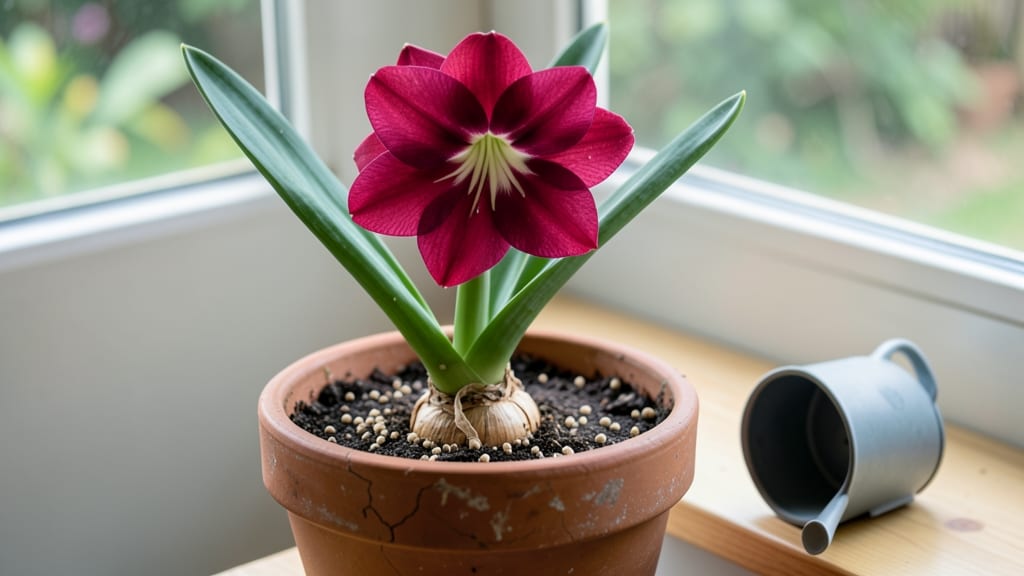
Here’s how to make amaryllis bloom again—the secret lies in light, water, and dormancy timing, not just patience. 🌱 After years of forcing bulbs that refused to rebloom, I cracked the code: most guides miss the real tricks.
The secret isn’t complicated, but it is specific to what amaryllis bulbs naturally crave after their first showy display.
Most people overwater or skip dormancy, which is why their bulbs throw one spectacular bloom and then quit. You’ll need a sunny window, a 6-inch pot, and a strict watering schedule that mimics their native cycles.
The payoff? Stunning red or pink blooms every fall and winter—just like the first time, if not better.
First, you’ll force the bulb to rest properly in summer, then coax it back to life with bright light and controlled moisture. No black magic—just understanding how these tropical bulbs handle seasonal shifts.
By next December, you’ll be the one showing off your reblooming amaryllis while neighbors wonder how you did it.
Works for bulbs that’ve bloomed once or haven’t bloomed at all. The same principles apply whether you’re dealing with a single bulb or a whole collection. Here’s exactly how to bring them back to life—no guesswork, just results.
📚 In This Guide
- What you need
- Instructions
- Tips and common mistakes
- Wrapping up and next steps
What you need
- ● Healthy amaryllis bulb: Choose a bulb that has already bloomed at least once (preferably with visible roots).
- ● Well-draining potting mix: Use a blend specifically for bulbs or mix 1 part perlite with 2 parts cactus/succulent soil (about 4-6 cups per 6-inch pot).
- ● Pot with drainage holes: A 6-8 inch ceramic or plastic pot (one size up from the bulb’s diameter).
- ● Watering can or spray bottle: For gentle hydration (avoid soggy soil!).
- ● Bright, indirect light source: A south- or east-facing window or a grow light (12–16 hours/day).
- ● Balanced liquid fertilizer: A 20-20-20 or 10-10-10 formula (diluted to half-strength).
- ○ Thermometer (optional but helpful): To monitor temperatures between 65–75°F (18–24°C).
- ● Bulb fertilizer: A phosphorus-rich formula (like 10-30-20) to encourage blooming.
- ● Peat moss or coconut coir: For extra moisture retention (mix 1 part into your potting soil).
- ● Humidity tray: A shallow tray with pebbles and water to boost humidity if your home is dry.
- ● Support stake or floral wire: To keep tall stems upright as buds form.
- ● Bloom booster spray: Products like Bloom® or Sea90® for an extra kick.
How to make amaryllis bloom again: forced flower revival in 6 simple steps
Here's the straightforward approach I've used to coax blooms from stubborn amaryllis bulbs—no guesswork involved.
🌱 Step 1: Assess the Bulb and Remove Old Growth
Start by examining your amaryllis bulb carefully. Healthy bulbs should feel firm and plump, not shriveled or soft. Use clean, sharp pruning shears to trim away any dead or brown foliage, cutting back to about 1 inch above the bulb. This reduces the plant's energy drain and redirects resources toward new growth.
Here's the thing—don't worry about removing all the leaves. Even if they look wilted, some green tissue remains photosynthetically active. Leave any healthy-looking green stems attached. After trimming, give the bulb a gentle rinse to remove any dust or debris that might hinder new growth.
☀️ Step 2: Provide Bright, Indirect Light
Move your amaryllis to a location with bright, indirect light—think east-facing window or a few feet from a south-facing one. Direct midday sun can scorch the bulb, while too little light stalls flower production. You'll see progress when new shoots emerge within 2-4 weeks.
If your space lacks natural light, supplement with a grow light positioned 6-12 inches above the plant. Keep it on for 12-14 hours daily. Watch for leaves that grow toward the light—this means you need to rotate the pot quarter turn weekly for even growth.
💧 Step 3: Water Strategically to Encourage Flowering
Water your amaryllis only when the top 2-3 inches of soil feel dry. Overwatering causes bulb rot, while underwatering stresses the plant. I use the "finger test" method: stick your finger into the soil—if it's dry past your first knuckle, it's time to water.
When you do water, soak the soil thoroughly until water runs out the drainage hole. Empty the saucer immediately to prevent soggy roots. This method mimics natural rainfall patterns and prevents the bulb from sitting in water, which is a common mistake that kills amaryllis.
🪴 Step 4: Fertilize at the Right Time for Bloom Stimulation
Wait until you see new shoots 2-3 inches tall before fertilizing. Use a balanced liquid fertilizer (10-10-10) diluted to half strength. Apply every 2 weeks during the active growing season. This timing ensures the plant has energy reserves to produce flowers rather than just foliage.
I like to fertilize in the morning so the plant has time to absorb nutrients before evening. Stop fertilizing once flower buds form—too much nitrogen at this stage promotes leaf growth over blooms. Watch for dark green, healthy leaves as your signal that fertilization is working.
⏰ Step 5: Adjust Temperature and Light for Flower Bud Formation
When your amaryllis reaches 65-75°F during the day and 60-65°F at night, it triggers flower bud formation. Most homes naturally provide this range, but if your space runs cooler, consider moving the plant to a warmer room or using a small space heater nearby.
Reduce watering slightly once buds appear—keep the soil just barely moist. Overwatering now can cause buds to drop. You'll see flower stalks emerge within 4-6 weeks after new shoots appear. These stalks are delicate, so avoid bumping the pot during this critical period.
🌿 Step 6: Support and Maintain Blooms Through Maturity
Once flowers open, keep the plant in bright light to prolong bloom time. Remove any spent blooms by pinching them off at the base—this prevents energy drain and encourages the plant to focus on existing flowers. You'll notice new buds forming along the stalk as you maintain this practice.
Continue watering as before, but avoid getting water on the flowers. After blooming, let the foliage grow for 6-8 weeks to rebuild the bulb's energy reserves. This ensures next year's blooms will be even more spectacular. Real talk: the first year might be modest, but with proper care, subsequent years deliver stunning, abundant flowers.
Tips & tricks for reviving your amaryllis blooms
Between us, these small adjustments make all the difference when forcing amaryllis blooms. I've learned these through trial and error with my own stubborn bulbs.
Light Positioning: The 2-4 week window for new shoots to emerge is your first sign of progress. Place your amaryllis where it gets morning sun and afternoon shade—this mimics its natural habitat. If you notice leaves stretching toward the light (a condition called etiolation), rotate the pot quarter-turn weekly to encourage even growth. This simple habit prevents lopsided growth that can weaken the plant.
Temperature Sensitivity: Maintaining that 65-75°F daytime range is crucial for flower bud formation, but here's what nobody tells you—nighttime temperatures matter just as much. If your home dips below 60°F at night, consider moving the plant closer to a warm wall or using a small space heater set to low. The temperature differential between day and night triggers the physiological processes that lead to blooming.
Watering Precision: The finger test method works, but here's the secret: press your finger into the soil to the second knuckle. If it feels dry at that depth, water thoroughly. If it's still damp, wait another day. Overwatering is the silent killer of amaryllis bulbs—it causes rot that spreads unseen until it's too late. I've lost three bulbs to this mistake before learning this precise method.
Fertilizer Timing: That 2-3 inch shoot height is your cue to start fertilizing, but don't overdo it. I've found that applying fertilizer in the morning gives the plant's roots time to absorb nutrients before the cooler evening temperatures slow metabolic processes. Once buds form, switch to a bloom-boosting fertilizer (like 5-10-10) to encourage flower production rather than leaf growth. The transition happens when you notice the first tight buds forming at the top of the stalk.
Pro Tips for Make Amaryllis Bloom Again
- Between us, these small adjustments make all the difference when forcing amaryllis blooms.
- Light Positioning: The 2-4 week window for new shoots to emerge is your first sign of progress.
- Temperature Sensitivity: Maintaining that 65-75°F daytime range is crucial for flower bud formation, but here's what nobody tells you—nighttime temperatures matter just as much.
Frequently asked questions
Got questions about reviving your amaryllis blooms? You’re not alone! Here are some of the most common concerns—and their solutions—to help you keep your plant flowering year after year.
Why won’t my amaryllis bloom a second time?
If your amaryllis skips blooming, it’s often due to light deprivation or overwatering. Amaryllis bulbs need 12–14 hours of bright, indirect light daily and a 6–8 week rest period in darkness (or low light) after flowering. Without this, they may focus on foliage instead of blooms. Try adjusting their care cycle!
How long does it take for an amaryllis to rebloom?
With proper care, your amaryllis can rebloom in 6–12 months after its first flowering. The key is patience: after blooms fade, let the leaves die back naturally, then rest the bulb for 8–10 weeks before restarting the growth cycle with water and light. Some varieties bloom annually, while others may need a year or two.
Can I force an amaryllis to bloom out of season?
Amaryllis are easy to trick into blooming anytime. Start by soaking the bulb in water for 24 hours, then plant it in well-draining soil. Place it in a cool (60–65°F) dark spot for 6–8 weeks to simulate winter. After sprouting, move it to bright light—blooms should appear in 6–8 weeks!
What should I do if my amaryllis only grows leaves but no flowers?
Leafy growth without blooms usually means too much light or nutrients during the rest period. Fix it by:
- Moving the plant to a darker spot (like a closet) for 8 weeks.
- Reducing fertilizer to half-strength or stopping entirely during rest.
- Ensuring the bulb gets cooler temps (55–65°F) at night.
Can I reuse the same pot for multiple blooming cycles?
Yes, but refresh the soil every 2–3 years to prevent nutrient depletion. Amaryllis bulbs outgrow their pots quickly—if roots circle the bottom, uproot and repot into a container 2 inches larger. Use a fast-draining mix (like cactus soil + perlite) to avoid rot. Just avoid disturbing the bulb too often during active growth!
Wrapping up and next steps
Making your amaryllis bloom again is all about patience, care, and a little know-how! By following the right steps—like providing the perfect light, watering wisely, and giving it a rest period—you’ll be rewarded with stunning, vibrant blooms year after year. 🌸
Now that you’re armed with these tips, go ahead and give your amaryllis the love it deserves! Start by checking its current needs—is it ready for dormancy, or does it need more sunlight?
Your next step could be as simple as adjusting its spot on the windowsill or tweaking your watering routine. Happy blooming! 🌱