
Blooming
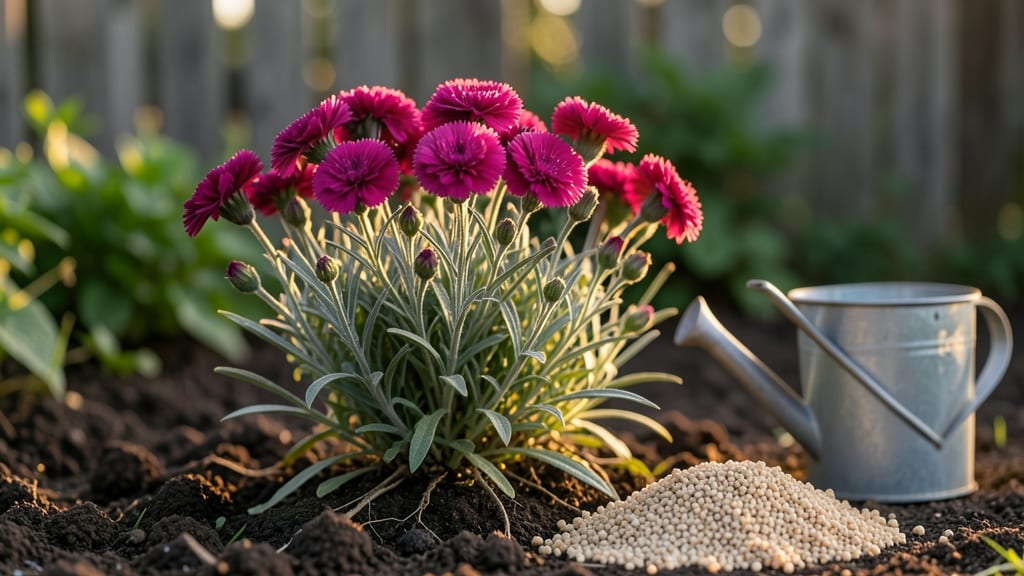
How to keep dianthus blooming all summer starts with deadheading and feeding—turning those stubborn gaps between blooms into a nonstop color show. The key is catching spent blooms before they set seed and giving the plants a mid-season nutrient boost that keeps them pushing new growth instead of going dormant.
Start with sharp pruners and a sunny morning—dianthus blooms open best in cool light, so you'll see every spent flower clearly. Snip just above the next set of leaves (about ¼ inch down), and you'll encourage bushier plants that bloom lower on the stems.
I fertilize every 4-6 weeks with a balanced 10-10-10 mix, but cut back to half-strength after early July to avoid leggy growth. You'll notice the difference within 10 days: fresh buds forming at the base, stems thickening, and those signature clove-scented flowers multiplying.
Even my black-thumb neighbors get jealous when their dianthus fades by July—mine keep going until frost. The secret weapon? Consistency. Water deeply once a week (more in extreme heat), mulch lightly to retain moisture, and watch for spider mites—they love dry conditions.
With this routine, your dianthus will outlast every other perennial in the border.
📚 In This Guide
- What you need
- Instructions
- Tips and common mistakes
- Wrapping up and next steps
What you need
- ● Pruning shears or sharp scissors – Clean, sharp tools (1 pair) to deadhead spent blooms and trim leggy stems.
- ● Balanced, water-soluble fertilizer – 10-10-10 or 20-20-20 NPK ratio (1–2 lbs or as per package instructions).
- ○ Slow-release granular fertilizer – Optional but helpful (e.g., 13-13-13 or rose-specific formula, 1–2 lbs).
- ● Watering can or hose with a gentle spray nozzle – Avoid soaking the foliage to prevent disease.
- ○ Gloves (optional) – For protection if handling thorny varieties or soil with sharp debris.
- ● Compost or organic mulch – 1–2 inches to retain moisture and improve soil health.
- ● Well-draining soil – Dianthus hates soggy roots! Amend heavy clay with perlite or sand if needed.
- ● Full sun exposure – At least 6–8 hours of direct sunlight daily for optimal blooming.
- ● Regular deadheading schedule – Every 2–3 days during peak bloom to encourage new flowers.
- ● Consistent watering – Water at the base (avoid wetting leaves) when the top 1–2 inches of soil feel dry.
Step-by-Step instructions for maintaining dianthus blooms all season
Here's the straightforward routine I use to keep my dianthus plants flowering heavily from early summer until frost.
✂️ Step 1: Deadhead Regularly to Encourage New Blooms
As soon as flower clusters fade and turn brown, snip them off at the base using clean pruners. I cut just above the first set of healthy leaves where the stem meets the plant—this prevents unsightly stems while allowing new buds to form below. The key is consistency: I deadhead every 3-4 days during peak bloom season when flowers open rapidly.
Don't wait until flowers fully brown—they'll self-seed and create weak, leggy growth. You'll know you're doing it right when you see fresh buds forming within 7-10 days of your last deadheading. For large clumps, I work in sections to avoid overwhelming myself, but never let more than 2-3 spent blooms remain on any stem.
💧 Step 2: Water Deeply but Infrequently
Dianthus thrives on neglect when it comes to watering. I water only when the top 2 inches of soil feel completely dry to the touch, which for me usually means every 5-7 days during hot spells. The secret is thorough watering—soak the root zone until water runs out the drainage holes, then let it dry completely before watering again.
Overwatering causes root rot and weak stems that flop over. You'll see healthy plants with upright growth and vibrant foliage when the watering routine is correct. If leaves start yellowing at the tips, that's your signal to cut back on frequency slightly.
☀️ Step 3: Provide Full Sun and Well-Draining Soil
Move your dianthus to a location with at least 6 hours of direct sunlight daily—morning sun with afternoon shade works best in hot climates. The more sun they get, the more vigorously they'll bloom. I've found that plants in full afternoon sun often produce their best color intensity, though they may need occasional shade during extreme heat waves.
If your soil drains poorly, amend with coarse sand or perlite before planting. Dianthus roots despise soggy conditions. You'll notice plants in ideal conditions developing that classic compact, bushy growth with flowers held just above the foliage, creating that perfect cottage garden look.
🌿 Step 4: Fertilize Lightly During Active Growth
Use a balanced, water-soluble fertilizer (10-10-10) diluted to half strength every 4-6 weeks during the growing season. I apply it after watering in the morning so the roots have time to absorb nutrients before the heat of the day. The goal is to encourage foliage growth without excessive leaf production at the expense of flowers.
Stop fertilizing completely after mid-summer to allow plants to harden off for fall. You'll see the difference in plant vigor when you maintain this feeding schedule—stems stay sturdy, leaves remain glossy, and the flowering period extends well beyond what most gardeners achieve.
⏰ Step 5: Prune Lightly After First Frost
Once temperatures drop below 40°F at night, cut back all stems by about one-third using clean pruners. This encourages fresh growth in spring and removes any diseased or damaged foliage. I always sterilize my pruners with rubbing alcohol between cuts to prevent spreading any potential pathogens.
The pruned plants can be left in the ground over winter in most climates, though they'll look dormant. In colder regions, a light mulch of straw helps protect the crown. You'll be rewarded in spring with plants that bounce back quickly and often produce their first flush of blooms earlier than unpruned plants.
Tips & tricks for maintaining dianthus blooms all season
Here's what I've learned after years of keeping my dianthus plants looking their absolute best—these small details make all the difference.
Timing is Everything: In Step 1, when you're deadheading every 3-4 days, I've found that mornings are the absolute best time to do this. The plants are fully hydrated from overnight dew, and the fresh cuts heal more quickly in the cooler morning air. If you must deadhead in the afternoon, do it at least 2 hours before sunset to prevent stress from evening heat.
The Right Tools Matter: For Step 1, invest in a pair of sharp, clean pruners—dull blades crush stems and invite disease. I sterilize my pruners with rubbing alcohol between cuts, especially when working with multiple dianthus plants. This simple habit prevents the spread of pathogens that can weaken your plants over time. You'll notice a significant difference in plant health when using properly maintained tools.
Sunlight Strategy: When positioning your dianthus for that essential 6 hours of sunlight in Step 3, consider the angle of your sun. In my experience, south-facing windows or garden spots provide the most consistent light. If you're in a container, rotate the pot every few days to ensure even growth—this prevents lopsided plants and encourages that compact, bushy shape we all love.
Fertilizer Timing Secret: In Step 4, when applying your diluted 10-10-10 fertilizer every 4-6 weeks, I've discovered that early morning application is crucial. The roots absorb nutrients most efficiently when the soil is cool, and applying after watering prevents root burn. The key is consistency—don't skip feedings during peak bloom season, but remember to taper off after mid-summer to prepare plants for winter.
Pro Tips for Keep Dianthus Blooming All Summer
- Here's what I've learned after years of keeping my dianthus plants looking their absolute best—these small details make all the difference.
- Timing is Everything: In Step 1, when you're deadheading every 3-4 days, I've found that mornings are the absolute best time to do this.
- The Right Tools Matter: For Step 1, invest in a pair of sharp, clean pruners—dull blades crush stems and invite disease.
Frequently asked questions
Got questions about keeping your dianthus in full bloom all summer? You’re not alone! Here are some of the most common queries—and their answers—to help you troubleshoot and thrive.
Why does my dianthus stop blooming mid-summer?
Dianthus often slows down due to heat stress, overcrowding, or nutrient depletion. Deadheading spent blooms (and leaves) encourages new growth, while a balanced phosphorus-rich fertilizer (like 5-10-5) can reignite flowering. Pro tip: Trim back leggy stems by ⅓ to promote bushier, more vigorous regrowth!
How often should I deadhead dianthus for continuous blooms?
Deadhead every 2–3 days during peak bloom (spring/summer) to prevent seed pods from forming. This redirects energy to new flowers. For low-maintenance care, aim to remove faded blooms at least 2–3 times per week. Bonus: Pinch off buds if overcrowding occurs—it keeps plants compact and flowering longer!
Can I use coffee grounds or eggshells to boost dianthus blooms?
Yes! Both are great organic amendments:
- Coffee grounds: Sprinkle lightly (¼ cup per plant) for nitrogen—but avoid overdoing it (can acidify soil).
- Eggshells: Crush and mix into soil for calcium, which strengthens cell walls and supports blooms. Pro tip: Bake shells for 10 mins first to kill bacteria.
Will dianthus rebloom if I cut it back hard in July?
A mid-summer pruning (cutting back by ⅓) can trigger a second flush of blooms by late summer. Time it right: Prune after a heatwave or when new growth appears. Water deeply afterward to reduce shock. Warning: Avoid heavy pruning in extreme heat (wait for temps below 85°F).
What’s the easiest low-maintenance dianthus variety for beginners?
Try ‘Firewitch’ or ‘Mystic’ series—these perennial dianthus are drought-tolerant, disease-resistant, and rebloom with minimal deadheading. For annuals, ‘Sweet William’ mixes are forgiving and thrive in poor soil. Hot tip: Choose heat-tolerant cultivars (like Dianthus barbatus) for longer summer color!
Wrapping up and next steps
Keeping your dianthus blooming all summer is easier than you think—just deadhead regularly, feed with the right nutrients, and tend to their environment. With a little effort, you’ll enjoy vibrant color from spring to fall! 🌸
Ready to transform your garden? Start small: pick one plant, try the tips above, and watch the difference in just a few weeks. Happy gardening! 🌱