
Blooming
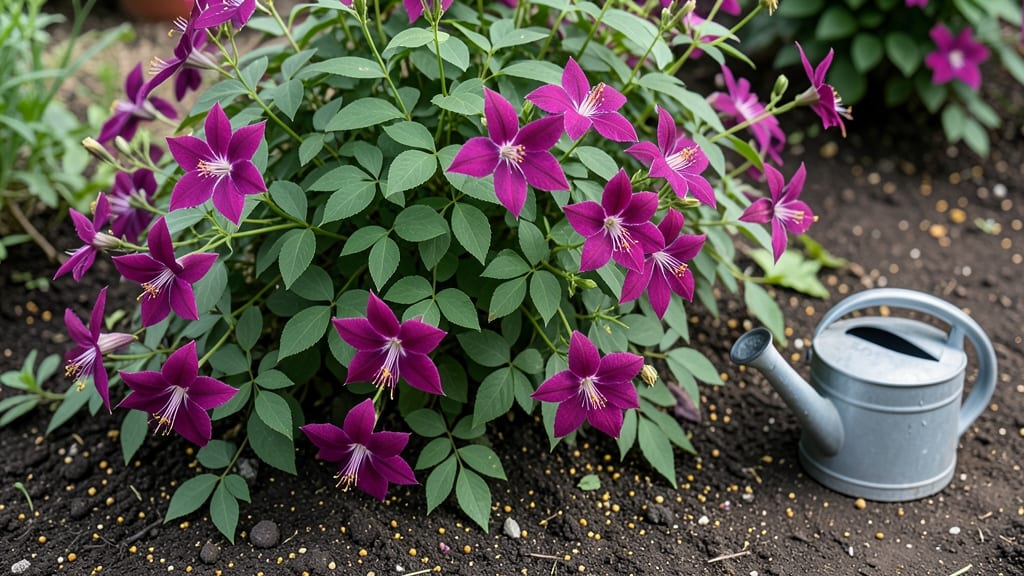
Making clematis bloom all summer isn’t magic—it’s pruning at the right time, feeding for flowers, and a little extra care. 🌸 I’ve turned my once-sparse vines into a nonstop floral display by following a simple routine that works for all three pruning groups (yes, there are three!).
The secret starts with understanding your clematis type and when to prune it—Group 1 in early spring, Group 2 after blooms, and Group 3 in late winter.
The real game-changer is feeding with the right nutrients—especially phosphorus, which pushes those blooms. I swear by a balanced 10-10-10 fertilizer in early spring, followed by a bloom booster like 5-10-5 when new growth appears.
Watering deep once a week (not daily light sprinkles) keeps roots happy without drowning them, and mulching around the base saves moisture while keeping roots cool.
By late summer, you’ll be pinching back leggy growth to encourage bushier vines and more flowers. The results? Vines heavy with blooms from June through September, even on my shade-loving varieties. The key is consistency—prune, feed, water—and watch your clematis transform into a flowering powerhouse.
Works for trellises, arbors, or ground covers—just adjust pruning timing based on your zone. Here’s how to adapt the method for your specific clematis type and climate. Let’s get those flowers going!
📚 In This Guide
- What you need
- Instructions
- Tips and common mistakes
- Wrapping up and next steps
What you need
- ● Pruning shears or sharp bypass pruners – Clean, sharp blades (avoid dull tools that crush stems).
- ● Garden gloves – Heavy-duty or cut-resistant (clematis thorns are no joke!).
- ● Balanced, slow-release fertilizer – Look for a 10-10-10 or 20-20-20 NPK ratio (or a clematis-specific formula). Quantity: ~1 lb per 10 sq ft of planting area.
- ● Organic mulch (e.g., shredded bark, compost, or straw) – 2-3 inches deep to retain moisture and regulate soil temp.
- ● Watering can or hose with a gentle spray nozzle – Deep watering is key!
- ○ Support structure (optional but helpful) – Trellis, arbor, or sturdy stakes (if your clematis needs guidance).
- ● Epsom salt (magnesium sulfate) – 1 tbsp per gallon of water (boosts blooms if leaves look yellow between veins).
- ● Copper fungicide – Prevents powdery mildew (spray in early summer if humidity is high).
- ● Tie-down clips or soft garden twine – For securing vines to supports without damaging stems.
- ● Soil pH test kit – Ideal pH: 6.0–7.0 (adjust with lime or sulfur if needed).
- ● Compost or worm castings – Top-dress in spring for extra nutrients.
Step-by-Step guide to encouraging nonstop clematis blooms
Here's the method I swear by after years of growing clematis—no deadheading required.
✂️ Step 1: Prune Correctly Based on Bloom Type
First, identify your clematis type: early bloomers (like 'Jackmanii') flower on previous year's growth, while late bloomers (like 'Niobe') flower on current year's growth. Early bloomers need minimal pruning—just trim dead stems in late winter to 1-2 inches above healthy buds. Late bloomers can be cut back harder in early spring to 12-18 inches tall, removing all but 3-5 strong stems.
I always prune on a dry, cloudy day to reduce stress. Use clean, sharp pruners and cut at a 45-degree angle just above an outward-facing bud. This prevents water from pooling on the cut and encourages new growth. Never leave stubs—1/4 inch above the bud is perfect.
💧 Step 2: Feed Strategically for Continuous Blooms
Clematis are heavy feeders, but timing matters. In early spring, apply a balanced fertilizer (like 10-10-10) when new shoots appear. Then, switch to a high-phosphorus formula (like 5-10-5) when buds form—this boosts flowering. I feed again in mid-summer with a low-nitrogen, high-potassium fertilizer (like 2-4-4) to sustain blooms.
Here's the thing—too much nitrogen makes leaves but stops flowers. I always follow package instructions exactly and water deeply after feeding. You'll see the difference in 3-4 weeks: thicker stems and more abundant blooms. Mulch with 2-3 inches of organic matter (like shredded bark) to retain moisture and feed roots slowly.
☀️ Step 3: Support and Position for Maximum Sunlight
Clematis need 6+ hours of sunlight daily, but their roots hate hot afternoon sun. I plant them near south- or west-facing walls where they get morning sun but afternoon shade. A strong trellis, arbor, or fence is a must—choose one that can support 10+ pounds when in full bloom.
Tie stems loosely with soft plant ties every 6-8 inches as they grow. Avoid wire or anything that can cut into the stems. If your clematis grows leggy, it’s either not enough light or too much nitrogen. Adjust by moving it to a sunnier spot or cutting back on fertilizer.
🌿 Step 4: Deadhead and Monitor for Pests
Deadheading isn’t strictly necessary, but it extends the blooming season. Pinch off spent flowers just above the first set of healthy leaves below the bloom. This redirects energy to new buds. I do this every 2-3 weeks during peak bloom season. If you miss a flower, don’t stress—it’ll still produce seed heads, which some gardeners love for winter interest.
Watch for clematis wilt (a fungal disease) or aphids—both can kill blooms fast. If you see yellowing leaves or sticky residue, spray with neem oil or insecticidal soap immediately. Healthy clematis should have deep green leaves and no signs of wilting or spots. A weekly check keeps problems under control.
⏰ Step 5: Winter Prep for Next Year’s Blooms
Before the first frost, cut back early bloomers to 1-2 inches above the ground—they’ll regrow from the base in spring. Late bloomers only need light trimming to remove dead stems. I always mulch heavily (4-6 inches) with straw or leaves to protect roots from freezing. This also reduces winter dieback, so you’ll have stronger growth next year.
In late winter, just before new shoots appear, give the base a light feeding with compost or worm castings. This jumpstarts growth and ensures earlier blooms the following season. If your clematis struggles, it might be root-bound—consider dividing and replanting every 3-4 years to keep it vigorous.
Tips & tricks for nonstop clematis blooms
These simple tricks will help you keep your clematis flowering all summer long without the stress of deadheading.
Pruning Precision: When pruning in Step 1, look for buds that face outward—they'll grow away from the center, creating a fuller plant. I always count 3-5 strong stems for late bloomers and make sure each cut is clean and angled. Using dull pruners crushes stems, inviting disease. Sharp pruners make all the difference.
Fertilizer Timing is Everything: The 3-4 week window after feeding in Step 2 is when you'll see the biggest difference. I mark my calendar for early spring, bud formation, and mid-summer feedings. Too much nitrogen? Your clematis will look like a leafy monster with no flowers. Stick to the high-phosphorus formula when buds appear—it's the secret to abundant blooms.
Sunlight Strategy: In Step 3, if your clematis isn't getting enough light, don't just move it—rotate the pot 180 degrees every few weeks. This ensures even growth and prevents leggy stems. Morning sun is ideal, but if you must use afternoon sun, make sure the roots stay shaded with mulch. A strong trellis isn't just for looks—it supports those heavy blooms and keeps stems from flopping over.
Pest Prevention: The weekly check in Step 4 catches problems before they spread. I keep a spray bottle of neem oil handy and check the undersides of leaves where pests love to hide. Yellowing leaves? That's your first sign of trouble. Act fast—clematis wilt can kill a plant in days if left unchecked. A little prevention now means more blooms later.
Pro Tips for Make Clematis Bloom All Summer
- These simple tricks will help you keep your clematis flowering all summer long without the stress of deadheading.
- Pruning Precision: When pruning in Step 1, look for buds that face outward—they'll grow away from the center, creating a fuller plant.
- Fertilizer Timing is Everything: The 3-4 week window after feeding in Step 2 is when you'll see the biggest difference.
Frequently asked questions
Got questions about keeping your clematis in full bloom all summer?
You’re not alone! Here are answers to the most common concerns—from pruning puzzles to feeding fixes.
Why isn’t my clematis blooming like it did last year?
Over-pruning, poor nutrition, or wrong pruning group (Group 1 vs. 3) can stunt blooms. Check your variety: Group 1 (early spring bloomers) needs minimal pruning; Group 3 (late summer bloomers) thrives with hard pruning in early spring. Feed with high-phosphorus fertilizer (like 5-10-5) when buds form to encourage flowers.
When’s the best time to prune for continuous blooms?
Timing depends on your clematis type:
- Group 1 (early spring bloomers): Prune after flowering (late spring/early summer).
- Group 2 (repeat bloomers): Light prune in early spring, then trim spent flowers mid-season.
- Group 3 (late summer bloomers): Prune hard in early spring (cut back to 12–18 inches).
What’s the best fertilizer for summer-long blooms?
Use a balanced, slow-release fertilizer (like 10-10-10) in early spring, then switch to high-potassium (like 7-9-5) when buds appear to extend blooming. Feed every 4–6 weeks during growing season, and water deeply after to prevent root burn. Mulch with compost to retain moisture!
Can I make my clematis bloom if it’s struggling in heat/drought?
Clematis hates dry soil—water deeply 2–3 times per week during heatwaves (early morning is best). For extra support, shade the roots with mulch or a temporary shade cloth (but keep the vines sunny!). A seaweed-based fertilizer can also boost stress resistance.
What if my clematis keeps dying back or looks sickly?
Yellow leaves? Brown stems? Likely overwatering, fungal disease, or pests. Fix it:
- Improve drainage (raise soil level or add grit).
- Prune dead/diseased stems immediately with sterilized tools.
- Spray with neem oil for pests or copper fungicide for mildew.
Wrapping up and next steps
With the right mix of pruning know-how and nutrient-rich care, your clematis can put on a dazzling show all summer long! 🌸 The secret lies in timing, technique, and feeding—whether you’re dealing with early, mid, or late bloomers.
Now that you’re armed with these bloom-boosting strategies, it’s time to roll up your sleeves and give your vines the love they deserve.
Ready to transform your garden into a nonstop floral paradise? Start by reviewing your pruning plan and scheduling your first feed—your clematis will thank you with vibrant blooms from spring to frost! 🌿