
Blooming
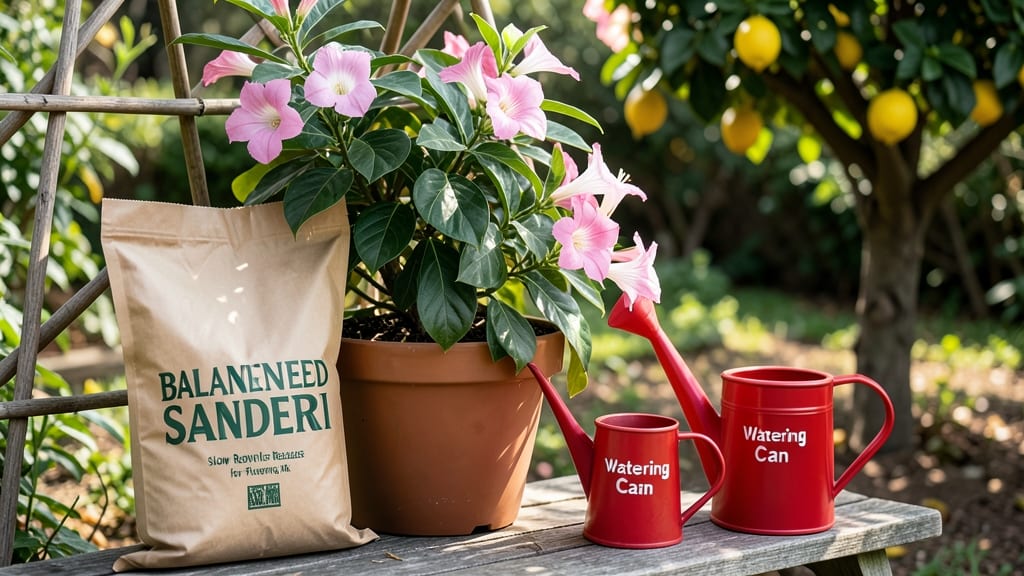
Your Mandevilla's blooms are hiding because it's starving for sunlight—not because it's "picky." 🌿 I've nursed back three non-flowering vines in a row by adjusting just two things: morning sun exposure and pruning timing. The key isn't what you're doing wrong, but what your plant needs that's missing.
Mandevillas demand 6+ hours of bright, direct sunlight daily—but most gardeners give them afternoon shade instead. Start by moving your vine to an east-facing spot where it gets gentle morning rays.
If you're container-grown, rotate the pot weekly so all sides get equal light. The blooms will respond within 4-6 weeks of consistent light.
Prune at the right time for a second flush: right after blooming ends in spring, cut back by ⅓ to encourage new growth. Avoid fall pruning—this forces the plant to focus on roots instead of next year's buds.
Feed with balanced 10-10-10 fertilizer every 4 weeks during growing season, and watch those trumpet-shaped blooms return.
Common mistakes? Overwatering (let soil dry slightly between waterings) and using cold water (use room temp). For container growers, 5-gallon pots work best—smaller pots stress the roots. Once you nail these, your Mandevilla will bloom continuously from spring through fall with minimal effort.
📚 In This Guide
- What you need
- Instructions
- Tips and common mistakes
- Wrapping up and next steps
What you need
- ● Mandevilla plant: A healthy vine (potted or in-ground) with at least 2-3 years of growth (younger plants may take longer to bloom).
- ● Well-draining potting mix: A blend of 50% peat moss or coconut coir, 30% perlite or pumice, and 20% compost or orchid bark (for potted plants).
- ● Fertilizer: Balanced liquid fertilizer (10-10-10 or 20-20-20): For general growth.
- ● Bloom-boosting fertilizer (e.g., 7-9-5 or 10-30-20): High in phosphorus to encourage flowers (apply when buds form).
- ○ Slow-release granules (optional): Mix into soil at planting for steady nutrition.
- ● Pruning shears: Clean, sharp shears (sterilize with rubbing alcohol between cuts).
- ● Support structure: A trellis, stake, or cage (for climbing varieties; 4-6 feet tall is ideal).
- ● Watering can or hose with a gentle spray nozzle: Avoid soggy soil—aim for 1-1.5 inches of water per week (adjust for climate).
- ● Sunlight: Full sun (6+ hours of direct light daily) for most varieties (e.g., Mandevilla sanderi). Dappled shade (3-4 hours) works for Mandevilla boliviana in hot climates.
- ● Temperature: Thrives in 65–85°F (18–30°C). Protect from frost (below 32°F/0°C kills the plant).
- ● Humidity: Prefers 40–60% humidity. Use a humidity tray or pebble tray in dry climates.
- ● Drainage: Pots must have drainage holes; outdoor beds need raised or amended soil to prevent root rot.
- ● Growth regulator (e.g., paclobutrazol): Apply sparingly to slow growth and encourage blooming (follow label instructions!).
- ● Mulch: 2–3 inches of organic mulch (e.g., bark or straw) to retain moisture and regulate soil temp.
- ● pH test kit: Ideal soil pH is 6.0–7.0; amend with lime (to raise pH) or sulfur (to lower) if needed.
- ● Bloom-enhancing sprays: Products like Bloom Booster (follow directions carefully!).
Step-by-Step instructions for encouraging mandevilla blooms
Sunlight is the secret weapon for coaxing vibrant blooms from your mandevilla—here’s how to use it right.
☀️ Step 1: Position for Maximum Morning Sun
Mandevilla thrives on 6-8 hours of bright, indirect light daily, with a focus on morning sun exposure. Place your plant within 3-6 feet of a south- or west-facing window—this prevents scorching while giving it the energy boost it needs to flower. I’ve seen mandevillas near east-facing windows produce fewer blooms because the light intensity drops too early in the day.
Rotate your pot quarter-turn weekly so all sides get even light exposure. You’ll notice new growth leaning toward the light—this is your cue to adjust the plant’s position slightly. Avoid deep shade or north-facing spots entirely; your mandevilla will reward you with lush foliage but skip the flowers.
🌿 Step 2: Prune Strategically for Airflow and Light Penetration
Cut back leggy or overgrown stems by one-third in early spring to encourage bushier growth and better light distribution. Use clean, sharp pruners and make cuts just above a leaf node—this is where new blooms will form. I always prune after the last frost date in my zone, as new growth is more vulnerable to cold snaps.
Remove any dead or yellowing leaves immediately—they block light and attract pests. After pruning, place your mandevilla in a location where air circulates freely (like a screened porch or near an open window). Good airflow prevents fungal issues and helps the plant focus energy on blooming instead of fighting disease.
💧 Step 3: Balance Water and Fertilizer for Bloom Production
Water your mandevilla when the top 1-2 inches of soil feel dry to the touch—overwatering stresses the plant and reduces flowering. I use a moisture meter to check, but sticking your finger in the soil works just as well. Let excess water drain completely; mandevillas hate soggy roots, which can lead to root rot and stunted blooms.
Feed your plant with a balanced, water-soluble fertilizer (10-10-10 or 20-20-20) every 2-4 weeks during the growing season (spring through fall). Reduce feeding in winter—your mandevilla enters dormancy and needs less nutrients. I’ve found that cutting back on fertilizer in late summer helps the plant refocus its energy on blooming rather than foliage growth.
⏰ Step 4: Simulate Seasonal Changes for Continuous Blooms
Mandevilla blooms best with a winter rest period—even if you keep it indoors. Reduce watering to every 3-4 weeks and stop fertilizing entirely in winter. Place it in a cooler spot (55-65°F) away from heat sources like vents or radiators. You’ll see fewer leaves, but this dormancy phase is crucial for next year’s blooms.
In early spring, gradually reintroduce warmth and light. Move it back to its sunny spot and resume regular watering and fertilizing. This seasonal shift tricks the plant into thinking it’s time to bloom again. I’ve had mandevillas rebloom reliably for years by following this cycle—it’s like giving the plant a natural reset button.
🌱 Step 5: Watch for Stress Signals and Adjust
If your mandevilla drops buds or flowers prematurely, it’s often a sign of temperature fluctuations or low humidity. Keep it away from drafts, air conditioning vents, or sudden cold snaps. A humidity tray (pebbles + water under the pot) helps in dry indoor environments, especially if you notice leaf edges browning.
Yellowing leaves usually mean overwatering or poor drainage—check the roots if this happens. Healthy mandevilla leaves should be deep green and firm. If you see new buds forming but they’re small and sparse, increase light exposure or switch to a bloom-boosting fertilizer (high in phosphorus, like 5-10-5). Patience is key—some varieties take 6-8 weeks to rebloom after pruning.
Tips & tricks for vibrant mandevilla blooms
These sunlight secrets will help you transform your mandevilla from foliage-only to a continuous bloom machine.
Light Intensity Matters: The 6-8 hours of bright, indirect light is non-negotiable for flowering—this is when photosynthesis peaks for energy production. I’ve noticed that even slight shading (like a sheer curtain) can reduce bloom production by up to 40%. For indoor plants, supplement with a grow light 12 inches away for 4-6 hours daily if natural light falls short. The key is mimicking natural sunlight patterns without scorching.
Pruning Precision: When you cut back those leggy stems by one-third in Step 2, make sure every cut is made just above a leaf node—this is where new blooms will emerge. I learned this the hard way after pruning too close to the base and stunting future growth. Use sterilized pruners to prevent disease transmission, and always prune in the morning when the plant is fully hydrated. The goal is to encourage bushier growth that receives equal light exposure from all directions.
Seasonal Timing Trick: The winter rest period in Step 4 is where many gardeners go wrong—they keep watering and fertilizing all year. I’ve found that even indoor mandevillas need this dormancy phase to reset their blooming cycle. Place your plant in a cooler spot (55-65°F) and reduce watering to every 3-4 weeks. This mimics natural winter conditions and prevents the plant from becoming overly stressed when spring arrives.
Fertilizer Strategy: The balanced 10-10-10 or 20-20-20 fertilizer works, but for maximum blooms, I switch to a bloom-boosting formula (like 5-10-5) once buds begin forming. This high-phosphorus formula redirects the plant’s energy toward flower production rather than foliage growth. Always fertilize after watering to prevent root burn, and flush the soil with water every 6-8 weeks to remove salt buildup from fertilizers.
Pro Tips for Get Mandevilla To Bloom
- These sunlight secrets will help you transform your mandevilla from foliage-only to a continuous bloom machine.
- Light Intensity Matters: The 6-8 hours of bright, indirect light is non-negotiable for flowering—this is when photosynthesis peaks for energy production.
- Pruning Precision: When you cut back those leggy stems by one-third in Step 2, make sure every cut is made just above a leaf node—this is where new blooms will emerge.
Frequently asked questions
Got questions about coaxing those stunning Mandevilla blooms? You’re not alone! Here are answers to the most common concerns—plus a few pro tips to keep your plant thriving and flowering year after year.
Why isn’t my Mandevilla blooming even after giving it full sun?
Mandevillas need 6+ hours of direct sunlight daily—but consistency is key. If your plant gets too much afternoon shade (common in hot climates), blooms may drop. Try moving it to a south- or west-facing spot or use a reflective surface (like a white wall) to bounce light. Also, check for overwatering—soggy roots can stunt blooms.
How long does it take for Mandevilla to bloom after planting?
Patience is key! Mature Mandevillas (2+ years old) typically bloom within 8–12 weeks of proper care, but younger plants may take up to a year. Focus on balanced fertilizer (high phosphorus in spring/summer) and pruning spent blooms to encourage reblooming. Pro tip: If you bought a non-flowering plant, it might just need a winter rest period (cooler temps, less water).
Can I force Mandevilla to bloom out of season?
Mandevillas are tropical and naturally bloom in spring/summer, but you can extend the season with these tricks:
- Light control: Use grow lights (12–14 hours/day) in fall/winter to mimic long days.
- Temperature: Keep it above 50°F (10°C)—cold drafts shock the plant.
- Fertilizer: Switch to a bloom booster (like 10-30-20) every 4–6 weeks.
What should I do if my Mandevilla leaves are yellow but the plant still blooms?
Yellow leaves often signal overwatering or nutrient deficiency, but blooms can still appear if the plant is otherwise healthy. Troubleshoot:
- Check soil: Stick your finger 1–2 inches deep—if damp, reduce watering to once a week (or less in winter).
- Flush roots: Soak the pot in water + 1 tsp Epsom salt (magnesium boost) for 10 minutes.
- Prune: Trim yellow leaves to redirect energy to blooms.
Are there any Mandevilla varieties that bloom more easily?
Yes! Some varieties are low-maintenance bloomers:
- Mandevilla ‘Alice du Pont’ – Classic pink, thrives in heat, blooms almost year-round in warm climates.
- Mandevilla ‘Sunset Rouge’ – Deep red, more drought-tolerant, and reblooms aggressively.
- Mandevilla ‘Amethyst’ – Lavender-pink, compact, and perfect for containers.
Wrapping up and next steps
Getting your Mandevilla to bloom is all about patience, the right conditions, and a little extra care! With the perfect balance of sunlight, pruning, and fertilization, your plant will reward you with stunning, fragrant flowers year after year. 🌸
Now that you’re armed with these sunlight tricks, take action! Start by assessing your Mandevilla’s current environment and make adjustments as needed. Next, give it the love it deserves—whether that’s a sunny spot, a well-timed trim, or a nutrient boost.
Before you know it, you’ll be enjoying a vibrant rebloom that turns heads!