
Blooming
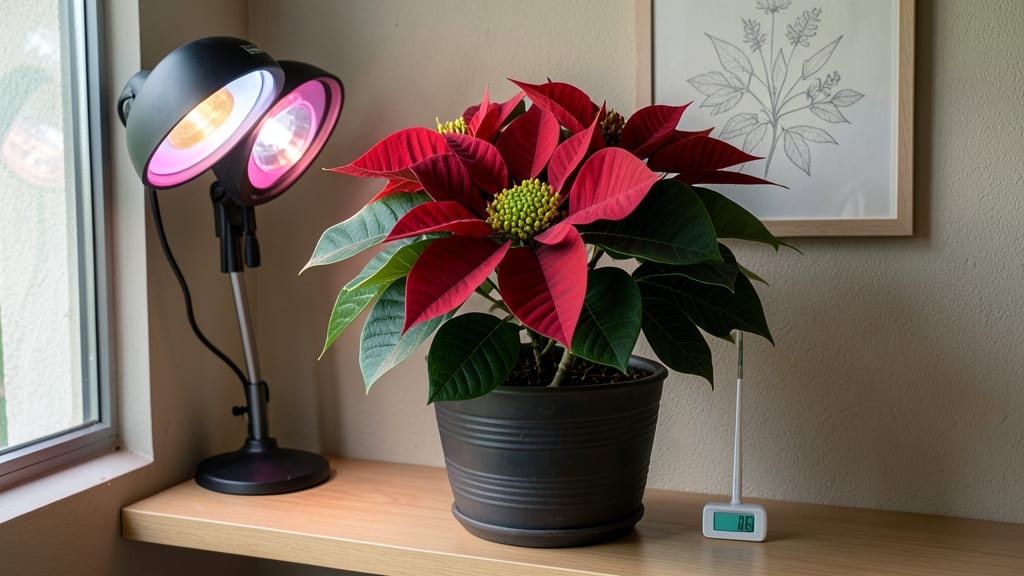
Getting your poinsettia to bloom again isn’t magic—it’s a light trick that turns those green stems into vibrant red bracts by Christmas. 🌟 I’ve turned my holiday plants from sad, leggy sticks into showstopping centerpieces year after year, and the secret starts 14 weeks before December 1st. Most people think poinsettias bloom because of cold weather, but it’s actually the darkness they need—14 hours of it, every single night.
The real game-changer is consistency. Skip one night of darkness, and you’ll reset the whole process. I use blackout curtains or move my plant to a closet after sunset, then bring it back in the morning.
Temperature matters too—keep it between 65-75°F during the day and 55-60°F at night. Too much heat or drafts throw off the blooming schedule, and suddenly you’ve got a plant that’s all stems and no color.
By mid-November, you’ll see buds forming—tiny yellow flowers that will transform into those bold red leaves.
The payoff is worth the patience: a plant that stays vibrant for weeks, not just a sad, wilting decoration by New Year’s. Even better, you’ll learn how to keep it alive for next year (most people kill them after the holidays, but it’s so easy to save them).
Here’s the best part: this method works for white, pink, or variegated poinsettias too. The only difference is the timing—start adjusting light conditions earlier if you want blooms by Thanksgiving instead. Once you master it, you’ll never buy another store-bought poinsettia again.
📚 In This Guide
- What you need
- Instructions
- Tips and common mistakes
- Wrapping up and next steps
What you need
- ● Poinsettia plant: A healthy, mature plant (preferably 3–5 years old for best results). Look for one with vibrant green leaves and no signs of pests or disease.
- ○ Grow lights or full-spectrum LED bulbs: 1–2 bulbs (60W–100W equivalent) for artificial light therapy. Optional: A timer switch to automate light cycles.
- ● Measuring tape or ruler: To ensure your plant receives the correct light distance (typically 12–18 inches from the light source).
- ● Well-draining potting mix: A high-quality, peat-based or cactus/succulent mix (avoid soggy soil!).
- ● Watering can with a fine rose: For gentle hydration—overwatering is the enemy of blooms!
- ○ Fertilizer (balanced or low-phosphorus): A 10-10-10 or 20-20-20 NPK ratio, diluted to half-strength. Optional: Slow-release granules for convenience.
- ● Pruning shears or clean scissors: Sharp and sterilized to trim leggy stems (if needed).
- ○ Thermometer (optional but helpful): To monitor temperatures, especially if using grow lights in a cool space.
- ● Consistent temperature: Keep your space between 65–75°F (18–24°C) during the day and 60–65°F (15–18°C) at night. Avoid drafts or sudden temperature swings!
- ● Humidity control: Aim for 40–50% humidity. Use a humidifier or place the pot on a tray of pebbles with water if your air is dry.
- ● Dark, cool space (for night cycles): A closet, cabinet, or room with blackout curtains for the 14-hour dark period.
Step-by-step instructions for poinsettia light management
Here’s how I coax vibrant blooms from poinsettias using light—no black magic, just science.
🌱 Step 1: Start with a Healthy Plant and Short Days
Poinsettias need 12 hours of darkness daily to trigger blooming, but they also need 12-14 hours of bright, indirect light during the day. Begin this cycle mid-September—that’s when I start my 14-hour light/10-hour dark routine. Place your plant in a spot with east or west-facing windows (south can be too intense). If natural light is weak, supplement with a grow light for 12 hours daily at 2-3 feet away. Avoid drafts—poinsettias hate temperature swings.
Watch for leggy growth (stems stretching toward light). If this happens, your plant isn’t getting enough light. Move it closer to the window or grow light. You’ll see compact, bushy growth when the light balance is right—this is your cue that the plant is happy and ready for the dark cycle.
⏰ Step 2: Enforce Strict 14-Hour Light/10-Hour Dark Cycles
This is the most critical step. From mid-September to early November, cover the plant with a black plastic bag, dark box, or even a blanket for 14 hours straight—starting 5 PM and ending at 7 AM. No peeking! Even a sliver of light will reset the blooming process. I use a timer-controlled grow light to automate the 12-hour light period, then drape a blackout curtain over the plant at the exact time. Consistency is key—miss a day, and you’ll delay blooms by weeks.
After 6-8 weeks of this routine, you’ll notice buds forming at the leaf axils (where stems meet leaves). If buds don’t appear, double-check your dark period—no light leaks. Once buds form, you can relax the strict schedule, but keep the plant in bright, indirect light for 8-10 hours daily to encourage vibrant color.
☀️ Step 3: Adjust Light and Care for Color Development
Once buds appear, shift to 12 hours of light daily (no need for the strict 14/10 cycle anymore). Place the plant in the brightest spot you have—south-facing windows or under grow lights work best. If light is weak, supplement with a full-spectrum LED bulb for 6-8 hours daily. Avoid direct sunlight, which can scorch the bracts (the red leaves). Keep temperatures between 65-75°F—cooler nights (<60°F) can actually deepened the red color, but avoid drafts.
Water only when the top inch of soil feels dry—overwatering causes yellow leaves and bud drop. I use room-temperature water and avoid getting water on the bracts. Fertilize lightly with a balanced, water-soluble fertilizer (10-10-10) every 2-3 weeks during this phase. You’ll see the bracts intensify in color as they mature—deep reds and pinks develop best with cool nights and bright days.
🪴 Step 4: Maintain Post-Bloom for Next Year’s Flowers
After the holidays, your poinsettia will drop its bracts and look sad—but don’t toss it! Prune the plant back by half its height in late January or early February, then fertilize and move it to a bright, sunny window. Resume the 14-hour light/10-hour dark cycle in mid-September, and you’ll get another round of blooms. I’ve had the same poinsettia bloom reliably for 5 years by following this routine. The key is patience and consistency—skipping steps won’t work, but once you nail the light cycle, it’s foolproof.
If you’re not keeping the plant long-term, enjoy its blooms for 6-8 weeks before it naturally declines. At that point, you can compost it or toss it—but why waste a good plant? With the right care, it’ll reward you next year.
Tips & tricks for perfect poinsettia blooms
Took me years of trial and error to perfect these light tricks—here's how to guarantee vibrant blooms every time.
The Light Factor: Position your poinsettia within 2-3 feet of an east or west-facing window during its 12-14 hour light period—this mimics natural sunlight patterns. I learned this the hard way after watching my plants stretch toward weak southern light, resulting in leggy, weak stems. For indoor setups, use a full-spectrum LED grow light on a timer for precise control. The key is consistent, bright indirect light that never exceeds 75°F—poinsettias hate heat stress.
Dark Cycle Discipline: That 14-hour darkness starting at 5 PM is non-negotiable. I use a blackout box with a timer to automate this—even a single flash of light can reset the blooming cycle. Place the box in a closet or dark corner where no ambient light sneaks in. If you're using a blanket, secure it tightly with clips or weights to prevent peeking. After 6-8 weeks of perfect darkness, you'll see those first buds appear at the leaf axils.
Temperature Secrets: While your poinsettia thrives between 65-75°F during the day, cooler nights (60°F) actually deepen the red pigmentation. I place mine near an unheated window at night during winter months. Avoid drafts completely—poinsettias are sensitive to temperature fluctuations, which can cause buds to drop prematurely. If your home stays consistently warm, consider moving the plant to a cooler basement area during the nighttime hours.
Watering Wisdom: The top inch of soil should feel dry before watering—overwatering is the #1 cause of yellow leaves and bud drop. I use room-temperature water to prevent shock to the roots. Never let water sit in the saucer, and avoid wetting the bracts (those colorful leaves) as this can cause brown spots. During the 6-8 week blooming phase, I reduce watering slightly to encourage stronger root development.
Pro Tips for Get A Poinsettia To Bloom
- Took me years of trial and error to perfect these light tricks—here's how to guarantee vibrant blooms every time.
- The Light Factor: Position your poinsettia within 2-3 feet of an east or west-facing window during its 12-14 hour light period—this mimics natural sunlight patterns.
- Dark Cycle Discipline: That 14-hour darkness starting at 5 PM is non-negotiable.
Frequently asked questions
about getting your poinsettia to bloom—because even the best gardeners need a little help! Here are answers to the most common questions to keep those vibrant red leaves shining bright.Why isn’t my poinsettia blooming this year?
Poinsettias need 12+ hours of darkness daily for 5–6 weeks to trigger blooming. If your plant isn’t flowering, check for light exposure—even a nightlight can disrupt the process! Also, ensure it’s healthy with proper watering and nutrients.
When should I start the dark treatment?
Begin the 12-hour darkness trick in early October for Christmas blooms. If you’re late, start as soon as possible—just know it may take longer. Consistency is key! Use a dark box, closet, or even a blanket over the plant during the night.
Can I use artificial light to help my poinsettia bloom?
Yes! Artificial light (like LEDs) can extend daylight, but turn it off at night to mimic darkness. Avoid warm or bright lights during the 12-hour dark period. A timer helps automate this—just remember: no light = blooms!
What if my poinsettia’s leaves turn yellow or drop?
Yellow leaves often mean overwatering or poor drainage. Let the top inch of soil dry out between waterings, and ensure the pot has drainage holes. Dropping leaves? It could be stress from light changes or temperature fluctuations—keep it 60–75°F and stable.
Can I make my poinsettia rebloom next year?
After blooming, prune it back in early spring, fertilize lightly, and repeat the dark treatment in fall. With patience, your poinsettia can become a year-round bloomer! Just avoid letting it go dormant—keep it slightly moist and in bright, indirect light.
Wrapping up and next steps
With the right light tricks and care, you’ve got everything you need to coax those stunning red bracts from your poinsettia!
Remember: consistency is key—12-14 hours of darkness for 6-8 weeks will work wonders. 🌟 Don’t let setbacks discourage you; even the pros tweak their approach until they find what works.
Ready to see your poinsettia shine brighter than ever? Start your 12-hour night cycle today and watch the magic unfold. And once those vibrant leaves appear? Share your success—because nothing beats the joy of a blooming poinsettia! 🎄✨