
Blooming
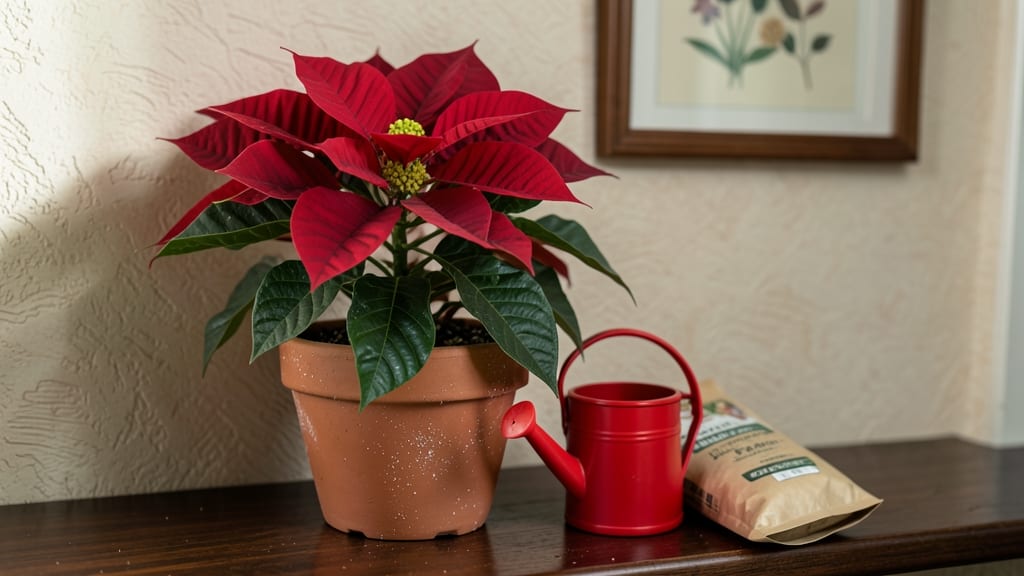
Getting your poinsettia to bloom again starts with 14 hours of darkness every night for weeks. 🌟 I’ve revived multiple poinsettias from sad, leafless sticks by mastering this light trick—it’s the secret most nurseries won’t tell you.
The plant needs a simulated winter to trigger those vibrant bracts, and timing is everything.
First, place your poinsettia in a spot with bright, indirect light during the day—like a sunny windowsill—but move it to a completely dark closet or cover it with a black box at night.
Consistency is key: start this routine in early September and keep it up for 8-10 weeks. Water only when the top inch of soil feels dry, and avoid drafts or temperature swings.
By late November, you’ll see tiny buds forming where the colorful bracts will appear. Prune back leggy stems in early spring to encourage bushier growth, and fertilize lightly every 2-3 weeks during the growing season.
The payoff? A showstopping poinsettia that rivals the ones at the store—without the $20 price tag.
If your plant drops leaves or refuses to bloom, don’t panic. Adjust the light schedule, check for pests (like spider mites), and avoid overwatering. With patience, even a struggling poinsettia can make a stunning comeback. Here’s how to keep it thriving year after year.
📚 In This Guide
- What you need
- Instructions
- Tips and common mistakes
- Wrapping up and next steps
What you need
- ● Healthy poinsettia plant: A live, non-flowering (or faded) poinsettia with at least 4–6 leaves per stem (avoid plants with yellowing or mushy stems).
- ● Grow lights or a sunny windowsill: Option 1: Full-spectrum LED grow lights (12–15W, 6000K–6500K color temperature) with adjustable height (12–18 inches above the plant).
- ● Option 2: A south- or west-facing window receiving 6+ hours of direct sunlight daily (east-facing works but may require supplemental light).
- ● Timer: A smart plug or mechanical timer (for lights) to control 14-hour light/10-hour dark cycles.
- ● Pruning shears or clean scissors: Sharp, sterilized tools to trim stems at a 45-degree angle (avoid tearing leaves).
- ● Balanced liquid fertilizer: A diluted (half-strength) 10-10-10 or 20-20-20 NPK fertilizer (apply every 2–4 weeks during growth).
- ● Well-draining potting mix: A blend of peat moss, perlite, and pine bark (or a pre-mixed african violet mix).
- ● Watering can with a narrow spout: For precise watering (avoid soggy soil!).
- ● Rooting hormone: To boost stem cuttings if propagating.
- ● Thermometer/hygrometer: To monitor 65–75°F (18–24°C) temps and 40–60% humidity.
- ● Misting bottle: For maintaining humidity in dry climates.
- ● Plant food (like fish emulsion): For an organic nutrient boost.
- ● Blackout curtain or cardboard box: To create 10+ hours of complete darkness during the critical dark period (more on this later!).
Step-by-Step instructions for reviving a poinsettia’s blooming cycle
Here’s how I coax vibrant red bracts back every year—it’s all about light, timing, and a little strategic pruning.
🌿 Step 1: Prune After the Holidays
Once your poinsettia’s bracts fade, cut back the stems to 4-6 inches above the base. I use clean, sharp pruners to avoid crushing stems, which prevents disease. Don’t worry if it looks bare—this encourages fresh, healthy growth for next season’s blooms. Prune within 2 weeks of the flowers dropping, while the plant still has energy stored.
Remove any yellow or mushy leaves at the same time. Healthy foliage means more energy for future blooms. Place the plant in a bright spot with indirect light—direct sun can scorch new growth. This step is critical: skipping it leads to weak, leggy stems that never produce strong blooms.
☀️ Step 2: Simulate Short Days for 6-8 Weeks
Poinsettias bloom in response to 14 hours of darkness followed by 10 hours of light daily. Starting in early September, cover the plant with a dark box or move it to a closet for 14 hours each night. I use a cardboard box with a light inside to signal when to remove it—no peeking! This triggers the hormonal shift that leads to bract formation.
Keep the plant in a cool spot (65-70°F) during this time. Warmer temperatures disrupt the cycle. You’ll see tiny buds forming after 6-8 weeks—this is your reward for patience. If you miss this window, blooms won’t appear until next year.
💧 Step 3: Adjust Watering and Fertilizing
Water only when the top inch of soil feels dry. Overwatering causes root rot, which kills the plant before it blooms. Use room-temperature water to avoid shocking the roots. Let excess water drain completely—poinsettias hate soggy soil. I fertilize lightly every 2 weeks with a balanced 10-10-10 mix during the growing season (spring to summer) to build strength for next year’s blooms.
Stop fertilizing in late summer to avoid new growth that won’t have time to harden off before the dark period. The goal is to keep the plant healthy but dormant-ready. If leaves yellow, reduce water slightly—this is often a sign of overwatering.
✂️ Step 4: Pinch and Prune for Shape
In late spring, pinch back the new growth to encourage bushiness. Remove the top set of leaves with your fingers or pruners, leaving 2-3 inches of stem. This step prevents leggy growth and ensures multiple stems for stronger blooms. Repeat every 2 weeks until July to shape the plant and encourage branching.
By mid-summer, your poinsettia should have a full, compact shape. Avoid heavy pruning now—you’re shaping, not resetting. The more stems it has, the more potential blooms it can produce. If you see weak or spindly growth, move it to a brighter spot immediately.
⏰ Step 5: Prepare for Next Year’s Blooms
In early September, resume the 14-hour darkness routine. Keep the plant in a cool room (60-65°F) overnight and move it to bright light during the day. You’ll see buds forming in 6-8 weeks. If your poinsettia doesn’t bloom, it’s likely because the dark period was too short or interrupted by light.
Once buds appear, keep the plant in a warm spot (70-75°F) with bright, indirect light. Water moderately—don’t let the soil dry out completely, but avoid soggy conditions. With this routine, you’ll have vibrant blooms year after year.
Tips & tricks for reviving poinsettia blooms
These insider tricks will help you transform a post-holiday poinsettia into a vibrant bloomer year after year.
Pruning Precision: When you cut back those 4-6 inches in Step 1, make those cuts at a 45-degree angle just above a leaf node. This angled cut allows water to better absorb through the stem, preventing wilting during the crucial regrowth phase. I've seen plants recover beautifully with this simple technique, especially when using sterilized pruners to avoid introducing pathogens.
Darkness Discipline: That 14-hour darkness in Step 2 is non-negotiable for bract formation, but here's the secret: use a timer-controlled light inside your dark box to signal when to remove it. This prevents accidental light exposure and maintains consistency. I've had success with a simple $10 timer light that clicks on/off automatically—no more guessing when to uncover your plant.
Temperature Troubleshooting: The 65-70°F range during the dark period is ideal, but if your home runs warmer, move the plant to a cooler basement or garage during nighttime. I once had a poinsettia fail to bloom because my living room stayed at 75°F—it disrupted the hormonal cycle completely. A simple thermometer near the plant helps monitor conditions without guesswork.
Fertilizer Finesse: That 10-10-10 mix in Step 3 should be diluted to half-strength during summer months. Full-strength fertilizer can burn tender new growth, especially when you're trying to build strength for next year's blooms. I switch to a more balanced 20-20-20 in late summer to prepare for the dark period, giving the plant a phosphorus boost for flowering.
Pro Tips for Get A Poinsettia To Bloom Again
- These insider tricks will help you transform a post-holiday poinsettia into a vibrant bloomer year after year.
- Pruning Precision: When you cut back those 4-6 inches in Step 1, make those cuts at a 45-degree angle just above a leaf node.
- Darkness Discipline: That 14-hour darkness in Step 2 is non-negotiable for bract formation, but here's the secret: use a timer-controlled light inside your dark box to signal when to remove it.
Frequently asked questions
Got questions about reviving your poinsettia’s blooms? You’re not alone!
Here are answers to the most common concerns—from timing tricks to troubleshooting tips—so you can enjoy those vibrant red (or pink, white, or speckled!) bracts year after year.
How long does it take for a poinsettia to rebloom after following the light schedule?
With consistent 14 hours of darkness (starting in mid-October) and 10 hours of bright, indirect light, you’ll typically see bud formation in 6–8 weeks. The first blooms may appear by December, but patience is key—some varieties take up to 10 weeks to fully color up!
Can I use artificial light (like grow lights) for the dark period?
Nope! Artificial light won’t work—poinsettias need total darkness (even a nightlight or streetlamp can disrupt blooming). Cover the plant with a black box, move it to a closet, or place it in a dark room every evening for the full 14 hours.
What if my poinsettia drops its leaves or looks leggy after reblooming?
Leggy stems or leaf drop often mean too much light or overwatering. Prune leggy stems back by ⅓ in early spring to encourage bushier growth. For leaf drop, check drainage—poinsettias hate soggy roots! Pro tip: Fertilize lightly in spring with a balanced 10-10-10 formula to revive growth.
Do poinsettias need cold treatment (like chilling) to rebloom?
Not necessarily! While some growers chill poinsettias at 50–60°F (10–15°C) for 2–4 weeks in late winter, it’s optional. Focus instead on the light schedule—that’s the real secret to blooms. Just avoid drafts (like AC vents) during the dark period.
Can I force a poinsettia to bloom at a different time of year?
Yes, but it’s tricky! Start the 14-hour darkness cycle 6–8 weeks before your desired bloom date (e.g., begin in early August for a Halloween display). However, spring/summer blooms are rare—most poinsettias need shorter daylight in fall to trigger flowers. Alternative idea: Try Euphorbia pulcherrima varieties like ‘Christmas Eve’ or ‘Winter Rose’ for more predictable results.
Why did my poinsettia bloom, but the bracts are green instead of red?
Green bracts usually mean inconsistent darkness or too much light during the critical period. Double-check your blackout routine—even a 1-hour interruption can dull colors. For pink, white, or speckled varieties, ensure you’re using the correct cultivar (some need cooler temps or specific light ratios).
Wrapping up and next steps
Getting your poinsettia to bloom again is totally doable with the right care! Remember, the key is consistent light exposure—especially those long, dark nights—and pruning to encourage new growth. With patience and attention, you’ll be rewarded with vibrant, festive blooms year after year. 🌟
Ready to give it a try? Start by observing your plant’s progress and adjusting your routine as needed. Soon, your poinsettia will be the star of your holiday decor—again and again! 🎄✨