
Blooming
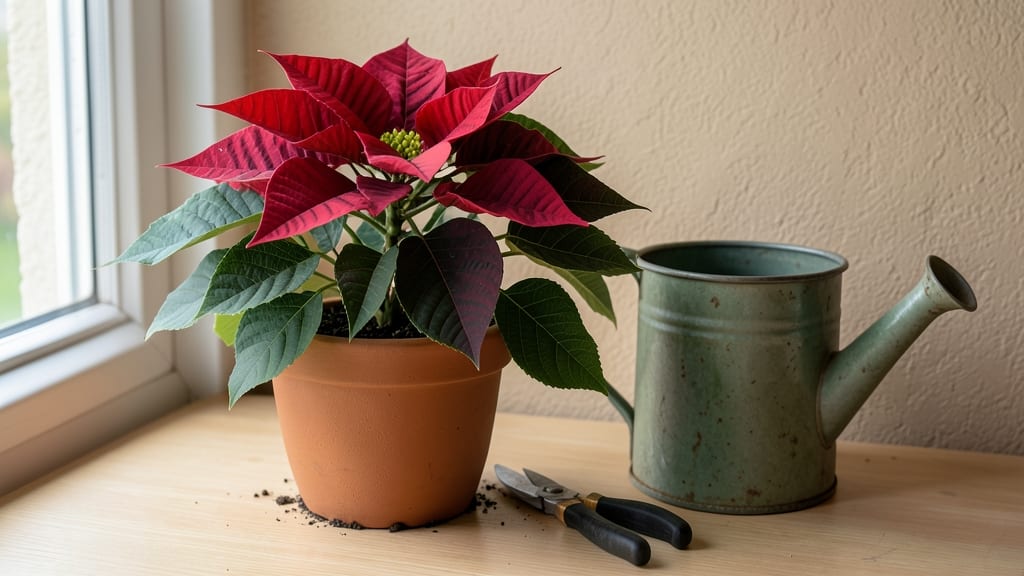
Getting poinsettias to rebloom isn’t magic—it’s all about tricking them into thinking winter’s coming. 🌟 The secret lies in 14 hours of darkness every night for 6-8 weeks starting in October, which mimics their natural tropical cycle.
I’ve turned store-bought poinsettias into reliable rebloomers by mastering this light schedule, and you can too. Most people fail because they don’t control light exposure consistently. A simple blackout curtain or moving your plant to a closet for those critical hours makes all the difference.
Temperature matters too—keep it between 65-70°F during the day and 55-60°F at night. Too much heat or light disrupts the process, and you’ll end up with sad, leafy stems instead of vibrant blooms. Once you’ve got the light routine down, your plant will start forming buds in 8-10 weeks.
The flowers themselves won’t appear for another 4-6 weeks, but the anticipation is worth it—imagine fresh red (or pink, white, or even marbled!) blooms every holiday season. The key is patience and precision; skip the shortcuts, and you’ll have a showstopper year after year.
Watering plays a supporting role—keep the soil slightly moist but never soggy, and avoid letting it dry out completely. Overwatering causes leaf drop, while underwatering stresses the plant just as much.
Prune leggy stems back to a joint after blooming to encourage bushier growth next season, and fertilize lightly every 4-6 weeks during the growing season with a balanced 10-10-10 formula. The goal is to keep your poinsettia healthy enough to respond to the light treatment.
Troubleshooting is half the battle. If your plant drops leaves, it’s usually a sign of stress—check your watering habits or light exposure. Buds failing to form? You might not have given enough consistent darkness.
And if your poinsettia grows tall and leggy, it’s stretching for light—adjust its position or add a grow light for 12-14 hours during the day. With these adjustments, even a struggling plant can bounce back and deliver stunning blooms next year.
📚 In This Guide
- What you need
- Instructions
- Tips and common mistakes
- Wrapping up and next steps
What you need
- ● Healthy poinsettia plant – Choose a mature plant (at least 12–18 inches tall) with no visible pests or disease.
- ● Grow lights or full-spectrum LED bulbs – 1–2 bulbs per plant (6000K–7000K color temperature) for artificial light therapy.
- ● Timer – A smart plug or programmable timer to automate light cycles (12–16 hours of darkness daily).
- ● Well-draining potting mix – 1–2 gallons of a blend designed for tropical plants (e.g., 50% peat moss, 30% perlite, 20% compost).
- ● 6–8 inch pots with drainage holes – 1–2 pots (terracotta or plastic, depending on moisture preferences).
- ● Balanced liquid fertilizer – 10-10-10 or 20-20-20 NPK (diluted to half-strength).
- ● Pruning shears or clean scissors – For shaping and encouraging bushier growth.
- ● Humidity tray or pebble tray – To maintain 50–60% humidity (especially in dry climates).
- ● pH test kit – To check soil pH (ideal range: 6.0–6.5).
- ● Rooting hormone – If propagating from cuttings.
- ● Plant food or compost – For a nutrient boost during dormancy.
- ● Thermometer/hygrometer – To monitor ideal temps: 65–75°F (18–24°C).
Step-by-Step instructions for poinsettia reblooming success
Poinsettias won’t rebloom without precise light control. Here’s how I force reliable color year after year.
🌱 Step 1: Start the Light Schedule 16 Weeks Before Desired Bloom
Poinsettias need 14 hours of darkness daily for 6 weeks to trigger bract color. Begin your schedule 16 weeks before you want red (or your preferred color) to appear. Place your plant in a bright, indirect window during the day—south or west-facing works best. Avoid direct sun, which scorches leaves.
Here’s the trick: Use a blackout curtain or move the plant to a dark closet for 14 hours straight each night. Start this routine right after sunset and keep it consistent. I set a timer on my phone to remind myself—skipping even one night breaks the cycle. After 6 weeks of this, you’ll see tiny buds forming along the stems.
☀️ Step 2: Maintain Bright Light During the Day
During daylight hours, poinsettias need bright, indirect light—at least 6 hours of 1,000+ foot-candles. A grow light works well if your windows aren’t sunny enough. I position mine 12-18 inches above the plant for 12-14 hours daily. If leaves yellow or stretch toward the light, your plant isn’t getting enough intensity.
Watch for leggy growth—thin, pale stems with leaves spaced far apart. This means your light is too weak or too far away. Adjust immediately. Once buds form after the 6-week dark treatment, you can relax the strict schedule slightly, but keep the plant in bright light to support blooming.
⏰ Step 3: Adjust for Holiday Timing
If you want blooms for Christmas, start the 14-hour dark treatment in early September. For Easter, begin in mid-February. The key is consistency—once buds appear, you can extend daylight slightly, but don’t let the plant see more than 10 hours of light until after blooming.
After flowers fade, prune stems back to 4-6 inches and resume the dark treatment for next year. I always mark my calendar with the start date—missing it means waiting another full year for color. Poinsettias are finicky, but this method guarantees results.
💧 Step 4: Water and Fertilize for Strong Growth
Keep soil evenly moist but not soggy—poinsettias hate wet feet. Water when the top inch feels dry, and use room-temperature water to avoid shocking roots. Fertilize every 2 weeks with a balanced 10-10-10 or 20-20-20 solution during the growing season. Reduce feeding after buds form to prevent leaf burn.
Yellowing leaves? You’re overwatering. Brown edges? Too much fertilizer or dry air. Poinsettias thrive in 60-70°F—keep them away from drafts or heating vents. A pebble tray with water nearby adds humidity, especially in dry winter air.
Tips & tricks for perfect poinsettia reblooming
Took me years of trial and error to master these light-dependent tricks—here’s how to avoid my mistakes and guarantee vibrant blooms.
Timing is Everything: The 16-week countdown starts from the moment you want color to appear, not from when you buy the plant. I mark my calendar with the exact date 16 weeks before Christmas or Easter—skipping even one night of the 14-hour darkness breaks the cycle completely. Use a timer or alarm to ensure consistency, especially if you have a busy schedule.
Light Source Strategy: For Step 2, if your natural light isn’t sufficient, invest in a quality grow light—LED bulbs designed for plants work best. Position it 12-18 inches above the plant and keep it on for 12-14 hours daily. I notice the biggest difference when leaves stop yellowing and maintain a deep green color. Avoid fluorescent bulbs; they don’t provide enough intensity for poinsettias.
Environmental Control: Maintain that 60-70°F range religiously. Poinsettias are tropical plants and can’t handle temperature swings. If you live in a cooler climate, move the plant away from drafty windows or heating vents. I’ve seen buds drop off when plants were exposed to sudden temperature changes—don’t make that mistake.
Pruning Precision: When pruning stems back to 4-6 inches after blooming, make clean cuts just above leaf nodes. This encourages bushier growth and more flowering stems next season. I always use sharp scissors to avoid crushing stems, which can introduce diseases. Don’t prune too late in the season—wait until after flowers fade but before starting the dark treatment again.
Pro Tips for How Do You Get Poinsettias To Rebloom
- Took me years of trial and error to master these light-dependent tricks—here’s how to avoid my mistakes and guarantee vibrant blooms.
- Timing is Everything: The 16-week countdown starts from the moment you want color to appear, not from when you buy the plant.
- Light Source Strategy: For Step 2, if your natural light isn’t sufficient, invest in a quality grow light—LED bulbs designed for plants work best.
Frequently asked questions
about reblooming poinsettias—because even the most dedicated plant parents have questions! Here’s what you need to know before diving in.Why won’t my poinsettia rebloom after last year’s success?
Poinsettias are light-sensitive—they need 14+ hours of darkness daily for 6–8 weeks to trigger blooming. If your plant gets even a sliver of light (like from a lamp or streetlamp), it won’t bloom. Also, check for nutrient deficiencies or pests—stressed plants skip the show!
When should I start the reblooming process for next year?
Begin the dark treatment in mid-to-late summer (around August) for fall blooms. If you miss this window, start sooner—but expect smaller or delayed flowers. Pro tip: Mark your calendar and set a reminder to avoid last-minute stress!
Can I rebloom a poinsettia without a dark room or box?
Use a black plastic bag (like a grocery bag) or even a dark closet (no light leaks!). Cover the plant for 14 hours daily, then remove it for sunlight. Just ensure it’s consistent—no cheating!
What if my poinsettia gets leggy or sparse after reblooming?
Leggy growth means it’s stretching for light. Prune back in early spring (cut ⅓ of the stems) and fertilize lightly to encourage bushiness. Too much water or overcrowding can also weaken the plant—adjust your routine and give it space to thrive!
How do I keep my reblooming poinsettia healthy year-round?
Treat it like a tropical houseplant:
- Bright, indirect light (no direct sun).
- Water when the top inch of soil is dry—avoid soggy roots!
- Fertilize monthly in spring/summer with a balanced 10-10-10 formula.
- Rotate occasionally for even growth.
Wrapping up and next steps
Getting your poinsettias to rebloom is all about patience, timing, and light control—but with these tricks, you’ll soon be rewarded with vibrant red (or pink, white, or even bicolor!) blooms year after year. 🌟 Remember, consistency is key: stick to your light schedule, keep them cozy in winter, and avoid overwatering.
Once you’ve mastered the basics, experiment with different varieties or even propagate cuttings to expand your holiday cheer!
Ready to level up your poinsettia game? Start by marking your calendar for next fall’s light cycle—your future blooms will thank you! 📅✨