
Blooming
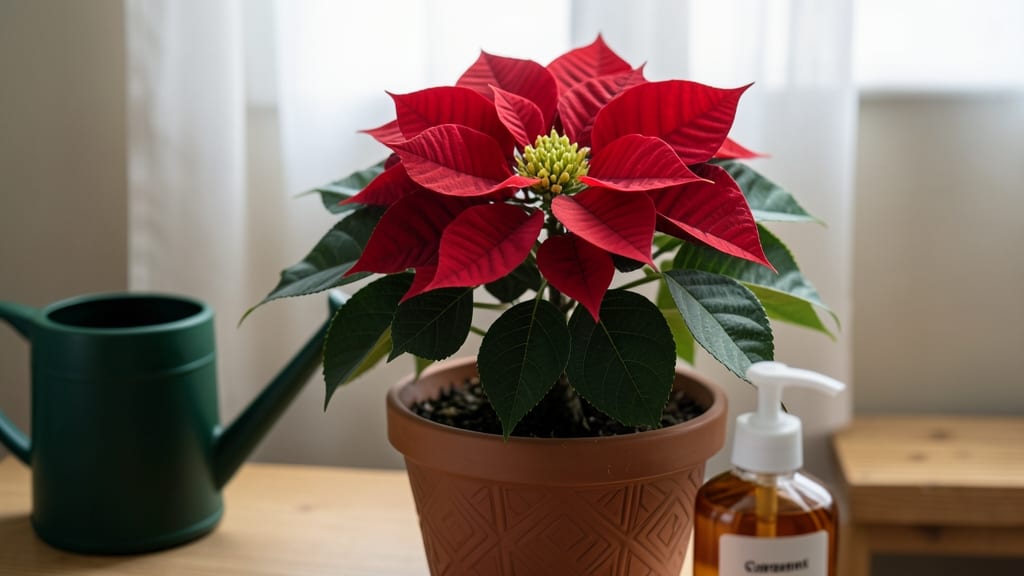
How do you make a poinsettia rebloom? The answer is simple—no magic, just science. 🌟 The secret lies in tricking the plant into thinking winter has arrived, and it starts with 14 hours of darkness every night for six weeks straight.
I’ve made this mistake twice: skipping the darkness trick or giving up too soon, only to watch my poinsettia turn into a sad, leggy green bush instead of a vibrant holiday centerpiece.
The key is patience and consistency. You’ll need a dark closet, a box, or even a sheet draped over the plant (no peeking light!). After six weeks of this routine, your poinsettia will reward you with those signature red bracts—just in time for the holidays.
Watering should stay light but consistent, and a balanced fertilizer every two weeks keeps it strong without overfeeding.
Once the buds form, you’ll know you’ve done it right—bright red, pink, or even white depending on your variety. The real payoff? A plant that’s healthy enough to rebloom year after year, saving you money and giving you that cozy holiday feeling every December.
Just don’t let it dry out or get too cramped, or those buds might drop faster than you can say "mistletoe."
This trick works for any poinsettia, whether it’s a classic red or a trendy marbled white. Start now, and by Thanksgiving, you’ll have a plant that’s the star of your seasonal decor—no store-bought pot needed. Here’s how to make it happen without the guesswork.
📚 In This Guide
- What you need
- Instructions
- Tips and common mistakes
- Wrapping up and next steps
What you need
- ● Healthy poinsettia plant (preferably from last year, with at least 4–6 leaves)
- ● Well-draining potting mix (1–2 gallons, depending on pot size)
- ● 6–8 inch pot (if repotting; ensure drainage holes are present)
- ● Balanced liquid fertilizer (20-20-20 or similar, diluted to half-strength)
- ● Watering can or spray bottle (for gentle hydration)
- ● Dark, enclosed space (e.g., closet, dark box, or tent—no light exposure)
- ● Timer or alarm (to track 14-hour darkness periods)
- ● Grow lights (12–14 hours of bright light daily after dark treatment)
- ● Humidity tray (pebbles + water to boost moisture levels)
- ● Plant food or slow-release fertilizer (for extra nutrients)
- ● Thermometer (to monitor temps between 65–75°F)
- ● Decorative pot cover (for a polished dark-treatment setup)
Step-by-Step instructions for making a poinsettia rebloom
Here's the foolproof method I use every year to coax vibrant red blooms right before the holidays.
🌱 Step 1: Start with a Healthy Plant
Choose a poinsettia with bright, green leaves and no visible pests or yellowing. These plants are sensitive to stress, so avoid buying ones with wilted or brown foliage—they won't rebloom. I always pick mine in late summer or early fall, giving them 8-10 weeks to recover and prepare for the darkness treatment.
Trim any dead or damaged leaves immediately with clean, sharp scissors. This prevents disease and helps the plant focus its energy on new growth. Place your poinsettia in a spot with bright, indirect light—like an east-facing window or under a grow light—for the first week. Too much direct sun now will scorch the leaves before they're ready for the reblooming process.
⏰ Step 2: Apply the Darkness Trick
The secret to reblooming is 14 hours of complete darkness each night for 6-8 weeks. Start this treatment in early October to have blooms by Christmas. Here's how I do it: cover the plant with a black plastic bag or place it in a dark closet from 5 PM to 9 AM daily. No peeking! Even a tiny bit of light will disrupt the process.
During the day, keep the plant in bright, indirect light for 10-12 hours. You'll notice new growth emerging as small bracts (the colorful leaves) form. If your home gets short winter days, supplement with a grow light for 14 hours total light daily. Watch for the first signs of color—tiny red or pink buds—that tell you the treatment is working.
💧 Step 3: Maintain Ideal Conditions
Water your poinsettia when the top inch of soil feels dry, but never let it sit in soggy soil. Overwatering causes root rot, which kills the plant before it blooms. I use room-temperature water to avoid shocking the roots. Keep the plant in a spot with 60-70°F temperatures—avoid drafts, heat vents, or cold windowsills.
Fertilize lightly every 2-3 weeks with a balanced, water-soluble fertilizer diluted to half strength. Too much fertilizer causes salt buildup in the soil, which burns the roots. You'll see the plant respond with stronger stems and more vibrant bracts. If leaves start yellowing, flush the soil with water to remove excess salts.
☀️ Step 4: Transition to Holiday Display
Once the bracts reach their full color (usually 8-10 weeks after starting darkness treatment), stop the nightly darkness and move the plant to a bright, sunny window or under grow lights. This helps maintain the color and keeps the blooms looking fresh. Avoid moving the plant too much—poinsettias are sensitive to location changes and may drop buds if stressed.
Keep the soil lightly moist but not soggy, and continue fertilizing every 3-4 weeks at half strength. Your poinsettia should now be ready for the holidays, with vibrant bracts that last for 6-8 weeks. If you want to save the plant for next year, prune it back by half in late winter and repeat the darkness treatment.
Tips & tricks for perfect poinsettia reblooming
Real talk: The darkness trick might sound tricky, but these small adjustments make all the difference between holiday disappointment and showstopping color.
Timing Secret: In Step 2, when you start the 14-hour darkness treatment, mark your calendar for exactly 6-8 weeks from that date. I use a sticky note on my fridge as a visual reminder—this ensures you don't accidentally skip a night or extend the treatment past the optimal time. The first week of darkness is when your poinsettia makes the biggest commitment to blooming, so don't skip it!
Lighting Strategy: For the 10-12 hours of daylight in Step 2, position your plant within 12 inches of a bright, indirect light source. I've found that east-facing windows work best because they provide gentle morning light without the harsh afternoon sun. If using grow lights, place them 6-12 inches above the plant and keep them on for exactly 14 hours total daily—this mimics natural daylight cycles perfectly.
Temperature Matters: Maintaining that 60-70°F range in Step 3 is crucial, especially if you have drafty windows or heat vents nearby. I keep my poinsettia on a stable bookshelf away from exterior doors—temperature fluctuations can shock the plant and cause buds to drop. If your home gets chilly at night, consider moving it to a warmer room during the darkness treatment.
Visual Cues: In Step 4, when transitioning to holiday display, watch for the bracts to develop a slight sheen—this indicates they're fully colored and ready to be showcased. I also check for tiny pink buds forming along the stems; these are your first sign that the reblooming process succeeded. Once you see these, you're just days away from vibrant holiday color!
Pro Tips for How Do You Make A Poinsettia Rebloom
- Real talk: The darkness trick might sound tricky, but these small adjustments make all the difference between holiday disappointment and showstopping color.
- Timing Secret: In Step 2, when you start the 14-hour darkness treatment, mark your calendar for exactly 6-8 weeks from that date.
- Lighting Strategy: For the 10-12 hours of daylight in Step 2, position your plant within 12 inches of a bright, indirect light source.
Frequently asked questions
How long does it take for a poinsettia to rebloom?
A poinsettia typically needs 8–10 weeks of consistent darkness (6–8 hours per night) to rebloom. Start the "darkness trick" in early fall (around late August to early September) for vibrant blooms by Christmas. Patience is key—rush it, and you might delay or weaken the process!
Can I use artificial light for the darkness trick?
Yes, but only if it’s truly dark—no peeking! Use a dark closet, box, or even a blackout curtain. Artificial light (like a nightlight) can trick the plant into thinking it’s daytime. For best results, cover the plant completely with a dark cloth or move it to a pitch-black space for those critical hours.
What if my poinsettia loses leaves or looks sad?
Don’t panic! Dropping leaves or wilting often happens during the reblooming process. Ensure your plant gets bright, indirect light during the day and consistent watering (let the top inch of soil dry out). If leaves turn yellow, it might need more light or less water. Trim dead leaves to encourage new growth.
Can I rebloom a poinsettia bought in spring?
Store-bought poinsettias (even non-holiday ones) can rebloom with the right care. Start the darkness trick as soon as you bring it home in late summer/early fall. Just avoid fertilizing until you see new growth—overfeeding can stress the plant.
Why isn’t my poinsettia blooming after the darkness trick?
Common reasons include inconsistent darkness (even a flashlight can disrupt it), poor light (they need bright, indirect light), or overwatering. Check for pests too! If buds form but drop, it might need cooler temps (60–70°F) or less water. Try again next year with adjustments!
Wrapping up and next steps
Reblooming your poinsettia is all about patience, consistency, and a little darkness magic! 🌱 By following the 12-hour darkness rule, adjusting light exposure, and keeping your plant happy with proper care, you’ll enjoy vibrant blooms year after year.
Don’t let past struggles discourage you—every gardener starts somewhere, and your poinsettia will thank you with stunning color!
Ready to transform your green thumb into a holiday legend? Start your reblooming journey today—your future festive centerpiece is waiting! 🎄✨