
Blooming
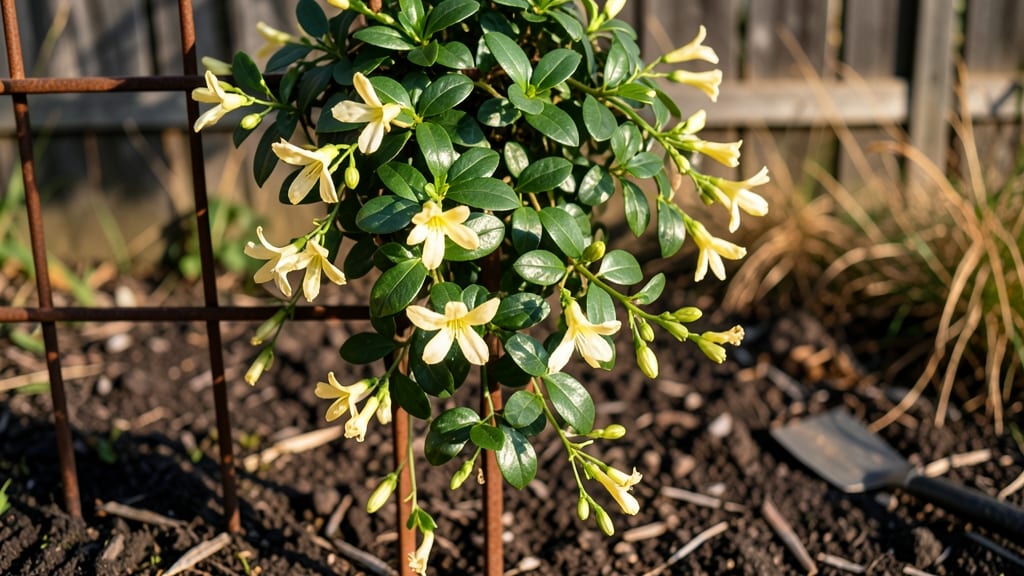
A blooming jasmine plant transforms your yard into a fragrant sanctuary at dusk. 🌿 I’ve grown jasmine for years, and the secret to those intoxicating evening blooms lies in sunlight, soil, and a little patience—no fancy tricks required.
The first time I smelled my plant’s flowers open under the moonlight, I knew I’d found my new favorite garden obsession.
Jasmine thrives in 6-8 hours of sunlight daily, well-draining soil, and a climate that mimics its tropical roots. Most varieties—like the classic Jasminum officinale or the delicate Jasminum sambac—need regular watering (keep soil moist but never soggy) and a balanced fertilizer every 6-8 weeks during growing season.
The key? Pruning after blooms fade to encourage bushier growth and more flowers next season.
By summer’s end, you’ll have clusters of creamy-white or pale yellow blooms that perfume the air as night falls. The scent is so rich, neighbors will ask where it’s coming from—even if your plant is just a small pot on your patio.
With the right care, your jasmine will reward you with years of effortless fragrance and lush, climbing vines.
Works for containers, trellises, or ground cover—just adjust pruning to control size. Here’s how to keep it thriving all season long.
📚 In This Guide
- What you need
- Instructions
- Tips and common mistakes
- Wrapping up and next steps
What you need
- ● Jasmine plant: Choose between Jasminum officinale (common jasmine) or Jasminum sambac (Arabian jasmine). Start with a healthy nursery plant or propagate from cuttings.
- ● Well-draining potting mix: 1 gallon (or 3.8 liters) of a blend designed for flowering plants (e.g., 60% peat moss, 20% perlite, 20% compost).
- ● Pot or garden space: Container: 12–16 inches (30–40 cm) in diameter with drainage holes (terracotta or ceramic preferred).
- ● Garden bed: Full sun to partial shade, with loose, fertile soil (amend with compost if needed).
- ● Fertilizer: Balanced, water-soluble fertilizer (10-10-10 or 20-20-20), diluted to half-strength.
- ● Watering can or hose: With a gentle spray nozzle for even moisture.
- ● Pruning shears: Sharp, sterilized shears for trimming (or a clean knife in a pinch).
- ○ Support structure (optional but helpful): Trellis, obelisk, or sturdy stakes for climbing varieties.
- ● Small mesh netting for sprawling types like Jasminum sambac.
- ● Gloves: Protective gardening gloves to avoid sap irritation.
- ● Mulch: Organic mulch (e.g., shredded bark) to retain moisture and suppress weeds.
- ● pH test kit: To ensure soil pH is between 6.0–7.0 (jasmine thrives in slightly acidic to neutral soil).
- ○ Slow-release granules: Optional 4–6 month fertilizer tablets for convenience.
- ● Spray bottle: For misting leaves in dry climates (jasmine loves humidity!).
Step-by-step guide to cultivating a fragrant blooming jasmine plant
Here's how to coax those signature evening-scented blooms from your jasmine vine.
🌱 Step 1: Select and Prepare the Right Growing Conditions
Jasmine thrives in partial shade to full sun, with at least 4-6 hours of morning sunlight and afternoon shade in hot climates. I always choose a location where the plant will receive gentle afternoon breezes—this mimics its natural tropical habitat and encourages robust blooming. The ideal temperature range is 65-85°F, with winter protection if temperatures drop below 50°F.
For container growing, select a pot with drainage holes that's at least 12 inches deep—jasmine has a deep root system. Fill the bottom third with gravel or perlite for drainage. You'll see the difference in growth when roots have room to spread and excess moisture drains away.
☀️ Step 2: Plant with Proper Spacing and Support
Set your jasmine plant 3-5 feet from any structure if growing against a trellis or wall—this gives the vine room to climb and prevents overcrowding. I always install a sturdy trellis or arbor before planting, using 3/8-inch galvanized wire or wooden slats spaced 6 inches apart. The vine will twine naturally, but the support prevents breakage when heavy with blossoms.
Dig a hole twice as wide as the root ball but no deeper. Gently loosen the roots if they're circling and position the plant so the top of the root ball sits 1 inch below soil level. Backfill with native soil mixed with compost to encourage root establishment. Water deeply to settle the soil and remove air pockets.
💧 Step 3: Establish a Consistent Watering and Fertilizing Routine
Jasmine needs 1-1.5 inches of water weekly, but the key is consistency—never let the soil dry out completely. I water at the base in the morning, allowing the top 2 inches of soil to dry slightly between waterings. Overhead watering can promote fungal diseases, so I avoid wetting the foliage. You'll know your watering is right when the soil feels slightly damp 2 inches down.
Feed your jasmine every 4-6 weeks during growing season with a balanced 10-10-10 fertilizer or a slow-release granular formula. I always mix fertilizer into the top 2 inches of soil rather than applying it to the surface—this prevents root burn. Reduce feeding in late summer to encourage blooming rather than leafy growth.
✂️ Step 4: Prune Strategically for Maximum Blooms
Prune jasmine immediately after flowering to shape the plant and encourage next year's blooms. I use clean, sharp pruners to cut back 1/3 of the previous year's growth, focusing on leggy stems and crossing branches. Always make cuts just above a leaf node or outward-facing bud—this directs new growth outward rather than inward.
Remove any dead, diseased, or weak stems completely. You'll see new growth emerge within 2-3 weeks if pruning was done correctly. Avoid heavy pruning in late summer—this can prevent next year's flowers from forming. Light shaping in early spring is better for encouraging abundant blooming.
🌿 Step 5: Encourage Nighttime Fragrance Through Seasonal Care
The secret to jasmine's signature evening scent is proper seasonal care. In late summer, reduce watering slightly and stop fertilizing entirely. This mimics the plant's natural preparation for dormancy and triggers flower bud formation. I also increase airflow around the plant by trimming nearby foliage—this prevents humidity buildup that can reduce fragrance intensity.
If growing in a container, move it to a cooler location at night during summer heatwaves. Jasmine blooms most heavily when daytime temperatures are warm but nights are cooler. You'll notice the strongest fragrance on warm evenings with gentle breezes—this is when the plant's natural pollinators are most active.
Tips & tricks for perfect blooming jasmine plants
Here's what nobody tells you about transforming your jasmine into a fragrant nighttime masterpiece.
Location is Everything: That 4-6 hours of morning sunlight is non-negotiable for robust blooming—it kickstarts the plant's energy production for evening fragrance. I've found that positioning near a south-facing window (north-facing in southern hemisphere) maximizes those critical sunlight hours while still allowing afternoon shade. The gentle breezes you'll create by placing it near an open window or balcony also help distribute that intoxicating scent throughout your space.
Root System Secret: The 12-inch deep pot requirement isn't just about space—it's about creating the right oxygen-to-water ratio in the root zone. I always add a handful of mycorrhizal fungi to the planting mix (available at garden centers) when repotting—this symbiotic relationship helps roots absorb nutrients more efficiently, which translates directly to more abundant blooms. Think of it as giving your jasmine a natural growth booster.
Pruning Precision: When you're cutting back that 1/3 of last year's growth in Step 4, focus on making clean cuts at a 45-degree angle just above an outward-facing bud. This angled cut prevents water from pooling on the stem, which could lead to rot. I also recommend sterilizing your pruners with rubbing alcohol between cuts to prevent spreading any potential diseases that could compromise your plant's health and flowering potential.
Seasonal Transition Strategy: That late-summer watering reduction isn't about depriving your plant—it's about signaling dormancy. I've noticed the most dramatic fragrance increases when I combine this with a 10% reduction in evening watering (if growing in containers) and moving the plant to a location that experiences a 10-15°F temperature drop at night. This mimics the plant's natural tropical behavior where warm days and cooler nights trigger heavy blooming.
Pro Tips for Blooming Jasmine Plant
- Here's what nobody tells you about transforming your jasmine into a fragrant nighttime masterpiece.
- Location is Everything: That 4-6 hours of morning sunlight is non-negotiable for robust blooming—it kickstarts the plant's energy production for evening fragrance.
- Root System Secret: The 12-inch deep pot requirement isn't just about space—it's about creating the right oxygen-to-water ratio in the root zone.
Frequently asked questions
Got questions about nurturing your blooming jasmine plant? You’re not alone! Here are answers to the most common queries—so you can enjoy that dreamy, evening-scented magic without the guesswork.
How often should I water my jasmine plant?
Water your jasmine when the top 1-2 inches of soil feel dry—usually every 7-10 days, depending on humidity and climate. Overwatering is a common killer, so always use a pot with drainage holes. Pro tip: Stick your finger in the soil to check moisture levels!
Why isn’t my jasmine blooming?
Jasmine needs full sun (6+ hours daily) and warmth (60°F+) to bloom. If it’s indoors, place it near a south-facing window. Prune leggy growth in early spring, and fertilize lightly with a balanced bloom booster every 4-6 weeks during growing season. Patience is key—some varieties take 2-3 years to flower!
Can I grow jasmine in a pot indoors?
Just choose a 10-15 gallon container with drainage and well-draining potting mix (like cactus/succulent blend). Place it near a bright window or under grow lights. Dwarf varieties like Jasminum officinale ‘Revolution’ are perfect for indoor spaces. Bonus: Rotate the pot weekly for even growth!
What pests should I watch for on jasmine plants?
Keep an eye out for aphids, spider mites, and whiteflies. If you spot sticky residue or tiny webs, spray with neem oil or insecticidal soap. For severe infestations, isolate the plant and repeat treatment every 5-7 days. Healthy jasmine with good airflow resists pests naturally!
How do I prune jasmine for more flowers?
Prune in early spring (before new growth) to shape the plant and encourage blooms. Cut back 1/3 of the oldest stems to the nearest leaf node, and trim any dead or crossing branches. Avoid heavy pruning in fall—it can delay spring flowering. Goal: Aim for an open, airy shape for better airflow and light penetration!
What’s a good alternative if I can’t grow jasmine?
If your climate is too cold or dry, try mock orange (Philadelphus), gardenia, or night-blooming jasmine (Cestrum nocturnum) for similar fragrance. For indoor options, stephanotis or jasmine-scented pelargonium (like ‘Citronella’) are low-maintenance doubles!
Wrapping up and next steps
Growing a blooming jasmine plant is like inviting nature’s own perfume into your home—its velvety petals and intoxicating scent are pure magic. 🌙✨ Whether you’re a seasoned gardener or just starting, this fragrant beauty rewards patience with evenings filled with natural elegance.
Now that you’re armed with the right materials and answers to common questions, it’s time to roll up your sleeves and watch your jasmine thrive.
Ready to take the next step? Start with a healthy cutting or seedling, give it love (and maybe a little moonlight!), and soon, your garden—or windowsill—will be alive with the sweetest nighttime aroma. Happy planting! 🌱💚