
Blooming
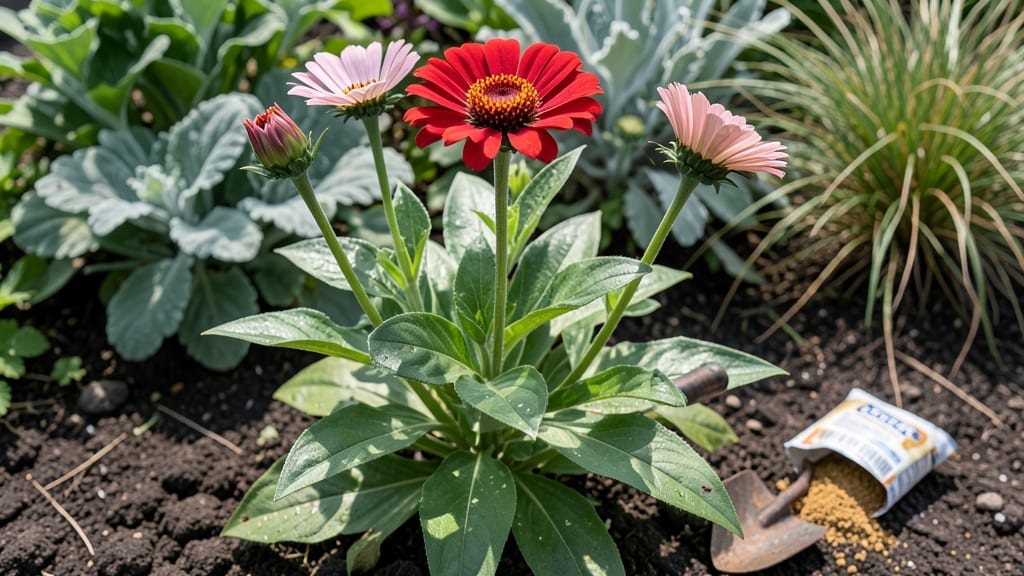
Watch zinnias transform from tiny sprouts into vibrant blooms that last all summer. 🌻 Each stage reveals a different kind of beauty—from delicate buds to bold, papery flowers—and understanding them helps you coax more blooms from your plants all season long.
I’ve tracked every phase in my garden, and the secret to long-lasting zinnias lies in recognizing when to prune, deadhead, and support their growth.
The first stage begins with 1-2 inch seedlings pushing through the soil, followed by 3-4 inch rosettes of fuzzy leaves. Then come the budding phase, where tight green clusters form—these will open into 2-4 inch blooms in just 7-10 days if your zinnias get full sun and consistent water.
The color shifts from pale green to bright pink, red, or yellow as the petals unfurl, revealing their layered centers.
Once blooms open, they last 7-10 days before fading, but deadheading spent flowers 2-3 times a week triggers new blooms in 5-7 days. Prune leggy stems back to a leaf node to encourage bushier growth, and you’ll see second waves of flowers by late summer.
The key is keeping plants healthy—zinnias reward good care with nonstop color from June until frost.
Even the final stage—when zinnias set seed—has its charm. Let a few flowers go to seed to feed pollinators, then collect the seeds for next year’s garden.
With the right care, zinnias give you months of blooms instead of just a single burst, making them one of the most generous annuals in the garden.
📚 In This Guide
- What you need
- Instructions
- Tips and common mistakes
- Wrapping up and next steps
What you need
- ● Zinnia seeds: Choose heirloom or hybrid varieties (e.g., 'Benary’s Giant,' 'Profusion'). Buy 20–50 seeds per plant, depending on desired density.
- ● Well-draining potting mix: 10–15 lbs for containers or 1 cubic yard for in-ground planting. Opt for a blend with 50% compost for nutrient-rich soil.
- ● Containers or garden bed: For containers: 5–7 inch pots (1 plant per pot) or 12-inch wide troughs (3–5 seeds per trough).
- ● For in-ground: Full sun (6+ hours/day) and space 12–18 inches apart for mature plants.
- ● Slow-release fertilizer: 1 lb per 100 sq ft (e.g., 10-10-10 or organic options like fish emulsion).
- ● Planting tools: Hand trowel or transplanting spade.
- ○ Gloves (optional but recommended for soil handling).
- ● Watering supplies: Watering can with 1-gallon capacity or a hose with a gentle spray nozzle.
- ○ Drip irrigation kit (optional for consistent moisture).
- ● Pruning shears: Sharp, bypass-type shears for deadheading and shaping.
- ○ Stakes or cages: 6–12 inch stakes (for tall varieties like 'State Fair') or tomato cages (optional for support).
- ● Weather awareness: Check frost dates in your USDA zone—zinnias thrive in zones 3–11 and need warm soil (60°F+) to germinate.
- ● Grow lights or shade cloth for seedlings if starting indoors.
- ● Mulch (e.g., straw or shredded leaves) to retain moisture.
- ● Color-coded plant markers to track bloom stages.
- ● Digital camera for documenting each zinnia bloom stage!
How to identify and nurture zinnia bloom stages
Each phase of zinnia growth reveals its own beauty—here’s how to recognize them and keep your plants thriving.
🌱 Step 1: Germination and Seedling Emergence
Zinnia seeds typically sprout within 7-14 days after planting, depending on soil warmth. You’ll know germination is underway when you see tiny green hooks breaking through the soil surface—those are the first true leaves, called cotyledons. They’re usually round and fuzzy, nothing like the later foliage.
Keep the soil consistently moist but not soggy during this phase. Overwatering can cause damping-off, where seedlings collapse at the base. If you planted in 65-75°F soil, expect faster germination. Once seedlings reach 1-2 inches tall, they’ll develop their first set of true leaves, which look more like mature zinnia foliage.
🌿 Step 2: Vegetative Growth and Leaf Development
This phase lasts 3-4 weeks and is all about leaf production. You’ll notice the seedlings grow taller with deep green, lance-shaped leaves arranged in a rosette pattern. Strong stems will form, and the plant will start to look bushier. This is the time to thin seedlings if you overcrowded them—leave the strongest, most upright ones to prevent competition.
Zinnias thrive in full sun (6+ hours daily) during this stage. If they start stretching toward the light with weak, pale stems, they’re not getting enough brightness. Pinch back the tips of the main stems when they reach 4-6 inches tall to encourage bushier growth and more blooms later. You’ll see side shoots form within a week of pinching.
☀️ Step 3: Bud Formation and Early Flower Development
The real magic happens here as buds form at the stem tips and along the branches. These buds start as tiny, tightly closed green knobs that gradually swell. In 70-75°F temperatures, buds develop quickly—watch for color changes from green to hints of the flower’s final hue (red, pink, or yellow, depending on variety).
This is when zinnias need consistent moisture but not excessive water. Overhead watering can cause buds to split or develop brown edges. Instead, water at the base of the plant in the morning to give leaves time to dry before evening. Deadhead spent blooms now to redirect the plant’s energy toward new buds rather than seed production.
🌸 Step 4: Full Bloom and Peak Floral Display
When buds fully open, you’ll see the showy, layered petals that make zinnias so beloved. The center disc florets (the tiny tube-like flowers) will be tightly packed, surrounded by ray florets that form the petal-like edges. A single bloom can last 5-7 days before wilting, but continuous deadheading ensures a nonstop display.
During peak bloom, zinnias need regular watering to keep the soil evenly moist but well-drained. Mulch around the base to retain moisture and prevent soil-borne diseases. If flowers start to droop in hot afternoons, they’re thirsty—zinnias wilt easily when stressed. A quick drink of water revives them within minutes.
✂️ Step 5: Post-Bloom and Seed Production
After a bloom fades, the center disc turns brown and dries out—this is the plant’s way of setting seed. If you want more zinnias next year, leave a few flowers to mature. The seed heads will form a papery, cone-like structure that splits open when ripe, releasing tiny, black seeds. Harvest seeds by placing a paper bag over the head and gently shaking it.
To extend the blooming season, cut back stems just above a set of leaves after the main flowers fade. This encourages a second flush of blooms, especially in cooler climates. Zinnias are annuals, so they’ll die back with frost, but their seeds can be saved for next year’s garden.
Tips & tricks for perfect zinnia bloom stages
To help your zinnias thrive through every phase, here are my most effective strategies for each growth stage.
Germination Insight: The 7-14 day germination window can feel like forever, but you can speed things up by pre-soaking seeds in warm water for 4-6 hours before planting. This mimics natural rainfall and often triggers faster sprouting. I've found that placing seeds on a damp paper towel in a warm spot (around 75°F) for 24 hours before planting can shave off 2-3 days from germination time. Just make sure to plant them immediately after they sprout—delaying planting can cause them to dry out.
Lighting Strategy: During the 3-4 week vegetative phase, zinnias need more than just sunlight—they need the right kind. If you're growing indoors or in partial shade, supplement with a grow light placed 6-12 inches above the plants for 12-14 hours daily. I've noticed that using a full-spectrum LED grow light prevents that "leggy" growth where stems stretch toward light sources. Position lights so they're evenly distributed to prevent one-sided growth patterns that can weaken your plants.
Bud Development Secret: In Step 3, when those tiny green knobs start forming, this is your cue to adjust your watering routine. I've learned the hard way that overhead watering at this stage can cause bud rot—those delicate buds absorb water like sponges and split open. Instead, use a soaker hose or water at the base in the morning, giving leaves plenty of time to dry before evening. This simple adjustment has nearly doubled my bud survival rate during hot, humid summers.
Post-Bloom Extension: When you reach Step 5 and see those faded blooms, don't just cut them off—strategically prune to encourage more flowers. I cut back stems just above a set of leaves where you can see new buds forming or side shoots emerging. This technique has given me a second flush of blooms that lasts well into fall in my zone 7 garden. The key is to make clean cuts with sharp scissors or pruners to prevent disease entry points.
Pro Tips for Zinnia Bloom Stages
- To help your zinnias thrive through every phase, here are my most effective strategies for each growth stage.
- Germination Insight: The 7-14 day germination window can feel like forever, but you can speed things up by pre-soaking seeds in warm water for 4-6 hours before planting.
- Lighting Strategy: During the 3-4 week vegetative phase, zinnias need more than just sunlight—they need the right kind.
Frequently asked questions
about zinnia bloom stages—because every gardener deserves clarity!How long does it take for zinnias to go from seed to full bloom?
Most zinnia varieties bloom 60–75 days after sowing from seed, depending on the cultivar. Dwarf zinnias (like 'Thumbelina') may flower in as little as 45 days, while giant varieties (like 'Benary’s Giant') can take up to 90 days. Warm soil (60–70°F) and full sun speed up the process!
Why are my zinnias blooming unevenly, with some flowers opening much later?
Uneven blooming is normal! Zinnias grow in waves—older stems produce flowers first, while newer growth catches up. To encourage synchronized blooms, deadhead spent flowers regularly and fertilize lightly with a balanced 10-10-10 mix. Overcrowding or inconsistent watering can also delay blooms, so space plants 6–18 inches apart (depending on variety).
Can zinnias bloom all season long, or do they need a break?
With proper care, zinnias are prolific rebloomers! Cut back dead flowers daily to prompt new buds, and fertilize every 3–4 weeks during peak growing months. In warm climates (Zones 8–11), they’ll bloom continuously until frost. In cooler areas, they may slow in late summer—just trim back ⅓ of the plant to rejuvenate growth!
Are there zinnias that bloom in stages I can use for long-lasting cut flowers?
For sequential blooming cut arrangements, mix early varieties like 'Crystal' (45 days) with late ones like 'Profusion Yellow' (70+ days). Dwarf zinnias (e.g., 'Lilliput') add texture, while giant zinnias (e.g., 'State Fair') provide drama. Harvest in the early morning when buds are just opening—they’ll last 7–10 days in a vase!
What should I do if my zinnias stop blooming and just grow leaves?
Leggy, leafy zinnias usually signal overcrowding, poor light, or excess nitrogen. Fix it by:
- Thinning plants to improve airflow.
- Ensuring 6+ hours of direct sun daily.
- Watering at the base (not overhead) to prevent fungal issues.
- Switching to a bloom-boosting fertilizer (low nitrogen, like 5-10-10).
Wrapping up and next steps
Understanding the zinnia bloom stages isn’t just about gardening—it’s about celebrating nature’s artistry in real time! From tiny buds to vibrant blooms, each phase offers its own charm, reminding us that growth is a journey worth savoring. 🌸
Ready to bring this beauty to your garden? Start by choosing your favorite zinnia variety, gathering your supplies, and diving into the planting process. Every seed you sow is a promise of future splendor—so get growing and watch your garden transform into a dazzling display! 🌻