
Blooming
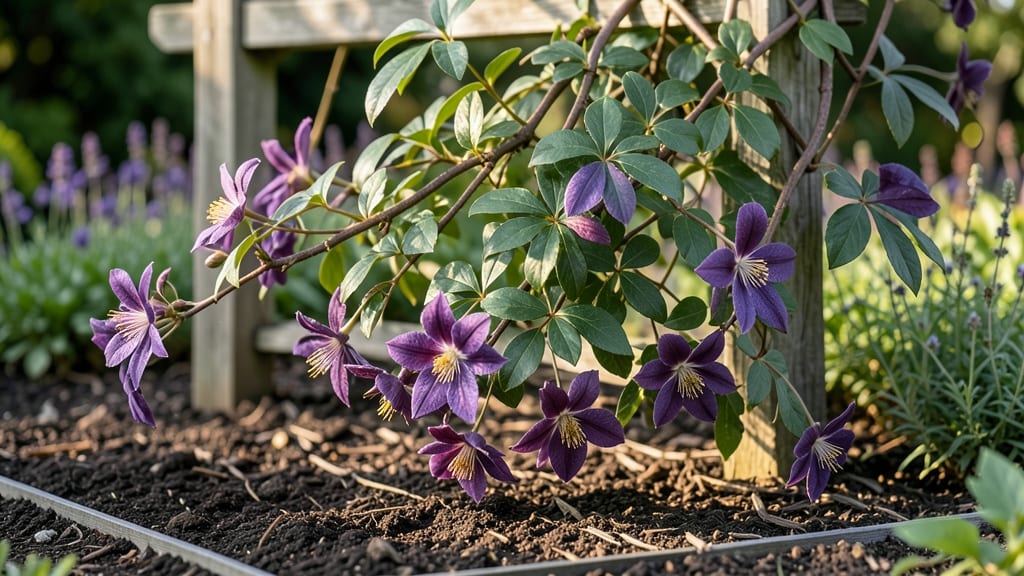
Vines in full bloom transform any garden into a living painting. 🌸 I remember the first time I saw my clematis arch explode with purple flowers—it turned a plain fence into a centerpiece.
These perennial climbers aren’t just pretty; they’re the backbone of vertical gardens that bloom season after season with minimal effort. The real magic happens when you pair them right. Wisteria cascades in spring lavender, while bougainvillea bursts with pink in summer heat.
Plant them near shrubs with contrasting foliage—like deep green hostas—and watch the colors pop. A trellis or pergola isn’t just support; it’s a stage for your vines to shine. By mid-summer, you’ll have a lush curtain of blooms that attracts hummingbirds and fills your space with fragrance. The best part?
These plants keep growing, year after year, with just a little pruning to shape their performance. Let’s turn your walls into a floral masterpiece.
Start with a sturdy structure—trellises for delicate climbers like cobaea, or heavy-duty pergolas for wisteria’s weight. Place them where they’ll get at least 6 hours of sunlight daily, and pair them with ground covers to hide their leggy early growth.
The contrast of deep purple clematis against silver lamb’s ear or coral bougainvillea with chartreuse ligularia creates drama no flat garden can match. Think beyond fences: train vines up arbors for romantic walkways, or let them spill over raised beds for a soft, blooming border.
The key is balance—mix fast growers like morning glory with slower, showier perennials. In just one season, your vertical space will feel alive with color and movement.
Here’s the secret: prune in late winter to encourage new growth, and deadhead spent blooms to keep the flowers coming. With the right placement, your vines will become the star of your garden—year after year, without the fuss of replanting annuals.
Imagine waking up to a wall of blooms every spring, summer, and fall.
📚 In This Guide
- What you need
- Instructions
- Tips and common mistakes
- Wrapping up and next steps
What you need
- ● Perennial Vine Plants: Choose from 3–5 varieties (e.g., clematis, wisteria, jasmine, or hops). Opt for hardy, disease-resistant cultivars suited to your climate zone.
- ● Support Structures: Trellis (6–10 ft tall, depending on vine growth)
- ● Arbor or pergola (for larger vines like wisteria)
- ● Obelisk or tomato cage (for compact varieties like sweet peas)
- ● Potting Soil: 5–10 gallons of well-draining, nutrient-rich potting mix (e.g., 60% peat/coir, 30% perlite, 10% compost).
- ● Containers (if not planting in-ground): 1–2 large pots (15–20 gallons) with drainage holes for each vine.
- ● Fertilizer: Slow-release granular fertilizer (10-10-10 or 5-10-10) or organic options like composted manure or worm castings.
- ● Mulch: 2–3 inches of organic mulch (e.g., shredded bark or straw) to retain moisture and suppress weeds.
- ● Garden Gloves (1 pair, heavy-duty for protection)
- ● Trowel or Hand Shovel (for planting)
- ● Pruners (bypass pruners for clean cuts)
- ● Watering Can or Hose (with adjustable nozzle for gentle watering)
- ● Measuring Tape (to space plants 3–6 ft apart, depending on variety)
- ● Stakes or Twine (to secure young vines to supports)
- ● Sunlight: Ensure your chosen location gets 6+ hours of sunlight daily (adjust for shade-tolerant vines like ivy).
- ● Water Source: Easy access to water for consistent moisture (vines need 1–2 inches per week).
- ○ Optional: Drip irrigation system for automated watering
- ● Epsom salt (for magnesium-deficient soil)
- ● Decorative lights or solar-powered stakes for nighttime ambiance
How to plant and maintain perennial climbing vines
Here’s the straightforward method I’ve used to keep vines thriving for years—no annual replanting required.
🌱 Step 1: Choose the Right Location and Support Structure
Select a spot with 6+ hours of sunlight daily—most perennial vines need full sun to bloom vigorously. I always check the mature height of the vine (like 10-20 feet for clematis or 15-30 feet for wisteria) and place the support structure at least 3 feet away from the house or fence to prevent rot from moisture buildup.
Install a sturdy trellis, arbor, or pergola before planting. For heavy vines like hops or passionflower, use galvanized metal or thick wooden posts buried 2 feet deep in the ground. The support should be wide enough to accommodate the vine’s mature spread—think 6-8 feet wide for wisteria clusters. This prevents tangled growth and makes pruning easier later.
🌿 Step 2: Prepare the Soil and Plant Correctly
Dig a hole twice as wide as the root ball but only as deep—planting too deep suffocates the roots. Amend the native soil with 3 inches of compost mixed into the bottom and sides of the hole. Perennial vines like well-draining soil, so if your yard has heavy clay, add a handful of perlite or coarse sand to improve aeration.
Gently remove the vine from its container and loosen any circling roots with your fingers. Place it in the hole so the top of the root ball sits 1 inch below soil level. Backfill with native soil mixed with compost, pressing lightly to eliminate air pockets. Water deeply to settle the soil—you’ll see the ground firm up around the roots. Mulch with 2-3 inches of wood chips, keeping it 6 inches away from the stem to prevent rot.
☀️ Step 3: Water and Fertilize for Strong Establishment
Water newly planted vines once a week for the first month, soaking the soil to a depth of 12 inches. Check moisture by sticking your finger in the soil—it should feel damp but not soggy. Overwatering is a common mistake that leads to root rot, especially in heavy clay soils. After the first month, reduce watering to every 2-3 weeks, unless your area experiences extreme heat or drought.
Apply a balanced fertilizer (10-10-10) at planting time, then again in early spring and midsummer. I use ½ cup per vine sprinkled around the base, followed by a deep watering to activate the nutrients. Avoid high-nitrogen fertilizers—they encourage leafy growth at the expense of flowers. Instead, focus on phosphorus and potassium to support blooming and root development.
✂️ Step 4: Prune for Healthy Growth and Abundant Blooms
Prune most perennial vines in late winter or early spring, before new growth begins. Remove any dead, diseased, or crossing branches first—this improves airflow and reduces pests. For spring-blooming vines like clematis, cut back 1/3 of the oldest stems to encourage new growth. Summer-blooming varieties like honeysuckle should be pruned right after flowering to shape the plant and promote next year’s blooms.
Use sharp, clean pruners to make cuts at a 45-degree angle, just above a leaf node or bud. Avoid leaving stubs—this invites disease. Thin out crowded stems to improve light penetration to the center of the vine. You’ll notice new shoots emerging within 2-3 weeks—this is your cue that the pruning worked. Regular pruning keeps vines manageable and ensures they produce more flowers each year.
🌿 Step 5: Monitor and Protect Through the Seasons
Keep an eye out for pests like aphids or spider mites, which love the tender new growth of vines. I spray affected areas with neem oil or insecticidal soap in the evening to avoid harming beneficial insects. For fungal issues like powdery mildew, improve airflow by pruning and apply baking soda spray (1 tsp baking soda + 1 quart water + a drop of dish soap) every 7-10 days until the problem clears.
In fall, reduce watering as the vine enters dormancy. Apply a 2-inch layer of mulch around the base to insulate roots during winter. Most perennial vines are hardy, but young plants may need a layer of burlap or frost cloth in extremely cold climates. With proper care, your vines will return year after year with even more dramatic blooms.
Tips & tricks for perfect perennial vine planting
These simple strategies will help your climbing vines flourish with minimal effort—once you get the basics right.
Sunlight Secret: That 6+ hours of sunlight isn't just a suggestion—it's non-negotiable for most perennial vines. I've seen clematis and wisteria wilt dramatically when planted in partial shade. If your yard only gets 4-5 hours of sun, consider container planting where you can move the vines to sunnier spots during peak sunlight hours. Morning sun with afternoon shade works best for heat-sensitive varieties like passionflower.
Support Structure Savvy: The 3-foot distance from structures isn't just about aesthetics—it's about preventing moisture buildup that causes rot. I learned this the hard way when my first passionflower vine developed fungal issues from constant dampness against the fence. For heavy vines like hops, bury those galvanized metal posts at least 2 feet deep to prevent leaning. The wider support (6-8 feet for wisteria) might seem excessive, but it prevents the vines from becoming tangled messes that are nearly impossible to prune later.
Planting Precision: That 1-inch below soil level placement is crucial—any deeper and you'll suffocate the roots, any shallower and they'll dry out. I use a small stake marked at the correct depth to ensure consistency. When loosening circling roots, be gentle but thorough—these roots can strangle the plant if left intact. The 3 inches of compost mixed into the soil creates a perfect growing zone right where the roots need it most, while the wood chips mulch keeps moisture levels steady without smothering the stem.
Watering Wisdom: The first month's weekly watering might seem excessive, but it's essential for establishing those deep roots. I use a soil moisture meter to check at 12 inches depth—if it's dry, water again. After the first month, let the soil dry slightly between waterings to prevent root rot. For container-grown vines, you'll need to water more frequently, sometimes daily in hot weather, since pots dry out much faster than garden soil.
Pro Tips for Vines In Full Bloom
- These simple strategies will help your climbing vines flourish with minimal effort—once you get the basics right.
- Sunlight Secret: That 6+ hours of sunlight isn't just a suggestion—it's non-negotiable for most perennial vines.
- Support Structure Savvy: The 3-foot distance from structures isn't just about aesthetics—it's about preventing moisture buildup that causes rot.
Frequently asked questions
Got questions about keeping vines in full bloom? You’re not alone!
Here are answers to the most common queries—from timing to troubleshooting—so your perennial climbers stay vibrant and healthy all season long.
When is the best time to plant vines for full bloom?
Plant most perennial vines in early spring (after the last frost) or fall (6-8 weeks before the first frost). This gives roots time to establish before extreme temperatures. Evergreen vines (like ivy or star jasmine) can also handle late fall planting in mild climates.
How long does it take for vines to reach full bloom?
Patience is key! Many vines take 1-3 years to reach their peak flowering, depending on the variety. Fast growers like clematis or honeysuckle may bloom sooner, while slow climbers (e.g., wisteria) need more time. Tip: Prune strategically in early spring to encourage earlier blooms.
What’s the easiest vine to grow for consistent blooms?
If you want low-maintenance, reliable blooms, try:
- Clematis – Thrives in sun/partial shade; deadhead spent flowers.
- Star jasmine (Trachelospermum) – Fragrant, drought-tolerant, and evergreen.
- Passionflower – Hardy, exotic blooms, and attracts pollinators.
Why aren’t my vines blooming this year?
Common culprits include:
- Over-fertilizing with nitrogen (promotes foliage, not flowers). Use a balanced 10-10-10 or bloom-boosting 5-10-10 fertilizer instead.
- Poor sunlight – Most blooming vines need 6+ hours of sun daily.
- Pruning at the wrong time – Avoid heavy cuts in late summer/fall.
- Stress from pests/disease – Check for aphids, powdery mildew, or root rot.
Can I grow vines in containers for full bloom?
Compact varieties
like dwarf clematis or boston ivy thrive in containers (15+ gallons). Use a well-draining mix with perlite, and trellis or stakes for support. Move pots to sunnier spots in winter if in cold zones. Bonus: Container vines are perfect for balconies or patios!
Quick Troubleshooting Table
| Problem | Likely Cause | Solution |
|---|---|---|
| Yellow leaves | Overwatering or nutrient deficiency | Check soil moisture; fertilize with iron-rich supplement. |
| No flowers | Too much shade or nitrogen | Prune for sun exposure; switch to phosphorus-heavy fertilizer. |
| Leggy growth | Not enough light | Relocate to sunnier spot or prune to encourage bushiness. |
Wrapping up and next steps
Watching vines in full bloom transforms any garden into a vibrant, living masterpiece—year after year!
Whether you’re drawn to the bold drama of wisteria, the delicate charm of clematis, or the hardy resilience of climbing roses, these perennial climbers prove that beauty and low maintenance can go hand in hand. 🌿✨
Now that you’re armed with the right materials and answers to common questions, it’s time to roll up your sleeves and create your own vertical oasis. Start small—choose one vine to test the waters, or go all out with a lush, layered design. Your garden’s next chapter is waiting!