
Blooming
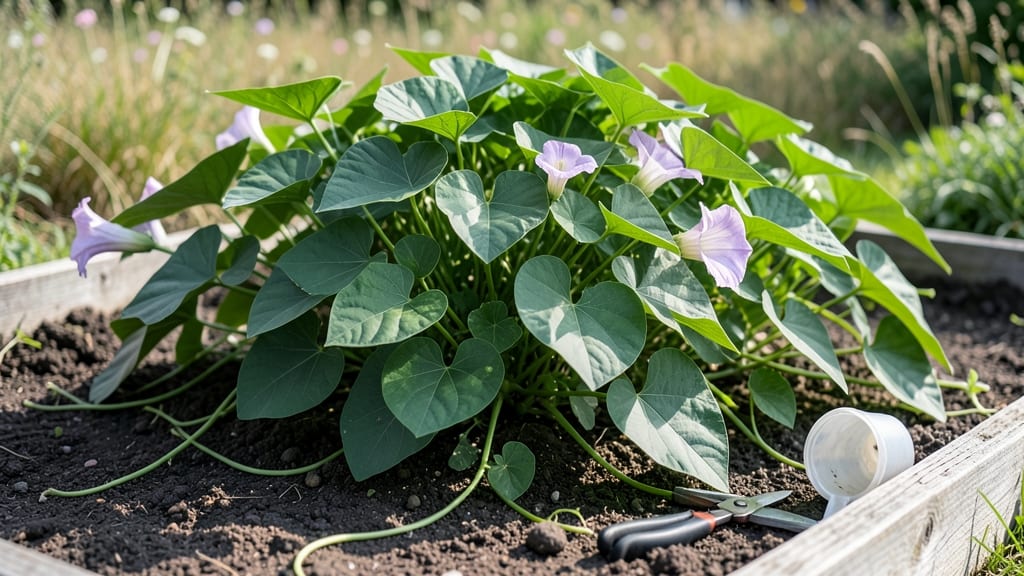
Those purple sweet potato blooms aren't just pretty—they're a sign your plant is thriving. 🌿 I used to think they were just ornamental, but now I know they mark the perfect time to harvest tubers or propagate new slips for next year's garden.
The timing is everything: blooms appear 60-90 days after planting, signaling the tubers are nearly ready. If you're growing for food, you can pinch off flowers to redirect energy to the roots—but if you love the look, leave them and enjoy the edible blossoms too.
Water consistently but avoid soggy soil, and give them full sun (6+ hours daily). Prune leggy vines to encourage bushier growth and more flowers, but don't overdo it—these plants are tough and forgiving.
Once you see those spikes, you've got a dual-purpose plant: harvest tubers now or save slips for future gardens. Either way, you're winning.
📚 In This Guide
- What you need
- Instructions
- Tips and common mistakes
- Wrapping up and next steps
What you need
- ● Sweet potato slips or tubers: Choose disease-free, certified slips or mature tubers (1–2 per plant). Opt for varieties like ‘Beauregard’ or ‘Georgia Jet’ for vibrant blooms.
- ● Well-draining potting mix: 5–10 gallons (for containers) or amend garden soil with compost (1 part compost to 3 parts soil).
- ○ Containers (optional but recommended): 5–7 gallon pots with drainage holes (for zones 3–5).
- ● Fabric grow bags (10–15 gallons) for better aeration.
- ● Balanced fertilizer (10-10-10): 1 tablespoon per plant at planting, then monthly during bloom season.
- ○ Slow-release organic fertilizer (optional): 1 cup per container (e.g., osmocote) for sustained nutrients.
- ● Support structure: Trellis, tomato cage, or bamboo stakes (4–6 feet tall) to guide vines and showcase blooms.
- ● Mulch: Straw or shredded leaves (2–3 inches) to retain moisture and suppress weeds.
- ● Watering can or hose with gentle nozzle: For deep, infrequent watering (1–1.5 inches per week).
- ● Epsom salt: 1 teaspoon per gallon of water (monthly) for magnesium boosts and vibrant foliage.
- ● Neem oil or insecticidal soap: For pest control (aphids, spider mites).
- ● Garden twine or soft ties: To secure vines to supports gently.
- ● Pruning shears: For trimming leggy vines or deadheading spent blooms.
- ● Garden gloves: To protect hands from prickly vines (especially in humid zones).
How to grow and care for sweet potato blooms
These stunning purple spikes are easier to grow than you think—just follow these steps for vibrant, long-lasting blooms.
🌱 Step 1: Choose and Prepare Sweet Potato Slips
Start with sweet potato slips, not grocery store tubers. Look for certified slips with 3-4 inches of stem and 2-3 leaves—these grow fastest. Soak the roots in lukewarm water for 4 hours before planting to encourage root growth. You’ll know they’re ready when the stems feel slightly pliable and the leaves perk up.
Plant slips in well-draining soil (sandy loam works best) after the last frost date in your zone. Dig a hole 12 inches deep and place the slip in so the top third of the stem sits above soil. This ensures the plant has enough energy to grow upward instead of rotting underground. Gently firm the soil around the base—don’t pack it down too tightly, or roots won’t spread.
☀️ Step 2: Position for Maximum Sun and Airflow
Sweet potato blooms thrive in full sun (6-8 hours daily), but they need protection from harsh afternoon heat in zones 7-9. A spot with morning sun and afternoon shade (like under a sheer curtain or near a building) keeps foliage lush while preventing wilting. You’ll see the difference in just a week—plants in full sun all day often scorch.
Space slips 18-24 inches apart to allow airflow, which prevents fungal diseases like powdery mildew. If you’re growing in containers, use 5-gallon pots with drainage holes. The roots expand aggressively, so larger containers mean fewer transplant shocks later. Water deeply after planting to settle the soil and encourage root growth.
💧 Step 3: Water and Fertilize for Strong Stems
Water when the top 2 inches of soil feel dry—overwatering causes rot, while underwatering stresses the plant. I aim for 1 inch of water weekly, adjusting for rain. You’ll know you’ve got the right balance when the leaves stay vibrant green and the stems feel sturdy to the touch. Mulch with 2 inches of straw or shredded leaves to retain moisture and regulate soil temperature.
Feed with a balanced 10-10-10 fertilizer every 4-6 weeks during the growing season. Stop fertilizing in late summer to let the plant focus on blooming instead of foliage. If you notice yellowing leaves, it’s a sign of over-fertilizing—flush the soil with water and reduce applications. The goal is strong stems, not lush leaves.
✂️ Step 4: Prune and Support for Dramatic Spikes
Pinch back the tips of new growth when stems reach 12 inches tall to encourage bushier, stronger plants. This might seem counterintuitive, but it redirects energy into thicker stems that support those heavy purple blooms. You’ll see more lateral branches form within 2-3 weeks, each capable of producing flowers.
Install bamboo stakes or small trellises when the first flower spikes appear. The blooms can reach 3-4 feet tall, and without support, they’ll flop over. Tie stems gently with soft twine—too tight, and you’ll restrict growth. Watch for the first buds to form; they’ll start as small, fuzzy clusters before opening into vibrant purple spikes.
🌿 Step 5: Extend the Blooming Season
Sweet potato blooms thrive in heat but can struggle in extreme humidity. If your area gets muggy summers, prune back 1/3 of the foliage in mid-summer to improve airflow. This might seem drastic, but it rejuvenates the plant and often triggers a second round of blooms in late summer or early fall.
Deadhead spent blooms regularly to encourage more flowers. Cut stems back to the nearest leaf node, and you’ll often see new buds form within 10-14 days. In cooler zones (3-5), the foliage may die back in winter, but the roots survive. In warmer zones (6-9), the plant often blooms year-round with minimal care. The key is consistent watering and occasional pruning to keep it vigorous.
Tips & tricks for perfect sweet potato bloom care
A few insider tricks that'll help your purple spikes grow stronger and bloom longer than ever.
Slip Selection: When choosing slips, look for ones with a slight curve in the stem—this indicates they've already started rooting. The 4-hour soak in lukewarm water is non-negotiable; cold water shocks the roots while hot water can damage the tender stems. I've found that slips with slightly curled leaves (not wilted) adapt fastest to transplanting. This small detail makes all the difference in establishing healthy plants that'll reward you with those dramatic purple blooms.
Soil Preparation: Don't just dig a hole—amend your soil with a 50/50 mix of native soil and compost before planting. The sandy loam recommendation is perfect because it drains quickly but holds enough moisture for those deep roots. I always test drainage by filling the hole with water—if it doesn't drain within 30 minutes, mix in more sand or perlite. Proper drainage prevents the #1 killer of sweet potato slips: root rot.
Pruning Strategy: When you pinch back growth at 12 inches, don't just snip the very top—cut just above a leaf node where new branches will form. This creates a bushier plant with more stems capable of producing those stunning purple spikes. I've seen plants go from sparse to lush in just 2-3 weeks after this simple pruning. The key is timing: do it when the plant has at least 3 sets of true leaves to ensure it has enough energy to recover.
Support System: Don't wait until the last minute to install stakes or trellises. The moment you see those fuzzy buds forming (about 6-8 weeks after planting), get your support in place. I use bamboo stakes because they're strong enough to support the 3-4 foot height but flexible enough to sway slightly in wind without breaking. The gentle movement actually helps strengthen the stems. Remember to tie stems loosely—you want to support, not strangle.
Pro Tips for Sweet Potato Bloom
- A few insider tricks that'll help your purple spikes grow stronger and bloom longer than ever.
- Slip Selection: When choosing slips, look for ones with a slight curve in the stem—this indicates they've already started rooting.
- Soil Preparation: Don't just dig a hole—amend your soil with a 50/50 mix of native soil and compost before planting.
Frequently asked questions
Got questions about sweet potato bloom? You’re not alone—these striking purple spikes can be as fascinating as they are tricky to grow! Here are answers to the most common queries, from timing to troubleshooting.
When do sweet potato blooms appear?
Sweet potato blooms typically emerge late summer to early fall, about 90–120 days after planting. In warmer climates (Zones 9–10), they may bloom earlier, while cooler zones (3–7) might see them later. Patience is key—don’t rush the process!
Why isn’t my sweet potato plant blooming?
Blooms may skip a season due to immature plants, poor sunlight (they need 6+ hours of direct sun), or over-fertilizing with nitrogen (which prioritizes leafy growth). Try pruning leggy vines or switching to a low-nitrogen, high-phosphorus fertilizer to encourage flowers.
Can I grow sweet potato blooms from store-bought sweet potatoes?
Nope! Store-bought sweet potatoes are treated to prevent sprouting. Instead, use organic, untreated sweet potato slips (baby plants) or grow your own from whole sweet potatoes with eyes. Pro tip: Save slips from last year’s harvest—they’re free and reliable!
Are sweet potato blooms edible?
While the flowers are technically edible (mild, slightly sweet), they’re not commonly consumed due to their bitter taste and fibrous texture. Focus on growing them for ornamental appeal—their vibrant purple spikes add drama to gardens and containers!
Do sweet potato blooms attract pollinators?
These blooms are a magnet for bees, butterflies, and hummingbirds, especially in late summer when other flowers are fading. Plant them near vegetable gardens to boost pollination for crops like tomatoes and peppers. Win-win for bees and your harvest!
How do I overwinter sweet potato blooms in cold climates?
Sweet potato vines are tender perennials—they’ll die back in frost but regrow from roots in spring. In Zones 3–6, mulch heavily with straw or leaves after the first frost. Dig up tubers in fall, store them in cool, dry sand, and replant slips the following spring.
Wrapping up and next steps
Discovering the sweet potato bloom—those stunning, perennial purple spikes—can transform your garden into a vibrant, low-maintenance paradise. Whether you're drawn to their bold color, resilience in zones 3-9, or ease of care, these plants are a dream for both beginners and seasoned gardeners.
Their ability to thrive with minimal fuss makes them a standout choice for adding texture and beauty to any outdoor space.
Ready to bring this eye-catching plant into your garden? Start small—grow a single spike in a pot or along a fence—and let its charm inspire you to explore more perennials. Happy planting! 🌱✨