
Blooming
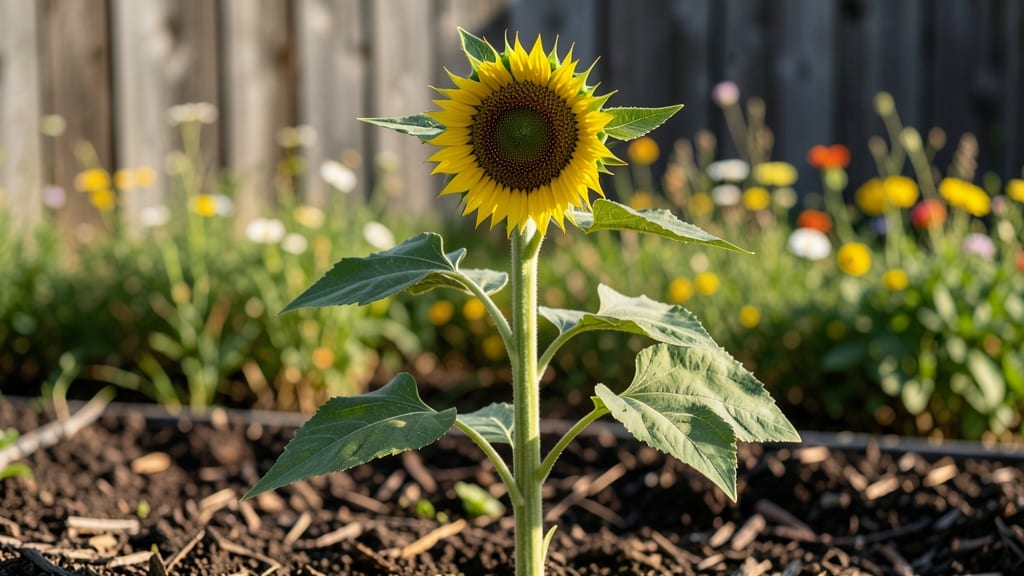
Sunflowers before blooming are all about sturdy stems and leafy ambitions. 🌱 Those early weeks determine whether your plants will stand tall or topple under their own weight—something I learned the hard way when my first batch leaned like drunkards in a summer breeze.
The secret isn't just water or sunlight—it's about strong stems from day one. Start with well-draining soil rich in compost, and water at the base (not overhead) to avoid weakening the stems. Young plants need 6-8 hours of sun daily, but too much heat without shade can stress them.
Look for deep green leaves and a thick stem—those are your signs of healthy growth. Supporting stems early prevents future heartbreak. Use stakes or cages as soon as plants reach 12 inches, tying them loosely with soft fabric.
Watch for pests like aphids or slugs, which love tender new growth. A quick spray of soapy water keeps them away without harming your sunflowers. By the time buds form, you'll have towering stalks ready to face the wind—and maybe even outshine your neighbors.
The key is consistency: water, support, and patience. Now go grow something impressive!
📚 In This Guide
- What you need
- Instructions
- Tips and common mistakes
- Wrapping up and next steps
What you need
- ● Sunflower seeds: Choose heirloom or hybrid varieties (e.g., 'Mammoth', 'Russian Giant')—10–20 seeds per plant, depending on desired stalk height.
- ● Well-draining potting mix: 5–10 gallons per plant (or 1 cubic yard for in-ground planting). Mix 50% garden soil, 30% compost, and 20% perlite/sand for optimal drainage.
- ● Fertilizer: Balanced granular fertilizer (10-10-10): 1–2 tbsp per plant at planting.
- ● High-phosphorus fertilizer (e.g., 5-10-10): 1 tbsp per plant when seedlings emerge (boosts root growth!).
- ● Support structures: Sturdy bamboo stakes or wooden dowels: 6–8 ft tall, 1–2 inches in diameter (1 per plant).
- ● Soft plant ties or garden twine: 10–15 ft per stake (avoid wire—it can damage stems!).
- ● Garden trowel or transplanting spade (for digging holes 12–18 inches deep).
- ● Watering can or hose with adjustable nozzle (gentle watering prevents stem weakness!).
- ● Pruning shears (for trimming lower leaves to 12–18 inches from the base—this boosts airflow and strength!).
- ● pH testing kit (ideal soil pH: 6.0–7.5).
- ● Mycorrhizal fungi powder (1 tsp per hole)—supercharges root development!
- ● Epsom salt (magnesium sulfate): 1 tbsp per gallon of water (spray on leaves weekly for stronger stems).
- ● Mulch (straw or wood chips): 2–3 inches thick around the base to retain moisture and deter weeds.
- ● Shade cloth (30–50% coverage) for seedlings in hot climates (prevents stress during early growth).
How to build strong sunflower stems before blooming
Here’s how I’ve learned to grow sunflowers that stand tall and proud—no flopping or snapping when the first winds hit.
🌱 Step 1: Choose the Right Variety for Your Climate
Not all sunflowers are created equal when it comes to stem strength. For towering stalks, opt for dwarf varieties like 'Moulin Rouge' (3-4 feet) or standard types like 'Russian Giant' (10-12 feet). If you live in a windy area, avoid tall, top-heavy varieties—they’ll lean or break under pressure.
Check your last frost date and plant seeds after soil warms to 50°F—cold soil slows root growth, making stems weaker. I always test soil moisture by squeezing a handful; if it crumbles easily, it’s ready. Plant seeds 1 inch deep and 6 inches apart in rows 2 feet apart for airflow and strength.
💧 Step 2: Water Deeply and Consistently
Sunflowers need 1-2 inches of water per week, but shallow watering leads to weak stems. I water at the base (not overhead) to encourage deep root growth—those roots anchor the plant like rebar. Wait until the top inch of soil feels dry before watering again; soggy soil suffocates roots and makes stems brittle.
Here’s the thing—morning watering is best. It gives leaves time to dry before evening, preventing fungal diseases that weaken stems. If you’re using a soaker hose, run it for 20-30 minutes to ensure moisture reaches 12 inches deep. You’ll see stronger stems within a week of consistent deep watering.
☀️ Step 3: Provide Support Early
Sunflowers don’t need stakes until they’re 3-4 feet tall, but I start checking for wind stress as soon as they’re 18 inches high. If leaves start bending or stems sway excessively, it’s time to act. Use 3-foot bamboo stakes or heavy-duty garden stakes—wooden ones rot faster and fail.
Insert stakes 2-3 inches deep next to the stem and tie loosely with soft cloth strips (never wire—it cuts into the stem). Adjust ties every 3-4 days as the stem thickens. You’ll notice stems grow straighter and thicker within 10-14 days of support. This is the moment that matters: early support prevents permanent bending.
✂️ Step 4: Prune for Strength and Airflow
Remove lower leaves that touch the soil to improve airflow and reduce disease. Use clean, sharp scissors to cut just above a leaf node—never tear leaves. I also snip off side buds that form below the main flower head; they drain energy from the stem’s growth. Leave only 1-2 buds near the top if you want multiple blooms.
Watch for yellowing leaves—they signal overcrowding or nutrient stress. If you see this, thin plants to 12 inches apart and side-dress with compost (not fertilizer—it burns roots). Strong stems need balanced care, not just water or food alone.
🪴 Step 5: Monitor and Adjust as They Grow
By the time sunflowers reach 5 feet, check stakes weekly. Loosen ties if they’re cutting into the stem—tight restraints strangle growth. If stems start leaning, gently guide them upright and secure with a second stake at a 45-degree angle for extra support.
Real talk: even with perfect care, some stems will bow under heavy blooms. If this happens, harvest early—cut the flower head when it’s half-open and place it in water indoors. The stem will still be strong enough to hold it for days. This trick saves your garden’s best blooms from snapping in storms.
Tips & tricks for towering sunflower stalks
These simple strategies will help you grow sunflowers that defy the wind and stand tall all season long.
Variety Matters: The 50°F soil temperature guideline is crucial—it ensures roots develop properly, but the right variety makes all the difference. For wind-prone areas, 'Moulin Rouge' dwarf varieties (3-4 feet) are my go-to because their shorter stature naturally resists toppling. If you're growing 'Russian Giant' (10-12 feet), I recommend planting them in clusters of three with stakes at planting to prevent leaning from day one. The difference in stem strength between varieties is remarkable.
Watering Wisdom: That 20-30 minute soaker hose session isn't just about quantity—it's about consistency. I've found that watering at the base creates a deeper root system that acts like an anchor. Here's what I do: run the soaker hose for exactly 25 minutes every morning, then check soil moisture at 12 inches deep with a screwdriver. If it comes out clean, you're golden. The key is maintaining that 1-2 inches per week while keeping the top inch dry between waterings.
Support System: The 18-inch wind stress check is where most gardeners fail. I start staking at this height because that's when stems begin to flex under their own weight. Use 3-foot bamboo stakes inserted 2-3 inches deep—this creates stability without restricting growth. The secret to effective staking is the cloth ties: adjust them every 3-4 days as the stem thickens. Tight ties strangle growth, but loose ties that can be easily adjusted prevent damage while allowing the stem to thicken naturally over those critical 10-14 days.
Pruning Precision: When removing lower leaves that touch the soil, cut just above a leaf node—this encourages new growth at stronger points. I've learned the hard way that snipping side buds below the main flower head saves energy for stem development. Here's a pro trick: leave just 1-2 buds near the top if you want multiple blooms, but remove all others. This redirection of energy creates thicker stems that can support heavier flower heads. Watch for yellowing leaves as your early warning system—they tell you when to thin plants to 12 inches apart and add compost.
Pro Tips for Sunflowers Before Blooming
- These simple strategies will help you grow sunflowers that defy the wind and stand tall all season long.
- Variety Matters: The 50°F soil temperature guideline is crucial—it ensures roots develop properly, but the right variety makes all the difference.
- Watering Wisdom: That 20-30 minute soaker hose session isn't just about quantity—it's about consistency.
Frequently asked questions
Got questions about sunflowers before they bloom?
You’re not alone! Here are answers to the most common queries to help you nurture sturdy, thriving stalks before those iconic blooms appear.
How do I know if my sunflower is healthy before it blooms?
Healthy pre-bloom sunflowers have deep green, rigid stems (no wilting or yellowing), tight, unopened buds, and no pests like aphids or holes in leaves. Check soil moisture—it should be evenly damp but not soggy. If stems bend easily or leaves droop, it’s time to reinforce support or adjust care.
When should I start strengthening sunflower stems before blooming?
Begin 4–6 weeks before blooming (when buds are golf-ball-sized). This gives stems time to harden. For early varieties, start in late spring; for late-season types, wait until early summer. Watch for buds forming—once they’re visible, it’s your cue to act!
What’s the best way to support sunflower stems before they bloom?
Use soft ties (like old T-shirts or garden twine) to loosely bind stems to stakes or trellises. Avoid tight wrapping—it can strangle growth. For extra strength, bury stakes 1–2 feet deep and angle them slightly for better support. Recheck ties weekly as stems grow.
Can sunflowers bloom if their stems weaken before budding?
Yes, but weak stems may snap under weight or wind. If you notice flimsy growth early, prune lower leaves to reduce strain and add a second stake for backup support. Overwatering or nutrient deficiencies (like lack of phosphorus) can weaken stems—adjust care if needed!
Are there sunflower varieties with naturally stronger stems before blooming?
Dwarf varieties (like ‘Teddy Bear’) have shorter, sturdier stalks, while giants (e.g., ‘Mammoth’) need extra support. For low-maintenance options, try ‘Autumn Beauty’ or ‘Russian Giant’—they balance height and resilience. Always check seed packets for stem strength ratings!
Wrapping up and next steps
Watching your sunflowers grow tall and strong before they bloom is a rewarding journey—one that starts with the right care and patience! 🌱 By focusing on stem strengthening, proper support, and attentive maintenance, you’ll set the stage for those stunning, towering blooms.
Remember, even the sunniest stalks need a little extra love to reach their full potential.
Now that you’re armed with the secrets, it’s time to roll up your sleeves and put theory into practice. Start by inspecting your sunflowers today—adjust their supports, check for pests, and give them the nutrients they crave. Your future sunflower masterpiece begins with today’s small steps!
- 🌿 Take action: Pick a sunny day to reinforce stems and monitor growth.
- 📅 Stay consistent: A little daily care goes a long way toward those dreamy blooms!