
Blooming
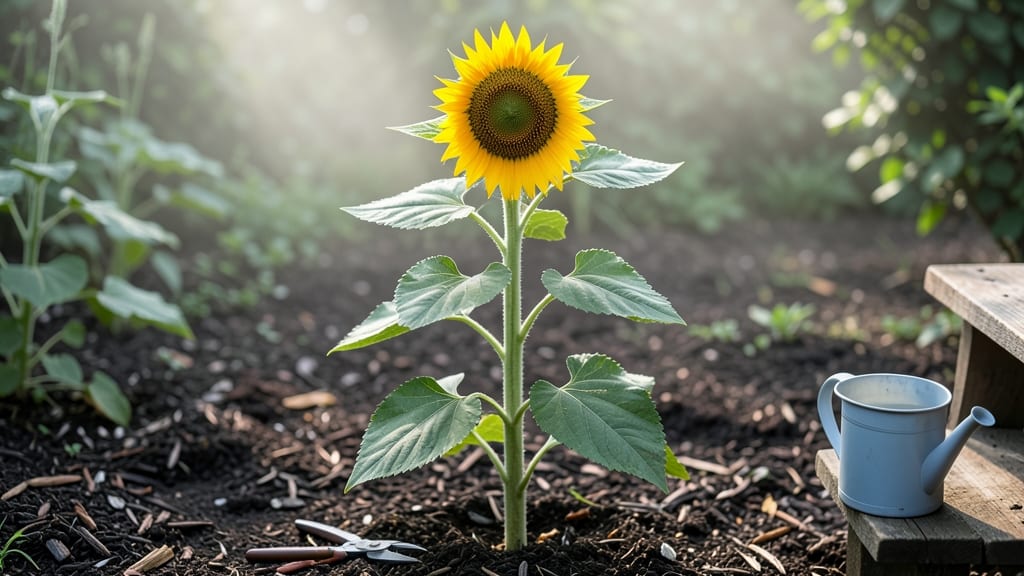
Sunflowers pre-bloom are where the real magic happens—those tight green buds hiding the giant sunbursts we all love. ✨ I’ve watched my sunflowers go from 3-inch sprouts to 10-foot giants in just 8-10 weeks, and the pre-bloom stage is where you either set them up for glory or watch them flop over by August.
This is when watering shifts from frequent light drinks to deep soaks once a week (unless it’s scorching), and you start scouting for pests like aphids before they turn those buds into sticky messes.
The stems should be thick as your thumb by now—if they’re skinny, it’s time for a side-dressing of compost or a balanced fertilizer.
By the time those buds swell to golf-ball size, you’ll know exactly when to stake them (if needed) and when to expect blooms in 7-14 days, depending on your zone. The key? Watching for the first yellow petal—that’s your countdown to harvest.
Works for all sunflower varieties, from dwarf ‘Teddy Bear’ to towering ‘Mammoth’. Let’s get those buds ready to burst!
📚 In This Guide
- What you need
- Instructions
- Tips and common mistakes
- Wrapping up and next steps
What you need
- ● Sunflower seeds: Choose pre-bloom-friendly varieties like Mammoth or Autumn Beauty (10-20 seeds per plant, depending on spacing).
- ● Well-draining soil: Mix 2 parts topsoil with 1 part compost (pH 6.0-7.5).
- ● Planting containers or garden bed: Minimum 12-inch depth and 18-inch diameter per plant (or 2-3 feet apart in rows).
- ● Watering can or hose: With a gentle spray nozzle to avoid disturbing seedlings.
- ● Fertilizer: Balanced 10-10-10 or organic compost tea (apply at planting and mid-growth).
- ○ Stakes or trellis (optional but helpful): 5-6 foot tall for tall varieties to prevent toppling.
- ● Grow lights: For indoor starters (12-16 hours/day, 2-3 feet above seedlings).
- ● Mulch: Straw or wood chips to retain moisture and suppress weeds.
- ● Plant markers: Label seeds with variety names and planting dates.
- ● Pruning shears: For trimming lower leaves to encourage bud development.
- ● Sunflower-specific pesticide: Neem oil or insecticidal soap to deter pests like aphids.
Step-by-step guide to managing sunflower bud development
Here's how to nurture sunflowers through their critical pre-bloom phase for vibrant, healthy flowers.
🌱 Step 1: Ensure Proper Plant Spacing and Support
Sunflowers need 12-24 inches of space between plants to develop strong stems and prevent disease. I always space mine 18 inches apart in rows 2 feet apart for optimal airflow. This spacing prevents overcrowding, which stresses plants and slows bud formation.
Tall varieties (over 6 feet) require staking with 3-foot bamboo stakes inserted 2 inches deep beside each plant. Tie stems loosely with soft plant ties every 12 inches up the stalk—too-tight ties can girdle stems as they thicken. Watch for stems leaning toward light; gently guide them upright to prevent weak, lopsided growth.
☀️ Step 2: Monitor Light and Water Requirements
Sunflowers need 6-8 hours of direct sunlight daily for bud development. If you notice buds staying small or stems becoming weak, move plants to a sunnier location immediately. In Zones 3-5, provide afternoon shade during extreme heat to prevent bud scorch.
Water deeply 2-3 times per week until the top 6 inches of soil feel dry. I use a soaker hose to deliver water at the base—this prevents fungal diseases that thrive in wet foliage. Yellowing leaves at the base signal overwatering, while crispy edges mean underwatering. Buds form best when plants receive consistent moisture without soggy soil.
💧 Step 3: Fertilize for Strong Bud Formation
Apply a balanced 10-10-10 fertilizer when plants reach 12 inches tall, using 1 tablespoon per plant. This timing ensures nutrients support stem elongation and bud initiation without excessive leaf growth. In Zones 6-10, switch to a low-nitrogen fertilizer (like 5-10-10) once buds form to prevent leggy stems.
Watch for signs of deficiency: purple stems indicate phosphorus deficiency, while yellow lower leaves mean nitrogen overload. I always water plants thoroughly before fertilizing to prevent root burn. Buds develop most vigorously when plants receive steady nutrients without sudden spikes.
⏰ Step 4: Track Bud Development by Zone
Bud opening timing varies by zone. In Zones 3-5, buds typically form 60-70 days after germination and open 7-10 days later. In Zones 6-10, this process accelerates to 50-60 days for bud formation and 5-7 days for opening. I mark planting dates on my calendar to anticipate bud stages.
Look for buds to swell and turn from green to yellow-green—this signals readiness to open. In cooler zones, night temperatures below 55°F can delay opening; use row covers to protect buds if frost threatens. Once buds begin opening, remove supports to allow full bloom exposure.
✂️ Step 5: Prune for Optimal Bud Health
Remove any side buds that form below the main bud using clean pruners. These lateral buds divert energy from the primary bloom. I always prune in the morning when stems are firm and diseases are less likely to spread. Cut ½ inch above a leaf node to encourage healthy regrowth.
Deadhead spent blooms immediately to redirect plant energy into new flower production. Watch for signs of stress: brown spots on buds indicate powdery mildew, while blackened stems signal stem rot. Treat fungal issues with neem oil applied at dusk to prevent leaf burn. Strong buds develop best on plants with minimal stress and proper airflow.
Tips & tricks for perfect sunflower bud development
Growing sunflowers to their full potential requires attention to detail—here's what I've learned after years of trial and error in my garden.
Spacing is Everything: The 18-inch spacing between plants isn't just about aesthetics—it's critical for airflow that prevents fungal diseases like powdery mildew. I've found that in tight spaces, buds often develop unevenly or fail to open completely. If you're short on space, consider growing dwarf varieties that naturally stay compact. For tall varieties over 6 feet, the additional row spacing of 2 feet becomes even more important to prevent stems from leaning or breaking under their own weight.
Light Requirements Matter More Than You Think: Those 6-8 hours of direct sunlight aren't negotiable for bud formation. I once had a batch of sunflowers that stayed small and green because they were planted too close to a fence that cast afternoon shade. If your garden gets less than 6 hours of sun, consider using grow lights for 4-6 hours daily during the critical bud formation phase (around 50-70 days after germination). The difference in bud size is dramatic when plants get adequate light.
Watering Wisdom: The 2-3 times per week watering schedule works best when you check soil moisture at the 6-inch depth. I've learned to water in the morning rather than evening to prevent fungal spores from thriving on wet foliage overnight. A simple soil moisture meter makes this easier—aim for soil that feels like a damp sponge at that depth. Overwatering is more common than you'd think, especially in cooler zones where evaporation is slower.
Fertilizer Timing is Critical: That 1 tablespoon of 10-10-10 fertilizer per plant when they reach 12 inches tall is a sweet spot—not too little, not too much. I've seen plants get leggy when fertilized too early, and buds develop poorly when fertilized too late. The key is to fertilize just as the plants are starting to show their first true leaves beyond the initial seed leaves. For organic gardeners, compost tea works well but may require more frequent applications.
Pro Tips for Sunflower Pre Bloom
- Growing sunflowers to their full potential requires attention to detail—here's what I've learned after years of trial and error in my garden.
- Spacing is Everything: The 18-inch spacing between plants isn't just about aesthetics—it's critical for airflow that prevents fungal diseases like powdery mildew.
- Light Requirements Matter More Than You Think: Those 6-8 hours of direct sunlight aren't negotiable for bud formation.
Frequently asked questions
Got questions about sunflower pre-bloom stages?
Here are answers to the most common ones—whether you're troubleshooting, planning, or just curious about your sunflowers' growth timeline.
How long does the pre-bloom stage last for sunflowers?
The pre-bloom stage typically lasts 30 to 60 days after germination, depending on variety, sunlight, and temperature. Dwarf varieties may bloom faster (25–35 days), while giant sunflowers can take up to 80+ days. Watch for the bud swelling—that’s your cue it’s close!
What temperature is best for sunflowers before blooming?
Sunflowers thrive in warm soil (60°F+) and temperatures between 70–85°F during the day. Cooler nights (<50°F) can slow growth, while extreme heat (>95°F) may stress plants. If nights dip below <40°F, consider row covers or planting later in the season.
Why isn’t my sunflower bud opening after pre-bloom?
Common culprits include:
- Underwatering: Buds need consistent moisture—dry soil can halt opening.
- Nutrient deficiency: Lack of phosphorus (look for dark green leaves with purple stems) or potassium can delay blooming.
- Overcrowding: Give plants 12–24 inches of space (depending on variety) for airflow and sunlight.
- Pests/disease: Check for aphids, powdery mildew, or sunflower moths.
Try fertilizing with a balanced 10-10-10 mix and ensure 6+ hours of direct sun daily.
Can I speed up the pre-bloom stage for sunflowers?
While you can’t force blooming, these tips help:
- Plant in full sun (6+ hours daily) and well-draining soil.
- Use warm-season fertilizers (like compost or bone meal) at planting.
- Avoid transplanting—sunflowers hate root disturbance.
- For faster results, choose early-maturing varieties like ‘Autumn Beauty’ (50–60 days).
Patience is key—sunflowers bloom on their own timeline!
What’s the difference between pre-bloom and bud stage?
The pre-bloom stage is the swelling bud phase (bud is closed, green, and firm). The bud stage begins when the bud starts splitting (yellow/green tips appear). Once the center disc turns brown, it’s fully bloomed! Track progress with a growth chart for your zone.
Wrapping up and next steps
Watching your sunflowers transition from pre-bloom to vibrant blooms is one of gardening’s sweetest rewards! 🌻 With the right timing, care, and zone-specific adjustments, you’ll soon enjoy towering stems and cheerful faces lighting up your garden. Now’s the perfect time to:
- 📅 Mark your calendar for peak bloom weeks based on your zone.
- 💧 Stay consistent with watering and support as buds swell.
- 🌱 Celebrate progress—every day brings you closer to those stunning blooms!
Ready to capture the magic? Snap photos of their journey or share tips with fellow gardeners—your sunflowers are about to steal the show! 📸✨