
Blooming
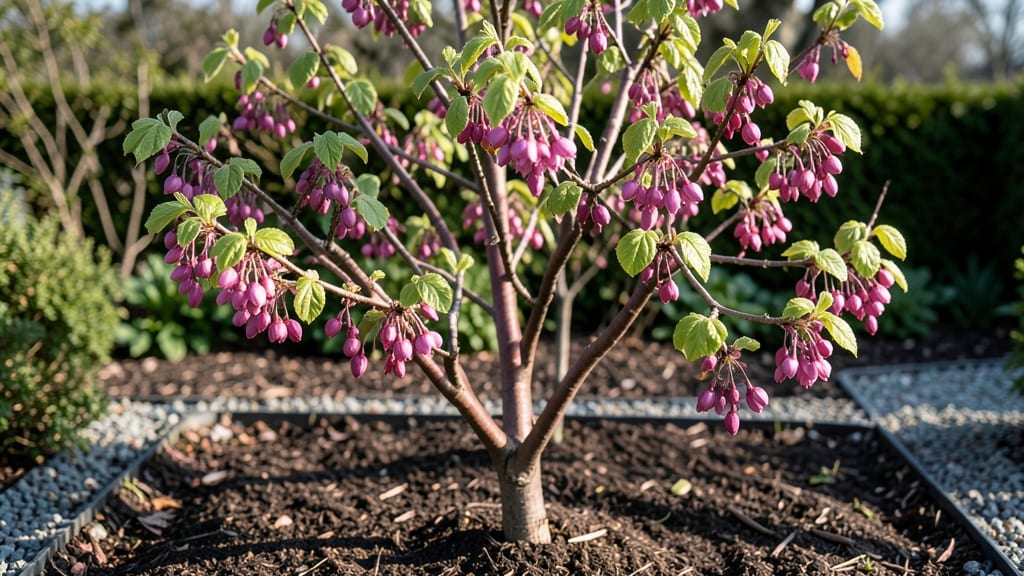
Your redbud tree’s post-bloom glow-up starts right after those pink clouds fade. ✨ I’ve learned that skipping this step means leggy branches and fewer spring flowers—so let’s fix that before summer heat sets in.
The key is timing: prune within 2-4 weeks after blooms drop, while new growth is still soft and responsive.
First, remove any dead or crossing branches with clean cuts just above a bud or outward-facing growth. Thin out crowded stems to improve airflow—this keeps your tree healthy and encourages those vibrant pink blooms next year.
Redbuds are forgiving, so don’t stress over perfection; focus on opening up the canopy for sunlight to reach the center.
After pruning, give your tree a deep watering to help it recover, and hold off on heavy fertilization until late summer. The summer foliage is stunning too—deep green and heart-shaped—but it’s also the time to watch for Japanese beetles or spider mites, which love redbud leaves.
A quick spray of neem oil keeps them in check.
Design-wise, redbuds shine as understory trees or small shade providers. Pair them with ferns or hostas for a lush, layered look, or let their peeling bark add winter interest. With this care, your tree will reward you with years of effortless beauty—no extra work required after the first season.
📚 In This Guide
- What you need
- Instructions
- Tips and common mistakes
- Wrapping up and next steps
What you need
- ○ Pruning shears: Bypass pruners (sharp, 6–8" blades) for clean cuts on small branches. Anvil pruners (for thicker branches) are optional but handy.
- ● Loppers: 10–14" loppers for branches up to 2" in diameter (extendable loppers save your back!).
- ● Pruning saw: Curved-tooth handsaw for branches thicker than 2" (avoid crushing the bark!).
- ● Gloves: Heavy-duty gardening gloves (cut-resistant for thorns or rough bark).
- ● Disinfectant: 70% rubbing alcohol or pruning sealant (to prevent disease spread).
- ● Ladder or step stool: Sturdy, 12–16 ft. extension ladder (if your tree is tall—safety first!).
- ● Trash bags: Heavy-duty contractor bags (for debris; 30–50 gallon size).
- ● Marking twine or flags: Brightly colored twine or small plant tags (to tag branches for removal).
- ● Pruning paint: Tree wound dressing (for large cuts > ½" in diameter—controversial but some swear by it!).
- ● Work boots: Steel-toe or waterproof boots (if working in rocky or wet areas).
- ● Safety glasses: ANSI-rated goggles (to shield from flying debris).
- ● Tree pruning guidebook: Or a printed reference (for redbud-specific tips).
- ● Camera: Smartphone or instant camera (to document your tree’s progress!).
Instructions for pruning your redbud tree after bloom
Here’s how to keep your redbud thriving and stunning all year—no guesswork, just proven techniques.
✂️ Step 1: Wait for the Right Time
Prune your redbud 4-6 weeks after the spring bloom fades—this gives the tree time to set new buds for next year. I always check for new leaf growth on lower branches before touching my pruners. If you prune too early, you risk cutting off next season’s flowers.
Spring is the only safe time to prune redbuds. Summer or fall cuts can stimulate weak growth that won’t survive winter. Watch for new shoots at branch tips—that’s your cue the tree’s ready for shaping.
🌿 Step 2: Remove Dead, Diseased, or Crossing Branches First
Start by cutting out any dead wood—it’s easy to spot as branches that snap when bent or have no bark. Next, look for diseased branches (discolored bark, oozing sap, or fungal growth) and remove them 6-12 inches below the damage. Redbuds are prone to silver leaf fungus, so don’t leave any infected wood behind.
Now check for crossing or rubbing branches—these create wounds where pests love to hide. Use sharp pruners to cut one branch completely at its base while leaving the stronger one intact. I always step back after each cut to visualize the tree’s new shape.
☀️ Step 3: Thin the Canopy for Better Airflow
Redbuds naturally grow in a vase-like shape, but dense centers can block light and air. Remove 10-20% of the smallest branches from the inside of the tree, starting from the bottom. Focus on branches growing straight up—these compete with horizontal branches for sunlight and weaken the tree’s structure.
Look for branches that are thinner than a pencil—these are the best candidates for thinning. Cut them back to a bud or side branch, always making cuts just outside the branch collar (the swollen area where the branch meets the trunk). This ensures faster healing.
🪴 Step 4: Shape and Maintain the Natural Form
Redbuds have a graceful, layered look, so avoid heavy pruning—never remove more than 25% of the tree’s foliage in one season. Instead, prune to enhance its natural shape by trimming only the longest or most unruly branches. I like to shorten branches that grow too close to the ground to keep the tree’s elegant silhouette.
For larger branches over 1 inch thick, use three-cut pruning to avoid bark tearing. First, make an undercut on the underside of the branch, then cut from the top, and finally remove the branch. This prevents the branch from tearing the trunk as it falls.
⏰ Step 5: Clean Up and Monitor for Recovery
After pruning, sterilize your tools with rubbing alcohol to prevent spreading disease. Collect all clippings and remove them from the yard—redbud leaves can harbor pests if left around. Water the base of the tree deeply but not excessively to help it recover, especially if you’ve made large cuts.
Watch for new growth within 4-6 weeks—this means the tree is healing well. If you see yellowing leaves or oozing sap at pruning cuts, the tree may be stressed. In that case, reduce watering and avoid pruning for at least a year to let it recover.
Tips & tricks for perfect redbud tree pruning
These simple yet game-changing tips will help you prune your redbud like a pro while keeping it healthy and beautiful for years to come.
Timing is Everything: The 4-6 week window after bloom is critical because it lets the tree set its next year's flower buds. If you prune too early, you could accidentally remove those buds before they form. I like to mark my calendar with the first signs of new leaf growth on lower branches—when I see that, I know it's time to start planning my pruning session. This timing also helps prevent stressing the tree during its most vulnerable growth phase.
Tool Prep Matters: Before you even touch a branch, sterilize your pruners with rubbing alcohol. This simple step prevents spreading disease between cuts. I also recommend sharpening your blades beforehand—dull tools crush branches instead of making clean cuts, which slows healing and invites pests. For larger branches, invest in a good pair of loppers or a pruning saw; they make the job cleaner and safer.
Visualizing the Shape: After each cut in Step 2, step back and look at your tree from all angles. This helps you visualize how the final shape will look before you make more cuts. Redbuds have a natural vase shape, so aim to maintain that open, layered structure. If you're unsure, take a photo before you start—you can compare it to your progress as you go. This prevents over-pruning and helps you focus on enhancing the tree's natural beauty.
Recovery Checklist: After pruning, monitor for new growth within 4-6 weeks as a sign the tree is healing well. If you notice yellowing leaves or oozing sap at the pruning cuts, your tree might be stressed. In that case, reduce watering and avoid any more pruning for at least a year. I've found that a light layer of mulch around the base helps retain moisture while protecting the roots during recovery. This simple step can make all the difference in helping your redbud bounce back stronger.
Pro Tips for Redbud Tree After Bloom
- These simple yet game-changing tips will help you prune your redbud like a pro while keeping it healthy and beautiful for years to come.
- Timing is Everything: The 4-6 week window after bloom is critical because it lets the tree set its next year's flower buds.
- Tool Prep Matters: Before you even touch a branch, sterilize your pruners with rubbing alcohol.
Frequently asked questions
about your redbud tree after bloom—because even the pros need a little guidance! Here are answers to the most common queries to keep your tree thriving.When is the best time to prune a redbud tree after it blooms?
Prune your redbud tree right after flowering (late spring) to avoid cutting off next year’s blooms, which form on old wood. Wait until new leaves fully emerge to spot dead or crossing branches. Avoid heavy pruning in fall or winter, as it can stress the tree.
Can I prune a redbud tree too much? What are the signs?
Yes! Over-pruning weakens the tree and reduces flowering. Signs include stunted growth, fewer blooms, or excessive leaf loss. Limit pruning to 10–20% of the canopy per year and avoid cutting more than 25% total in a single season.
Why did my redbud tree stop blooming after pruning?
Redbuds bloom on old wood, so pruning too late (after buds form) or removing too many branches can reduce flowers. Focus on shaping and thinning rather than heavy cuts. If blooms are sparse, check for pests, disease, or nutrient deficiencies (like iron chlorosis).
What should I do if my redbud tree looks leggy after bloom?
Leggy growth often means the tree needs light pruning to encourage bushiness. Trim back overly long branches to just above a leaf bud or lateral branch. Avoid "topping" (cutting the main stem)—it harms the tree’s structure. Fertilize lightly in early spring to promote balanced growth.
Are there alternatives to redbud trees for low-maintenance blooms?
If redbuds seem high-maintenance, consider these low-maintenance alternatives with similar charm:
- Eastern Red Cedar – Drought-tolerant with year-round interest.
- Serviceberry – Blooms early, edible berries, and great fall color.
- Viburnum – Hardy, disease-resistant, and attracts pollinators.
- Dwarf Fothergilla – Fragrant spring blooms and fiery fall foliage.
Wrapping up and next steps
Your redbud tree’s post-bloom care doesn’t have to be complicated—just strategic! With the right pruning techniques, you’ll keep its vibrant charm alive year-round while ensuring healthy growth. Start small: trim in late winter or early spring, and always prioritize air circulation and sunlight. 🌿
Ready to transform your garden? Grab your pruners and give your redbud the TLC it deserves! Next, explore seasonal care tips to keep your tree thriving through every season.