
Blooming
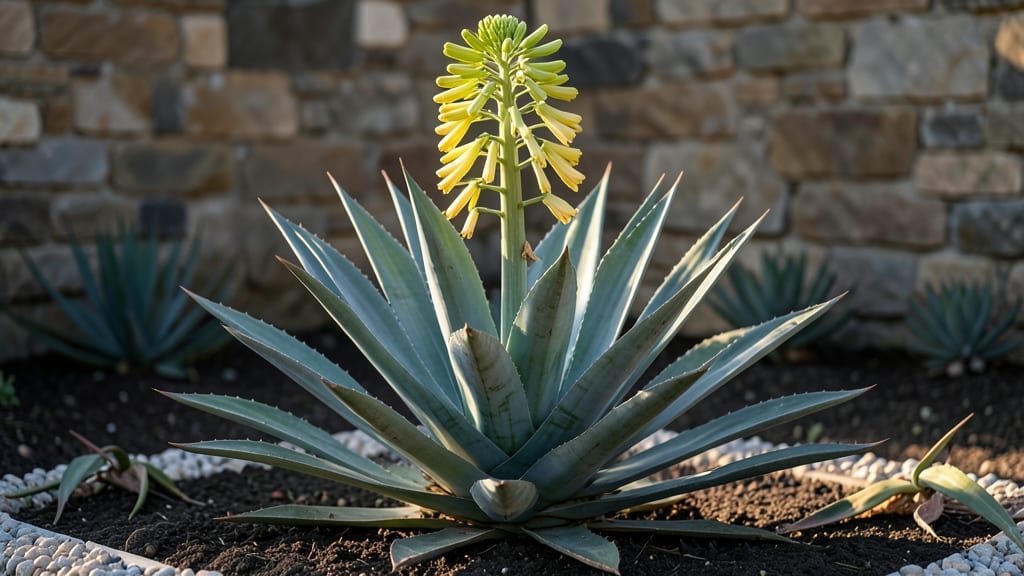
Witnessing a Queen Victoria agave bloom feels like nature's grandest firework display—once-in-a-lifetime drama for desert gardeners. 🌵 This rare agave, with its striking blue-green rosettes, takes 10-20 years to produce its towering, candelabra-like flower stalk, but the journey is what makes it magical.
The moment you spot new growth at the center of the rosette, you know the countdown has begun.
Here's the secret to coaxing that bloom: full sun, well-draining soil, and patience. This frost-resistant beauty thrives where summers scorch, but it needs protection from winter freezes below 20°F.
The rosette will slowly transform—leaves curling, a central spike emerging—before the dramatic 6-10 foot flower stalk bursts forth, covered in vibrant yellow blooms that attract hummingbirds and bees.
Once it blooms, the mother plant dies—but not before sending out pups (baby plants) around its base. These are your insurance policy for future blooms. Collect them carefully, replant them, and in 10-20 years, you might just witness the cycle repeat.
The payoff? A garden centerpiece that turns heads and stories that last generations.
For those in colder zones, container growing lets you bring it indoors during winter. The real reward? Knowing you've nurtured something so rare and spectacular that even Queen Victoria herself would envy your garden. Now, let's talk about what to watch for—and what to avoid—along the way.
📚 In This Guide
- What you need
- Instructions
- Tips and common mistakes
- Wrapping up and next steps
What you need
- ● Queen Victoria Agave Plant: 1 mature plant (6–12 inches in diameter, depending on age). Look for one with a healthy, symmetrical rosette and no signs of pests or disease.
- ● Well-Draining Soil: 5–10 gallons of cactus or succulent mix (or a blend of 60% potting soil + 40% perlite/pumice). Avoid heavy or clay-based soils.
- ● Container (if potted): 1–2 large pots (12–18 inches in diameter) with drainage holes. Terracotta or fabric pots work best.
- ● Gravel or Pebbles: 1–2 cups for the bottom layer of pots to improve drainage.
- ● Slow-Release Fertilizer: 1 packet of balanced, low-nitrogen fertilizer (e.g., 5-5-5 or 10-10-10) for succulents.
- ● Watering Can with Narrow Spout: 1 (for precise hydration—overwatering is the enemy!).
- ● Garden Gloves: 1 pair (to protect hands from sharp agave edges).
- ● Trowel or Small Shovel: 1 (for transplanting or adjusting soil).
- ● Pruning Shears: 1 (for trimming dead leaves or pups after blooming).
- ○ pH Testing Kit: 1 (optional, to ensure soil pH is between 6.0–7.0).
- ● Mulch (Gravel or Bark): Small amount (to retain moisture and deter weeds).
- ● A sunny location with 6+ hours of direct sunlight daily (partial shade in extreme heat).
- ● Frost protection for zones below USDA Hardiness Zone 8 (e.g., move pots indoors or use frost cloth).
- ● Patience—Queen Victoria Agave can take 7–10 years to bloom, but the wait is worth it!
Instructions for cultivating and caring for a Queen Victoria agave bloom
This striking succulent delivers drama with minimal fuss—here’s how to coax its legendary bloom.
🌱 Step 1: Select and Prepare the Planting Site
The Queen Victoria agave thrives in full sun with 6+ hours of direct light daily. Choose a location with well-draining soil—this plant despises soggy roots. Native to arid regions, it tolerates 10-40°F but prefers 70-95°F for optimal growth.
Amend heavy clay soil with coarse sand or gravel to improve drainage. Test your soil’s pH—Queen Victoria prefers slightly acidic to neutral (5.5-7.5). If your soil is alkaline, mix in sulfur or peat moss to adjust. Avoid fertilizing before planting; the plant stores nutrients in its leaves.
☀️ Step 2: Plant or Transplant with Care
Dig a hole twice as wide as the root ball but no deeper. Gently remove the plant from its container, loosening any circling roots with your fingers. Place it in the hole so the top of the root ball sits 1 inch below soil level—this prevents rot while allowing the base to absorb moisture.
Backfill with native soil, pressing lightly to eliminate air pockets. Water deeply immediately after planting to settle the soil, but avoid creating a puddle. Queen Victoria agaves establish slowly—wait 2-3 weeks before resuming regular watering. You’ll know it’s settled when new growth appears along the leaf edges.
💧 Step 3: Master Watering for Longevity
Water only when the soil feels completely dry 2-3 inches down. Stick your finger in the soil—if it’s damp, wait. Overwatering is the #1 killer of agaves. During summer heat, you may water every 2-3 weeks; in winter, reduce to every 4-6 weeks.
Use a drip irrigation system or soaker hose to deliver water at the base, avoiding wetting the leaves. Wet foliage invites fungal diseases, and Queen Victoria’s thick leaves repel water naturally. Mulch with 2-3 inches of gravel or crushed stone to reflect sunlight and prevent soil moisture loss.
✂️ Step 4: Prune and Maintain for Bloom Potential
Remove dead or damaged leaves with sterilized pruners, cutting at the base. Never prune healthy leaves—this plant relies on its rosette structure for energy storage. If you notice yellowing at the base, it’s a sign of rot; trim affected areas immediately to prevent spread.
Fertilize lightly in spring with a balanced, slow-release fertilizer (10-10-10). Apply only ½ the recommended dose—agaves are low-maintenance and don’t need heavy feeding. The goal is to encourage slow, steady growth, not rapid leaf production, which diverts energy from bloom development.
⏰ Step 5: Encourage the Legendary Bloom
Queen Victoria agaves typically bloom after 10-20 years, but you can nudge the process. In late winter, reduce watering by 50% to mimic drought stress—a natural trigger for flowering. Combine this with full sun exposure and consistent warmth (75-85°F).
The bloom itself is a spectacular 10-15 foot tall stalk with yellow-green flowers. Once it appears, protect it from strong winds. After flowering, the mother plant dies—but not before sending out pups (offspring) around its base. Transplant these immediately to continue your collection.
Tips & tricks for perfect Queen Victoria agave bloom cultivation
Toxic beauty thrives with these subtle adjustments that make all the difference between a struggling plant and a showstopper.
Sunlight Strategy: While the instructions specify 6+ hours of direct sun, I've found Queen Victoria agaves actually perform best with morning sun and afternoon shade in extremely hot climates (above 95°F). The intense afternoon rays can scorch the thick leaves, so if your summers are brutal, consider partial afternoon shade during peak heat months. This balances the plant's need for light while protecting its delicate structure.
Soil Science: The instructions mention amending clay soil with sand or gravel, but I've discovered an even better approach for heavy soils: create a raised bed with a mix of 50% native soil, 30% coarse sand, and 20% perlite. This provides the perfect drainage while maintaining moisture retention. The perlite also helps prevent compaction over time, which is crucial for these long-lived plants that need to establish deep root systems.
Watering Wisdom: The 2-3 inch soil dryness test is spot-on, but I've learned to adjust my finger test based on season. In summer, press your finger 3 inches down—the deeper dryness indicates the plant's ability to store water in its leaves. In winter, you can check at the original 2-3 inch depth since the plant's metabolic rate slows dramatically. This seasonal adjustment prevents both overwatering and underwatering during temperature shifts.
Bloom Trigger: The 50% water reduction in late winter is brilliant, but timing is everything. I've found the most reliable results come from starting this reduction in mid-February when day lengths begin increasing naturally. Combine this with a 10-15°F temperature drop (if possible) to simulate the natural winter chill that triggers flowering. The plant responds best when these environmental cues align with its natural dormancy period.
Pro Tips for Queen Victoria Agave Bloom
- Toxic beauty thrives with these subtle adjustments that make all the difference between a struggling plant and a showstopper.
- Sunlight Strategy: While the instructions specify 6+ hours of direct sun, I've found Queen Victoria agaves actually perform best with morning sun and afternoon shade in extremely hot climates (above 95°F).
- This provides the perfect drainage while maintaining moisture retention.
Frequently asked questions
Got questions about the stunning Queen Victoria Agave bloom? You’re not alone! Here are some of the most common queries—plus straightforward answers to help you nurture this frost-resistant beauty like a pro.
How cold can Queen Victoria Agave tolerate before damage occurs?
The Queen Victoria Agave is frost-resistant but not frost-proof. While it can handle brief dips to 20°F (-6°C), prolonged exposure below 25°F (-4°C) may cause leaf burn or bloom damage. Mulch heavily in winter and avoid planting in frost pockets for best results.
How long does the Queen Victoria Agave bloom last?
Once the dramatic 8-foot-tall inflorescence emerges, it typically blooms for 4–6 weeks. Afterward, the plant may produce offsets (pups) or decline—don’t panic! This is natural. Deadhead spent blooms to redirect energy to new growth.
Can I grow Queen Victoria Agave in containers? If so, what size pot do I need?
Yes! This agave thrives in containers but needs space to spread. Aim for a pot at least 12–18 inches wide and deep, with drainage holes. Use a fast-draining cactus/succulent mix and repot every 2–3 years to prevent root bind.
Why isn’t my Queen Victoria Agave blooming?
Several factors can delay blooming:
- Age: Most agaves bloom at 10–20 years old—patience is key!
- Light: Insufficient sun (6+ hours/day) stunts growth. Move to a sunnier spot.
- Stress: Overwatering or poor drainage can prevent flowering. Let soil dry completely between waterings.
- Nutrients: A light dose of low-nitrogen fertilizer in spring can encourage blooming.
What’s a good alternative if I want a dramatic bloom but can’t handle agave’s lifespan?
If you love the Queen Victoria’s spectacle but want a shorter-lived option, try:
- Dracaena marginata (‘Dragon Tree’): Arching leaves and occasional blooms.
- Yucca rostrata (‘Beaked Yucca’): Tall, architectural, and drought-tolerant.
- Hesperaloe parviflora (‘Red Yucca’): Blooms yearly with red flowers and is highly frost-resistant.
What should I do if my agave’s bloom turns mushy or rots?
Mushy blooms signal overwatering or fungal issues. Act fast:
- Trim the affected stem below the rot with sterilized shears.
- Reduce watering—let soil dry out completely between drinks.
- Improve airflow by spacing plants 3–4 feet apart.
- Apply copper fungicide if rot persists.
Wrapping up and next steps
The Queen Victoria Agave isn’t just a stunning centerpiece—it’s a low-maintenance powerhouse that brings drama and resilience to any garden. With its frost-resistant charm and bold, architectural beauty, this agave proves that striking plants can thrive even in heat and harsh conditions.
Whether you’re a seasoned gardener or just starting out, adding this majestic bloomer is a win-win for your outdoor space!
Ready to level up your landscape? 🌵✨ Start by selecting the perfect spot in your garden—one that gets plenty of sun—and watch as this agave becomes the star of your outdoor show! Plan your planting today and enjoy years of effortless elegance.