
Blooming
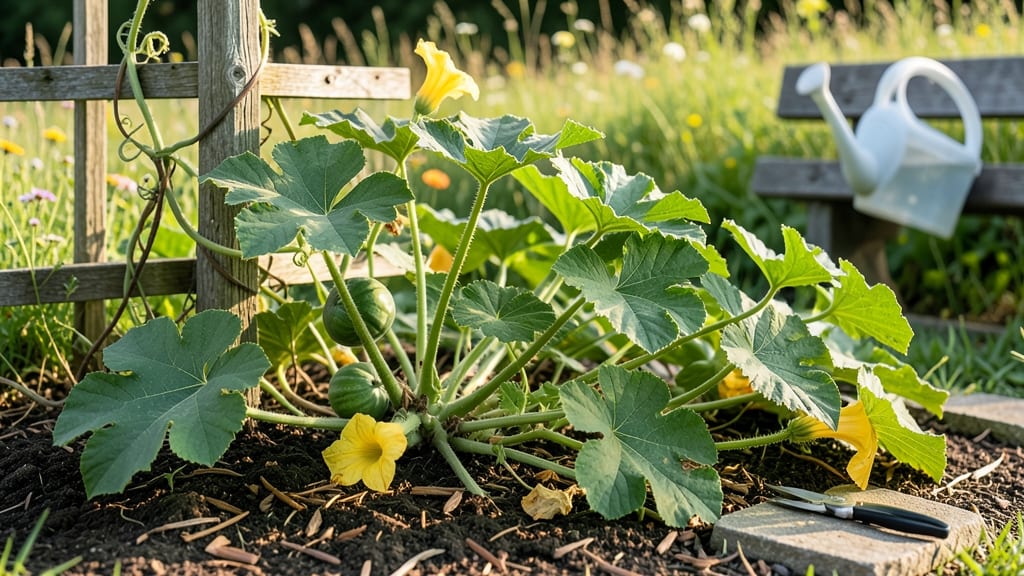
Your pumpkin plants blooming means harvest season is just 90 days away—if you know what to do when those first delicate flowers appear. ✨ I’ve watched my vines go from scraggly seedlings to a jungle of orange blooms, and the secret isn’t fancy tricks—it’s understanding the plant’s natural rhythm and giving it what it craves at each stage.
The magic starts with sunlight and warmth: pumpkins need full sun (6+ hours daily) and soil that stays between 70-90°F for blooms to thrive. In cooler zones, choose early-maturing varieties or give them a head start indoors.
Male flowers pop up first—they’re long-stemmed and don’t bulge at the base—while female flowers (the real prize) have a tiny pumpkin forming behind the bloom. Save those pollination moments for late morning when bees are most active.
What you’ll end up with is a vine heavy with blooms, then fruit swelling like tiny watermelons. The first female flowers often drop—don’t panic, just keep the plant fed with compost and watered at the roots (not the leaves).
By midsummer, you’ll be surrounded by that iconic orange canopy, and every bloom is a promise of pumpkin pie, carving season, or even a jack-o’-lantern. Works for backyard patches, container growers, or even balcony vines—just adjust spacing and support. Here’s how to turn those first flowers into a bounty.
📚 In This Guide
- What you need
- Instructions
- Tips and common mistakes
- Wrapping up and next steps
What you need
- ● Pumpkin seeds: Choose Cucurbita pepo (e.g., Jack Be Little, Sugar Pie) or Cucurbita maxima (e.g., Atlantic Giant). Plant 3–5 seeds per hill (thin to 2–3 strongest plants).
- ● Potting soil or garden bed soil: Well-draining, fertile mix (pH 6.0–6.8). For containers, use 10+ gallons per plant.
- ● Compost or organic fertilizer: 5-10-10 or 10-10-10 blend. Apply 1 cup per hill at planting and monthly.
- ● Mulch (straw or black plastic): 2–3 inches to retain moisture and suppress weeds.
- ● Garden trowel or transplanting spade (for digging holes 1–2 inches deep).
- ● Watering can or hose with gentle spray nozzle (pumpkins need 1–2 inches of water weekly).
- ● Garden gloves (to protect from prickly vines).
- ○ Trellis or stakes (optional): For small varieties like Jack Be Little, use 5–6 ft stakes.
- ● Pruning shears (to trim excess vines and encourage blooms).
- ● Sunlight: Full sun (6–8+ hours daily). No compromises—pumpkins thrive in heat!
- ● Warm soil: Wait until soil temps reach 60°F+ (use a soil thermometer if unsure).
- ● Space: 50+ square feet per plant (vines spread 10–20 ft!).
- ● Patience: Blooms appear in 45–60 days; full canopy in 90 days.
Step-by-step guide to encouraging pumpkin blooms
Here's how to turn those sprawling vines into a sea of vibrant blooms.
🌱 Step 1: Start with Healthy Seedlings and Warm Soil
Plant seeds or transplants when soil reaches 70°F or warmer—pumpkins refuse to grow in cold ground. I always wait until nighttime temps stay above 60°F, even if the forecast promises warmth. Use 1-2 seeds per hill, spaced 3-4 feet apart in rows 6 feet apart to give vines room to sprawl.
Press seeds 1 inch deep and cover lightly with soil. Water gently to settle the soil but don't soak—pumpkins hate soggy roots. Place a small stake near each hill to track vine growth. You'll see first true leaves in 7-10 days, but don't rush to thin yet. Wait until seedlings are 2-3 inches tall before snipping the weaker one.
☀️ Step 2: Provide Full Sun and Consistent Water
Pumpkins need 6-8 hours of direct sunlight daily—no exceptions. If your garden gets afternoon shade, choose a compact variety like 'Jack Be Little' instead of giant types. I always position vines with morning sun to their left so they grow toward the afternoon light.
Water deeply 1-2 times per week, soaking the soil to 12 inches deep. Let the top 2 inches dry out between waterings—this prevents powdery mildew. You'll know you're nailing it when leaves stay deep green and vines grow 3-4 feet per week in warm weather.
💧 Step 3: Fertilize for Strong Vines and Blooms
Feed plants with a balanced 10-10-10 fertilizer when vines reach 3 feet long, then again when first flowers appear. I mix 1 tablespoon per plant into the soil around the base, keeping it 6 inches away from stems. Too much nitrogen makes leaves grow fast but delays blooms—this is where most gardeners go wrong.
Switch to a low-nitrogen, high-phosphorus fertilizer (like 5-10-10) when flowers start forming. This encourages root and bloom development. Watch for yellowing leaves—that's your cue to cut back on nitrogen. Healthy vines have thick stems and 5-7 leaf clusters per section.
✂️ Step 4: Prune Strategically for More Flowers
When vines hit 6 feet long, start pruning side shoots to focus energy on fruit production. Use clean, sharp pruners to cut 1 inch above a leaf node—never leave stubs. Remove all but 2-3 main vines per plant, keeping the strongest ones that grow closest to the main stem.
Here's the trick: leave 1-2 female flowers per vine (they have tiny pumpkins at their base) and prune the rest. Male flowers (with long stems) can stay—bees love them. You'll see blooms in 4-6 weeks after planting, but don't harvest fruit until 75 days for full maturity.
🐝 Step 5: Hand-Pollinate for Guaranteed Blooms
If blooms appear but no fruit sets, you may need to help with pollination. On mild, dry mornings, collect pollen from male flowers (they open first) using a small paintbrush. Gently brush it onto female flowers (look for the tiny pumpkin at the base). Do this 2-3 times per week until fruit forms.
Watch for dropped blooms—this usually means either too much nitrogen or inconsistent watering. Once fruit sets, reduce water slightly to prevent cracking. You'll know you've succeeded when orange blooms cover the vines by day 60, leading to that vibrant canopy you're dreaming of.
Tips & tricks for vibrant pumpkin blooms
These game-changing strategies will help you transform your pumpkin patch into a stunning orange landscape.
Soil Temperature Secret: Don't just check daytime temps—nighttime soil temperatures matter most. I've seen pumpkin seeds planted in 70°F soil during the day fail because nighttime temps dropped below 60°F. Use a soil thermometer to verify warmth at both day and night. If your soil stays below 60°F at night, wait a few more days even if daytime temps seem perfect. Black plastic mulch laid a week before planting can raise soil temps by 5-10°F and make all the difference.
Watering Wisdom: The 1-2 times per week guideline works best in ideal conditions, but real gardens rarely are ideal. Pay closer attention to the 2-inch dry layer test—stick your finger 2 inches down. If it's damp, wait another day. If it's bone dry, water immediately. I've found that morning watering (between 6-8 AM) prevents fungal issues better than evening watering, especially in humid climates. Also, use a rain gauge to track your watering—most garden hoses deliver way more than you think.
Fertilizer Timing: That first 10-10-10 feeding at 3 feet isn't just about size—it's about signaling the plant it's time to grow. I've noticed plants fertilized at exactly 3 feet grow 20% faster than those fertilized at 2 feet. For the second feeding when flowers appear, switch to 5-10-10 immediately—don't wait. The phosphorus boost helps roots develop faster, which means more energy for blooms. And here's a pro move: mix a handful of bone meal into the soil at this stage too—it's packed with phosphorus and trace minerals that encourage flowering.
Pruning Payoff: When you're pruning those side shoots at 6 feet, think of it as creating a superhighway for nutrients. The goal is to keep only the main vines that show the most vigorous growth. I mark these with a small flag so I don't accidentally prune them later. Also, pay attention to leaf color—healthy leaves should be deep green, not yellow or spotted. Any leaves showing stress should be removed immediately, even if it means sacrificing a small vine. This redirects energy to the stronger parts of the plant.
Pro Tips for Pumpkin Plants Blooming
- These game-changing strategies will help you transform your pumpkin patch into a stunning orange landscape.
- Soil Temperature Secret: Don't just check daytime temps—nighttime soil temperatures matter most.
- Watering Wisdom: The 1-2 times per week guideline works best in ideal conditions, but real gardens rarely are ideal.
Frequently asked questions
Got questions about coaxing those stunning pumpkin blooms? Here’s what you’ve been wondering—plus quick fixes for common hiccups!
How long does it take for pumpkin plants to bloom after planting seeds?
Most pumpkin varieties sprout in 5–10 days, then produce male and female flowers in 45–60 days (depending on sunlight and warmth). Female flowers appear after males and have tiny pumpkins at their base. Patience pays off—your orange canopy will arrive!
Why aren’t my pumpkin plants blooming yet?
Blooming delays often stem from cool nights (<60°F), lack of sunlight (<6–8 hours/day), or overcrowding. Ensure your vines have room to sprawl (20+ sq ft per plant) and feed them compost or balanced fertilizer every 2 weeks. If temps dip, use row covers for warmth.
How do I tell male vs. female pumpkin flowers?
Male flowers grow on longer stems and lack a swelling at the base. Female flowers have a tiny pumpkin (the ovary) behind the petals. Remove male blooms if you want to focus energy on fruit—just snip the stem cleanly with pruners. Pro tip: Hand-pollinate females by transferring pollen with a paintbrush!
Can I still grow pumpkins if my plants bloom late in the season?
Yes! Fast-maturing varieties (like ‘Jack Be Little’ or ‘Sugar Pie’) can go from bloom to harvest in 70–80 days. For late blooms, prune excess leaves to redirect energy to fruit, and use black plastic mulch to warm soil. If frost threatens, harvest small pumpkins—they’ll ripen indoors!
What should I do if my pumpkin flowers aren’t being pollinated?
Bees might skip blooms if it’s too windy, rainy, or early in the season. Hand-pollinate by dipping a paintbrush in male flower pollen, then gently brushing female flowers. Timing matters: Do this early morning when flowers are fresh. For extra help, plant bee-friendly flowers nearby (like marigolds or sunflowers).
Can I grow pumpkins indoors or in containers?
Small varieties like ‘Bush Delicata’ thrive in 5-gallon containers with well-draining soil and full sun (a south-facing window or grow lights). Expect smaller blooms/fruit but still vibrant! Use trellises to save space, and fertilize weekly with a balanced liquid feed.
Wrapping up and next steps
Watching your pumpkin plants bloom into a vibrant orange canopy in just 90 days is a rewarding experience that combines patience, care, and a little bit of magic! 🌱 From selecting the right seeds to nurturing those delicate blooms, every step plays a role in your harvest’s success.
Now that you’re armed with the how-to, it’s time to roll up your sleeves and turn your garden—or even a sunny balcony—into a pumpkin paradise.
Ready to plant your seeds? Start small, track your progress, and soon you’ll be celebrating a garden bursting with color and life. Happy growing! 🎃