
Blooming
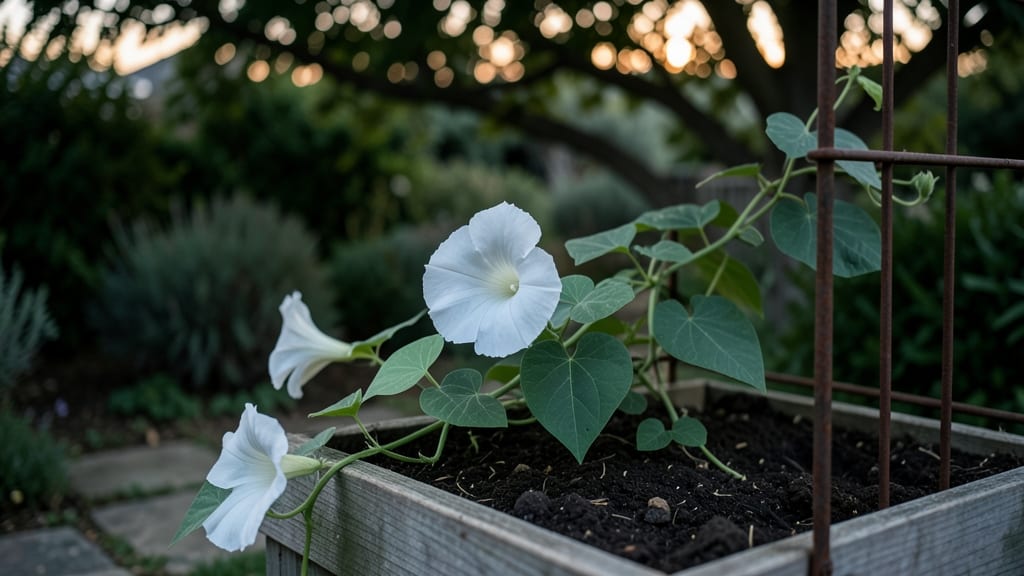
Night-blooming morning glory unfurls its fragrant trumpets only after sunset, and I’ve learned the secret to coaxing those moonlit displays year after year—it’s all about the right growing conditions. 🌙 These vines don’t just climb; they transform your garden into a nocturnal perfume factory, drawing in moths with their sweet, intoxicating scent.
The key? Mimicking their natural tropical habits, because they’re picky about heat, humidity, and consistent moisture.
Start with well-draining soil mixed with compost—these vines hate soggy roots—and plant them in full sun for 6+ hours daily, even if they bloom at night. A sturdy trellis (think 8-10 feet tall) gives them room to twine upward, and regular watering keeps the foliage lush.
Forget the morning glory you know—this one thrives in zones 9-11, but even cooler climates can grow it as an annual with a little extra care.
By mid-summer, you’ll wake to find delicate white blooms already fading, replaced by fresh ones opening as dusk falls. The scent alone is worth the effort—like walking through a secret garden after dark. Just avoid overwatering (yellow leaves are a dead giveaway) and watch for powdery mildew if humidity spikes.
Pro tip: Deadhead spent blooms to encourage more flowers, and let the vines climb freely—they’ll reward you with months of nocturnal beauty. Perfect for patios, pergolas, or even container growing with a vertical support. Now go chase those moonlit blooms!
📚 In This Guide
- What you need
- Instructions
- Tips and common mistakes
- Wrapping up and next steps
What you need
- ● Seeds: 10–20 Ipomoea alba (night blooming morning glory) seeds (organic, non-GMO preferred).
- ● Growing Containers: 5-gallon pots (2–3) with drainage holes or
- ● In-ground garden bed (6–8 ft long, well-draining soil).
- ● Potting Mix: 1–2 bags of high-quality, well-draining potting soil (add perlite or sand for aeration).
- ● Support Structure: Trellis (6–8 ft tall) or
- ● String/rope tied between posts (for climbing).
- ● Fertilizer: Balanced, water-soluble fertilizer (10-10-10 or 20-20-20, diluted to half-strength).
- ● Watering Can: 1–2 gallon capacity (with a gentle spray nozzle).
- ● Pruning Shears: Small, sharp pair for trimming vines.
- ● Mulch (straw or shredded leaves) to retain moisture.
- ● Plant food (compost or worm castings) for nutrient boost.
- ● Grow lights (if starting indoors before last frost).
- ● Moonlight reflector (for enhanced nighttime blooms—fun experiment!).
- ● Garden gloves (to protect hands from thorns on some varieties).
How to grow night blooming morning glory vines
Here's how I transform my garden into a moonlit wonderland with these easy-care climbers.
🌱 Step 1: Choose the Perfect Planting Location
Morning glories need a sturdy trellis or fence at least 6-8 feet tall—these vines grow aggressively. I always plant near a south-facing wall or fence where they'll get full sun for 6+ hours daily. The key is positioning the trellis where the vines will climb upward during the day, then cascade beautifully at night.
Check your space for obstructions like trees or buildings that might block morning sun. You'll see the vines start climbing within 2-3 weeks of planting, so choose a spot where they can spread without crowding other plants. I like to plant mine near patios or walkways so I can enjoy the evening display up close.
💧 Step 2: Plant Seeds at the Right Time and Depth
Sow seeds directly in the garden after your last frost date when soil reaches 60°F. I've found that planting in late spring gives vines enough time to establish before summer heat arrives. Drop seeds ½ inch deep and 6 inches apart—they germinate best in warm soil, so avoid planting too early in cool climates.
Keep the soil consistently moist but not soggy during germination, which takes 7-14 days. You'll know it's working when you see the first true leaves appear—these will be heart-shaped and deep green. I like to thin seedlings to 4-6 inches apart once they're 2 inches tall to give each plant room to grow into a strong vine.
☀️ Step 3: Provide Support and Encourage Vigorous Growth
Install your trellis or fence before planting so the vines have something to climb immediately. I use a 5-foot tall wire trellis for my morning glories, and they'll reach the top within 6-8 weeks. As the vines grow, gently weave them through the trellis supports to encourage upward growth.
Water deeply 1-2 times per week during dry spells, focusing on the base of the plant. You'll see the most dramatic blooms when vines are well-established and healthy. I always add a balanced fertilizer in early summer to boost flowering—just follow package instructions for application rates.
✂️ Step 4: Prune and Maintain for Continuous Blooms
Deadhead spent flowers regularly to encourage more blooms, but don't prune too aggressively—morning glories produce flowers along their stems. I like to pinch back the tips of young vines to promote bushier growth. The vines will naturally die back in fall, so I let them go dormant unless I'm in a mild climate where they might overwinter.
Watch for pests like aphids or spider mites, which can weaken the vines. A strong spray of water usually removes them, but I've also used insecticidal soap if needed. The key to success is keeping the vines healthy and supported—they'll reward you with stunning nighttime displays all summer long.
🌙 Step 5: Enjoy the Evening Show
Morning glories typically bloom from late afternoon into the night, with flowers opening fully in the evening. I've seen them stay open until sunrise in some varieties! The best viewing is on warm, moonlit nights when the flowers glow against the dark sky.
To extend the blooming season, I sometimes plant a second batch of seeds in early summer. The vines will grow quickly and start flowering just as the first batch begins to fade. With proper care, you can enjoy these enchanting flowers from early summer through fall.
Tips & tricks for growing stunning moonlit vines
Transforming your garden into a nighttime spectacle with these enchanting climbers takes just a few key tricks—and avoiding some common pitfalls.
Location is Everything: That south-facing spot with full sun isn't just about daytime growth—it's what triggers those magical nighttime blooms. I've found that planting near a reflective surface like a patio or walkway amplifies the evening glow. The vines need that 6+ hours of direct sun to store enough energy for their dramatic nighttime show.
Soil Temperature Matters: The 60°F soil temperature requirement isn't arbitrary—it's when morning glory seeds become active. Use a soil thermometer if you're unsure, especially in cooler climates. I've seen germination rates drop dramatically when soil stays below 55°F. For faster results, consider using a seedling heat mat if you're planting early.
Timing Your Trellis Installation: Installing that 5-foot trellis before planting gives vines something to latch onto immediately, which prevents them from sprawling on the ground. I've had the best success with wire trellises—they're sturdy enough to support the weight of mature vines while allowing them to weave through naturally. The 6-8 week climb time assumes you're starting with healthy seeds and proper support.
Nighttime Viewing Secrets: For the most dramatic displays, position a string light or solar-powered garden light near your vines. The combination of artificial light and moonlight creates a magical effect. I've also found that white or pale purple varieties show up best against dark backgrounds—consider planting them near dark green foliage or against a black fence for maximum impact.
Pro Tips for Night Blooming Morning Glory
- Transforming your garden into a nighttime spectacle with these enchanting climbers takes just a few key tricks—and avoiding some common pitfalls.
- Location is Everything: That south-facing spot with full sun isn't just about daytime growth—it's what triggers those magical nighttime blooms.
- Soil Temperature Matters: The 60°F soil temperature requirement isn't arbitrary—it's when morning glory seeds become active.
Frequently asked questions
When do night blooming morning glories actually open?
Night blooming morning glories typically open their flowers in the late afternoon or early evening, around 4–6 PM, and remain vibrant until sunrise. They close again as daylight returns. If you’re eager to see them, check for buds that start swelling in the afternoon—they’ll unfurl within hours!
How fast do these vines grow, and how much space do they need?
These vines are fast growers, often climbing 6–10 inches per day in ideal conditions! They can reach 15–20 feet in a single season, so provide a sturdy trellis, fence, or pergola. Without support, they’ll sprawl aggressively—give them at least 10 feet of horizontal space if left to trail.
Can I grow night blooming morning glories in containers?
Yes! They thrive in large containers (at least 5-gallon pots) with well-draining soil and regular watering. Use a trellis or tall cage to guide their growth. Just ensure the pot has drainage holes and is placed in full sun. Containers also make it easier to overwinter the plant in warmer climates.
Are night blooming morning glories toxic to pets or humans?
While generally not toxic to humans, night blooming morning glories contain lysergic acid amide, a mild psychoactive compound. In large quantities, they may cause mild nausea or dizziness. For pets, they’re low-risk, but it’s best to discourage chewing to avoid stomach upset. Keep them out of reach if you have curious pets!
Do night blooming morning glories come back every year?
In most cases, no—they’re annuals and die back with frost. However, in warm climates (USDA Zones 9–11), they may reseed themselves. For repeat blooms, save seeds from the pods (they turn brown and papery when ripe) or replant fresh seeds each spring. Chilly regions can try overwintering them indoors, but they’re best treated as seasonal stars!
What if my morning glories aren’t blooming at night?
Check these common issues:
- Light exposure: Ensure they get 6+ hours of direct sun daily—partial shade can delay blooming.
- Watering: Too much moisture stresses roots; keep soil evenly moist but not soggy.
- Fertilizer: Use a balanced, low-nitrogen fertilizer to encourage flowers over foliage.
- Variety: Some hybrids bloom earlier; try ‘Moonlight and Starlight’ for reliable nighttime shows.
Wrapping up and next steps
The night blooming morning glory is a magical addition to any garden, offering a mesmerizing display of moonlit beauty and vibrant colors. Whether you're drawn to its enchanting flowers, ease of growth, or ecological benefits, these vines bring a touch of whimsy and wonder to your outdoor space. 🌙✨
Ready to invite some nighttime charm into your life? Start by selecting your favorite variety, gathering your supplies, and giving these vines the love they deserve. Soon, you’ll be rewarded with a breathtaking spectacle that turns your garden into a dreamy, after-dark paradise!