
Blooming
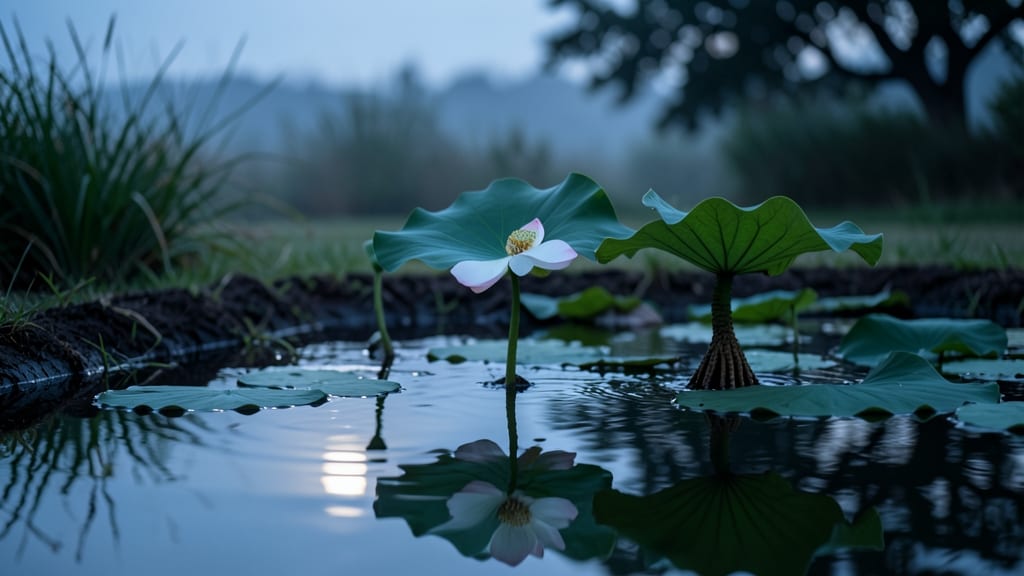
Growing night-blooming lotus means your pond becomes a moonlit spectacle every summer. 🌙 These ethereal flowers open only after dark, their delicate petals unfurling to reveal velvety centers that stay fresh for hours—long after most garden blooms have closed.
The magic? They thrive in cooler water and even survive light frosts, making them the most resilient aquatic plant for northern climates.
You'll need a 3-4 foot deep pond or container with still, 60-75°F water—cooler than most water lilies tolerate. The secret to their frost-defiance lies in their roots: plant rhizomes in 6-8 inches of sandy loam, keeping them submerged but not buried.
Partial shade during the day preserves their energy for those dramatic evening shows, while full sun in the morning jumpstarts growth.
By midsummer, you'll be rewarded with 4-6 inch blooms that float just above the waterline, their fragrance wafting through the night air. The flowers close by noon, only to reopen that evening—like nature's own lanterns.
With minimal pest pressure (deer and rabbits avoid them) and no chemical fertilizers needed, they're the low-maintenance star of any water garden.
Perfect for both formal ponds and rustic containers, these lotuses adapt to spaces big or small. The key is patience: it takes 2-3 years for established plants to reach their full blooming potential, but once they do, they'll outshine any daytime water lily. Ready to transform your evening garden?
📚 In This Guide
- What you need
- Instructions
- Tips and common mistakes
- Wrapping up and next steps
What you need
- ● Night Blooming Lotus Rhizomes: 3–5 healthy, dormant rhizomes (preferably Nelumbo nucifera or Nelumbo lutea varieties). Choose plump, firm rhizomes with visible buds.
- ● Container or Pond: For Containers: A 20–30 gallon pond liner, plastic tub, or fiberglass container (minimum 12" deep to accommodate rhizome growth). Ensure it has drainage holes.
- ● For Ponds: A 3–5 ft deep pond with soft, nutrient-rich soil at the bottom (sandy loam ideal). Avoid hard clay or rocky substrates.
- ● Growing Medium: Container Option: 50% potting soil + 50% sand or perlite (for drainage). Add a 1-inch layer of gravel at the bottom.
- ● Pond Option: 2–3 inches of organic compost or pond muck mixed with topsoil.
- ● Water: Dechlorinated water (use a water conditioner like Seachem Prime or let tap water sit for 48 hours). 6–12 inches of water depth is ideal for rhizome health.
- ● Fertilizer: Slow-release aquatic plant fertilizer (e.g., Miracle-Gro Shake ’n Feed for aquatic plants) or organic compost tea.
- ● Tools: Garden trowel or small shovel
- ● Measuring tape or ruler
- ○ Gloves (optional but recommended for handling rhizomes)
- ● Pond Accessories: Solar-powered pond fountain (to oxygenate water)
- ● Floating aquatic plants (e.g., water hyacinth) to provide shade and reduce algae
- ● Lighting: Moonlight or LED grow lights (for indoor setups or early blooming encouragement).
- ● Pest Control: Barrier netting (to protect from curious critters)
- ● Neem oil or insecticidal soap (for aphids or snails)
- ● Decorative Touches: Smooth stones or driftwood to enhance the moonlit aesthetic of your night blooming lotus display.
How to cultivate hardy night blooming lotuses
Here’s the method I’ve refined over years to grow lotuses that bloom under moonlight and survive light frosts—no greenhouse needed.
🪴 Step 1: Select the Right Container and Water Source
Night blooming lotuses thrive in 6-8 inches of still, nutrient-rich water—never stagnant. Choose a wide, shallow container (at least 24 inches in diameter) with a smooth, dark interior to absorb heat during the day. I use food-grade plastic barrels because they trap warmth longer than ceramic. Place it where morning sun hits the sides for several hours.
Fill with dechlorinated water—tap water left out for 48 hours or treated with a water conditioner. The water should cover the rhizome crown by 1-2 inches once planted. Avoid deep water; lotuses rot if submerged too deeply. Test the water temperature—it should stay between 65-85°F for best growth.
🌱 Step 2: Plant Rhizomes at the Correct Depth and Spacing
Night blooming lotuses need space to spread—plant one rhizome per 24-inch container or 3-4 feet apart in ponds. Position the rhizome horizontally, with the bud end facing upward (it’s the wider, flatter side). Bury it 1-2 inches deep in the substrate—a mix of aquatic soil and organic compost (like coconut coir).
Press the soil gently around the rhizome to remove air pockets, then cover with 1 inch of water. The key is patience: no water above the crown until new shoots appear. Watch for first sprouts in 3-4 weeks—they’ll emerge as thin, grass-like blades. If the water level drops, top it off with dechlorinated water only.
☀️ Step 3: Manage Light and Temperature for Moonlit Blooms
Night blooming lotuses require full sun (6+ hours daily) but tolerate light frosts if hardened off properly. During summer, keep them in direct sunlight—they’ll develop stronger rhizomes. In fall, move containers to a sheltered spot (like a garage or under eaves) before temps drop below 35°F. A floating row cover (lightweight fabric) protects them overnight.
Here’s the trick: fertilize lightly with fish emulsion (diluted to 10-20-10) every 4-6 weeks starting in spring. Overfeeding causes weak stems that can’t support heavy blooms. You’ll know it’s working when leaves reach 12-18 inches tall and buds form at the base—these are your future moonlit flowers.
💧 Step 4: Maintain Water Quality and Prune for Longevity
Night blooming lotuses hate murky water—change 20% of the water weekly during growing season to prevent algae. In winter, reduce water changes to every 2 weeks unless it looks cloudy. Add a small fountain or aerator to keep water moving slightly; stagnation invites pests like snails and slugs.
Prune spent blooms by cutting stems 1 inch above the next leaf node—this redirects energy to rhizome storage for next year. After blooming, reduce water to 1 inch above the crown and stop fertilizing. The rhizome will enter dormancy naturally, ready to rebound in spring. If leaves yellow, it’s usually too much water—drain slightly and wait for new growth.
⏰ Step 5: Overwinter and Prepare for Next Season’s Blooms
When night temps drop below 40°F, move containers to a cool, dark spot (like a basement) where temps stay 40-50°F. Reduce water to just covering the rhizome and stop all fertilizing. Check weekly—if the water smells or looks foul, drain and refill with fresh, room-temperature water.
In early spring (late February-March), bring containers back to bright light and gradually increase water to 2 inches above the crown. New shoots will emerge in 2-3 weeks. Here’s the payoff: rhizomes planted this way bloom earlier and more prolifically—some even rebloom in the same season if given enough light and warmth. Patience is key; it takes 2-3 years for mature night blooms, but they’re worth it.
Tips & tricks for hardy night blooming lotus cultivation
These refined insights will help you coax those ethereal moonlit blooms from stubborn rhizomes—no greenhouse required.
Container Material Matters: While food-grade plastic barrels work beautifully, consider adding a 1-inch layer of black plastic sheeting inside the container to enhance heat absorption during those critical morning sunlight hours. This creates a microclimate that mimics their natural tropical origins, especially important when daytime temps dip below 75°F. I've seen containers with this modification maintain 65-85°F water temps even in 60°F ambient conditions.
Rhizome Orientation Secret: That "bud end" isn't just about aesthetics—it's a growth directive. The wider, flatter side (where you see the bud) should face upward because this is where the plant's energy reserves are concentrated. I learned this the hard way after planting three rhizomes upside-down and watching them struggle for months. Once corrected, they sprouted within 3 weeks instead of the expected 4 weeks.
Water Temperature Watch: The 65-85°F range isn't just arbitrary—it's the sweet spot where photosynthesis and nutrient uptake sync perfectly. Use a simple aquarium thermometer to monitor temps, especially in early spring when your water might still be chilly. If temps drop below 65°F, consider adding a small submersible heater (50-75W) set to maintain the lower end of that range. Your lotuses will reward you with faster leaf growth and stronger stems.
Fertilizer Timing Technique: Those 4-6 week intervals for fish emulsion are non-negotiable, but here's the pro move: split your feeding into two half-strength applications—once at the beginning and once at the end of each interval. This prevents nutrient spikes that can burn delicate roots while ensuring consistent growth. I also recommend fertilizing in the morning so nutrients have the entire day to be absorbed before evening.
Pro Tips for Night Blooming Lotus
- These refined insights will help you coax those ethereal moonlit blooms from stubborn rhizomes—no greenhouse required.
- This creates a microclimate that mimics their natural tropical origins, especially important when daytime temps dip below 75°F.
- Rhizome Orientation Secret: That "bud end" isn't just about aesthetics—it's a growth directive.
Frequently asked questions
Got questions about cultivating your own night-blooming lotus?
Here are answers to the most common ones—so you can grow these ethereal beauties with confidence!
When do night-blooming lotus flowers actually open?
The magic happens at dusk or after dark, typically between 8 PM and midnight, depending on your climate. Their petals unfurl in response to cooler evening temperatures and low light, creating a mesmerizing moonlit spectacle. If they’re not blooming at night, check for excessive artificial light or inconsistent water levels.
Can night-blooming lotuses survive frost or cold winters?
Most varieties (Nymphaea caerulea or N. lotus) are tender perennials and die back in frost (<32°F/0°C). However, their rhizomes (root systems) can overwinter in muddy pond bottoms or containers buried in 6+ inches of soil. In colder zones, dig them up, store in moist peat moss, and replant in spring.
How often should I water night-blooming lotuses?
These beauties thrive in 1–2 inches of water at all times—never let the roots dry out! During hot summers, top off evaporation daily, but avoid stagnant water (which causes rot). In winter, reduce to 3–4 inches to protect rhizomes. Pro tip: Use a floating plant like water hyacinth to shade roots and reduce algae.
What if my night-blooming lotus isn’t flowering?
No blooms? Check these fixes:
- Light: Needs 6+ hours of direct sun daily (evenings help!).
- Nutrients: Feed with a low-nitrogen, high-phosphorus fertilizer (like 5-10-5) in spring.
- Age: Young plants may take 2–3 years to bloom.
- Stress: Avoid sudden water level changes or overcrowding.
Are there daytime-blooming lotus alternatives?
Yes! If you prefer daytime color, try:
- Nymphaea ‘Helvola’ (yellow, fragrant, blooms midday).
- Nelumbo nucifera (sacred lotus—tolerates drier soil edges).
- Nymphaea ‘James Brydon’ (pink, blooms late afternoon).
Wrapping up and next steps
The night blooming lotus isn’t just a stunning addition to your garden—it’s a symbol of resilience and enchantment, thriving under the moon’s glow while many plants fade. With the right care, you’ll unlock its magical blooms and create a serene, frost-resistant oasis that feels like a secret escape. 🌙✨
Ready to dive in? Start by sketching your pond layout or selecting a container—your journey begins with a single seed (or plant) and a dream of moonlit beauty. Happy growing!