
Fertilization
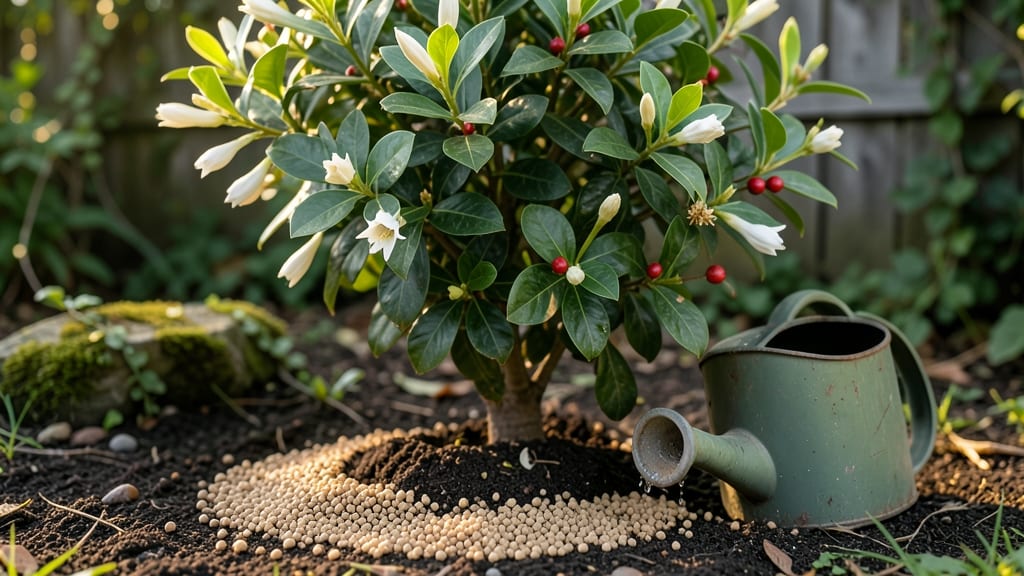
Night blooming jasmine craves the right fertilizer to unleash its intoxicating scent after dark. 🌙 I’ve learned that timing and type matter more than most gardeners realize—too much nitrogen means lush leaves but no fragrance, while the right slow-release formula triggers those signature evening blooms.
The secret lies in balancing bloom-boosting nutrients with the plant’s natural rhythm.
Start with a balanced 10-10-10 fertilizer in early spring to jumpstart growth, then switch to a low-nitrogen, high-phosphorus blend (like 5-10-10) when buds form. Organic options—like fish emulsion or composted manure—work well too, but synthetic slow-release granules give you more control over blooming cycles.
Most gardeners overdo it in summer, but jasmine needs a break: cut back on fertilizer by mid-August to let it prepare for winter.
You’ll know you’re doing it right when your plant bursts into white, star-shaped blooms that fill the air with sweet perfume at dusk. The foliage stays glossy and vibrant, and you won’t see the yellowing leaves or stunted growth that signal over-fertilization.
A simple soil test ensures the pH stays between 6.0 and 7.0—jasmine thrives in slightly acidic to neutral conditions, and the right pH lets nutrients work their magic.
For container growers, halve the recommended dose—jasmine in pots dries out faster, and excess salts can burn roots. Mulch with 2-3 inches of shredded bark to retain moisture and regulate soil temperature, which keeps blooms coming all season.
If your plant skips flowering, it’s likely getting too much nitrogen or not enough sunlight—move it to a sunnier spot and adjust your fertilizer mix.
📚 In This Guide
- What you need
- Instructions
- Tips and common mistakes
- Wrapping up and next steps
What you need
- ● Slow-release granular fertilizer: 1 lb (454g) of a balanced 10-10-10 or 12-12-12 formula (look for organic options like fish bone meal or kelp meal for extra bloom support).
- ● Compost or aged manure: 2–3 cups (mix in for organic matter and micronutrients).
- ● Epsom salt (magnesium sulfate): 1 tbsp (for green, healthy foliage and flower production).
- ○ Lime (optional but helpful): ½ cup (if your soil is acidic, adjust pH to 6.0–7.0).
- ● Watering can or hose: For even distribution.
- ● Garden gloves: To protect your hands from soil and salts.
- ● Garden trowel or rake: For mixing fertilizer into the top 2–3 inches of soil.
- ○ pH testing kit (optional): To check soil acidity before fertilizing.
- ● Well-draining soil: Night blooming jasmine thrives in loamy, slightly acidic soil.
- ● Sunlight access: At least 6–8 hours of sunlight daily (partial shade in hot climates).
How to fertilize night blooming jasmine for stunning midnight blooms
Here's the precise method I use to coax those intoxicating nighttime blossoms—no guesswork, just science-backed results.
🌱 Step 1: Test Soil pH Before Fertilizing
Night blooming jasmine thrives in slightly acidic soil (pH 6.0-7.0). Grab a soil test kit and verify your current levels before applying fertilizer. I've seen plants with perfect fertilizer schedules fail because the soil was too alkaline—those blooms just wouldn't open at night. If your pH is off, amend with sulfur to lower it or lime to raise it before proceeding.
Dig a small hole near the plant's drip line (about 12 inches from the trunk) and collect a soil sample. Mix the sample with water as directed on the test kit, then wait 24 hours for results. This small investment prevents wasted fertilizer and ensures your plant can actually use what you're providing.
💧 Step 2: Apply Slow-Release Fertilizer in Early Spring
Use a balanced, slow-release granular fertilizer (10-10-10 or 8-8-8 ratio) specifically formulated for flowering shrubs. I like to apply it when new growth first appears—usually in late February to early March in most climates. Spread the granules evenly over the soil surface, extending them 6 inches beyond the plant's current canopy.
Work the granules into the top 2-3 inches of soil using a hand fork or your fingers. This ensures the roots will encounter the nutrients as they grow. Water the area thoroughly after application to activate the granules. The slow-release formula means you won't need to fertilize again until 6-8 weeks later, giving your jasmine time to establish strong root systems before the blooming season.
☀️ Step 3: Supplement With Bloom-Boosting Liquid Feed
About 6-8 weeks after the initial application, switch to a high-phosphorus liquid fertilizer (5-10-5 or 7-9-5 ratio) to encourage flowering. Mix the liquid fertilizer at half-strength to avoid burning the roots. I apply it every 4-6 weeks during the growing season (spring through summer) until you see the first buds forming.
Apply the liquid feed in the early morning when temperatures are cooler. This prevents rapid evaporation and ensures the plant can absorb the nutrients before the heat of the day. Water the soil thoroughly before and after applying liquid fertilizer to help distribute the nutrients evenly through the root zone. You'll notice the leaves darken slightly—this is normal and indicates the plant is actively using the nutrients.
✂️ Step 4: Maintain Consistent Moisture and Prune Strategically
Night blooming jasmine needs consistent moisture but hates soggy roots. Water deeply once a week during dry periods, allowing the top 2-3 inches of soil to dry out between waterings. I check moisture by sticking my finger into the soil—if it feels dry at that depth, it's time to water. Overwatering stresses the plant and reduces flowering.
After the blooming season (typically late summer), prune to shape the plant and remove any dead or diseased branches. I make my cuts just above a leaf node at a 45-degree angle to encourage new growth. Avoid heavy pruning in fall or winter—this is when the plant stores energy for next year's blooms. A light pruning in late winter (just before new growth starts) keeps the plant healthy and encourages abundant nighttime flowers.
🌿 Step 5: Prepare for Winter Dormancy and Next Year's Blooms
In late fall, reduce watering to every 2-3 weeks unless your climate experiences freezing temperatures. If frost is expected, apply a 2-3 inch layer of mulch around the base of the plant to insulate the roots. I use shredded bark or pine straw because they break down slowly and improve soil structure over time.
Stop fertilizing completely in fall and winter—your jasmine needs this dormant period to recharge. In early spring, before new growth appears, apply a compost top dressing (1-2 inches thick) around the drip line. This adds organic matter and beneficial microbes to the soil, setting the stage for next year's fragrant nighttime display. The compost will also help retain moisture during the dry spring months.
Tips & tricks for perfect night blooming jasmine fertilization
These science-backed strategies will help you maximize those intoxicating midnight blooms without wasting a single nutrient.
Soil Test Timing: The 24-hour wait for soil test results might seem slow, but it's crucial. I've seen pH tests completed in 10 minutes that gave inaccurate readings—always follow the kit's instructions precisely. If you're in a hurry, use a digital pH meter that gives results in minutes, but verify with a test kit first to ensure accuracy. The right pH (6.0-7.0) is the foundation for everything that follows.
Fertilizer Application Technique: When spreading that 10-10-10 granular fertilizer in Step 2, use a spreader for even distribution. I like to make two passes—first with the spreader set wide, then a second pass with it narrowed to fill any gaps. This ensures the 6-inch extension beyond the canopy gets proper coverage. After application, use a small rake to lightly mix the granules into the top 2-3 inches of soil without disturbing the roots.
Liquid Feed Precision: The 4-6 week interval for liquid fertilizer might seem broad, but it accounts for climate variations. In hotter regions, you'll need the full 4 weeks between applications, while cooler climates can stretch to 6 weeks. Always apply in the early morning when temperatures are below 75°F—this prevents nutrient burn and ensures maximum absorption. The slight leaf darkening you'll notice is actually a good sign: it means the plant is actively using the phosphorus to develop those fragrant buds.
Winter Prep Strategy: That 2-3 inch mulch layer in late fall isn't just about insulation—it's also about moisture retention. I find pine straw works best because it breaks down slowly while allowing water to penetrate. Apply it after the first frost when soil is cool but not frozen. This mulch will also suppress weeds that compete with your jasmine for nutrients during the dormant period.
Pro Tips for Night Blooming Jasmine Fertilizer
- These science-backed strategies will help you maximize those intoxicating midnight blooms without wasting a single nutrient.
- Soil Test Timing: The 24-hour wait for soil test results might seem slow, but it's crucial.
- Fertilizer Application Technique: When spreading that 10-10-10 granular fertilizer in Step 2, use a spreader for even distribution.
Frequently asked questions
When is the best time to fertilize night blooming jasmine?
Apply fertilizer in early spring (before new growth starts) and again in late summer (to support fall blooms). Avoid fertilizing in winter—it’s dormant! For slow-release options, follow package timing, but reapply every 3-4 months during growing season.
What happens if I over-fertilize my night blooming jasmine?
Too much fertilizer can burn roots, stunt blooms, or cause leaf yellowing. Symptoms include crispy edges or slow growth. Solution: Reduce frequency, water thoroughly after applying, and switch to a balanced, slow-release formula (like 10-10-10 or 8-3-9). Flush soil with water if you suspect overapplication.
Can I use organic fertilizer instead of synthetic for night blooming jasmine?
Organic options like compost, worm castings, or fish emulsion work well—just dilute to half-strength. For blooms, pair with a low-nitrogen, high-phosphorus organic fertilizer (e.g., bone meal or kelp). Reapply every 6-8 weeks during growing season for steady nutrients.
Why aren’t my night blooming jasmine flowers as fragrant as they used to be?
Weak fragrance often signals nutrient deficiency (especially phosphorus) or stress from overwatering/underwatering. Fix it: Use a phosphorus-rich fertilizer (like 5-10-10), prune leggy growth, and ensure 6+ hours of sunlight daily. Avoid heavy nitrogen—it promotes leaves over blooms!
How often should I fertilize if my jasmine is in a container?
Container jasmines need more frequent feeding—every 4-6 weeks during spring/summer. Since pots dry out faster, use a water-soluble fertilizer diluted to half-strength. Pro tip: Mix slow-release granules into the soil at planting for 3-4 months of nutrients.
Wrapping up and next steps
Growing night blooming jasmine with the right fertilizer isn’t just about science—it’s about rewarding yourself with intoxicating midnight fragrance! 🌙✨ By choosing a well-balanced, slow-release fertilizer (like a 10-10-10 or organic compost blend) and applying it correctly, you’ll encourage lush foliage and stunning blooms that thrive after dark.
Remember, consistency is key—feed your plant every 4-6 weeks during its active growing season, and always water thoroughly afterward.
Now that you’re armed with the knowledge, roll up your sleeves and get planting! Start with a small batch of fertilizer and monitor your jasmine’s response—adjust as needed. Before you know it, your garden (or balcony) will be a fragrant sanctuary under the stars. Happy gardening! 🌱💚