
Blooming
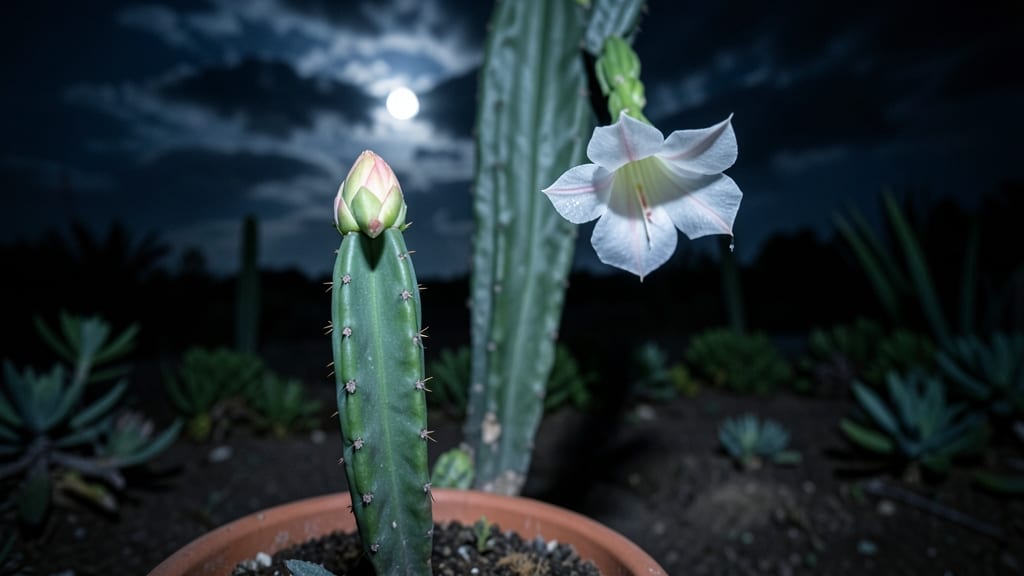
Understanding your night-blooming cereus stages is the secret to those perfect moonlit displays that smell like tropical night air. 🌙 I’ve watched mine go from a tiny seedling to a plant that bursts into fragrant white blooms at dusk—and it all comes down to knowing when to expect each stage and what the plant truly needs.
The first sign of success? Those tiny, spiky seedlings that appear within 4-6 weeks of planting, if you’ve got the light and warmth right.
Once past the seedling phase, your plant enters its vegetative growth spurt, where it builds energy for future blooms. This is where most gardeners trip up—rushing to force flowers too soon.
Instead, focus on 6-8 hours of bright light daily and temperatures between 70-85°F during the day, dropping to 60-65°F at night. That temperature swing is what triggers the magic: the blooms won’t open unless the plant experiences this natural day-night contrast.
The real show begins when your plant is 3-5 years old and fully mature, but even then, timing is everything. A single bloom lasts just 24 hours, so you’ll need to stay vigilant—especially since they open at dusk and close by dawn.
The fragrance hits its peak around 10 PM, and if you miss it, you’ll have to wait another year. That’s why I mark my calendar: June-July is prime bloom season in most climates, but indoor plants can flower year-round with the right light.
After the bloom fades, don’t toss those stems! They’ll eventually produce pups at the base—your plant’s way of saying, “I’m ready to multiply.” With proper care, you’ll have new plants to share or expand your collection.
The key is patience: a well-cared-for cereus can live for decades, rewarding you with those intoxicating nighttime displays year after year.
📚 In This Guide
- What you need
- Instructions
- Tips and common mistakes
- Wrapping up and next steps
What you need
- ● Night-Blooming Cereus Plant: 1-3 mature plants (potted or cuttings)
- ● Recommended varieties: Selenicereus grandiflorus (Queen of the Night), Hylocereus undatus (Pink Pitaya), or Hylocereus megalanthus (King of the Night)
- ● Well-Draining Potting Mix: 50% cactus/succulent soil (e.g., Miracle-Gro Cactus Mix)
- ● 30% perlite or pumice (for aeration)
- ● 20% coarse sand or orchid bark (to prevent root rot)
- ● Containers: 1-3 terracotta or fabric pots (4-6 inches in diameter, with drainage holes)
- ○ Optional: Self-watering pots (for consistency)
- ● Sunlight: Bright, indirect light (6+ hours/day; south-facing window or grow lights)
- ● Watering Supplies: Spray bottle (for humidity)
- ● Watering can with narrow spout (avoid soggy soil)
- ● Growth Enhancers: Phosphorus-rich fertilizer (e.g., Dyna-Gro Grow, diluted to half-strength)
- ● Humidity tray (for tropical varieties)
- ● Bloom Triggers: Temperature control (cool nights, 55–60°F for Selenicereus)
- ● Ethylene gas (ripe apples in a bag near the plant for 24–48 hours)
- ● Monitoring Tools: Digital thermometer/hygrometer (to track bloom conditions)
- ● Grow journal (to log stages and adjustments)
Instructions for cultivating night blooming cereus stages
Mastering the delicate timing of night blooming cereus stages transforms a tricky plant into a fragrant, show-stopping centerpiece.
🌱 Step 1: Establish Ideal Growth Conditions Before Flowering
Night blooming cereus (Hylocereus) thrives when you mimic its natural tropical forest understory environment. Position your plant in bright, indirect light—think east-facing window or 6-8 feet from a south window—to avoid scorching leaves while ensuring 12-14 hours of light daily. I've found that supplementing with a full-spectrum LED grow light for 4-6 hours daily during winter prevents the leggy growth that signals light deprivation.
Temperature consistency is critical: maintain a range of 65-75°F during the day and no lower than 55°F at night. Sudden temperature drops below 50°F shock the plant and can abort flower buds. I keep mine near a smart thermostat-controlled vent to ensure stable conditions—this is where most growers fail, especially in drafty homes.
🌿 Step 2: Trigger Flowering Through Strategic Light Manipulation
The secret to perfect night blooming timing lies in light deprivation. For 4-6 weeks before desired bloom time, reduce light exposure to 10-12 hours daily by covering the plant with a blackout curtain or moving it to a closet with a small window during the longest day of the year. This mimics the plant's natural short-day flowering response found in its native Mexico and Central America.
Watch for bud formation—these appear as small, fuzzy growths along the stems, typically 8-12 weeks after initiating the light cycle change. Here's the thing: don't rush this process. I've seen growers impatiently extend light again too soon, which causes buds to drop. Once buds form, maintain consistent light exposure of 12-14 hours daily to support their development.
⏰ Step 3: Time the Blooming Window for Maximum Enjoyment
Night blooming cereus flowers typically open 2-3 nights after bud formation, usually between 8 PM and midnight, with some varieties lasting until 4 AM. The key to perfect timing is observation: monitor buds closely in the afternoon—they'll begin to split open slightly, revealing the first hints of petals. This is your cue to dim overhead lights and provide only soft, ambient lighting to create the magical moonlit effect.
Once the flower opens, it releases its intoxicating fragrance—jasmine-like with tropical undertones—that peaks during the first 4-6 hours. To extend the bloom period, I've found that keeping the plant in a cool (60-65°F), humid environment (using a pebble tray with water) helps. Avoid direct breezes, which can cause petals to drop prematurely within 24-48 hours.
💧 Step 4: Maintain Post-Bloom Care for Future Stages
After the flower wilts, do not prune the stem—the plant will naturally absorb nutrients from the dead bloom to strengthen next year's growth. Reduce watering to every 2-3 weeks, allowing the top 2-3 inches of soil to dry completely between waterings. Overwatering now leads to root rot, which can kill the plant before it enters dormancy.
In late fall, after the plant has finished blooming, reduce watering further and move it to a cooler location (50-60°F) to mimic its natural dry season. This 3-4 month dormancy period is crucial—skipping it results in weak, sparse blooms the following year. I've seen cereus plants that bloomed beautifully for two years straight when given proper dormancy, then failed completely in year three because the cycle was broken.
Tips & tricks for perfect night blooming cereus stages
Here's the thing about night blooming cereus—it's all about patience and precision. These small adjustments make the difference between a plant that blooms once and one that becomes a fragrant, reliable centerpiece year after year.
Light Cycle Precision: When you're initiating that 4-6 week light deprivation in Step 2, mark your calendar exactly 4-6 weeks before you want flowers. I use a timer to ensure the 10-12 hour light window is consistent—even a few extra minutes can disrupt the process. For best results, start this cycle in late spring to time blooms for summer evenings when you'll actually enjoy them. Watch for those fuzzy buds to appear 8-12 weeks in, but don't rush the process—buds need time to develop properly.
Temperature Stability: The 65-75°F daytime range mentioned in Step 1 is non-negotiable. I've seen growers struggle when their thermostat kicks in at night, dropping below 55°F. Consider a small space heater with a thermostat near your plant during cooler months—just make sure it's not blowing directly on the leaves. The key is consistency: sudden drops below 50°F will shock the plant and cause buds to abort.
Observation is Everything: In Step 3, when you're monitoring those buds in the afternoon, here's what I look for: the fuzzy growths will start to split open slightly, revealing a tiny gap where petals will emerge. This happens 2-3 nights before blooming. That's your cue to dim overhead lights and prepare for the evening show. I keep a small notebook to track bud formation dates—this helps me predict exactly when to expect that magical fragrance.
Post-Bloom Recovery: After the flower wilts, resist the urge to prune immediately. The plant needs 2-3 weeks to absorb nutrients from the dead bloom before you reduce watering. I've seen growers cut stems too soon, which stresses the plant and weakens next year's growth. During the 3-4 month dormancy period in Step 4, I place my plants in a cool garage with a small grow light for just 2 hours daily to maintain minimal growth without encouraging new buds.
Pro Tips for Night Blooming Cereus Stages
- Here's the thing about night blooming cereus—it's all about patience and precision.
- Light Cycle Precision: When you're initiating that 4-6 week light deprivation in Step 2, mark your calendar exactly 4-6 weeks before you want flowers.
- Temperature Stability: The 65-75°F daytime range mentioned in Step 1 is non-negotiable.
Frequently asked questions
Got questions about nurturing your night-blooming cereus? Here are answers to the most common ones—so you can enjoy those magical moonlit blooms with confidence!
When should I expect my night-blooming cereus to flower?
Night-blooming cereus typically flowers once a year, usually between late spring and summer (May–July in the Northern Hemisphere). The exact timing depends on the plant’s age, light exposure, and care—younger plants may take 2–3 years to bloom. Pro tip: A well-rested plant (6+ hours of darkness) triggers blooming, so avoid disturbing it during its dormant winter phase.
How long does a night-blooming cereus flower last?
Each bloom opens at dusk and lasts just 24–48 hours—hence the name! The flower wilts by noon the next day, but the plant may produce multiple buds over weeks. To maximize blooms, keep conditions stable (consistent light, moderate watering) and avoid stress. Fun fact: Some varieties release a sweet, jasmine-like fragrance at night!
Why isn’t my night-blooming cereus blooming?
Common culprits include:
- Insufficient light: Needs bright, indirect sunlight (6+ hours/day). South/west-facing windows are ideal.
- Overwatering: Let soil dry completely between waterings—root rot kills blooms.
- Lack of dormancy: Mimic winter: reduce watering and light in fall/winter to reset growth.
- Too young: Patience! Mature plants (3+ years) bloom reliably.
Fix it: Adjust care for 2–3 months before the expected bloom season.
Can I force a night-blooming cereus to bloom out of season?
While you can’t force blooms, you can encourage them with these tricks:
- Temperature shock: Move the plant to 55–60°F (13–15°C) for 4–6 weeks in winter.
- Light control: Simulate shorter days with a dark box for 12+ hours nightly.
- Dormancy phase: Reduce watering to every 3–4 weeks in autumn.
Warning: Overdoing this may stress the plant. Start small and monitor closely!
What should I do after the flower wilts?
Don’t panic! A wilted bloom means the plant is redirecting energy to future growth. Here’s what to do:
- Trim dead flowers: Snip the stem 1 inch below the bloom with clean scissors.
- Resume normal care: Water when the top 2 inches of soil are dry.
- Boost light: Increase sunlight gradually to prep for next year’s blooms.
Goal: Keep the plant healthy so it sets buds for next season!
Wrapping up and next steps
Watching your night-blooming cereus unfold through its magical stages is like witnessing nature’s own fireworks! 🌙 From the tight buds of Stage 1 to the vibrant, fragrant bloom of Stage 4, each phase is a testament to patience and care.
Remember, timing, light, and temperature are your best allies—so stay observant and adjust as needed.
Ready to level up your plant parent game? 🌱 Start by tracking your plant’s progress in a journal or take photos to compare growth over time. Next, experiment with hand-pollination to ensure those stunning blooms turn into fruit—or simply enjoy the show!
Whether you’re a seasoned gardener or a curious beginner, every night-blooming cereus is a little miracle waiting to unfold.