
Blooming
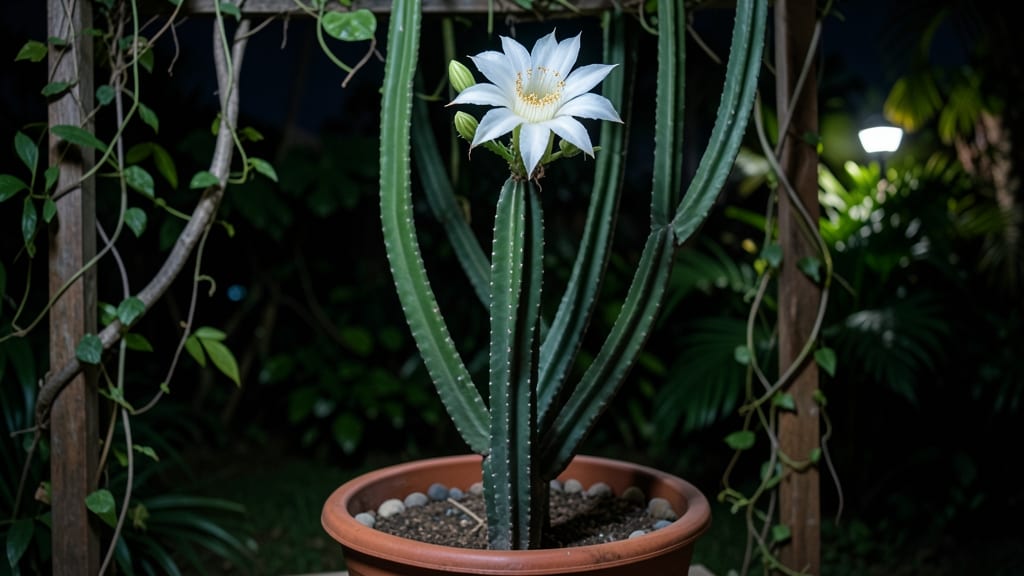
Your night blooming cereus cactus flower unfurls under moonlight like a secret garden party. 🌙 These stunning epiphytic cacti (Hylocereus spp.) need 12-14 hours of darkness before blooming, which is why timing your light exposure matters more than you might think.
I've watched mine transform from sleepy green stems to dramatic white or pink flowers—all because I finally cracked the light cycle code. The secret isn't complicated: bright indirect light during the day (6-8 hours of morning sun or grow lights) followed by complete darkness at night.
Too much light delays blooms, while too little makes the plant stretch awkwardly. My plants thrive in well-draining cactus mix with a chunky texture—think perlite and coarse sand—to prevent rot, which is their #1 enemy.
When you get it right, you're rewarded with 3-5 inch flowers that open at dusk and last just one night, but the scent lingers like a tropical breeze.
The key is patience—it can take 2-3 years for mature plants to bloom reliably, but once they do, they'll repeat the show every few weeks during their season. Here's where most gardeners go wrong: overwatering or letting them sit in soggy soil.
Stick your finger in the mix—if the top inch feels damp, wait. And if your plant isn't blooming? Check your light source first. These cacti aren't divas, but they do need their beauty sleep.
📚 In This Guide
- What you need
- Instructions
- Tips and common mistakes
- Wrapping up and next steps
What you need
- ● Night-blooming cereus cactus (e.g., Hylocereus or Selenicereus species) – 1 healthy, mature plant (3+ years old for best results).
- ● Grow lights or LED bulbs – 1-2 full-spectrum grow lights (15W–25W) or LED bulbs (6000K–6500K color temperature) for light control.
- ● Timer or smart plug – 1 programmable timer or Wi-Fi-enabled plug to automate light cycles (12–14 hours of darkness required).
- ● Well-draining cactus soil mix – 1 bag (5–10 gallons) of cactus/succulent blend (60% mineral grit, 30% potting soil, 10% perlite).
- ● Pot with drainage holes – 1 container (12–18 inches in diameter) with drainage (terracotta or ceramic preferred).
- ● Watering can with a narrow spout – 1 small can to avoid overwatering.
- ● Thermometer/hygrometer – 1 digital unit to monitor temperature (ideal: 60–80°F) and humidity (40–60%).
- ● Humidity tray or pebble tray – To maintain moisture levels during blooming season.
- ● Fertilizer (balanced or bloom-specific) – 1 bottle of diluted cactus fertilizer (5-10-10 NPK ratio) for pre-bloom feeding.
- ● Support stake or trellis – If your cereus grows tall and needs structural support.
- ● Notebook or app – To track light cycles, watering, and blooming progress!
Step-by-Step instructions for triggering night blooming cereus cactus flowers
Here's how I coax stunning moonlit blooms from these desert beauties—no black magic, just light control.
🌱 Step 1: Understand the Light Cycle Requirements
Night-blooming cereus needs 14 hours of complete darkness to trigger its spectacular evening show. During the day, it thrives in bright, indirect light—think east or west-facing windows or grow lights 12-18 inches away. Too little light makes it stretch leggy; too much direct sun can scorch the pads.
Here's the thing—these cacti are sensitive to light cues. If you keep them under artificial lights past 8 PM, they won't bloom. Use timers for grow lights to mimic natural daylight cycles. Watch for pale, stretched growth—that's your signal the light isn't right.
☀️ Step 2: Simulate Natural Daylight Hours
Start with 12-14 hours of light daily in spring to encourage blooming. I use a timer-controlled LED grow light set to turn on at 6 AM and off at 6 PM. This consistent schedule trains the cactus to expect darkness at night. Real talk: if you forget to turn off the lights, you'll miss the blooms entirely.
Move your plant to a cool, dark location (like a closet or basement) starting at 6 PM sharp. Keep it there until 8 AM the next morning. This 14-hour darkness is non-negotiable for blooming. If your home stays too warm at night, the buds may drop before opening.
🌿 Step 3: Provide the Right Temperature and Humidity
During the day, keep temperatures between 70-85°F—this mimics their desert origins. At night, let temps drop to 60-65°F to signal blooming time. A cool basement or unheated garage works perfectly for this. I've seen buds open beautifully in 55°F conditions, but below 50°F and they'll refuse to bloom.
Humidity isn't critical, but 30-50% is ideal. Too much moisture can rot the base, while dry air might cause buds to wilt. Mist lightly once a week if your home is very dry, but never let water pool in the soil. Watch for yellowing pads—that's a sign of overwatering.
💧 Step 4: Water and Fertilize Strategically
Water only when the soil is completely dry—these cacti store moisture in their pads. Stick your finger 1 inch deep into the soil; if it feels dry, water thoroughly until it drains from the bottom. Overwatering is the #1 killer of night-blooming cereus. I use a self-watering pot with a moisture meter to avoid guesswork.
Feed with a balanced cactus fertilizer (like 5-5-5) once a month during spring and summer. Stop fertilizing in fall and winter—this mimics their natural dormancy period. Too much food makes them grow fast but bloom poorly. You'll know it's working when you see new, healthy pads forming.
⏰ Step 5: Time Your Blooming Window
With perfect light control, your cactus should begin forming flower buds in late summer. These look like tiny green nubs at the tips of the pads. Don't panic if they drop—it's normal for the first few attempts. Once buds form, keep all conditions exactly the same—no changes to light, water, or temperature.
The big night arrives 6-8 weeks after buds form. Set up a nighttime viewing spot with a red or dim light—these colors won't disturb the blooms. The flowers open at dusk, stay open all night, and wilt by mid-morning. Take photos immediately—they're gone by sunrise!
Tips & tricks for perfect night blooming cereus cactus flowers
Here's what nobody tells you about coaxing those magical moonlit blooms—small details that make all the difference.
Light Control is Non-Negotiable: That 14-hour darkness from Step 1 isn't just a suggestion—it's the biological trigger for blooming. I learned this the hard way after keeping my grow lights on too late for weeks. Use a smart plug with timer for your grow lights to automate the 6 AM to 6 PM schedule. This ensures perfect consistency without you having to remember to flip switches. For extra reliability, consider a photoperiod timer designed for succulents.
Temperature Drop is the Secret: The 60-65°F nighttime temperature range in Step 3 isn't just about comfort—it mimics the desert's cool nights that signal blooming time. If your home stays too warm, move your cactus to a cooler basement or garage during those critical evening hours. I've seen buds open beautifully at 55°F but refuse below 50°F, so don't overdo it with cold. A thermometer in the growing area helps monitor this precisely.
Bud Development Watch: Those tiny green nubs in Step 5 are your first sign of success—but they're fragile. When you see them forming in late summer, keep every condition exactly the same. No moving the plant, no changing water schedules, no experimenting with new light sources. Even a slight temperature fluctuation can cause them to drop. Place a small note on your calendar marking when you first spot buds to track the 6-8 week countdown to bloom night.
Nighttime Viewing Hack: For the big reveal, set up your nighttime viewing spot with red LED string lights—they won't disturb the blooms like white light would. I use battery-operated red lights placed around the plant so you can admire the flowers without waking them up. Position a tripod with camera nearby too, since these flowers only stay open until mid-morning. The fragrant, moonlit display is worth the careful planning!
Pro Tips for Night Blooming Cereus Cactus Flower
- Here's what nobody tells you about coaxing those magical moonlit blooms—small details that make all the difference.
- Light Control is Non-Negotiable: That 14-hour darkness from Step 1 isn't just a suggestion—it's the biological trigger for blooming.
- Temperature Drop is the Secret: The 60-65°F nighttime temperature range in Step 3 isn't just about comfort—it mimics the desert's cool nights that signal blooming time.
Frequently asked questions
Got questions about your night-blooming cereus cactus? We’ve got answers!
From timing tricks to troubleshooting, here’s what you need to know to keep those moonlit blooms coming back year after year.
When do night-blooming cereus flowers actually open?
The magic happens at dusk—typically between 8 PM and midnight, depending on your location and seasonal light changes. Flowers last just 12–24 hours before wilting. For best viewing, use a timer light to mimic sunset if blooms are late to open.
Why isn’t my night-blooming cereus flowering?
If your cactus skips blooming, it’s likely due to light deprivation or stress. Ensure it gets 14+ hours of darkness (use blackout curtains or a box) for 6–8 weeks before expected bloom time. Check for overwatering or temperature swings—these can delay flowers.
How long does it take for a night-blooming cereus to flower?
Patience is key! Mature plants (3+ years old) may bloom annually, but younger ones can take 2–5 years to produce flowers. Provide consistent care—bright indirect light, well-draining soil, and cool nights (55–65°F)—to encourage faster maturation.
Can I force a night-blooming cereus to flower out of season?
Yes! Use artificial light control to trick your plant. For winter blooms, expose it to 12 hours of light/day for 2 months, then switch to total darkness for 14+ hours. For summer blooms, reverse the process. Just avoid extreme temperature shifts!
What do I do with a wilted night-blooming cereus flower?
Don’t toss it! Let the flower fully dry on the plant—it’ll form a seed pod in 2–3 weeks. Save seeds for propagation or compost the dried remains. Prune dead flowers at the base with sterilized scissors to keep your cactus healthy.
Are there alternatives if my cereus won’t bloom?
Try these bloom-inducing hacks:
- Rotate your plant to ensure even light exposure.
- Fertilize with a low-nitrogen, high-phosphorus mix (like 5-10-10) during growing season.
- Simulate rainy season with a brief soak in room-temp water every 2–3 weeks.
- Consider grafting onto a hardier rootstock if your plant is struggling.
Wrapping up and next steps
The night blooming cereus cactus is a mesmerizing spectacle of nature’s timing, revealing its stunning flowers under the moonlight when conditions are just right. By mastering light control, you can unlock its full potential—turning your garden into a magical evening display. 🌙✨
Now that you’re armed with the knowledge, why not give it a try? Start experimenting with light exposure, monitor your plant’s response, and enjoy the rewarding journey of nurturing these enchanting blooms. Happy gardening!