
Blooming
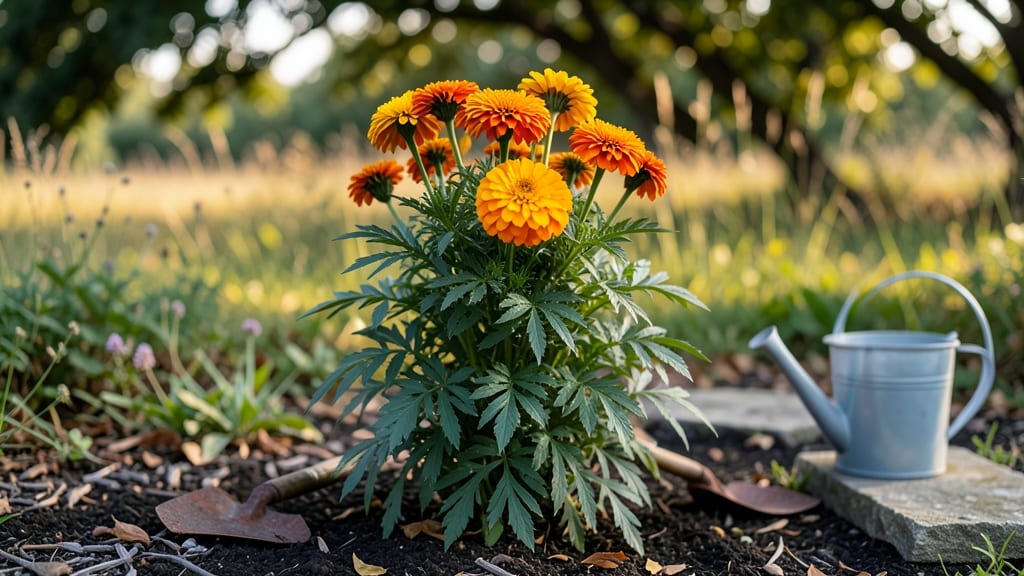
The marigold blooming season arrives when days stretch long and warm—typically May through October in most gardens, but timing shifts dramatically depending on your zone. 🌻 I’ve watched French marigolds open their cheerful faces by early June in my Zone 7. garden, while taller African varieties often lag until July, their deeper petals unfurling like sunlit confetti.
The secret to early blooms lies in planting dates and sunlight: sow seeds indoors 6-8 weeks before last frost for a head start, or direct-seed after soil warms to 60°F.
Southern gardeners enjoy near-continuous blooms from spring to frost, while cooler climates may see a shorter window—though French marigolds often rebloom if deadheaded promptly. What you’ll love most is how these pest-repelling stars double as garden workhorses—their bright blooms deter nematodes and aphids while attracting pollinators.
African types (like ‘Tangerine’) can top 3 feet tall, while French varieties stay compact, perfect for borders or containers. For prolonged flowering, feed lightly with balanced fertilizer midseason and remove spent blooms—this trick keeps my marigolds producing until hard frost, even in shorter seasons.
📚 In This Guide
- What you need
- Instructions
- Tips and common mistakes
- Wrapping up and next steps
What you need
- ● Marigold seeds or seedlings: Choose between French marigolds (compact, fragrant) or African marigolds (taller, vibrant). Start with 5–10 seeds per plant or 3–5 seedlings for optimal spacing.
- ● Well-draining potting mix: A blend of 60% garden soil, 30% compost, and 10% perlite/sand (1–2 cubic feet per planting area).
- ● Containers or garden beds: For containers: 12–18" pots (1–2 seeds per pot).
- ● For garden beds: Space plants 12–18 inches apart in full sun.
- ● Organic fertilizer: A balanced 10-10-10 NPK or fish emulsion (1 tbsp per plant at planting).
- ● Mulch: Straw or shredded leaves (2–3 inches) to retain moisture.
- ● Garden trowel or transplanting spade (for digging).
- ● Watering can with a fine rose nozzle (gentle watering prevents seed displacement).
- ● Pruning shears (to trim dead blooms and encourage more flowers).
- ○ Pest deterrents (optional): Neem oil spray (1 tsp neem oil + 1 quart water) for aphids.
- ● Diatomaceous earth (food-grade) to repel slugs.
- ○ Stakes or cages (optional): For taller varieties (e.g., African marigolds) in windy areas.
How to extend your marigold blooming season naturally
Marigolds reward patience with vibrant blooms that last well beyond their natural season—here’s how to coax extra weeks of color.
🌱 Step 1: Choose the Right Varieties for Long Bloom Times
French marigolds (Tagetes patula) and African marigolds (Tagetes erecta) are your best bets for extended blooming. French types like 'Bonanza' and 'Janie' produce smaller, clustered flowers that keep coming in waves, while African varieties such as 'Crackerjack' and 'Tangerine Gem' boast bold, long-lasting blooms. I always plant both—French for ground cover and African for height and drama.
Look for disease-resistant tags on seed packets. Varieties labeled "double" or "semi-double" tend to bloom longer than single-petal types because their petals don’t drop as quickly. Start with 4-6 plants per variety to ensure continuous color—you’ll see why once you witness their nonstop production.
☀️ Step 2: Optimize Sunlight and Soil for Continuous Flowering
Marigolds demand 6+ hours of full sun daily—no exceptions. Without sufficient light, they’ll focus on leaf production instead of blooms. I place mine in the sunniest spot in my garden, often where other plants wilt. If your yard lacks direct sun, supplement with a grow light for 12 hours daily during shorter autumn days.
Amend the soil with compost or aged manure before planting to ensure rich, well-draining soil. Marigolds hate soggy roots, so avoid heavy clay. I mix in a handful of perlite per planting hole to improve drainage—this prevents root rot and keeps flowers coming. Test soil pH; marigolds thrive in slightly acidic to neutral soil (pH 6.0-7.0).
💧 Step 3: Master the Watering and Fertilizing Balance
Water deeply once a week during their first month, then reduce to every 10-14 days once established. Overwatering triggers leafy growth at the expense of blooms. Let the top 1-2 inches of soil dry out between waterings—you’ll know it’s time when the soil feels dry to touch.
Feed with a low-nitrogen, high-phosphorus fertilizer (like 5-10-5) every 4-6 weeks starting when buds form. I avoid high-nitrogen feeds—they promote lush foliage but stifle flowers. Pinch off the first blooms when they fade to encourage bushier growth and more flowers later. This trick works like magic for extending the season.
✂️ Step 4: Deadhead and Prune for Extended Blooms
Deadheading is the secret to marigold longevity. Snip off spent blooms just above the next set of leaves with clean shears. I do this every 3-4 days during peak bloom—it signals the plant to produce more flowers instead of going dormant. Wear gloves; marigold sap can irritate skin.
Prune leggy stems back by one-third in early autumn to promote compact growth and new blooms. Avoid cutting into woody stems—focus on soft, green growth. This rejuvenates the plant and often triggers a second flush of flowers before frost. I always prune on a cloudy day to reduce stress on the plant.
🪴 Step 5: Protect and Transition for Late-Season Blooms
As temperatures drop, cover plants with frost cloth on nights below 40°F. This shields them from early frosts while still allowing sunlight. I secure the cloth with stakes to prevent contact with the foliage. Marigolds can tolerate light frosts, but a hard freeze will kill them—so act fast when temperatures dip.
Harvest flowers in the morning for the longest vase life. Cut stems at an angle and place them in cool water immediately. Indoors, they’ll last 1-2 weeks—a bonus for autumn weddings or holiday decor. If you’re growing marigolds for pest control, let some flowers go to seed; the seeds contain compounds that deter pests even after the plant dies.
Tips & tricks for perfect marigold blooms
These insider tricks will help you maximize your marigolds' natural pest-repelling beauty all season long.
Variety Selection Strategy: When choosing between French and African marigolds, consider your space and goals. French varieties like 'Bonanza' create dense ground cover that suppresses weeds, while African types like 'Crackerjack' provide striking height and bold color. For maximum pest control, plant both varieties—their combined scent confuses pests more effectively. I've found that planting French marigolds in rows between vegetables creates a natural barrier while African types planted near the garden's edges act as visual sentinels.
Light Optimization: That crucial 6+ hours of full sun requirement isn't negotiable, but you can maximize it with strategic placement. Position your marigolds where they'll receive morning sun and afternoon shade if your climate gets extremely hot. This prevents leaf scorch while still providing the light they need for blooming. In containers, rotate pots every few days to ensure even sun exposure all around the plant—this creates more uniform growth and flowering.
Soil Preparation: The secret to marigolds' longevity lies in their roots. Before planting, mix compost or aged manure thoroughly into the soil to a depth of 12 inches. This creates a nutrient-rich zone that encourages deep root growth. For heavy clay soils, add a 2-inch layer of coarse sand or perlite to the bottom of planting holes—this improves drainage without changing the soil's overall composition. I've seen marigolds thrive in soil that would choke other plants because of this simple preparation.
Frost Protection: When temperatures dip below 40°F, your marigolds need that frost cloth protection. The key is to secure it properly—use stakes or a small hoop system to keep the cloth 2-3 inches above the plants. This allows sunlight to penetrate while still providing insulation. I've extended the blooming season by weeks simply by being prepared with frost cloth on hand. For extra insurance, cover plants in the late afternoon when temperatures are dropping fastest—this gives them a head start on warmth retention.
Pro Tips for Marigold Blooming Season
- These insider tricks will help you maximize your marigolds' natural pest-repelling beauty all season long.
- Variety Selection Strategy: When choosing between French and African marigolds, consider your space and goals.
- Light Optimization: That crucial 6+ hours of full sun requirement isn't negotiable, but you can maximize it with strategic placement.
Frequently asked questions
Got questions about marigold blooming season? You’re not alone! Here are some of the most common queries—and their answers—to help you grow vibrant, pest-repelling marigolds with ease.
When is the best time to plant marigolds for peak blooming?
Plant marigolds after the last frost in spring (typically mid-April to early May in most U.S. zones) for summer-long blooms. For fall color, sow seeds 8–10 weeks before your first frost. Pro tip: Start seeds indoors 4–6 weeks early if your growing season is short!
Why aren’t my marigolds blooming this season?
Marigolds may skip blooming due to over-fertilizing (too much nitrogen = leafy growth), lack of sunlight (they need 6+ hours daily), or crowded roots. Prune spent blooms, ensure full sun, and use a low-phosphorus fertilizer (like 5-10-5) to encourage flowers.
Can I extend the marigold blooming season into fall?
Deadhead faded blooms regularly, and mulch around plants to protect roots from early frost. Choose late-blooming varieties like ‘French Marigold’ or ‘Signet Marigold,’ which often flower until hard frost. Bonus: Succession plant seeds every 2–3 weeks for continuous color!
Do marigolds really repel pests all season long?
Yes—but their pest-deterring power peaks during active blooming (spring to fall). The scent of their flowers confuses pests like aphids and nematodes. For year-round protection, plant French marigolds (strongest repellent) near veggies, and rotate crops annually to maintain effectiveness.
What’s a good alternative if marigolds don’t thrive in my climate?
Try cosmos (drought-tolerant, similar pest-repelling traits), zinnias (long bloom time), or nasturtiums (edible and pest-resistant). All thrive in warm seasons and attract pollinators. For cooler climates, calendulas (pot marigolds) are a hardy substitute!
Wrapping up and next steps
Watching marigolds burst into vibrant blooms is like nature’s own celebration—bright, cheerful, and packed with benefits!
Whether you’re growing them to deter pests, brighten your garden, or simply soak in their sunny charm, their blooming season is a reminder of how small efforts can yield big rewards. 🌼✨
Now that you’re armed with the best tips for timing, care, and enjoyment, why not take the next step? Plant a few marigolds this season—your garden (and local pollinators!) will thank you. Happy gardening!