
Blooming
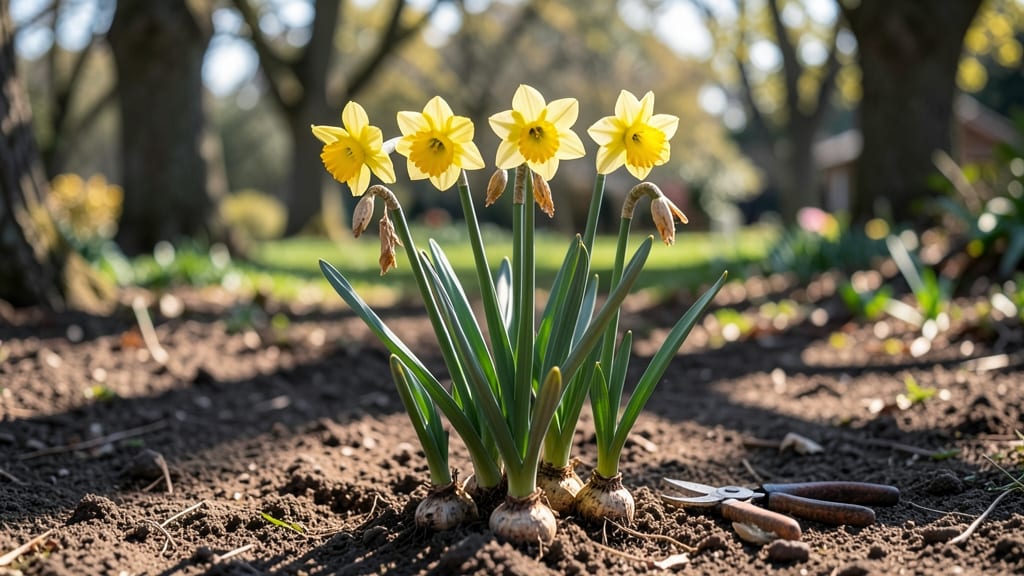
Late blooming daffodils like 'Ice Follies' and 'Tête-à-Tête defy the usual spring show—these varieties burst into color again in late summer, turning your garden into a second-season spectacle. 🌼 The secret lies in their biology: these rebloomers store energy differently, rewarding patient gardeners with extraordinary longevity and a second flush of blooms when most gardens have gone quiet.
Plant them in well-draining soil with full sun (6+ hours daily) and fertile compost mixed into the bed—this mimics their natural Mediterranean roots.
The key timing? Fall planting (8-10 weeks before first frost) gives them time to establish strong bulbs before their first bloom, while spring feeding with a balanced fertilizer (10-10-10) fuels that late-season rebloom. Water deeply after planting, then maintain 1 inch per week during growing seasons.
What you'll end up with is a garden that stays vibrant long after tulips and hyacinths have faded—bold yellows, whites, and even peach blooms appearing in July or August when most gardeners are already dreaming of fall.
These daffodils multiply over time, creating natural drifts that spread effortlessly and resist deer and squirrels better than early bloomers.
Perfect for sunny borders, cottage gardens, or even container displays, these late bloomers thrive in USDA Zones 3-8 with minimal fuss. The trade-off? They need consistent care—skimp on sunlight or fertilizer, and you'll miss that second show.
But get it right, and you'll have daffodils when your neighbors are pulling up their summer annuals.
📚 In This Guide
- What you need
- Instructions
- Tips and common mistakes
- Wrapping up and next steps
What you need
- ● Late-blooming daffodil bulbs: 5–10 bulbs (check for healthy, firm bulbs with no mold or soft spots).
- ● Well-draining potting mix: 2–3 cubic feet (avoid heavy clay soil; mix in perlite or sand for aeration).
- ● Container or garden bed: Containers: 12–15" deep pots (with drainage holes) for 1–2 bulbs each.
- ● Garden beds: Full sun exposure (6+ hours/day) and loose, fertile soil.
- ● Balanced fertilizer (10-10-10 or similar): 1 tbsp per bulb (apply at planting and mid-season).
- ○ Slow-release bulb fertilizer (optional but recommended): 1 cup per 5 sq ft of bed.
- ● Mulch (straw, shredded bark, or pine needles): 2–3 inches to insulate roots.
- ● Garden trowel or bulb planter: For digging holes (2x bulb depth, ~8" deep).
- ● Watering can or hose with gentle spray: Avoid soaking bulbs post-planting.
- ● Pruning shears: To trim faded foliage after blooming (but leave 6" of stems!).
- ○ Gloves (optional): For handling soil or thorny mulch.
- ○ Sunlight meter (optional): To confirm your garden’s light conditions (6000+ lux = ideal).
- ● Rebloom-specific bulbs: Seek varieties like Tête-à-Tête or Ice Follies—they’re bred to rebloom!
- ● Post-bloom care: Let foliage yellow naturally (4–6 weeks) to feed the bulb for next year.
- ● Winter prep: Add a 3-inch layer of mulch in fall to protect bulbs from freeze-thaw cycles.
How to encourage late-blooming daffodils to rebloom in one season
Here's my foolproof method for coaxing those stubborn late bloomers into a second flush—no fancy tricks, just smart timing and care.
🌱 Step 1: Identify and Select the Right Varieties
Not all daffodils rebloom—only the Jonquil, Ice Follies, and Tête-à-Tête varieties reliably produce a second bloom. Look for plants with multiple flower stems and healthy, deep green foliage after their first bloom. Avoid hybrids with single stems or those that die back completely after flowering.
I always check for new flower buds forming at the base of the stem after the first bloom fades. If you see these, your plant has the potential to rebloom. Dig up any questionable plants now—they won’t respond to reblooming efforts.
☀️ Step 2: Provide Ideal Light and Soil Conditions
Reblooming daffodils need full sun (6+ hours daily) and well-draining soil with a pH between 6.0 and 7.0. If your garden soil is heavy clay, amend it with 2-3 inches of compost mixed into the top 6 inches of soil. Poor drainage causes bulb rot, which kills the plant before it can rebloom.
Test your soil’s moisture level by digging down 4 inches—it should feel slightly damp but not soggy. If your yard stays wet for days after rain, plant in a raised bed or container with perforated drainage holes instead.
💧 Step 3: Fertilize and Water Strategically
After the first bloom fades, apply a balanced, slow-release fertilizer (10-10-10) around the base of the plant. I use about ½ teaspoon per plant worked into the top 2 inches of soil. This gives the bulb energy to form new flower buds without overstimulating leaf growth.
Water deeply once a week until the foliage turns completely yellow and brown—this signals the bulb is storing nutrients for next year. Overwatering now causes weak stems and fewer blooms. Stop watering entirely once the leaves die back naturally.
✂️ Step 4: Deadhead and Support Flower Stems
Remove spent blooms by cutting the stem ½ inch above the next set of leaves. This redirects the plant’s energy toward developing new buds rather than seeding. I always use clean, sharp pruners to avoid damaging the stem—dull blades crush tissue and invite disease.
Stake tall varieties like Jonquil with 3-foot bamboo stakes tied loosely to the stem. Wind or rain can snap heavy flower heads, and a broken stem won’t rebloom. Leave the foliage untouched until it yellows completely—this is how the bulb fuels its second bloom.
⏰ Step 5: Time the Second Bloom for Late Summer
Reblooming daffodils typically flower 6-8 weeks after the first bloom. If your first flush was in early spring, expect the second round in late July to August. Watch for new flower buds forming at the base of the stem—these will open into your late-season blooms.
Here’s the thing—reblooming takes energy. If your daffodils produce a second flush, they may skip the following spring’s bloom. That’s normal. To encourage both seasons, reduce fertilizer after the second bloom and let the foliage die back naturally before winter.
Tips & tricks for perfect late blooming daffodils
These insider tricks will help you transform your daffodils from one-season wonders into reliable late-summer stars.
Variety Selection: The key to success starts in Step 1—only Jonquil, Ice Follies, and Tête-à-Tête varieties reliably rebloom. I’ve seen gardeners waste time on hybrids like 'Paperwhite' or 'Iceberg' that never produce a second flush. Pro tip: Look for plants with multiple stems after their first bloom—these are your best candidates. The more stems, the greater the chance for reblooming, as each stem can potentially produce new buds.
Soil Science: In Step 2, don’t just amend your soil—test it first. I use a simple pH test kit to confirm that range between 6.0 and 7.0 before adding compost. The 2-3 inches of compost should be mixed into the top 6 inches of soil, but if your clay soil is particularly dense, consider adding perlite or sand to improve drainage. This isn't just about aesthetics—proper drainage prevents bulb rot, which is the silent killer of reblooming potential.
Fertilizer Precision: When applying that ½ teaspoon of 10-10-10 fertilizer in Step 3, think of it as a targeted energy boost rather than a general feeding. The slow-release formula prevents overstimulation, which can lead to leafy growth at the expense of flower buds. I’ve found that applying it right after the first bloom fades gives the bulb just enough nutrients to form new buds without exhausting itself before the second flush.
Deadheading Technique: In Step 4, when you’re cutting that ½ inch above the next set of leaves, make sure your pruners are sharp—dull blades can crush the stem and introduce disease. I use a small pair of bypass pruners for this task, and I always sterilize them with rubbing alcohol between cuts. This precision redirecting of energy is what transforms a one-time bloomer into a reliable late-season performer.
Pro Tips for Late Blooming Daffodils
- These insider tricks will help you transform your daffodils from one-season wonders into reliable late-summer stars.
- Variety Selection: The key to success starts in Step 1—only Jonquil, Ice Follies, and Tête-à-Tête varieties reliably rebloom.
- Soil Science: In Step 2, don’t just amend your soil—test it first.
Frequently asked questions
Got questions about coaxing those late-blooming daffodils into a second showstopper season? You’re not alone! Here are the answers to the most common queries—so you can troubleshoot like a pro and keep those golden trumpets popping up year after year.
Why are my daffodils blooming late?
Late bloomers are often a sign of newly planted bulbs (they need 6–8 weeks to establish roots) or stress factors like poor soil drainage, insufficient sunlight, or inconsistent watering. If your daffodils are mature but still lagging, they might need a spring feeding or a sunnier spot. Cold winters can also delay blooming—just give them time!
How can I encourage reblooming in just one season?
Late-blooming daffodils (like Jonquil or Ice Follies) are your best bet for reblooming! Focus on 6 key steps:
- Deadhead after blooming (but save the foliage—it feeds the bulb!).
- Water deeply 1x/week during dry spells (but avoid soggy soil).
- Ensure full sun (6+ hours/day) for robust growth.
- Fertilize in early spring with a balanced bulb food (10-10-10).
- Let foliage yellow naturally before trimming (this recharges the bulb!).
- Protect from squirrels—they love fresh daffodil shoots!
What if my daffodils don’t rebloom at all?
Don’t panic! Some varieties (like Narcissus poeticus) are one-and-done, but others just need a reset. Try these fixes:
- Divide clumps every 3–5 years (overcrowding stifles blooms).
- Plant in well-draining soil—waterlogged roots = no reblooms.
- Check your climate: Southern gardens may need shade in peak summer to prevent dormancy.
- Try a “bloom booster”: A light dusting of compost around bulbs in early spring can help.
Can I force late-blooming daffodils indoors?
For indoor blooms, follow these steps:
- Choose small bulbs (like Paperwhite or Tazetta) or dig up late-season bloomers in early fall.
- Chill for 10–12 weeks in a cool, dark place (40–50°F).
- Plant in well-draining soil and place in bright, indirect light.
- Keep soil moist (not soggy!) and watch for shoots in 3–4 weeks.
How do I protect late bloomers from pests?
Squirrels, deer, and even daffodil flies can wreak havoc. Try these tricks:
- Physical barriers: Use chicken wire over bulbs in early spring or mesh cages for reblooming stems.
- Natural deterrents: Plant alliums or garlic nearby—their scent repels pests.
- Water at the base (not leaves) to avoid fungal issues from overhead sprinklers.
- Neem oil spray for aphids or daffodil fly larvae (reapply after rain).
Wrapping up and next steps
Late-blooming daffodils aren’t just a second chance—they’re a gift of color and joy that keeps on giving! With the right care, patience, and a sprinkle of rebloom magic, you can turn your garden into a seasonal spectacle.
Whether you’re a seasoned gardener or a curious beginner, every step counts—so grab those shears, feed those bulbs, and watch your hard work bloom into beauty.
Ready to level up your garden game? 🌱 Start by bookmarking this guide and planning your next gardening session—your late-blooming daffodils will thank you with years of cheerful surprises!