
Blooming
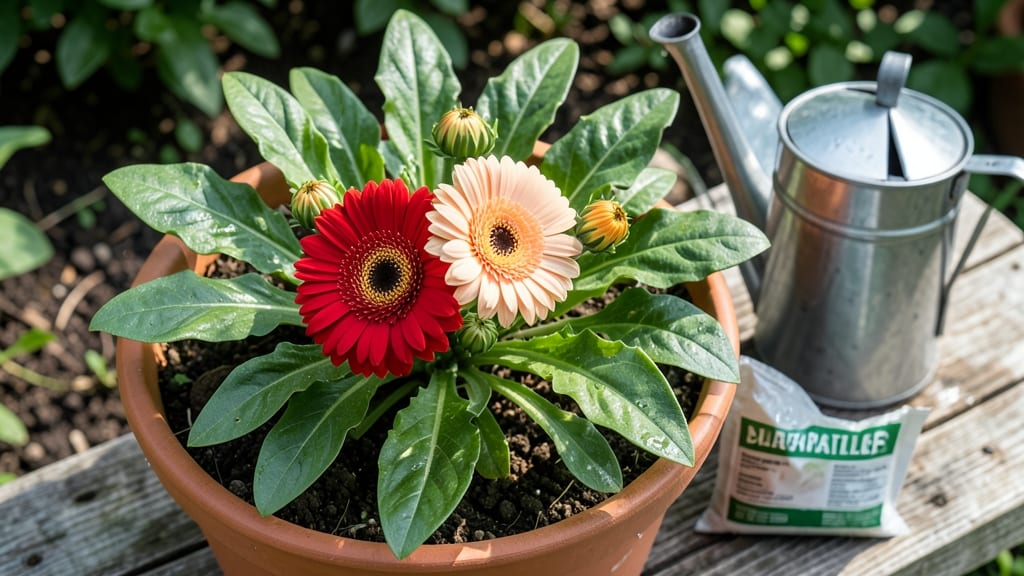
To keep gerbera daisies blooming nonstop, deadhead daily—it’s the secret weapon I wish I’d known years ago. 🌸 These vibrant flowers reward consistent care with weeks of fresh blooms, but neglect turns them into leggy, sparse stalks.
The fix is simpler than you think: a quick snip here and there keeps them producing colorful reblooms all season.
Start by removing faded blooms at the base where the petals meet the stem—this redirects energy to new flowers instead of seed production. Pair this with bright morning sun (at least 6 hours) and well-draining soil, and you’ll see the difference in just 2-3 weeks.
Overwatering is the silent killer, so let the top inch of soil dry between waterings, and fertilize lightly every 4-6 weeks with a balanced bloom booster.
What you’ll end up with is a bushy plant covered in fresh blooms—reds, oranges, yellows, you name it. The key is staying consistent: deadhead daily, water smartly, and feed occasionally. Even in containers, gerberas thrive with these basics, giving you months of eye-catching color instead of a single flush.
For cooler climates, bring potted gerberas indoors before frost—they’ll still bloom if you keep them near a sunny window. And if your plants look tired by midsummer, a light pruning back by a third revives them for a second wave of flowers.
It’s all about working with their natural rhythm, not fighting it.
📚 In This Guide
- What you need
- Instructions
- Tips and common mistakes
- Wrapping up and next steps
What you need
- ● Gerbera daisies – Healthy, established plants (purchased from a nursery or grown from seed). Pro tip: Choose varieties like 'Annette Hegg' or 'Marmalade' for vibrant, long-lasting blooms!
- ● Pruning shears or sharp scissors – Clean, sharp tools to deadhead spent blooms without damaging stems. 💡 Tip: Sterilize with rubbing alcohol between cuts to prevent disease!
- ○ Gloves (optional but recommended) – Protect your hands from thorns and dirt while pruning.
- ● Watering can or hose with a gentle nozzle – Ensures deep but controlled hydration (avoid soggy soil!).
- ● Balanced fertilizer (10-10-10 or 20-20-20) – 1 tbsp per plant every 4–6 weeks during the growing season (spring to fall). ✨ Bonus: Use a slow-release granular fertilizer for convenience!
- ● Mulch (organic, like shredded bark or compost) – 2–3 inches around the base to retain moisture and suppress weeds.
- ● Well-draining potting mix or garden soil – If repotting, use a mix with 50% peat moss or coco coir and 50% perlite/sand for aeration.
- ● Bloom booster fertilizer (e.g., high-phosphorus like 5-10-5) – Apply every 2 weeks for extra floral power!
- ● Epsom salt (magnesium sulfate) – 1 tbsp dissolved in 1 gallon of water monthly for greener foliage and stronger stems.
- ● Plant support stakes or cages – Helps tall varieties stay upright in windy conditions.
- ● pH testing kit – Gerberas thrive in soil pH 6.0–7.0; adjust with lime (to raise pH) or sulfur (to lower) if needed.
- ● Compost or worm castings – Adds nutrients naturally and improves soil structure over time.
How to keep gerbera daisies blooming all season
Here's the simple routine I use to turn one-time bloomers into a garden full of vibrant flowers.
✂️ Step 1: Deadhead Daily at the Right Time
The secret to continuous blooms is removing spent flowers immediately after they fade. I grab my pruners and snip the flower head just above the next set of leaves or buds—never at the base of the stem. This prevents the plant from wasting energy on seed production and redirects it toward new buds.
Watch for the petals to fully drop and the center to turn brown. That's your cue to cut. I do this first thing in the morning when the stems are still firm, which helps prevent disease from settling into open cuts. Use clean, sharp pruners to make a clean cut—ragged edges slow healing and invite pests.
☀️ Step 2: Provide Consistent Sunlight and Water
Gerbera daisies need 6-8 hours of direct sunlight daily for maximum blooming. I position mine where they get morning sun and afternoon shade in hot climates—this prevents the petals from scorching. If you notice buds forming but not opening, your plant might need more light or a cooler spot.
Water deeply 2-3 times per week, letting the top 2 inches of soil dry out between waterings. I check by sticking my finger in the soil—if it feels dry at that depth, it's time to water. Overwatering causes root rot, which stunts blooming. Always water at the base to keep petals dry, preventing fungal spots that ruin the flowers.
💧 Step 3: Feed Regularly for Continuous Blooms
I fertilize every 2-3 weeks during the growing season with a balanced 10-10-10 or 20-20-20 formula, following the package rates. The key is consistency—gerberas respond best to steady nutrition rather than heavy doses. I mix the fertilizer into the soil during watering to avoid burning the roots.
Stop fertilizing in late summer if your climate gets hot—gerberas go semi-dormant in extreme heat. You'll see new buds form within 7-10 days of feeding, signaling the plant is happy. If blooms slow down, it might need more phosphorus (the middle number)—switch to a 5-10-5 formula for a boost.
🌿 Step 4: Prune for Airflow and Shape
Every 4-6 weeks, I give my gerberas a light pruning to encourage bushier growth. Cut back any leggy stems by one-third just above a leaf node. This prevents the plant from getting top-heavy and encourages branching, which means more flower stems.
Remove any yellow or damaged leaves immediately—they sap energy and attract pests. I also thin out crowded stems to improve airflow, which reduces fungal diseases. After pruning, give the plant a light feeding to help it recover and push out new growth. You'll notice fresh, vibrant leaves within 10-14 days if everything is right.
⏰ Step 5: Adjust Care for Seasonal Changes
In spring, I start fertilizing and deadheading aggressively to kickstart blooming. By summer, I reduce watering slightly and provide afternoon shade if temperatures exceed 85°F. In fall, I taper off fertilizing but keep deadheading—this extends the blooming season into cooler months.
Gerberas are tender perennials in most climates, so I protect them from frost with a lightweight frost cloth in fall. If you live in a warm winter zone, they'll keep blooming year-round with consistent care. The key is observing your plants—they'll tell you what they need through their growth patterns.
Tips & tricks for perfect gerbera daisy care
These simple secrets will transform your gerberas from one-time bloomers into a garden full of vibrant color all season.
Timing Secret: I've found that morning deadheading is the absolute best time—stems are firm and disease risk is lowest. If you miss morning, do it first thing after buds fully drop. I keep a pair of sterilized pruners by my garden hose for quick access, and always clean them with rubbing alcohol between cuts to prevent spreading any potential pathogens.
Light Strategy: The 6-8 hours of sunlight requirement is non-negotiable, but placement matters just as much. I position my gerberas where they get morning sun and afternoon shade in hot climates—this prevents the delicate petals from scorching while still getting their full light dose. If you notice buds forming but not opening, it's a clear sign they need more light or a cooler spot during peak afternoon sun.
Fertilizer Insight: When you're fertilizing every 2-3 weeks, I like to alternate between a balanced 10-10-10 formula and a phosphorus-rich 5-10-5 blend. The phosphorus boost (middle number) is what really kickstarts those new buds. I always mix it into the soil during watering to avoid burning the roots—never sprinkle dry fertilizer on top of wet soil. You'll notice new buds forming within 7-10 days if everything's right.
Pruning Wisdom: That 4-6 week pruning schedule might seem frequent, but it's what keeps your gerberas bushy and full. When you're cutting back leggy stems by one-third, always make your cut just above a leaf node. This encourages branching, which means more flower stems. I also make it a habit to remove any yellow or damaged leaves immediately—they're energy vampires that attract pests and diseases.
Pro Tips for Keep Gerbera Daisies Blooming
- These simple secrets will transform your gerberas from one-time bloomers into a garden full of vibrant color all season.
- Timing Secret: I've found that morning deadheading is the absolute best time—stems are firm and disease risk is lowest.
- Light Strategy: The 6-8 hours of sunlight requirement is non-negotiable, but placement matters just as much.
Frequently asked questions
How often should I deadhead gerbera daisies to keep them blooming?
Deadhead gerbera daisies daily or at least every other day during peak bloom season (spring to fall). Remove spent blooms by snipping the stem just above the next set of leaves or buds. This encourages new flowers to form and prevents the plant from wasting energy on seed production.
What’s the best time of day to deadhead gerbera daisies?
The ideal time is in the morning after dew has dried but before the heat of the day. This reduces stress on the plant and gives it time to recover before evening. Avoid deadheading in the evening, as damp conditions can increase the risk of fungal diseases.
Can I deadhead gerbera daisies with my fingers, or do I need scissors?
While you can pinch off dead blooms with your fingers, using clean, sharp pruning shears or scissors is best. This ensures a clean cut and minimizes damage to the stem. If using fingers, be gentle to avoid crushing the stem or leaving stubs.
Why are my gerbera daisies not reblooming even after deadheading?
Reblooming may be hindered by overcrowding, poor sunlight, underwatering, or nutrient deficiencies. Ensure your daisies get 6+ hours of sunlight daily, well-draining soil, and regular feeding with a balanced fertilizer. Also, check for pests or diseases that could stress the plant.
Can I use the cut flowers from deadheading for arrangements?
Gerbera daisies make stunning cut flowers for bouquets. Harvest them in the early morning when buds are just opening for the longest vase life. Remove lower leaves to prevent bacterial growth in water, and change the water every 2–3 days.
Wrapping up and next steps
Keeping your gerbera daisies blooming isn’t just about luck—it’s a simple, rewarding routine! With the right tools, a little patience, and consistent deadheading, you’ll enjoy a nonstop parade of vibrant blooms all season long. 🌸
Ready to transform your garden into a colorful paradise? Start by grabbing your pruners, follow the steps above, and watch your gerberas thrive. Happy gardening—and happy blooming! 🌟
Next step: Share your progress with fellow gardeners or experiment with different varieties to keep the fun going!