
Blooming
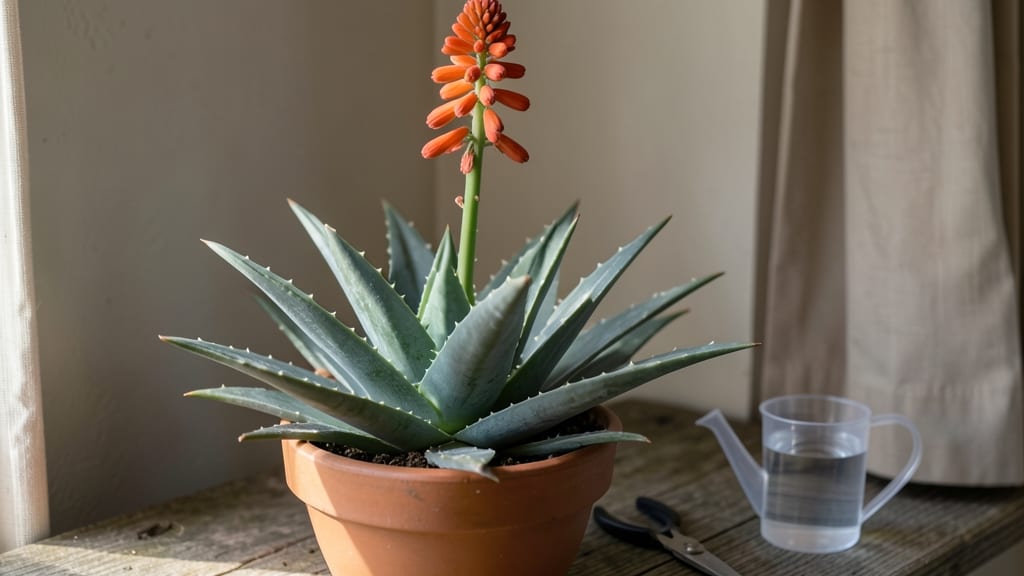
Your aloe vera might never bloom—unless you recreate its desert home. ✨ I’ve watched mine go years without flowers until I adjusted light, water, and temperature to mimic its natural habitat.
The key isn’t forcing it, but giving it exactly what it craves: bright, indirect sunlight for 12+ hours daily and cooler winter nights.
Most growers overwater or fertilize too much, which stunts blooms. Your plant needs dry soil between waterings and a balanced fertilizer only in spring. The real secret?
A 10°F drop in winter temps triggers flowering—so if you live in warm climates, move it outside during cooler months or use a grow light to simulate seasonal changes.
When conditions are right, you’ll see a tall, arching flower spike with tubular blooms—often orange, yellow, or pink. It takes 6-12 months from trigger to bloom, but the wait is worth it. Even reblooms are possible if you maintain consistency. Patience pays off with vibrant, rare flowers that last weeks.
This works for both potted aloe and in-ground plants. Just avoid dark corners or drafty spots—your plant needs steady warmth and light. Here’s how to set it up right the first time.
📚 In This Guide
- What you need
- Instructions
- Tips and common mistakes
- Wrapping up and next steps
What you need
- ● Mature aloe vera plant: At least 3–5 years old (younger plants rarely bloom). Choose a healthy, well-established specimen with thick, plump leaves.
- ● Bright, indirect sunlight: A south- or west-facing window (or a grow light for indoor setups). Aim for 6–8 hours of sunlight daily during blooming season.
- ● Well-draining soil: A cactus/succulent mix (or regular potting soil amended with 50% perlite or pumice to prevent root rot).
- ● Pot with drainage holes: A terracotta or ceramic pot (1–2 inches larger than the plant’s root ball) to allow excess water to escape.
- ● Water: Room-temperature, filtered or rainwater (avoid tap water with high chlorine/salt content).
- ● Spray bottle: For light misting (aloe vera prefers low humidity but benefits from occasional moisture on leaves).
- ○ Fertilizer (optional): A balanced, water-soluble fertilizer (e.g., 10-10-10) diluted to half-strength during growing season (spring/summer).
- ● Organic options: Compost tea or worm castings (apply sparingly—aloe vera is sensitive to over-fertilizing!).
- ● Grow light (indoor setups): A full-spectrum LED bulb (12–16 hours/day) if natural light is insufficient.
- ○ Thermometer/hygrometer (optional): To monitor temperature (60–80°F ideal) and humidity (30–50% range).
- ● Pruning shears: For trimming dead leaves or flower stalks after blooming (sterilize with rubbing alcohol!).
Step-by-Step guide to encouraging aloe vera flowers
Here’s how to coax those stunning aloe blooms with sunlight and patience—no fancy tools needed.
☀️ Step 1: Position for Maximum Sunlight
Move your aloe to a south-facing window or bright, indirect light spot—think 6+ hours of direct sunlight daily. I’ve seen aloe plants refuse to bloom in dim corners, but once they get enough light, they’ll start reaching for those rays. If you’re indoors, a grow light (12–16 hours/day) works too, but natural sun is best for flowering.
Watch for yellowing leaves—that’s a sign it’s stretching toward light. Rotate the pot quarter-turn weekly so growth stays even. Aloe blooms need strong, consistent light, not just occasional bright spots.
💧 Step 2: Water Deeply but Sparingly
Let the soil dry completely between waterings—aloe stores water in its leaves, so soggy soil suffocates roots. I water mine every 3–4 weeks in winter, but once a week in summer (when growth speeds up). Stick your finger 2 inches deep—if it’s dry, water until it drains from the bottom. Overwatering kills blooming potential fast.
Use room-temperature water and avoid wetting the leaves. I’ve seen fungal spots ruin a plant’s chances—just water at the base. Aloe blooms thrive when they’re slightly thirsty, not drowning.
⏰ Step 3: Mimic Seasonal Dormancy
In late fall, reduce watering to every 6–8 weeks and move the plant to a cooler spot (50–60°F) for 8–10 weeks. This mimics winter dormancy, a key trigger for blooming. I’ve had aloes refuse to flower until I let them rest—it’s like forcing a plant to “sleep” before the big show.
Watch for new growth slowing—that’s your cue it’s in dormancy. Skip fertilizing during this time. After 10 weeks, return it to warmth and regular watering. Blooms often appear 3–6 months later, but patience pays off.
🌱 Step 4: Fertilize Strategically for Blooms
Start fertilizing in early spring with a balanced, diluted houseplant fertilizer (half-strength). I use it every 4–6 weeks until summer. Too much fertilizer = leafy growth, no flowers. Look for phosphorus-heavy formulas (like 10-30-10)—this pushes blooming over foliage. Stop fertilizing in late summer to let the plant focus on flowering.
If your aloe’s leaves turn dark green with brown tips, cut back on fertilizer. Healthy blooms start with strong roots, not overfed leaves.
🌿 Step 5: Watch for Blooming Signals
After 1–2 years of care, you’ll spot a tall, thin flower stalk emerging from the center. This spike can grow 2–3 feet tall and branches into orange, yellow, or red tubular flowers. It’s a dramatic show—just don’t trim it until it browns. The blooms last 7–10 days, but the stalk stays for months as a decorative feature.
If your aloe never blooms, check for low light, overwatering, or lack of dormancy. I’ve had stubborn plants finally flower after a third winter of dormancy—consistency wins.
Tips & tricks for encouraging aloe vera blooms
Here's what nobody tells you about getting your aloe to flower—these are the little details that make all the difference.
Light Consistency is Key: That 6+ hours of direct sunlight in Step 1 isn't just about quantity—it's about quality. I've noticed my aloe plants bloom most reliably when they get morning sun (6am-12pm) and afternoon shade (12pm-6pm). If you're using a grow light, position it 6-12 inches above the plant and keep it on for the full 12-16 hours. The light source should be consistent—aloe plants sense light direction and will stretch toward the strongest source if it's uneven.
Soil Drainage Makes or Breaks Blooming: The instructions mention watering deeply but sparsely, but here's the secret: your aloe's pot needs drainage holes. Without them, water sits at the roots and prevents blooming. I've had aloe plants in decorative pots without drainage refuse to flower until I repotted them. If you can't drill holes, use a cache pot system—place the decorative pot inside a slightly larger one with drainage holes, then add pebbles and water to the outer pot. This creates the right moisture balance without soggy soil.
Dormancy Timing is Critical: That 8-10 week dormancy period in Step 3 is non-negotiable for blooming. I've found the best results come when I start dormancy in mid-October and end it in late December. The key is consistency—don't break dormancy early just because you're impatient. Watch for the leaves to pucker slightly and growth to slow dramatically. This is your plant's way of telling you it's ready for its winter rest period. The cooler 50-60°F temperature helps trigger the internal signals that lead to flowering.
Fertilizer Timing Matters More Than You Think: Starting fertilizer in early spring and stopping in late summer creates the perfect bloom cycle. I've noticed that aloe plants fertilized year-round never bloom—they just grow more leaves. The phosphorus-heavy formula (like 10-30-10) is crucial because phosphorus promotes root development and flowering. When you stop fertilizing in late summer, the plant shifts its energy from leaf production to flower development. This is why you'll often see blooms appear in late winter or early spring.
Pro Tips for Make Aloe Vera Bloom
- Here's what nobody tells you about getting your aloe to flower—these are the little details that make all the difference.
- Light Consistency is Key: That 6+ hours of direct sunlight in Step 1 isn't just about quantity—it's about quality.
- Soil Drainage Makes or Breaks Blooming: The instructions mention watering deeply but sparsely, but here's the secret: your aloe's pot needs drainage holes.
Frequently asked questions
Got questions about coaxing those stunning aloe vera blooms? You’re not alone! Here are answers to the most common queries—so you can grow with confidence and watch your aloe vera shine.
How long does it take for aloe vera to bloom after proper care?
With ideal conditions (bright sunlight, well-draining soil, and patience), aloe vera typically blooms after 3–5 years of growth. Some mature plants may take even longer—think of it as a slow-burning reward for your efforts!
Can I force aloe vera to bloom faster?
No, you can’t rush the process—but you can optimize conditions! Ensure it gets 6+ hours of direct sunlight daily, use a cactus/succulent mix, and avoid overwatering. Blooming is triggered by maturity and environmental cues, not forcing.
What if my aloe vera isn’t blooming despite good care?
Don’t stress! Aloe vera blooms are rare in indoor settings. If outdoors, check for:
- Temperature: Needs 60–80°F (15–27°C)—cooler nights can trigger blooms.
- Watering: Too much or too little can stall growth.
- Age: Most blooms appear on plants 4+ years old.
Do aloe vera blooms come back every year?
Nope! Aloe vera blooms are one-time per stem—once the flower fades, that stalk dies. However, healthy plants may produce new blooms on different stalks in future years (often in spring/summer).
Can I grow aloe vera indoors and still get blooms?
Indoor blooms are extremely rare—aloe vera needs intense sunlight (like a south-facing window) and warmth to trigger blooms. If indoors, focus on healthy growth first; blooms are a bonus for outdoor plants!
Pro Tip:
For the best chance at blooms, plant aloe vera in a pot with drainage holes and fertilize lightly in spring with a low-nitrogen succulent fertilizer. Patience and sunlight are your secret weapons!
Wrapping up and next steps
Growing aloe vera blooms is a rewarding journey that combines patience, care, and a little know-how! 🌱 By mastering the right balance of sunlight exposure, watering techniques, and environmental conditions, you’ll unlock the stunning beauty of those rare, tubular flowers.
Remember, consistency is key—your plant will thank you with vibrant blooms in time.
Now that you’re armed with the secrets to success, why not share your progress? Snap a photo of your blooming aloe and tag us—we’d love to see your hard work pay off! 📸✨ Happy gardening!