
Blooming
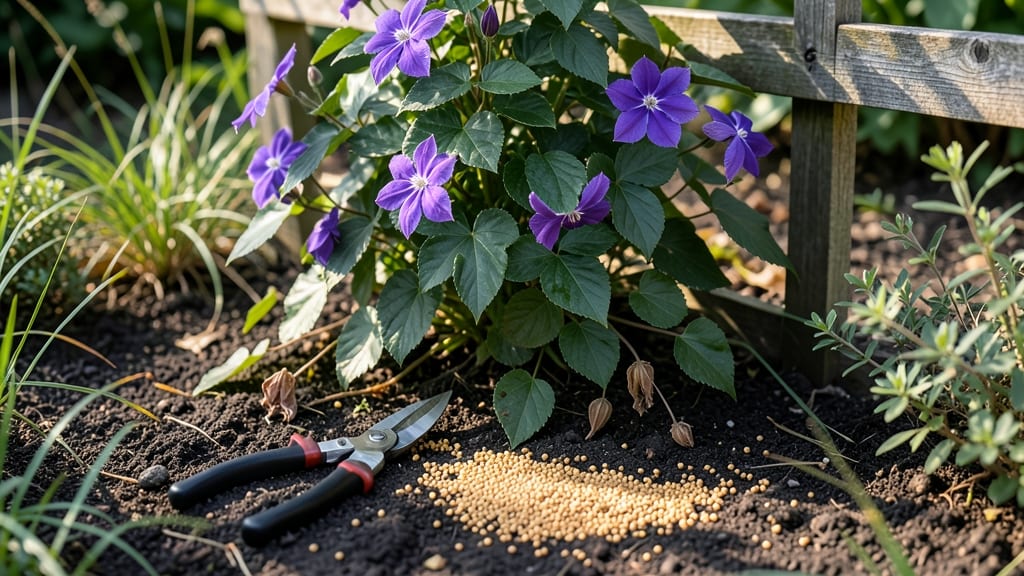
Getting your clematis to bloom feels like unlocking a secret garden—once you know the pruning zones and timing, those lush vines explode with flowers. ✨ I’ve struggled with stubborn clematis that refused to rebloom, but the key lies in understanding their growth cycles and when to prune.
The wrong cut can mean fewer blooms, while the right one triggers a second flush that lasts all summer long.
Clematis thrive with 6+ hours of sunlight daily and well-draining soil rich in organic matter. Overwatering is the silent blooming killer—let the top inch dry between waterings. Most gardeners mess up by pruning at the wrong time, but timing depends on your plant’s type (early, mid, or late bloomer).
Early bloomers (like ‘Jackmanii’) get pruned right after their first flush, while late bloomers (like ‘Nelly Moser’) wait until spring.
With the right approach, you’ll see vibrant blooms within 6-8 weeks of proper pruning, and those second flushes arrive like clockwork. The trick is patience—clematis reward careful pruning with dramatic displays that turn heads.
Once you master the zones and timing, your vines will bloom like they’re in a botanical garden, not just your backyard.
Even experienced gardeners overlook support structures—clematis need strong trellises or arbors to climb properly. Weak stems flop, and flopping stems don’t bloom well. Start with healthy soil, prune confidently, and watch your clematis transform from stubborn vines into a showstopper. Here’s how to make it happen without the guesswork.
📚 In This Guide
- What you need
- Instructions
- Tips and common mistakes
- Wrapping up and next steps
What you need
- ● Pruning shears or secateurs: Sharp, clean, and disinfected (use rubbing alcohol or a 10% bleach solution). Size: 5-7 inches (13-18 cm) with bypass blades for precision cuts.
- ○ Gloves: Heavy-duty gardening gloves (optional but recommended—clematis can have thorns!).
- ● Pruning saw: For thicker stems (1+ inch / 2.5+ cm diameter). Tip: Look for a folding design for easy storage.
- ● Loppers: For medium-sized stems (½–1 inch / 1.3–2.5 cm). Bonus: Self-pruning or ratcheting models reduce hand fatigue.
- ○ Disinfectant (optional but highly recommended): 1 part bleach to 9 parts water or 70% isopropyl alcohol to prevent disease spread.
- ○ Pruning sealant (optional): For large cuts (½ inch / 1.3 cm or thicker) to prevent sap loss or pests. Look for: Tree wound paint or horticultural sealant.
- ● Know your clematis group: Groups 1-3 (early bloomers) vs. Groups 2-3 (repeat bloomers). Pro tip: Most second-flush clematis fall into Groups 2-3!
- ● Healthy plant: No signs of disease (e.g., brown spots, wilting) or pest infestation (e.g., spider mites, aphids). 💡 Treat issues before pruning!
- ● Sunlight: At least 6+ hours of direct sun daily. Partial shade is okay for Groups 1-2.
- ● Watering access: A hose with a gentle spray nozzle or drip irrigation system for post-pruning hydration.
- ● Support structure (if needed): Sturdy trellis, arbor, or obelisk for climbing varieties. Height: Match the mature size of your clematis (e.g., 6–10 ft / 1.8–3 m for most vines).
- ● Pruning chart or guide: A visual reference for zone markers (e.g., colored tape or labels) to track cuts.
- ● Mulch: Organic mulch (e.g., shredded bark) to retain moisture and regulate soil temp.
- ● Fertilizer: Balanced 10-10-10 or 5-10-5 fertilizer for post-pruning growth. 🌡️ Apply in early spring or after first bloom.
- ● Plant markers: Labels to track pruning dates and zones (e.g., "Group 3 – Pruned March 15").
Step-by-step guide to encouraging clematis to bloom
Here's the method I use to coax vibrant blooms from my stubborn clematis—it’s all about pruning zones and timing.
🌿 Step 1: Identify Your Clematis Type and Pruning Zone
First, determine your clematis type—early bloomers (spring flowers) vs. late bloomers (summer/fall flowers). Early bloomers (like Clematis montana or Clematis armandii) bloom on old wood, so prune lightly after flowering. Late bloomers (like Clematis viticella or Clematis jackmanii) bloom on new wood, so prune hard in early spring.
Next, find your USDA hardiness zone. Most clematis thrive in zones 4-9, but pruning timing shifts slightly with climate. In colder zones (4-6), prune late winter/early spring (after last frost). In warmer zones (7-9), prune late winter to avoid heat stress. You’ll know it’s time when forsythia blooms—your cue to prune.
✂️ Step 2: Prune Based on Blooming Habits
For early bloomers, prune right after flowering (late spring/early summer). Cut back spent blooms to the first healthy pair of leaves below. Never cut into old wood—this removes next year’s flowers. I like to leave 3-5 buds on each stem to encourage new growth.
For late bloomers, prune hard in early spring (just as new shoots emerge). Cut back 2/3 of the plant to a strong pair of buds, about 12-18 inches from the ground. This aggressive pruning forces energy into new, vigorous growth that blooms later. If you’re unsure, snap a stem—if it’s woody and hollow, it’s old wood; if it’s green and flexible, it’s new.
☀️ Step 3: Provide the Right Growing Conditions
Clematis needs full sun (6+ hours daily) and moist, well-draining soil. If your plant isn’t blooming, check its location—shade or poor soil can stunt flowers. I plant mine near a south-facing wall for extra warmth and support them with a strong trellis to climb.
Water deeply once a week (more in drought). Keep the root zone consistently moist—wilting stresses the plant and reduces blooms. Mulch with 2-3 inches of organic matter (like shredded bark) to retain moisture and regulate soil temperature. You’ll see healthier growth when leaves stay vibrant green, not yellow or crispy.
🌱 Step 4: Feed for Maximum Blooms
Clematis are heavy feeders, so fertilize twice a year: once in early spring (when new shoots appear) and again after first blooms fade. Use a balanced, slow-release fertilizer (like 10-10-10) or a high-phosphorus formula (like 5-10-5) to encourage flowering. Scatter granules 6 inches from the base and water in.
I also top-dress with compost in fall to replenish nutrients. Avoid high-nitrogen fertilizers—they promote leafy growth at the expense of flowers. Look for small, tight buds forming in spring—that’s your sign the plant is storing energy for blooms.
⏰ Step 5: Encourage a Second Flush of Blooms
To trigger a second flush (common in late bloomers), pinch back new growth in mid-summer after the first blooms fade. Cut back 1/3 of the current season’s growth to stimulate branching. Deadhead spent blooms regularly—this redirects energy to new flowers instead of seed production.
In warmer climates, a second flush often appears 6-8 weeks after pruning. If your clematis isn’t reblooming, check for overcrowding—thick foliage blocks airflow and light. Thin out competing plants nearby. You’ll know you’re on track when you see multiple buds forming along stems by midsummer.
Tips & tricks for perfect clematis blooms
These little details make all the difference between a few sad blooms and a garden bursting with clematis color.
Pruning Precision: When pruning late bloomers in early spring, look for the first pair of buds that face outward on the stem—these will produce the most vigorous growth. I cut just above these buds, leaving about 12-18 inches of stem. This ensures strong new shoots that will support abundant flowers later. For early bloomers, I always leave 3-5 buds after pruning—this guarantees next year's spring display while still encouraging summer growth.
Visual Pruning Cues: Here's what I learned the hard way: if you're unsure whether a stem is old or new wood, snap it! Old wood is woody and hollow, while new growth is green and flexible. This simple test prevents accidentally removing next year's blooms. I also mark my pruning cuts with a permanent marker before cutting—this helps me visualize where the new growth will emerge.
Sunlight Strategy: Clematis needs 6+ hours of direct sunlight daily, but morning sun with afternoon shade works best in hot climates. If your plant isn't blooming, check its location—even partial shade can reduce flower production. I plant mine near south-facing walls which reflect extra warmth and light. For container-grown clematis, rotate the pot every few weeks to ensure even sun exposure all around.
Fertilizer Timing: The twice-a-year fertilization schedule is key, but timing matters more than you'd think. Apply your first dose of balanced fertilizer when you see those first tiny green shoots in spring—this jumpstarts growth. The second application should happen immediately after the first blooms fade, not before. I also make it a habit to water thoroughly after fertilizing to help nutrients reach the roots. Look for small, tight buds forming in spring as your sign the plant is storing energy for blooms.
Pro Tips for Get Clematis To Bloom
- These little details make all the difference between a few sad blooms and a garden bursting with clematis color.
- Pruning Precision: When pruning late bloomers in early spring, look for the first pair of buds that face outward on the stem—these will produce the most vigorous growth.
- Visual Pruning Cues: Here's what I learned the hard way: if you're unsure whether a stem is old or new wood, snap it!
Frequently asked questions
Got questions about getting your clematis to put on a show-stopping display? You’re not alone! Here are some of the most common concerns—and quick, practical answers to help you troubleshoot and succeed.
Why isn’t my clematis blooming at all?
Clematis often skips blooms due to over-pruning (cutting back too late or too hard) or poor sunlight. Most varieties need 6+ hours of sun daily—especially in the morning. Also, check if your plant is group 1, 2, or 3 (pruning zones matter!). Group 3 (late bloomers) may need a hard prune in early spring to encourage new growth.
Can I force a second flush of blooms?
For Group 2 (early summer bloomers), give them a light trim after the first flush to encourage a second round. For Group 3 (late summer/fall bloomers), avoid pruning until after blooming—then prune in early spring to set up next year’s flowers. Pro tip: Feed with a high-potassium fertilizer after the first flush to boost blooms!
Should I prune clematis in winter or spring?
Timing depends on your clematis group:
- Group 1 (spring bloomers): Prune right after blooming (or lightly in early spring).
- Group 2 (early summer bloomers): Prune after the first flush (late spring/early summer).
- Group 3 (late summer/fall bloomers): Prune in early spring (before new growth starts).
What if my clematis only has leaves and no flowers?
This usually means too much nitrogen (leafy growth = happy, but not blooming). Switch to a balanced or phosphorus-rich fertilizer (like 5-10-5) to encourage flowers. Also, check for:
- Shady spots (move to sunnier location).
- Overcrowded roots (mulch well and prune nearby plants).
- Old wood (Group 3 varieties need annual spring pruning).
How hard can I prune my clematis without killing it?
It depends on the group! Here’s a quick guide:
Group
Pruning Time
How Much to Cut
Group 1
After blooming (late spring)
Lightly trim dead/weak stems (or hard prune to 12” if overgrown).
Group 2
After first flush (late spring/early summer)
Cut back 1/3 of the plant to encourage second blooms.
Group 3
Early spring (before new growth)
Hard prune to 12–18” above ground (or 2–3 strong buds).
Wrapping up and next steps
Getting your clematis to bloom beautifully is all about understanding its pruning zones, timing, and care needs—and now you’ve got the expert tips to make it happen! 🌸 Whether you’re a seasoned gardener or just starting, a little patience and the right techniques will reward you with stunning second flushes of color.
Don’t wait—grab those pruners and give your clematis the love it deserves!
Ready for more? Next, explore our guide on the best fertilizers for clematis to keep those blooms thriving all season long!