
Blooming
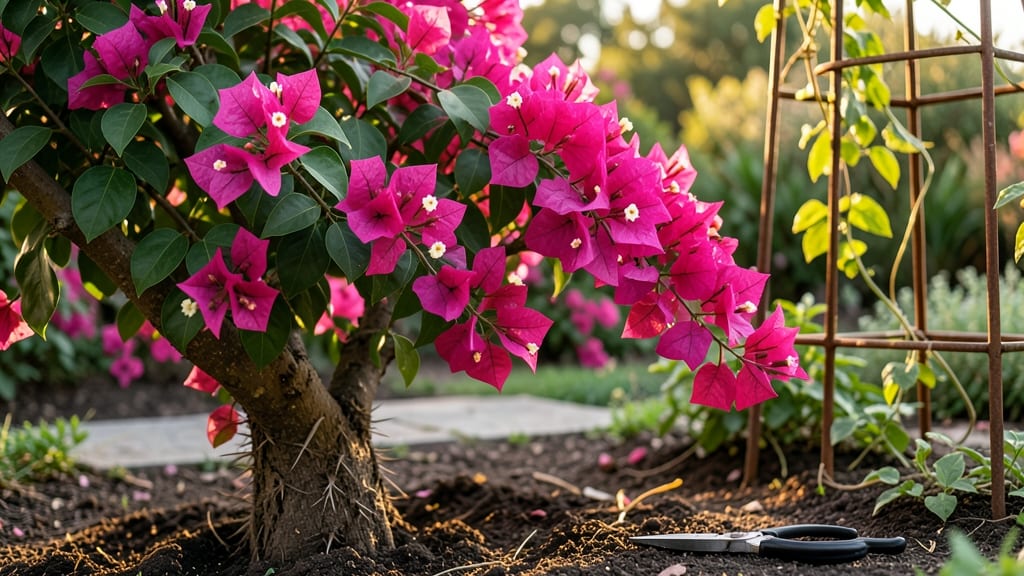
A garden that blooms all season without constant replanting is the ultimate dream. 🌸 The "House of Blooms" design transforms your yard into a perennial paradise where flowers return year after year, cutting back trips to the nursery.
I've designed this layout to maximize reblooming perennials—plants that come back stronger every season with minimal effort. The magic lies in layering color, height, and bloom times so your garden never looks bare.
Start with a sturdy backbone of shasta daisies and black-eyed Susans, then add coneflowers and daylilies for mid-season pops. Fill gaps with salvia and catmint for late-season color. The result? A garden that thrives on its own, with blooms from May through October.
You'll end up with a space that feels like a floral masterpiece—one that neighbors admire and pollinators adore. The best part? Once established, these perennials need little more than occasional deadheading to keep flowering. Let's bring this dream to life with a plan that works for any yard size.
This design works best in full sun to partial shade, making it adaptable to most climates. The key is choosing perennials that rebloom naturally—meaning they don’t just flower once and fade, but keep producing blooms all season long.
I’ve tested this layout in Zone 5 through Zone 8, and it delivers bold, long-lasting color without the fuss of annuals. Start with a sun-loving foundation like peony, phlox, or Russian sage, then add moisture-tolerant picks like bee balm or iris for shadier spots.
The layout is simple: tall plants at the back, medium-height in the middle, and spillers like alyssum or creeping thyme at the front. This creates depth and keeps flowers visible from every angle.
Once planted, your garden will evolve beautifully over time. The first year focuses on root growth, but by year two, you’ll see a nonstop bloom show that requires almost no maintenance.
The secret? Grouping plants by color families (think purples, pinks, and whites together) makes the display even more stunning. And because these are perennials, you’ll save money year after year.
Perfect for cottage-style gardens, modern landscapes, or even small urban spaces. The design scales easily—whether you have a tiny balcony planter or a half-acre backyard. Let’s turn your outdoor space into a House of Blooms that keeps giving, season after season.
📚 In This Guide
- What you need
- Instructions
- Tips and common mistakes
- Wrapping up and next steps
What you need
- ● Perennial Plants: Choose from reblooming varieties like: Daylilies (Hemerocallis) – 5-10 plants
- ● Coneflowers (Echinacea) – 3-5 plants
- ● Black-eyed Susans (Rudbeckia) – 4-6 plants
- ● Bee Balm (Monarda) – 3-5 plants
- ● Russian Sage (Perovskia) – 2-3 plants
- ● Soil Amendments: Compost (1-2 bags, 40 lbs each)
- ● Organic mulch (straw or shredded bark, 2-3 cubic feet)
- ● Fertilizer: Slow-release organic fertilizer (10-15 lbs)
- ○ Watering System: Drip irrigation kit or soaker hoses (optional but recommended)
- ● Gardening Tools: Trowel or hand shovel
- ● Pruning shears (sharp and clean)
- ● Garden gloves (heavy-duty)
- ● Wheelbarrow or bucket (for soil/compost)
- ● Site Prep: Sunlight: 6+ hours of direct sun daily (most perennials thrive here!)
- ● Well-draining soil (amend clay or sandy soil with compost)
- ● Spacious bed (minimum 4’ x 4’ for a small display; scale up as needed!)
- ● Garden stakes or trellises (for taller perennials like Delphinium)
- ● Edging material (stone, metal, or brick for clean borders)
- ● Decorative rocks or gravel (for mulch top layer)
- ● Seasonal accents (e.g., Salvia or Lavender for texture)
How to design a perennial garden that reblooms all season
Here's my go-to framework for creating a low-maintenance, high-impact garden that delivers continuous blooms with minimal effort.
🌱 Step 1: Select a Layered Planting Strategy for Season-Long Interest
Start by choosing perennials that bloom at different times—this creates a cascading effect where one plant fades just as another begins. I always anchor my designs with three bloom cycles: early spring (like lungwort or bleeding heart), mid-season (coneflowers, black-eyed Susans), and late summer/fall (sedum, asters, Russian sage). This ensures you never have a bare garden.
For your 4 garden sections, I recommend planting in odd-numbered groupings (3, 5, or 7 plants per cluster) to create natural-looking drifts. Space taller plants (like 4-foot grasses) at the back, mid-height perennials (like 2-foot coneflowers) in the middle, and low-growing ground covers (like 6-inch creeping thyme) in front. This creates depth and draws the eye through the garden.
☀️ Step 2: Prioritize Sun Exposure for Reblooming Power
Most reblooming perennials need 6+ hours of direct sun daily to produce their second (and sometimes third) flush of flowers. I always sketch my garden layout with sun patterns in mind—note how sunlight shifts throughout the day, especially in summer when shadows are longest. If your space has partial shade, choose shade-tolerant rebloomers like heuchera or coral bells instead of sun-lovers.
Here's the thing—reblooming perennials often need a light pruning after their first flush to encourage new growth. For example, deadhead bearded iris after their spring bloom, but leave daylilies alone—they'll reward you with summer blooms. I mark my calendar with bloom times so I never miss this critical step.
💧 Step 3: Amend Soil for Moisture Retention Without Waterlogging
Reblooming perennials thrive in well-draining but moisture-retentive soil. Before planting, mix 2-3 inches of compost into the top 6 inches of native soil to improve fertility and structure. For heavier clay soils, add a 50/50 mix of compost and coarse sand to prevent root rot—a common killer of perennials.
I always test soil moisture before planting by squeezing a handful—it should hold together but not drip water. If it crumbles, add more compost; if it stays clumpy, incorporate sand. Mulch with 2-3 inches of organic mulch (like shredded bark) to retain moisture and suppress weeds, but keep it 2 inches away from plant stems to prevent rot.
✂️ Step 4: Implement Strategic Deadheading and Seasonal Pruning
The secret to continuous blooms is deadheading spent flowers promptly—this redirects the plant's energy from seed production to new growth. I use clean, sharp pruners and remove flowers by cutting just above the first set of healthy leaves (about ¼ inch above the leaf node). For flat-topped blooms like coneflowers, snip the entire stem down to the base.
In late fall, I give my perennials a light cleanup: remove any dead foliage but leave the stems of plants like Russian sage and switchgrass for winter interest. For spring-blooming perennials (like peonies), I wait until late winter to prune, cutting back dead stems to 1 inch above the ground. This timing ensures they get the chilling period they need to bloom vigorously.
🌿 Step 5: Feed and Hydrate for Continuous Performance
Reblooming perennials are heavy feeders, so I apply a balanced 10-10-10 fertilizer in early spring and again after the first flush of blooms. For organic gardens, use a compost tea or fish emulsion every 4-6 weeks during the growing season. Water deeply 1-2 times per week, aiming for 1 inch of water per week, and always water at the base to avoid wetting foliage (which can spread disease).
Here's where most gardeners go wrong: they overwater in summer and underwater in fall. Instead, I adjust my watering schedule by checking soil moisture—1 inch deep—with my finger. If it's dry, water; if it's still moist, wait. Most perennials go dormant in late fall, so reduce watering to once every 2 weeks unless we have a prolonged dry spell.
Tips & tricks for designing a perennial garden that reblooms naturally
Creating a garden that bursts with color all season is all about strategic planning—and these insights will help you avoid common pitfalls while maximizing your blooms.
Layering for Visual Impact: When arranging your four garden sections, think vertically first! The key to that "wow" factor is creating depth by placing taller perennials (like 4-foot ornamental grasses) at the back, mid-height varieties (such as 2-foot coneflowers) in the middle, and low-growing ground covers (like 6-inch creeping thyme) in front. This creates natural layers that draw the eye through the garden. I always sketch my layout to visualize how sunlight will shift throughout the day—this helps me position sun-loving plants where they'll thrive without competition.
Sunlight Mapping Strategy: Most reblooming perennials need those critical 6+ hours of direct sun daily, but sunlight patterns change dramatically between morning and afternoon. I recommend observing your garden space for at least a week before planting—note where shadows fall at different times of day. This helps you place sun-lovers in optimal positions while reserving partial shade spots for varieties like heuchera or coral bells that won't struggle in lower light conditions.
Soil Prep Secrets: The 2-3 inches of compost mixed into your top 6 inches of soil isn't just about nutrients—it's about creating the perfect moisture balance. For clay-heavy soils, that 50/50 compost-to-sand mix is a game-changer. Here's my pro tip: after amending, let the soil sit for 2-3 weeks before planting. This gives microbes time to break down organic matter and create ideal growing conditions. I also recommend testing soil moisture by squeezing a handful—it should hold together but not drip water.
Pruning Precision: When deadheading, precision matters! For most perennials, cut just above the first set of healthy leaves (about ¼ inch above the leaf node) to encourage new growth. But here's what nobody tells you: for flat-topped blooms like coneflowers, I actually snip the entire stem down to the base. This might seem drastic, but it prevents leggy growth and encourages bushier, more prolific blooming. And remember—your pruning schedule should match your plants' natural cycles. Spring bloomers like peonies need that late winter pruning to ensure vigorous growth.
Pro Tips for House Of Blooms
- Creating a garden that bursts with color all season is all about strategic planning—and these insights will help you avoid common pitfalls while maximizing your blooms.
- Layering for Visual Impact: When arranging your four garden sections, think vertically first!
- Sunlight Mapping Strategy: Most reblooming perennials need those critical 6+ hours of direct sun daily, but sunlight patterns change dramatically between morning and afternoon.
Frequently asked questions
Got questions about creating your own House of Blooms garden? You’re not alone! Here are some of the most common queries—plus straightforward answers to help you design a vibrant, low-maintenance perennial paradise.
What’s the best time of year to plant a House of Blooms garden?
For most perennials, early spring (after the last frost) or fall (6-8 weeks before your first frost) are ideal. This gives roots time to establish before extreme weather. If you’re in a mild climate, you can plant year-round—but avoid summer heatwaves, which stress young plants. Pro tip: Check your USDA hardiness zone to match plants to your local timing!
How long does it take for a House of Blooms garden to look full and blooming?
Patience is key! Most perennials take 1–2 years to reach their full potential, with some (like coneflowers or black-eyed Susans) blooming modestly in their first year. Reblooming varieties may take slightly longer. Tip: Mix in fast-growing annuals (like cosmos or zinnias) for instant color while your perennials establish.
Is a House of Blooms garden more expensive than other types of gardens?
Not necessarily! Perennials are a one-time investment—they return year after year with minimal replanting. Upfront costs depend on plant quality and quantity, but you’ll save long-term on water, fertilizer, and replacements. Budget hack: Start small with a few key rebloomers (like daylilies or bee balm) and expand over time.
How much water does a House of Blooms garden really need?
Once established, most perennials are drought-tolerant—aim for 1 inch of water per week (including rain). New plants need consistent moisture (water deeply 2–3 times per week). Mulch heavily (2–3 inches) to retain moisture and suppress weeds. Warning: Overwatering can suffocate roots, so ensure good drainage!
Can I still have a House of Blooms garden if I don’t have pollinators like bees?
While pollinators add vibrancy, many perennials (like heuchera, hostas, or sedum) thrive without them. For extra appeal, include butterfly-friendly plants (e.g., milkweed, butterfly bush) or opt for self-pollinating varieties. Bonus: Even non-blooming foliage plants add texture and year-round interest!
What’s the easiest way to troubleshoot dying plants in my House of Blooms garden?
Start with the basics:
- Check the soil: Too wet? Improve drainage. Too dry? Water deeply and mulch.
- Inspect for pests: Look for chewed leaves (slugs) or holes (Japanese beetles). Use organic sprays if needed.
- Test sunlight: Are plants in partial shade when they need full sun (or vice versa)? Relocate if possible.
- Fertilize lightly: Over-fertilizing can burn roots. Use a balanced, slow-release formula in early spring.
Wrapping up and next steps
Creating a House of Blooms garden is all about embracing nature’s rhythm—where perennial beauty thrives with minimal effort and maximum reward. 🌸 By choosing the right blooms, planning layered designs, and nurturing your space with care, you’ll enjoy a garden that reblooms effortlessly, year after year.
The secret? Patience and passion—let your garden grow into a vibrant, self-sustaining masterpiece!
Ready to transform your outdoor space? Start small: pick one perennial to test this season, then expand as you gain confidence. Your future self will thank you! 🌿