
Blooming
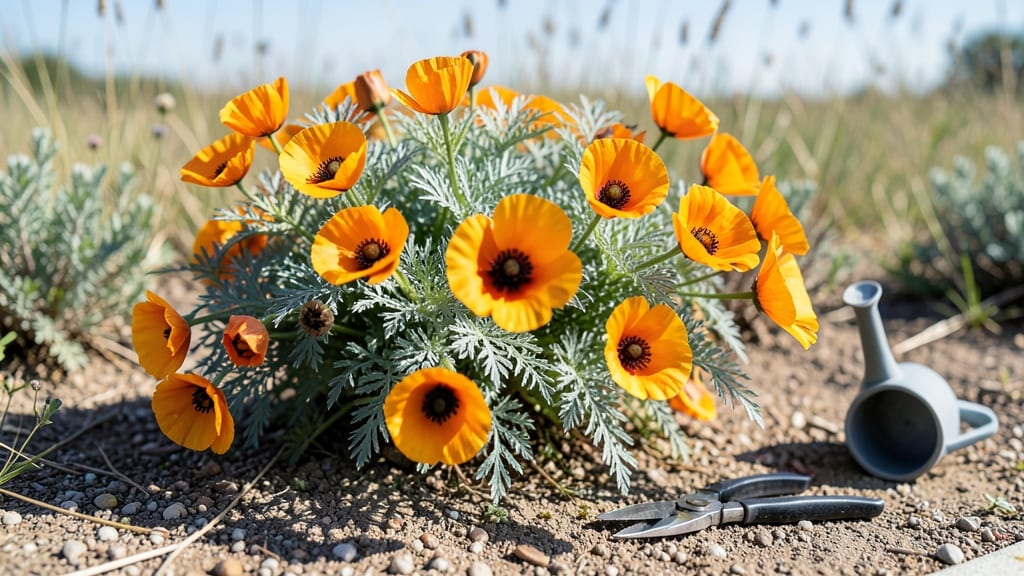
California poppy blooming transforms your garden into a golden sea of sunshine—and it keeps coming back every spring if you know the secrets. 🌻 I’ve watched mine carpet entire hillsides for years, their delicate petals opening wide under the California sun, only to fade and reset for next season’s show.
The magic starts with full sun and well-draining soil—these poppies hate soggy roots. In my zone 7b garden, they bloom from February to April, but they’ll push later in cooler climates.
The key is minimal fuss: once established, they’re drought-tolerant and self-seeding, meaning less work for you and more blooms for everyone. During peak bloom, water lightly (they despise wet feet) and skip deadheading—let the spent blooms go to seed for next year’s display.
Pest pressure is usually low, but watch for aphids on new growth; a blast of water often clears them. The payoff? Months of effortless color with almost no maintenance after the first year. Perfect for wildflower meadows, rock gardens, or even container edges.
Here’s how to set yours up for that sun-drenched spectacle—year after year.
📚 In This Guide
- What you need
- Instructions
- Tips and common mistakes
- Wrapping up and next steps
What you need
- ● Seeds: Eschscholzia californica (California poppy) seeds – 1-2 packets (500-1,000 seeds) for a small garden.
- ● Well-draining soil: Sandy or loamy soil with pH 6.0-8.0 (avoid heavy clay).
- ● Sunlight: Full sun exposure (6+ hours daily).
- ● Water: Minimal irrigation (drought-tolerant once established).
- ● Space: 6-12 inches apart for mature plants (they self-seed easily!).
- ● Garden gloves (for handling seeds/soil).
- ● Seed starter tray (if pre-sprouting indoors).
- ● Mulch (light organic layer to retain moisture).
- ○ Fertilizer (low-nitrogen, like 5-10-5 blend, optional).
- ● Deadheading shears (to encourage reblooming).
Step-by-Step guide to encouraging California poppy blooms
Here's how to coax those iconic orange blooms back every spring with minimal fuss.
☀️ Step 1: Select the Perfect Sunlit Location
California poppies demand full sun exposure—at least 6-8 hours daily. I always choose the driest, sunniest corner of my garden because these plants thrive where others struggle. The more intense the sunlight, the brighter and more prolific the blooms will be next season.
Watch for microclimates in your yard—areas near south-facing walls or slopes often get extra heat. Poppies will spread aggressively in these spots, creating a golden carpet by spring. Avoid low-lying areas where cold air settles, as even brief frost can blacken the foliage.
🌱 Step 2: Prepare Well-Draining Soil Without Fertilizer
These desert natives despise rich soil—too much nitrogen produces lush green foliage at the expense of blooms. I mix the native soil with 50% coarse sand or perlite to create that perfect gritty texture they crave. The goal is soil that drains so quickly it barely stays damp after watering.
Test your soil's drainage by scooping a handful—if it forms a ball when squeezed, add more sand. Poppies will reward you with 3-4 inch wide blooms when the roots can breathe freely. Never amend with compost or fertilizer; it's the surest way to get leggy stems and few flowers.
💧 Step 3: Water Deeply but Infrequently
Once established, California poppies are drought-tolerant, but proper initial watering sets them up for years of blooming. Water deeply once every 7-10 days during the first growing season, soaking the soil to 6 inches deep. You'll know it's right when water appears at the bottom of the hole you dug to check.
After the first year, reduce watering to every 3-4 weeks unless your region experiences prolonged drought. Overwatering causes root rot, and you'll see it as yellowing leaves or stems that collapse. Let the soil dry completely between waterings—poppies store moisture in their taproots and don't need frequent drinks.
✂️ Step 4: Deadhead Strategically for Next Year's Blooms
Here's the thing—California poppies self-seed prolifically, but deadheading extends the current season's display and ensures stronger blooms next year. Snip spent blooms at the base with clean shears, but leave the seed pods on some plants if you want natural propagation. I typically deadhead half the plants to maintain both current color and future volunteers.
Watch for the blooms to fade from vibrant orange to a dull brown—this is your cue to act. Deadheading after the petals drop prevents the plant from setting seed and diverts energy to root development. By late summer, you'll see new basal rosettes forming that will bloom next spring.
⏰ Step 5: Protect from Winter Moisture and Frost
While poppies tolerate light frost, prolonged cold and wet soil can kill them. I apply a 2-inch layer of gravel mulch in fall to prevent soil heaving and improve drainage. This mimics their native desert conditions where winter rains are minimal. The gravel also reflects sunlight, keeping roots warmer.
If your winters are wet, create raised beds for poppies to prevent rot. You'll know your winter care is working if the plants emerge in early spring with tight rosettes of blue-green foliage. Avoid covering with organic mulch—it retains too much moisture and invites fungal diseases that poppies can't tolerate.
Tips & tricks for perfect California poppy blooms
Took me years of trial and error to figure out these secrets—here's how to guarantee those vibrant orange blooms come back stronger every spring.
Sunlight Strategy: The 6-8 hours of daily sun in Step 1 isn't just about light—it's about heat intensity. I've found that poppies near south-facing walls get an extra boost from reflected heat. If your yard lacks such spots, consider using reflective mulch or even a white-painted brick wall to redirect sunlight. The key is replicating their native desert conditions where they receive both direct sun and radiant heat. Watch for leaves that look pale or stretched—they're begging for more light.
Soil Texture Test: That 50% sand or perlite mix in Step 2 is non-negotiable, but here's the pro move: test your amended soil by filling a jar halfway with soil, adding water, and shaking vigorously. If water separates clearly after 10 minutes, you've got perfect drainage. If it stays cloudy, add more sand. I've seen poppies thrive in soil that feels almost dry to the touch—this is their natural state. The goal is soil that feels like a dry beach rather than damp garden loam.
Watering Wisdom: The 6-inch deep watering in Step 3 might seem excessive, but it's crucial for establishing those deep taproots. I use a soil probe to check depth—if it comes out dry, water again. The real trick is timing: water in the morning so any excess evaporates before evening. I've noticed poppies watered in the afternoon often develop fungal issues from prolonged moisture on their leaves. Once established, let the soil dry completely between waterings—you'll know it's right when the top inch feels like crumbled chalk.
Deadheading Discipline: When Step 4 mentions deadheading half the plants, I actually recommend a more strategic approach: leave seed pods on 20% of plants for natural propagation while deadheading the rest. This creates a self-sustaining population while maximizing current blooms. The secret timing is right after the petals fade to brown—this is when the plant shifts energy from blooming to seed production. I've seen gardens go from sparse patches to full meadows in just two years by following this method.
Pro Tips for California Poppy Blooming
- Took me years of trial and error to figure out these secrets—here's how to guarantee those vibrant orange blooms come back stronger every spring.
- Sunlight Strategy: The 6-8 hours of daily sun in Step 1 isn't just about light—it's about heat intensity.
- Soil Texture Test: That 50% sand or perlite mix in Step 2 is non-negotiable, but here's the pro move: test your amended soil by filling a jar halfway with soil, adding water, and shaking vigorously.
Frequently asked questions
Got questions about California poppies blooming? You’re not alone! Here are some of the most common queries—plus straightforward answers to help you make the most of these sun-loving beauties.
When do California poppies typically bloom?
California poppies usually burst into color from late winter to early spring (February–April), with some late bloomers stretching into May. Their timing depends on climate—cooler coastal areas bloom earlier, while inland regions may see flowers slightly later. Pro tip: They thrive in full sun, so plant them where they’ll get at least 6–8 hours of sunlight daily!
Why aren’t my California poppies blooming?
If your poppies are just sending up green stems without flowers, they might be overcrowded, underfed, or lacking sunlight. These drought-tolerant plants often need a light trim after the first bloom to encourage a second round. Also, avoid rich soil—they prefer lean, well-draining conditions. Troubleshoot: Thin out plants and ensure they’re in a sunny spot!
Can I grow California poppies in containers?
California poppies adapt well to containers, making them perfect for patios or balconies. Use a well-draining mix (like cactus/succulent soil) and a pot with drainage holes. Just ensure the container gets full sun and isn’t overwatered—they hate soggy roots. Bonus: Pair them with lavender or succulents for a low-maintenance Mediterranean vibe!
What can I plant alongside California poppies for a wildflower meadow?
These poppies pair beautifully with other drought-resistant wildflowers like lupines, coreopsis, or yarrow. For height contrast, try California buckwheat or sage. Avoid heavy feeders (like roses) or plants needing frequent watering. Design tip: Mix native grasses like purple needlegrass for texture and movement!
How much water do blooming California poppies need?
Once established, California poppies are extremely low-maintenance—they thrive on occasional deep watering (about once every 2–3 weeks). Overwatering is their biggest enemy! Newly planted seeds or cuttings may need light, frequent moisture until roots take hold. Remember: They’re adapted to wildfire-prone ecosystems, so drought tolerance is their superpower.
Wrapping up and next steps
The California poppy blooming is a breathtaking reminder of nature’s resilience and beauty—bright, cheerful, and effortlessly stunning. Whether you’re admiring wild fields or nurturing your own garden, these sun-loving blooms bring joy with minimal fuss.
Now that you know the secrets to their care, why not plant a few seeds this season and welcome their golden faces into your outdoor space?
🌱 Next step: Grab your gloves, pick a sunny spot, and let the magic of California poppies brighten your world—year after year!