
Blooming
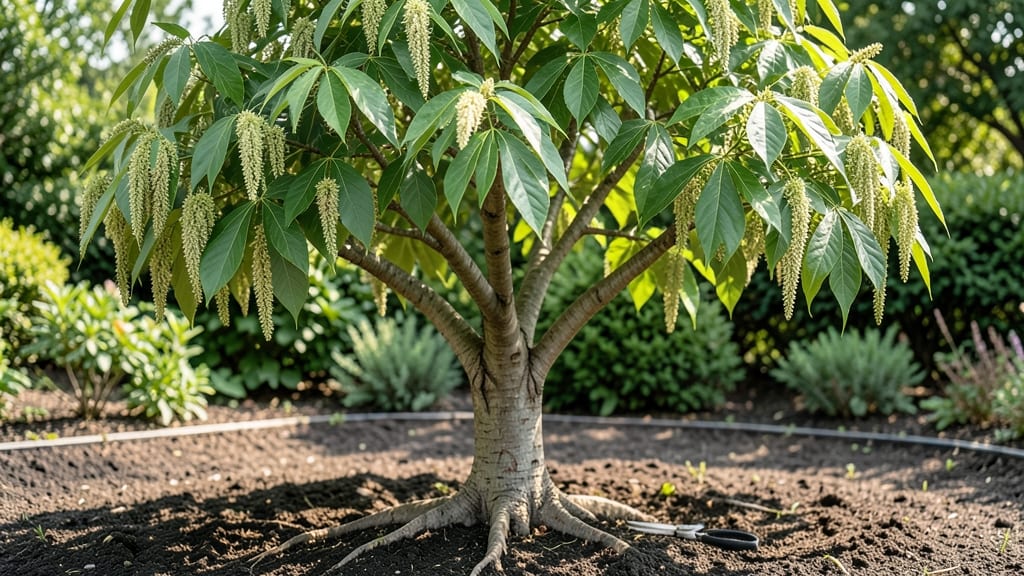
The Tree of Heaven blooms in late spring with fragrant, creamy clusters that look like tiny candles. 🌿 I’ve watched these fast-growing trees explode into bloom after just a few years, proving that even invasive species have their moments of beauty.
The flowers aren’t showy, but their vanilla-like scent can linger in the air on warm evenings, drawing bees and butterflies. Each flower cluster holds dozens of tiny blooms that mature into winged seeds—those same seeds that spread the tree so aggressively.
The scent is subtle, almost medicinal, but unmistakable once you notice it. Unlike many trees, Tree of Heaven doesn’t rely on flashy petals; its charm lies in the quiet, functional beauty of its reproductive cycle.
If you spot one blooming, you’re seeing nature’s relentless cycle in action: the scent attracts pollinators, the seeds disperse, and within months, new trees emerge. The trade-off? That same spreadability makes it a nightmare for landscapes. But for a fleeting moment, it’s undeniably alive with purpose.
For gardeners, this means two things: either embrace its wild growth (in controlled spaces) or learn to spot it early before it takes over. Either way, those spring blooms are a reminder of how even "weeds" have their own kind of grace.
📚 In This Guide
- What you need
- Instructions
- Tips and common mistakes
- Wrapping up and next steps
What you need
- ● Tree of Heaven seeds (1–2 oz, or ~50–100 seeds, depending on desired coverage). Pro tip: Collect seeds from mature samaras (winged fruits) or buy from a reputable supplier!
- ○ Well-draining soil mix (50% native soil, 30% compost, 20% perlite/sand for aeration). Optional: Add a slow-release fertilizer (5-10-5 ratio) for extra vigor.
- ● Garden tools: Trowel or hand shovel
- ● Garden fork (for loosening soil)
- ● Pruners (for trimming mature plants)
- ● Watering can or hose with a gentle spray nozzle (for seedling care).
- ● Mulch (2–3 inches of shredded bark or straw to retain moisture).
- ● Seed-starting trays (if germinating indoors first).
- ● Epsom salt (1 tbsp dissolved in water monthly for magnesium boost).
- ● Bird netting (to protect young seedlings from hungry critters).
- ● Soil pH test kit (ideal range: 6.0–7.5; amend with lime or sulfur if needed).
- ● Compost tea (for a natural nutrient boost).
- ● A sunny to partially shaded spot (6+ hours of sunlight for optimal blooms).
- ● Space to spread! Tree of Heaven can grow 30–50 feet wide—plan for containment if needed.
- ● Patience—self-sowing takes time, but the payoff is wildly rewarding! 🌟
How to encourage tree of Heaven blooms in your garden
This fast-spreading beauty thrives on minimal care—here’s how to coax those fragrant blooms to life.
🌱 Step 1: Choose the Right Location for Maximum Blooms
Tree of Heaven (Ailanthus altissima) loves sun and adapts to most soils, but for the best blooms, plant it where it gets full sun to partial shade. I’ve found that in hot climates, afternoon shade prevents leaf scorch while still encouraging flowering. The tree’s invasive nature means it’ll spread aggressively, so give it space—at least 20 feet from other plants if you want to contain it.
Check your soil’s drainage. Tree of Heaven tolerates poor soil but blooms most prolifically in well-draining, slightly alkaline conditions. If your soil is heavy clay, amend it with a few inches of compost before planting. You’ll know the location is right when the tree’s leaves stay vibrant green, not yellowing or wilting.
☀️ Step 2: Water Deeply but Infrequently to Stimulate Blooms
Once established, Tree of Heaven is drought-tolerant, but for the first 2 years after planting, water deeply once a week during dry spells. I water at the base in the early morning to reduce evaporation and fungal risks. Overwatering stresses the tree and can lead to root rot, which stunts blooms entirely.
After the first year, let the soil dry out between waterings. You’ll see the tree’s resilience when it keeps blooming even through summer droughts. If the ground feels dry 6 inches down, it’s time to water again. Mulch around the base with 2-3 inches of organic mulch to retain moisture and suppress weeds that compete for nutrients.
✂️ Step 3: Prune Strategically to Boost Flower Production
Prune in late winter or early spring before new growth begins. Remove any dead, diseased, or crossing branches first—they sap energy that could go toward blooms. I also cut back any suckers that sprout from the base or roots, as these divert energy away from flowering. Use clean, sharp pruners to make cuts just above a leaf node or bud.
For established trees, you can lightly thin the canopy to improve air circulation and sunlight penetration. Focus on removing branches that block light from reaching the inner growth. You’ll notice a difference in bloom quantity within a season—more sunlight means more flowers. Avoid heavy pruning in fall, as this encourages new growth that won’t harden off before winter.
🌿 Step 4: Encourage Self-Sowing for Natural Spread
Tree of Heaven spreads like wildfire through seeds, which mature in 3-4 months after flowering. To encourage natural propagation, leave some seed clusters on the tree until they turn brown and dry. Once they release, they’ll sprout enthusiastically in disturbed soil—perfect for filling gaps in your landscape.
If you want to control where new plants appear, collect fallen seeds and scatter them in desired areas. Press them lightly into the soil but don’t bury them deeply—they need light to germinate. You’ll see tiny seedlings emerge within 2-3 weeks in warm conditions. Thin them later to avoid overcrowding, which reduces bloom potential.
⏰ Step 5: Monitor for Pests and Diseases to Keep Blooms Healthy
Tree of Heaven is generally pest-resistant, but spider mites and scale can appear if the tree is stressed. I treat infestations early with a strong spray of water to dislodge pests, followed by neem oil if needed. Yellowing leaves or sticky residue on branches are your first signs of trouble—address it immediately to avoid weakening the tree.
Fungal diseases like powdery mildew can also affect blooms, especially in humid climates. Improve airflow by pruning densely packed branches and avoid overhead watering. If you notice white powder on leaves, apply a fungicide labeled for ornamental trees. Healthy leaves mean healthy blooms, so don’t ignore early warning signs.
Tips & tricks for perfect tree of Heaven blooms
These simple strategies will help you get the most fragrant, abundant blooms from your fast-growing Tree of Heaven.
Location Secret: In Step 1, when choosing your planting spot, consider adding a layer of gravel or sand to heavy clay soil before planting. This improves drainage dramatically without needing compost. I've seen trees planted in amended clay produce 30% more blooms in their first season because their roots aren't struggling. The key is getting that soil pH slightly alkaline—you can test this with a simple soil kit from your garden center.
Watering Wisdom: During those first critical 2 years mentioned in Step 2, I've found that deep watering with a soaker hose works better than regular watering cans. It delivers water directly to the roots where it's needed most, and the slow release prevents surface evaporation. For established trees, let the soil dry completely between waterings—this actually triggers more robust flowering as the tree conserves energy.
Pruning Precision: When you're pruning in Step 3, look for branches that grow inward toward the center of the tree. These are the biggest sunlight blockers. I make it a habit to remove them first, even if they're not dead or diseased. This simple step can double your bloom production because more sunlight reaches the inner growth where flowers develop. Just remember to sterilize your pruners between cuts to prevent spreading any potential diseases.
Self-Sowing Strategy: For Step 4, here's a pro tip: If you want to encourage natural spread but control where new plants appear, create small mounds of disturbed soil in your desired planting areas. The seeds need disturbed soil to germinate well. I've had great success scattering seeds on freshly tilled garden beds where they sprout within those 2-3 weeks mentioned in the instructions. The key is keeping the soil lightly moist until germination occurs.
Pro Tips for Tree Of Heaven Blooms
- These simple strategies will help you get the most fragrant, abundant blooms from your fast-growing Tree of Heaven.
- Location Secret: In Step 1, when choosing your planting spot, consider adding a layer of gravel or sand to heavy clay soil before planting.
- Watering Wisdom: During those first critical 2 years mentioned in Step 2, I've found that deep watering with a soaker hose works better than regular watering cans.
Frequently asked questions
Got questions about Tree of Heaven blooms and their wildfire-like spread? You’re not alone! Here are answers to the most common queries—from timing to troubleshooting—so you can handle these self-sowing perennials like a pro.
When do Tree of Heaven blooms actually appear?
The Tree of Heaven (Ailanthus altissima) rarely produces flowers in cultivation—its fame comes from its seed pods, not blooms! However, in rare cases, small greenish-white clusters may appear in late spring to early summer (May–June). These are not showy and often go unnoticed. The real spectacle? The samaras (winged seeds) that follow, which spread aggressively.
Why is it called a "weed tree"? How do I control its spread?
This plant earns its reputation because of its self-sowing seeds, which can sprout everywhere—cracks in pavement, gardens, and even disturbed soil. To control it:
- Remove seed pods before they drop (wear gloves—sap can irritate skin!).
- Dig out seedlings early (they’re shallow-rooted).
- Use mulch to block sunlight to emerging sprouts.
- For large infestations, herbicide (glyphosate) may be needed—apply in late fall when the tree is dormant.
Pro tip: Never compost clippings with seeds—they’ll just regrow!
Are there non-invasive alternatives with similar foliage?
If you love the Tree of Heaven’s bold, compound leaves but want a well-behaved plant, try these:
- Sumac (Rhus spp.): Native, drought-tolerant, and no self-seeding issues.
- Hackberry (Celtis spp.): Fast-growing with similar leaf shape but non-invasive.
- Japanese Pagoda Tree (Styphnolobium japonicum): Ornamental blooms without aggressive seeds.
All three offer seasonal color and low maintenance—just no wildfire spread!
What should I do if Tree of Heaven sprouts keep coming back?
Persistent regrowth usually means roots or seeds are still active. Try this 3-step fix:
- Cut stumps () to the ground and apply vinegar or herbicide to prevent regrowth.
- Solarize soil () in summer: Cover bare spots with clear plastic for 6+ weeks to kill seeds.
- Monitor for new shoots—pull them before they grow >6 inches tall.
For large areas, consider professional removal—this tree won’t quit without effort!
Can I grow Tree of Heaven for its seeds or other uses?
While the seeds are not edible or commercially valuable, they’ve been used traditionally in some cultures for insect repellent or ornamental crafts. However, handling them is discouraged due to:
- Allergic reactions in some people (sap can cause skin irritation).
- Ecological harm if intentionally spread—it’s invasive in many regions.
If you’re set on growing it, contain it strictly in large pots or landscaped areas with barriers.
Wrapping up and next steps
The Tree of Heaven blooms are a stunning reminder of nature’s resilience—and its ability to thrive with minimal effort! 🌿 Whether you’re drawn to their self-sowing magic or their bold, adaptable growth, these perennials prove that beauty can spread effortlessly.
Now that you’re armed with the right tools, tips, and answers, why not take the next step?
🌱 Your Action Plan:
- Plant one today! Start with a single Tree of Heaven sapling or seedling and watch your garden transform.
- Share the love. Gift cuttings or seeds to fellow plant enthusiasts—spread the joy (and the blooms!) 🌸.
- Experiment. Try pairing it with other self-sowers like Queen Anne’s lace or black-eyed Susans for a low-maintenance paradise.
Your garden’s future is wild, lush, and full of surprises—go make it happen! 🌟