
Blooming
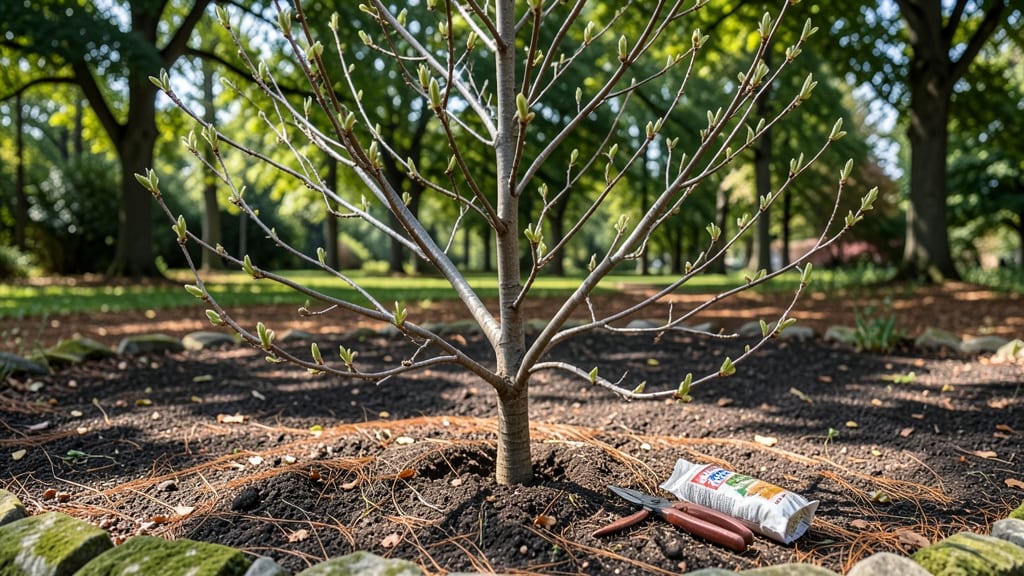
Your redbud tree's springtime spectacle starts long before those iconic pink blooms appear. 🌸 The secret to showstopping flowers lies in what you do—or don't do—during those quiet weeks when the tree looks bare and dormant.
I've seen redbuds transform from scraggly winter branches to full, blooming glory just by timing pruning right and giving them the perfect early spring care.
The first clue that spring is coming? Those tiny, copper-colored leaf buds swelling along the branches. That's when you should be pruning—right after leaf drop but before new growth starts. This timing removes dead wood while preserving next year's flower buds, which form on last year's branches.
Early spring is also when you'll spot the classic redbud bark: smooth, gray-brown with subtle ridges, and branches that arch gracefully.
What you'll get right is a tree that bursts into bloom 2-3 weeks earlier than neglected redbuds. The flowers arrive in clusters along the branches, their vibrant pink standing out against fresh green leaves.
Just give your tree full sun to partial shade, well-draining soil, and moderate watering—about 1 inch per week—during those pre-bloom weeks when roots are waking up.
Here's the kicker: most people over-prune, accidentally removing next year's flowers. I learned that the hard way when my first redbud bloomed sparsely after aggressive trimming. The fix? Light pruning focused on removing only dead, crossing, or weak branches—never more than 25% of the canopy.
This keeps your redbud healthy, blooming, and full of life for decades.
📚 In This Guide
- What you need
- Instructions
- Tips and common mistakes
- Wrapping up and next steps
What you need
- ● Pruning shears: Sharp, bypass-pruners (for small branches, 6–8" blades). Example: Fiskars or Felco.
- ● Loppers: 1 pair (for thicker branches, 10–12" cutting capacity).
- ● Pruning saw: 1 handheld saw (for branches >1.5" diameter). Example: Felco F-2 or Corona.
- ● Gloves: Heavy-duty gardening gloves (to protect hands from thorns and debris).
- ● Disinfectant (70% isopropyl alcohol or bleach solution): 1 small spray bottle (to sterilize tools between cuts).
- ● Trash bags or bucket: 1–2 (for collecting pruned branches).
- ○ Ladder (optional but helpful): Extendable or step ladder (if tree exceeds 6 ft).
- ● Hand pruners with ratchet: For easier cutting of stubborn branches.
- ● Pruning sealant: 1 small tube (to seal larger cuts, though redbuds heal well without it).
- ● Marking twine or flags: For tagging branches to remove later.
- ● Work apron: With pockets to keep tools organized.
- ● Safety glasses: To shield eyes from debris.
Instructions for pruning redbud trees before bloom
Here's the precise timing and technique I use every spring to ensure vibrant blooms.
✂️ Step 1: Time Your Pruning for Post-Bloom Renewal
Wait until after the tree finishes flowering—typically 4-6 weeks after you first see pink blossoms. This timing ensures you don't remove next year's flower buds hidden in last season's growth. I mark my calendar when the petals begin falling, then schedule pruning for 2-3 weeks later.
If you prune too early, you risk cutting off flower buds that form on old wood. The tree relies on these dormant buds for its spectacular spring display. Look for brown, papery seed pods as your visual cue—this confirms the blooming cycle is complete.
✂️ Step 2: Remove Dead, Diseased, or Crossing Branches
Start by eliminating any dead wood—branches that snap when bent or have hollow centers. Next, remove branches with disease symptoms like cankers, fungal growth, or oozing sap. Use sharp pruning shears to make clean cuts at the branch collar, the swollen area where the branch meets the trunk.
Look for crossing branches growing toward each other—they'll rub and create wounds. Cut the smaller of the two branches at its point of origin. I also remove any branches growing straight upward ("water sprouts") since they compete with the tree's natural shape and reduce bloom quality.
✂️ Step 3: Thin the Canopy for Better Airflow
Step back and examine the tree's overall shape. Redbuds naturally grow with a rounded, vase-like form. Select branches to remove that will open up the center by 20-30%—this improves airflow and reduces disease risk. Focus on branches growing inward or downward that block light from reaching the center.
Make your cuts just outside the branch collar at a 45-degree angle. Avoid leaving stubs, which invite decay. For larger branches over ½ inch thick, use three cuts: undercut first, then top cut, and finally remove the branch. This prevents tearing the bark.
✂️ Step 4: Shape for Optimal Bloom Display
Redbuds bloom on 2-year-old wood, so avoid heavy pruning that removes too many older branches. Instead, focus on light shaping—remove only 10-15% of the total canopy. I typically prune to maintain the tree's natural silhouette while opening it up slightly for better bloom visibility.
Look for branches that create a balanced, layered effect. The goal is to preserve the tree's graceful form while ensuring sunlight reaches all parts of the canopy. Avoid over-pruning—redbuds respond poorly to aggressive cuts and may produce fewer flowers the following spring.
💧 Step 5: Post-Pruning Care for Strong Recovery
Water the tree deeply immediately after pruning to help it recover from the stress. Apply 1-2 inches of mulch around the base (keeping it 3 inches away from the trunk) to retain moisture and regulate soil temperature. Avoid heavy fertilizing right after pruning—this can stimulate new growth that won't harden off before winter.
Monitor the tree for 3-4 weeks for any signs of stress like yellowing leaves or oozing sap. If you notice new growth emerging from old cuts, apply a thin layer of pruning sealant to protect the wound. This step is optional but helpful in wet climates where decay is a risk.
Tips & tricks for pruning redbud trees before bloom
These expert insights will help you achieve that perfect balance between shaping and preserving your redbud's natural beauty.
Timing is Everything: The 4-6 week window after flowering is critical because redbuds set their flower buds on old wood during the previous growing season. Waiting until you see those brown, papery seed pods confirms the blooming cycle is complete—this is your green light to prune. I've learned the hard way that pruning too early can mean fewer blossoms next spring, so mark your calendar when petals start falling and schedule your pruning for exactly 2-3 weeks later.
Precision Cutting Technique: When removing branches in Step 2 and Step 3, always make your cuts just outside the branch collar at a 45-degree angle. This small detail prevents unsightly stubs that invite decay. For branches over ½ inch thick, use the three-cut method: undercut first, then make your top cut, and finally remove the branch. This technique prevents tearing the bark and gives your tree a clean, professional finish. I've seen too many pruning jobs where this basic step was overlooked, leading to wounds that never properly heal.
Canopy Opening Strategy: The goal in Step 3 is to open up the center by 20-30% while maintaining that graceful vase-like shape. I find it helpful to visualize the tree as a layered cake—each branch should contribute to the overall silhouette without blocking light from reaching the center. Focus on removing branches that grow inward or downward, as these are the ones that create dense, shaded areas where disease can thrive. Remember, redbuds bloom on 2-year-old wood, so we're not removing the flower-producing branches—just the ones that would compete for resources.
Post-Pruning Recovery: That deep watering immediately after pruning is more important than you might think. The tree is essentially dealing with a minor injury, and proper hydration helps it recover faster. I've found that applying 1-2 inches of mulch (keeping it 3 inches away from the trunk) makes a noticeable difference in maintaining consistent soil moisture. The optional pruning sealant is particularly valuable in wet climates—it creates a protective barrier that prevents water from sitting on fresh cuts, which can lead to fungal infections.
Pro Tips for Redbud Tree Before Bloom
- These expert insights will help you achieve that perfect balance between shaping and preserving your redbud's natural beauty.
- Timing is Everything: The 4-6 week window after flowering is critical because redbuds set their flower buds on old wood during the previous growing season.
- Precision Cutting Technique: When removing branches in Step 2 and Step 3, always make your cuts just outside the branch collar at a 45-degree angle.
Frequently asked questions
Got questions about your redbud tree before bloom? You’re not alone! Here are answers to the most common concerns—so you can prep your tree like a pro.
When is the best time to prune a redbud tree before it blooms?
Prune your redbud tree after it blooms (late spring) but before new growth hardens (early summer). Avoid pruning in fall or winter, as it can stimulate late-season growth vulnerable to frost damage. If you must prune earlier, focus on dead or diseased branches only.
Can I prune a redbud tree in late winter or early spring?
While late winter/early spring is common for many trees, redbuds are an exception. Pruning too early can remove next year’s flower buds (which form on old wood). If you spot dead branches in winter, trim them, but wait for post-bloom pruning for structural shaping.
Will pruning affect the redbud’s spring flowers?
Not if done correctly! Redbuds bloom on last year’s growth, so pruning after flowering won’t harm blooms. Just avoid heavy cuts—stick to removing up to 25% of the canopy to maintain the tree’s energy for vibrant spring flowers.
What if my redbud tree isn’t blooming at all?
Lack of blooms could mean over-pruning, poor sunlight, or age (young trees <3 years old may not bloom). Check for 3+ hours of direct sun daily and avoid aggressive pruning. If the tree is mature but still bare, it might need a rejuvenation prune (light cuts to stimulate new growth).
Are there alternatives to redbud trees for early spring color?
Yes! Consider serviceberry (Juneberry), cherry blossom (Prunus), or dogwood (Cornus). Like redbuds, these bloom early and thrive in similar conditions. Just note: Dogwoods prefer slightly more shade, while serviceberries offer edible fruit—perfect for pollinators!
Wrapping up and next steps
Ready to transform your redbud tree into a stunning springtime showstopper? 🌸 Pruning before bloom is your secret weapon—it boosts health, enhances blooms, and keeps your tree thriving for years. With the right tools, timing, and techniques, you’re well on your way to a vibrant, picturesque garden centerpiece.
Now that you’re armed with pruning know-how, take action! Grab your shears, mark your calendar, and give your redbud the care it deserves. Watch as your efforts bloom into a breathtaking display—you’ve got this!