
Blooming
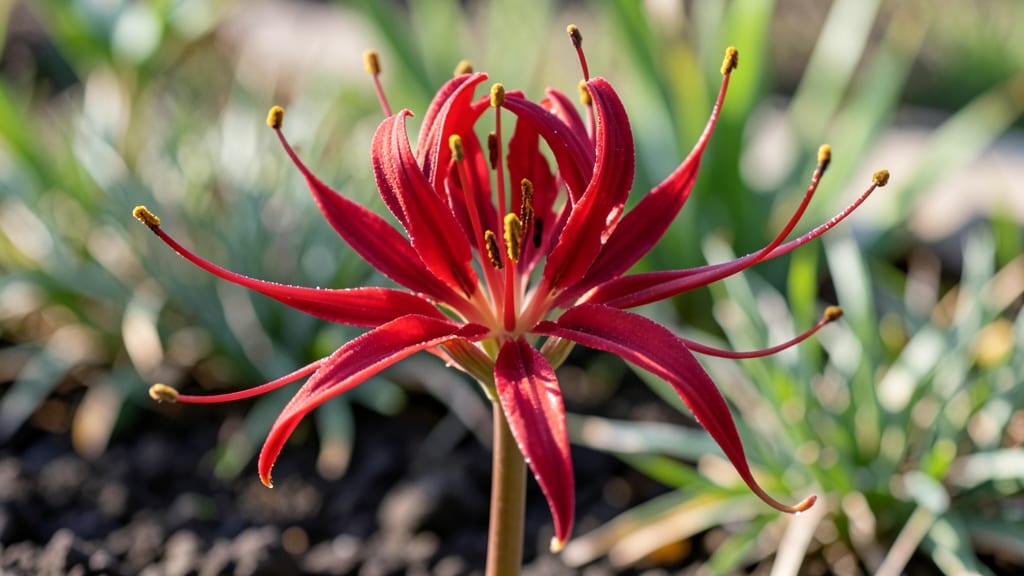
Red spider lilies burst into fiery bloom just when most gardens start to fade—late summer to fall. 🌺 I remember the first time I spotted their crimson spikes poking through my garden in August, a stark contrast to the wilted annuals.
These hardy perennials thrive where others struggle, reblooming year after year with minimal fuss.
Native to Asia, they love heat and humidity but handle frost like a champ, making them perfect for zones 5-9. The secret to their vibrant blooms? Well-drained soil and a little patience—they often skip flowering their first year but reward you with dramatic spikes thereafter.
Unlike peonies or daylilies, they don’t need deadheading to rebloom, though removing spent flowers keeps the garden tidy.
Imagine your garden in September: while neighbors’ annuals are done for the year, your spider lilies stand tall, their deep red blooms catching the golden light. They pair beautifully with ornamental grasses and late-blooming asters, creating a striking autumn tableau.
The best part? They multiply over time, spreading gently to form naturalizing clumps.
For maximum impact, plant them where they’ll get afternoon sun—their blooms open fully in the heat. In cooler climates, they’ll wait until late summer to bloom, while warmer zones may flower as early as July.
The key is to let them establish first; once they’re happy, they’ll bloom reliably for decades with almost no care.
📚 In This Guide
- What you need
- Instructions
- Tips and common mistakes
- Wrapping up and next steps
What you need
- ● Red spider lily bulbs (Lycoris radiata): 5–10 bulbs (depending on desired coverage). Choose firm, plump bulbs without soft spots.
- ● Well-draining soil: Mix equal parts garden soil, compost, and coarse sand or perlite (1 part each) for optimal drainage.
- ● Organic mulch: 2–3 inches of shredded bark, pine needles, or straw to retain moisture and regulate temperature.
- ○ Slow-release fertilizer (optional but recommended): 10-10-10 or a bulb-specific formula (1 tbsp per bulb at planting time).
- ● Garden trowel or bulb planter (for precise planting depth).
- ● Garden gloves (to protect hands from sharp bulb edges).
- ● Watering can or hose with a gentle spray nozzle (avoid overwatering).
- ● Measuring tape or ruler (to ensure 2–3 inches of soil coverage over bulbs).
- ● Pruners or shears (for trimming dead foliage after blooming).
- ● Sunlight: A location with partial to full sun (6+ hours of sunlight daily).
- ● Climate: Hardy in USDA Zones 5–9 (frost-tolerant but prefers mild winters).
- ● Patience: Bulbs may take 6–12 months to establish before blooming.
Step-by-step guide to encouraging red spider lily reblooms
Here’s how I coax these striking perennials to flower again and again—even after frost.
🌱 Step 1: Plant in the Right Spot for Year-Round Success
Choose a location with partial shade—morning sun and afternoon shade works best. Red spider lilies thrive in well-draining soil with a slightly acidic to neutral pH (6.0-7.0). I dig in a 2-inch layer of organic matter (like compost) before planting to improve drainage and fertility. The bulbs need 6-8 inches of loose soil to settle properly—don’t bury them too deep or they’ll rot.
If your soil stays soggy in winter, plant on a mound or raised bed to prevent bulb rot. I always test drainage by digging a hole, filling it with water, and watching how quickly it drains—if it takes more than 30 minutes, amend with perlite or sand. These bulbs hate wet feet, even in dormancy.
☀️ Step 2: Provide Consistent Moisture Without Overwatering
Water deeply once a week during the growing season (spring through fall), aiming for 1 inch of water per week. The key is even moisture—never let the soil dry out completely, but avoid soggy conditions. You’ll know it’s right when the top 2 inches of soil feel damp but not wet. Mulch with 2-3 inches of shredded bark to retain moisture and protect roots from temperature swings.
In winter, reduce watering to once every 2-3 weeks unless your region gets heavy frost. The bulbs store energy underground, and too much water can trigger rot. I check moisture by sticking my finger 2 inches deep—if it’s dry, that’s when to water.
✂️ Step 3: Deadhead and Fertilize for Next Year’s Blooms
After flowers fade, snip the spent blooms at the base (but leave the foliage). This redirects energy to bulb storage instead of seed production. I use clean, sharp scissors to avoid damaging new growth. The foliage needs 6-8 weeks to yellow naturally—don’t cut it back until it’s completely browned. This ensures the bulb rebuilds reserves for next year’s blooms.
In early spring, apply a balanced, slow-release fertilizer (10-10-10) at ½ the recommended rate. Too much nitrogen now will produce lush leaves but fewer flowers. I scatter granules around the base and water deeply to activate them. Repeat in early fall to support root growth before dormancy.
⏰ Step 4: Protect from Harsh Winters (Even Though They’re Frost-Tolerant)
While red spider lilies handle light frost, heavy snow or prolonged cold can damage foliage. I mound 2-3 inches of mulch (straw or leaves) around the base in late fall, then remove it in early spring once temperatures stay above 40°F. This insulates roots without trapping moisture.
If your winters are extremely cold (below 10°F), add an extra 4-inch layer of mulch for protection. The bulbs themselves are hardy, but young plants or newly planted bulbs benefit from this extra care. I check mulch depth in late winter—if it’s compressed or rotting, replace it with fresh material.
🌿 Step 5: Divide and Replant Every 3-4 Years
When blooms become sparse, it’s time to divide. Dig up clumps in early spring or fall, separate the bulbs gently, and replant the largest, firmest ones. I discard any soft or shriveled bulbs—they won’t rebloom well. Space new plantings 3-4 inches apart and water lightly until established.
This step prevents overcrowding, which reduces flower production. I always replant divisions in the same spot or a similar microclimate—they hate being moved once mature. After replanting, keep soil consistently moist for 4 weeks to help roots re-establish.
Tips & tricks for perfect red spider lily reblooms
Here's what nobody tells you about keeping these beauties blooming season after season.
Soil Test First: Before planting, grab a soil test kit from your local garden center—it's only $10 and can save you from years of frustration. Red spider lilies need that 6.0-7.0 pH range to thrive, and your soil might be hiding a surprise. I've seen gardens where the soil looked perfect but tested acidic enough to stunt growth. If your test shows a pH below 6.0, mix in 1 cup of lime per plant and wait 2 months before replanting. For pH above 7.0, work in 1 cup of sulfur per plant instead.
Timing is Everything with Mulch: That 2-3 inch mulch layer in Step 4 is crucial, but the timing matters just as much. Apply it in late fall after the first hard frost when soil temperatures drop below 50°F. I've learned this the hard way—adding mulch too early can trap heat and encourage rot. In spring, remove it once temperatures stay consistently above 40°F for at least 3 days. This prevents premature warming that can shock the bulbs.
Watering Hack for Busy Gardeners: Instead of remembering to water deeply once a week, I set up a simple drip irrigation system on a timer for 15 minutes every 7 days during growing season. The key is delivering that 1 inch of water without overdoing it. For winter watering, I use the finger test at 2 inches deep—if it's dry, that's your cue. This method ensures consistent moisture without the guesswork.
Fertilizer Timing Secret: When you apply that 10-10-10 fertilizer at half rate in early spring, here's the pro move: water it in immediately with 1 inch of water. This activates the granules right at the roots where they'll do the most good. I also split the fall application into two doses—half in early fall and half in late fall—to support both root growth and winter hardiness. This two-step approach gives you stronger bulbs without the risk of over-fertilizing.
Pro Tips for Red Spider Lily Bloom
- Here's what nobody tells you about keeping these beauties blooming season after season.
- Soil Test First: Before planting, grab a soil test kit from your local garden center—it's only $10 and can save you from years of frustration.
- Timing is Everything with Mulch: That 2-3 inch mulch layer in Step 4 is crucial, but the timing matters just as much.
Frequently asked questions
When do red spider lilies bloom, and how long does it last?
The Lycoris radiata typically blooms in late summer to early fall (August–October), sending up striking red flower spikes that last 2–3 weeks. Unlike many perennials, they don’t bloom in spring—this is their only show of the year!
Are red spider lilies truly frost-resistant? How cold can they handle?
Yes! These beauties thrive in USDA Zones 5–9 and handle light frosts after blooming. Plant bulbs in well-draining soil and mulch in winter for extra protection. Just avoid planting in soggy spots—they hate wet roots.
Why isn’t my red spider lily blooming? Troubleshooting tips!
No flowers? Check these common issues:
- Too much shade: They need full sun (6+ hours/day) for robust blooms.
- Over-fertilizing: Skip spring fertilizer—they bloom on last year’s energy!
- Crowded bulbs: Divide clumps every 3–4 years for better airflow.
- Newly planted bulbs: They often take 1–2 years to bloom.
Patience pays off—once established, they’re low-maintenance stars!
Can I grow red spider lilies in containers? What’s the best setup?
Use a large pot (12"+ diameter) with fast-draining mix (add perlite/pumice). Plant 3–5 bulbs per container and place in full sun. Overwinter indoors in a cool, dark spot (like a garage) if temps drop below 20°F (-7°C).
Are there alternatives to red spider lilies for late-summer color?
If you love bold late-season blooms, try these frost-tolerant picks:
- Crimson Toad Lily (Tricyrtis hirta): Shade-loving, spider-like flowers (but white/purple!).
- Japanese Anemone (Anemone × hybrida): Pink/white blooms that dance in fall breezes.
- Black-Eyed Susan (Rudbeckia): Cheerful yellow daisy-like flowers.
- Ornamental Grass (Miscanthus): Adds texture and movement.
Each brings its own magic to the garden!
Wrapping up and next steps
The red spider lily is a stunning, low-maintenance perennial that rewards gardeners with its vibrant blooms and resilience—even after frost! Whether you’re drawn to its striking flowers or its ability to rebloom year after year, this plant is a must-have for any garden. 🌸
Now that you know how to nurture it, why not plant one this season? Start small with a single bulb or expand your garden’s drama with a cluster—your future blooms will thank you! For even more inspiration, explore other frost-hardy perennials to create a year-round garden masterpiece.