
Blooming
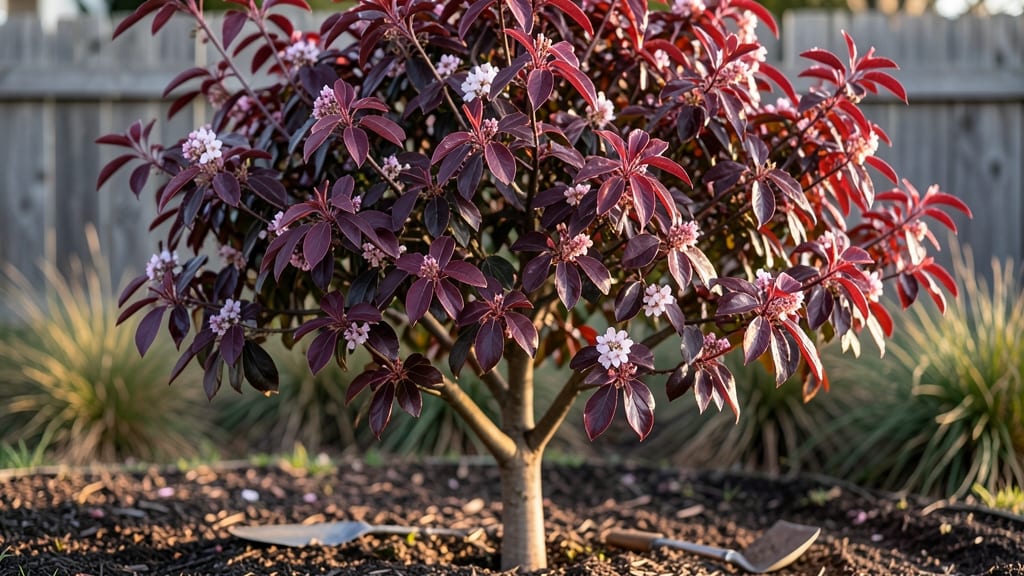
The purple leaf plum bloom transforms any garden into a masterpiece with its stunning pink spring flowers and deep purple foliage that lasts all season. 🌸 I planted mine last spring, and the way it stands out against the green lawn—even in winter—makes it the star of my yard.
This tree isn't just pretty; it's cold-hardy, thriving where other ornamentals would struggle. What makes it special is how it contrasts with everything else. Pair it with silver foliage plants like lamb's ear or dusty miller, and the purple leaves pop even more.
For spring color, plant daffodils or tulips at its base—their bright blooms complement the plum's delicate pink flowers perfectly. The tree even produces small, edible fruits (though they're tart, not sweet).
By midsummer, the foliage deepens to a rich burgundy, creating a dramatic focal point that works in both formal and cottage-style gardens. It handles pruning well, so you can shape it into a small tree or let it grow into a multi-stemmed shrub. The best part?
It stays vibrant through winter, offering color when most gardens look bare. This tree works in sunny spots or partial shade, making it versatile for different garden layouts. Whether you're planting it as a standalone specimen or in a mixed border, it delivers year-round drama with minimal effort.
Here's how to make it shine in your space!
📚 In This Guide
- What you need
- Instructions
- Tips and common mistakes
- Wrapping up and next steps
What you need
- ● Purple Leaf Plum Tree: 1 bare-root or container-grown Prunus cerasifera (choose a cold-hardy cultivar like 'Newport' or 'Krauter Vesuvius' for zones 5–9).
- ● Size: 1–3 gallons (mature trees available for instant impact).
- ● Planting Site: Full sun (6+ hours daily) in well-draining soil (amend clay with compost if needed).
- ● Space: 15–20 feet apart (account for mature width of 12–15 feet).
- ○ Soil Amendments (Optional but Helpful): 5–10 lbs of compost or aged manure per planting hole.
- ● 1 cup of slow-release fertilizer (10-10-10 or organic option).
- ● Shovel (round-point for digging, flat-blade for backfilling).
- ● Garden trowel (for root adjustments).
- ● Wheelbarrow (for soil/compost mixing).
- ● Pruning shears (sterilized, for shaping after planting).
- ● Mulch (2–3 inches of wood chips or pine straw to retain moisture).
- ● Watering can/hose (with adjustable nozzle for gentle watering).
- ○ Stakes & ties (optional) for young trees in windy areas.
- ● 🌡️ Timing: Plant bare-root trees in early spring (before buds swell) or container-grown trees in fall for established root growth.
- ● ✨ Soil Test: Check pH (ideal: 6.0–7.0); amend with lime or sulfur if needed.
- ● 🚫 Avoid: Over-fertilizing (purple leaf plums thrive in lean soil—too much nitrogen reduces color intensity!).
How to grow a stunning purple leaf plum tree
This cold-hardy beauty thrives with minimal fuss—here’s how to coax vibrant blooms year after year.
🌱 Step 1: Choose the Right Location and Plant at the Perfect Time
Purple leaf plums demand full sun—at least 6 hours daily—for their signature foliage and showy spring blooms. I always plant mine in early spring, just as the soil warms to 50-60°F, giving roots time to establish before summer heat. Avoid planting in late fall; tender roots won’t survive winter’s freeze-thaw cycles.
Dig a hole twice as wide as the root ball but only as deep. Place the tree so the top of the root ball sits 1-2 inches above ground level—this prevents waterlogging. Amend the native soil with a 5-gallon bucket of compost mixed into the bottom of the hole for better drainage and nutrients.
☀️ Step 2: Water Deeply and Mulch for Winter Protection
After planting, water deeply until the soil is 6-8 inches damp—you’ll know it’s right when water pools slightly at the surface but doesn’t puddle. Purple leaf plums hate soggy roots, so ensure your site drains well. I water twice weekly the first month, then taper to once weekly once established, checking that the top 2 inches of soil feel dry before watering again.
Spread 3-4 inches of mulch (like shredded bark) around the base, keeping it 6 inches away from the trunk to prevent rot. This mulch blanket insulates roots in winter and retains moisture in summer. Replenish mulch annually—it breaks down faster than you’d think.
✂️ Step 3: Prune for Shape and Health After Blooming
Prune right after spring blooms fade (late April or May) to shape the tree and encourage next year’s flowers. Remove dead, crossing, or inward-growing branches first—they compete for energy and block airflow. Cut back any suckers (shoots at the base) immediately; they drain the tree’s strength.
For a balanced shape, I thin out 10-20% of the canopy each year. Make cuts just above an outward-facing bud, using clean, sharp pruners. Avoid heavy pruning in fall—it stimulates new growth that won’t harden off before winter. Seal larger cuts (over ½ inch thick) with pruning sealant to prevent disease.
🌿 Step 4: Fertilize for Vibrant Foliage and Blooms
Feed your purple leaf plum once in early spring with a balanced 10-10-10 fertilizer (follow package rates). This jumpstarts growth after winter dormancy. I skip summer fertilizing—too much nitrogen now encourages leafy growth at the expense of next year’s blooms. In late fall, add a 5-pound bag of bone meal around the drip line to boost phosphorus for root strength.
Watch for yellowing leaves—a sign of over-fertilizing. If this happens, flush the soil with extra water to leach excess salts. Purple leaf plums are tough, but they’ll protest if you overdo it. A light hand ensures those deep purple leaves stay vibrant all season.
⏰ Step 5: Protect from Late-Freeze Damage and Pests
Young trees (under 3 years old) need burlap wrap in winter to shield buds from late spring frosts. Remove it as soon as danger passes—delaying too long can smother new growth. Mature trees handle cold well, but I still monitor for plum curculio (a beetle that chews buds). Handpick eggs or treat with neem oil spray in early spring if you spot damage.
Here’s the thing—purple leaf plums are low-maintenance, but they’ll reward you best with consistent care. A little pruning, proper watering, and seasonal feeding keep them blooming and colorful for decades. And when those spring blossoms burst in shades of pink or white? It’s worth every effort.
Tips & tricks for perfect purple leaf plum care
These practical insights will help you coax the most stunning blooms and foliage from your purple leaf plum—without the guesswork.
Location is Everything: While the instructions mention full sun, I can't emphasize enough how critical those 6 hours of direct sunlight daily are for that signature purple foliage. If your yard has partial shade, position the tree where it gets morning sun and afternoon shade—this prevents leaf scorch while still encouraging vibrant color. I've seen trees in full sun develop leaves so deep purple they look almost black!
Soil Temperature Matters: The instructions specify planting when soil warms to 50-60°F, but here's the thing—you can test this with your finger. Stick your hand about 6 inches deep; if the soil feels cool but not freezing, it's ready. Cold soil slows root establishment, making young trees vulnerable to winter stress. I always check this before planting to avoid common mistakes.
Watering Wisdom: That 6-8 inch deep watering after planting might seem like a lot, but it's essential. I like to use a garden hose with a slow setting to avoid creating a crater—just let it run until water pools slightly at the surface. For established trees, the "top 2 inches dry" rule works, but I check this by pushing a screwdriver into the soil. If it slides in easily, it's time to water.
Pruning Pro Tips: When thinning 10-20% of the canopy in Step 3, focus on branches that cross or grow inward—they're the ones causing crowding. I always look for the "U" shape where the branch meets the trunk; cutting just above an outward-facing bud ensures new growth goes in the right direction. For larger cuts, I use a small brush to clean the wound before sealing—this prevents sap from oozing and inviting pests.
Pro Tips for Purple Leaf Plum Bloom
- These practical insights will help you coax the most stunning blooms and foliage from your purple leaf plum—without t...
- Location is Everything: While the instructions mention full sun, I can't emphasize enough how critical those 6 hours ...
- Soil Temperature Matters: The instructions specify planting when soil warms to 50-60°F, but here's the thing—you can ...
Frequently asked questions
Got questions about purple leaf plum bloom? You’re not alone! Here are some of the most common queries—and their answers—to help you make the most of this stunning, cold-hardy tree.
When is the best time to plant a purple leaf plum tree?
The ideal time to plant is in early spring or fall (4-6 weeks before the first frost). This gives roots time to establish before extreme temperatures hit. Avoid planting in summer heat or winter cold, as stress can stunt growth. Choose a day with overcast skies to reduce transplant shock!
How long does the purple leaf plum bloom last?
Expect a 2-3 week spectacle! Blooms typically appear in early to mid-spring (March-April, depending on your zone), with vibrant pink-purple flowers that fade into glossy green foliage. For extended color, some varieties offer fall foliage in shades of red or purple—just as stunning as the spring show!
Can purple leaf plums handle cold winters?
These trees are USDA zones 5-9 hardy, meaning they thrive in sub-zero temps down to -20°F (-29°C). However, young trees may need winter mulch (3-4 inches of wood chips) to protect roots. No extra wrapping is needed—just let them bask in the cold!
Do purple leaf plums produce edible fruit?
While they’re not prized for eating, they do bear small, tart plums that birds and wildlife love! If you’re growing this tree for ornamental value, the fruit is a bonus for local critters. For edible plums, consider varieties like Stanley or Methley instead.
Why aren’t my purple leaf plum leaves staying purple?
Fading purple can mean too much sun (leaves revert to green) or nutrient deficiencies (like iron or nitrogen). Try:
- Partial shade (4-6 hours of sun daily)
- Balanced fertilizer in early spring
- Regular pruning to improve airflow
What are some great alternatives if I can’t grow a purple leaf plum?
If your climate or space is limited, try these equally showy bloomers:
- Japanese Maple (Acer palmatum) – Vibrant foliage + delicate blooms
- Smoke Bush (Cotinus coggygria) – Purple haze in summer
- Redbud (Cercis canadensis) – Early spring pink flowers
- Dwarf Lilac (Syringa meyeri) – Fragrant purple blooms
Wrapping up and next steps
The purple leaf plum bloom isn’t just a springtime spectacle—it’s a year-round investment in beauty and resilience. With its striking foliage, cold-hardy nature, and low-maintenance charm, this tree transforms any landscape into a vibrant masterpiece.
Whether you’re a seasoned gardener or a beginner, now’s the perfect time to plant or admire its magic!
Ready to bring home this standout stunner? Start by researching local nurseries or checking planting zones to ensure your purple leaf plum thrives. Happy gardening! 🌸✨