
Blooming
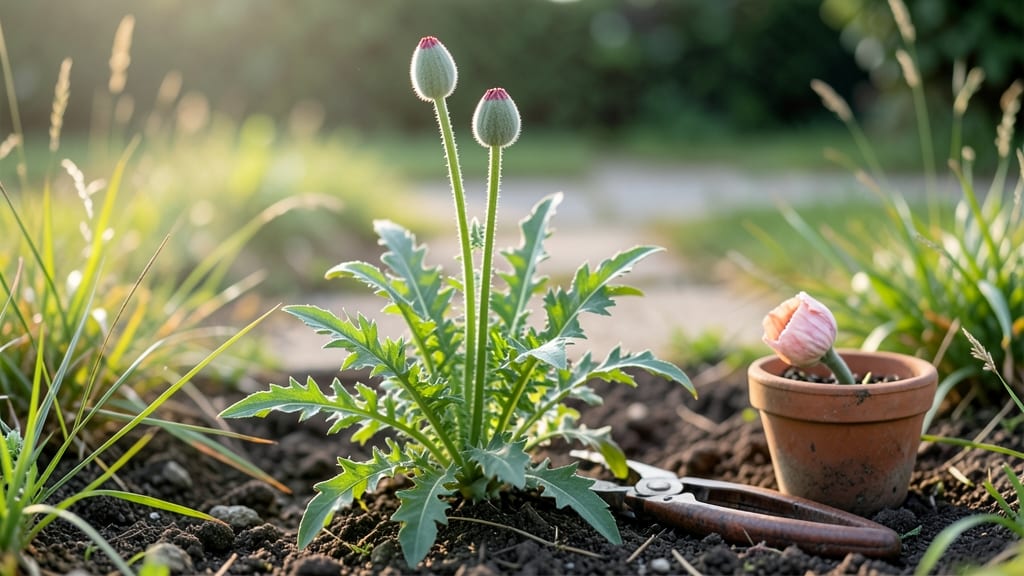
The poppy flower before bloom is all about that fierce foliage—those deep green, fern-like leaves unfurling with surprising speed. 🌱 I’ve watched them go from tiny seedlings to foot-tall giants in just six weeks, their stems sturdy enough to hold future blooms. that’ll rival any sunset.
The real magic happens underground, where roots spread wider than you’d expect for such delicate-looking plants.
Sunlight is non-negotiable—poppies demand full sun (6+ hours daily) to build the energy they’ll need for those dramatic blooms. Watering’s trickier than it seems: keep soil evenly moist but never soggy, especially as buds form.
Too much water now means floppy stems later, while drought stress shows up as yellowing leaves or buds that refuse to open.
Look for tight, rounded buds forming along the stems—this is your cue that blooming’s just weeks away. Healthy buds feel firm, not mushy, and the foliage stays vibrant. If you see blackened stems or buds splitting open prematurely, it’s usually too much moisture or inconsistent watering.
The goal? Strong stems that’ll support those iconic blooms without bending.
Poppies reward patience—those early care choices determine whether you’ll get weeks of bold blooms or a single disappointing show. Once buds appear, reduce watering slightly to encourage longer vase life, and watch as your garden transforms into a sea of color.
The best part? They self-seed like crazy, so next year’s poppies practically grow themselves.
📚 In This Guide
- What you need
- Instructions
- Tips and common mistakes
- Wrapping up and next steps
What you need
- ● Poppy seeds or seedlings: Quantity: 10–50 seeds (or 3–5 seedlings per pot) for small patches; scale up for larger gardens.
- ● Type: Choose heirloom or dwarf varieties (e.g., ‘Patty’s Pink’ or ‘Black Bat’) for compact growth.
- ● Well-draining soil mix: 1 part potting soil + 1 part perlite/sand (for seedlings).
- ● For in-ground planting: Amend clay soil with compost and coarse sand (ratio: 2:1:1).
- ● Containers (if starting indoors): 4–6" deep pots with drainage holes (biodegradable pots work too!).
- ○ Tray or seed-starting mat (optional, for warmth).
- ● Watering can or spray bottle: Fine mist setting for seedlings; gentle stream for mature plants.
- ● Fertilizer (low-nitrogen): Balanced formula (5-5-5 or 10-10-10) diluted to half-strength.
- ● Fish emulsion or compost tea (1 tbsp per gallon of water) for organic options.
- ● Hand trowel or transplanter (for moving seedlings outdoors).
- ● Pruning shears (to trim dead foliage post-bloom for repeat flowers).
- ● Mulch (straw or shredded leaves) (1–2" layer to retain moisture).
- ● Garden stakes or rings (for tall varieties like Papaver orientale to prevent flopping).
- ● Grow lights (if starting seeds indoors; 12–16 hours/day).
- ● Epsom salt (1 tbsp per gallon of water, monthly for magnesium boost).
Step-by-step pre-bloom care for thriving poppies
Poppies reward patience with bold, fleeting blooms—but only if you give them the right start.
🌱 Step 1: Plant in Well-Draining Soil with Full Sun
Poppies despise soggy roots, so amend your soil with 2-3 inches of coarse sand or perlite per square foot to improve drainage. I like to mix in a handful of compost for nutrients while keeping the soil loose. Poppies thrive in full sun (6-8 hours daily), so choose a spot with no afternoon shade—this prevents weak stems that flop before blooming.
Sow seeds ¼ inch deep in early spring or fall, depending on your climate. I plant mine in clusters of 5-7 seeds spaced 6 inches apart—this mimics their natural growth pattern and ensures strong stems. Press seeds lightly into soil (they need light to germinate) and water gently with a fine mist until the surface is damp but not wet.
💧 Step 2: Water Sparingly and Avoid Overhead Moisture
Poppies hate consistent moisture—their roots rot easily. Water only when the top 1-2 inches of soil feel dry, and use a drip irrigation system or watering can with a narrow spout to avoid wetting foliage. I water mine in the early morning so leaves dry quickly, preventing fungal diseases like powdery mildew.
Once seedlings reach 2 inches tall, reduce watering further. Poppies develop deep taproots that seek moisture underground, so frequent shallow watering encourages weak, shallow roots. Let the soil dry completely between waterings—this toughens stems and prepares them for wind.
✂️ Step 3: Thin Seedlings and Remove Weak Stems
When seedlings are 3-4 inches tall, thin them to 4-6 inches apart to prevent overcrowding. I use clean scissors to snip unwanted stems at soil level—pulling risks disturbing roots of remaining plants. Keep the strongest, straightest stems, as these will produce the most robust blooms.
Remove any leggy or pale seedlings immediately. These plants compete for nutrients and light, weakening the entire cluster. If you notice yellowing lower leaves, it’s a sign of overwatering—reduce frequency and let the soil dry more between waterings.
☀️ Step 4: Fertilize Lightly and Monitor for Pests
Poppies don’t need much fertilizer—too much nitrogen produces lush foliage but delays blooms. Instead, side-dress with ½ cup of 5-10-10 fertilizer per 10 square feet in early spring. I mix it into the top 1 inch of soil and water lightly to activate it. Avoid high-phosphorus fertilizers, which encourage root growth over flowers.
Watch for aphids or spider mites, which love poppy foliage. I spray infested plants with neem oil (mixed at 1 tablespoon per quart of water) in the evening to avoid harming pollinators. If leaves develop black spots or holes, it’s likely slug damage—set out beer traps (a shallow dish of beer) near the plants to deter them.
⏰ Step 5: Prepare for Bloom with Strategic Pruning
About 6 weeks before expected bloom time, inspect stems for side buds. Pinch back the top 1-2 inches of the main stem to encourage bushier growth and more flowers. This is the moment that matters: pruning now redirects energy from vertical growth to lateral buds, doubling your bloom count.
Stop all fertilizer applications 4 weeks before blooming to let the plant focus on flower production. If stems grow too tall and flop, stake them lightly with 3-foot bamboo stakes tied loosely with twine. Avoid heavy staking—poppy stems are brittle and snap easily under pressure.
Tips & tricks for perfect poppy pre-bloom care
Mastering poppy pre-bloom care transforms fleeting flowers into a repeat blooming spectacle—here's how to avoid the common pitfalls that sabotage success.
Soil Science: The 2-3 inches of coarse sand or perlite per square foot isn't just about drainage—it's about creating an oxygen-rich environment for those deep taproots. I've found that adding a thin layer of gravel (about ½ inch) on top of the amended soil prevents crusting after watering, which poppy seedlings hate. This extra step keeps moisture from pooling while allowing air circulation at the soil surface.
Pruning Precision: That 6-week timing before bloom for pinching side buds might seem arbitrary, but it's actually based on poppy growth cycles. I mark my calendar by counting back from my region's average first frost date—this ensures buds form when temperatures are still warm enough for flowering. Use clean, sharp scissors and make cuts at a 45-degree angle just above a leaf node to prevent water from pooling at the cut.
Fertilizer Finesse: The ½ cup of 5-10-10 fertilizer per 10 square feet is designed to be gentle, but timing matters more than quantity. I apply it in early spring when soil temperatures reach 55°F—cooler soil locks out nutrients. For organic gardeners, substitute with a balanced compost tea (1 tablespoon per gallon of water) applied every 4 weeks instead of the synthetic fertilizer.
Pest Prevention: The neem oil mixture (1 tablespoon per quart) works wonders, but I've found an extra step makes it even more effective. Add ½ teaspoon of honey to the mix—it attracts beneficial insects that prey on aphids and spider mites. Spray in the evening when pollinators are less active, and repeat every 7-10 days until pests disappear. The honey also helps the solution cling better to foliage.
Pro Tips for Poppy Flower Before Bloom
- Mastering poppy pre-bloom care transforms fleeting flowers into a repeat blooming spectacle—here's how to avoid the common pitfalls that sabotage success.
- Soil Science: The 2-3 inches of coarse sand or perlite per square foot isn't just about drainage—it's about creating an oxygen-rich environment for those deep taproots.
- Pruning Precision: That 6-week timing before bloom for pinching side buds might seem arbitrary, but it's actually based on poppy growth cycles.
Frequently asked questions
Got questions about poppy flowers before they bloom?
You’re not alone! Here are answers to the most common queries—from timing to troubleshooting—to help you nurture those stunning Papaver plants to their full potential.
How do I know if my poppy is about to bloom?
Look for tight, rounded buds that feel firm to the touch—like a closed fist. Some varieties (like Papaver rhoeas) may also develop a slight greenish hue at the base. Avoid opening buds too soon; let nature take its course for the boldest blooms!
When is the best time to plant poppy seeds for early blooms?
Poppies thrive when sown directly in the ground in early spring (as soon as soil is workable) or late summer for fall blooms. Avoid transplanting seedlings—they hate root disturbance! For repeat bloomers, succession plant every 2–3 weeks.
Why are my poppy buds turning brown before opening?
Brown buds often signal overwatering or fungal issues (like botrytis). Ensure soil drains well and space plants 12–18 inches apart for airflow. If caught early, trim affected buds and reduce watering. Pro tip: Mulch lightly with straw to prevent soil splashing.
Can I force poppies to bloom earlier?
Poppies are short-day plants, meaning they bloom based on daylight—not heat. While you can’t rush them, cool nights (50–60°F) and full sun (6+ hours) encourage timely blooms. Avoid fertilizing pre-bloom; poppies prefer lean soil. Patience pays off with bold, repeat blooms!
What’s a good alternative if my poppies won’t bloom?
Try California poppies (Eschscholzia) or cornflowers (Centaurea)—both are drought-tolerant and bloom reliably. For height, pair with lupines or delphiniums. Poppies are finicky, but these perennials offer low-maintenance color too!
| Quick Fixes for Pre-Bloom Poppies |
|---|
|
Wrapping up and next steps
The poppy flower before bloom stage is where you set the foundation for stunning, repeat blooms—so don’t skip the care! With the right soil, sunlight, and watering routine, your poppies will reward you with bold, vibrant blooms season after season. 🌸
Now that you’re armed with the knowledge, take action! Plant those seeds or seedlings today and give your poppies the love they need. Watch them transform from delicate buds to breathtaking blooms—you’ve got this!