
Blooming
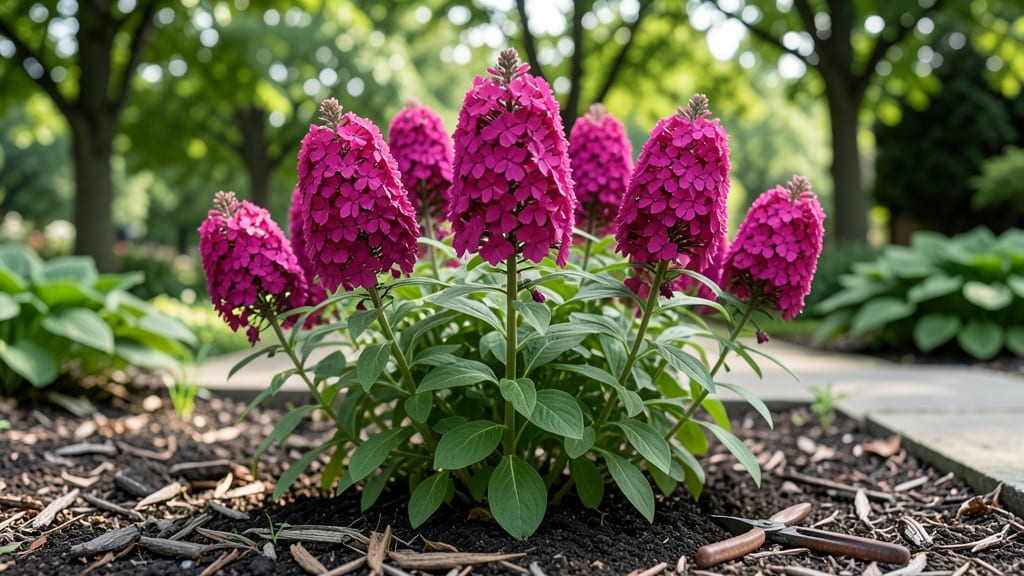
Phlox bloom time is the moment your garden transforms into a purple cloud—late June through August, depending on variety and climate. 🌸 I’ve watched mine push through spring’s last frost, then explode with color just when summer’s heat starts to settle in.
Some varieties bloom early, others late, but all deliver that signature phlox fragrance and cheery spikes that hummingbirds adore.
Your location makes all the difference: Northern gardeners see early summer blooms, while Southerners often get a second flush in fall. Phlox thrives in full sun to partial shade and well-drained soil—too much heat or poor drainage can delay blooms.
I’ve even seen late-season varieties hold out until early September with proper care, giving your garden a second wind.
To extend the show, deadhead spent blooms and fertilize lightly after the first flush. I swear by a balanced 10-10-10 feed in early summer to keep those spikes coming. The result? A garden that stays vibrant when many perennials are fading—three months of color from one low-maintenance plant.
Perfect for cutting gardens, borders, or pollinator patches. Whether you’re planning a summer wedding bouquet or just want reliable blooms, phlox delivers—year after year with minimal fuss. Here’s how to time it right for your zone.
📚 In This Guide
- What you need
- Instructions
- Tips and common mistakes
- Wrapping up and next steps
What you need
- ● Phlox plants: Choose between Phlox paniculata (summer-blooming) or Phlox subulata (spring-blooming). Buy 3–5 plants for a full, vibrant display.
- ● Well-draining potting mix: 5–10 gallons (sterilized soil blend or a mix of 60% garden soil, 30% compost, and 10% perlite for optimal drainage).
- ● Fertilizer: Balanced granular fertilizer (10-10-10): ½ cup per plant at planting time.
- ● Slow-release organic fertilizer (e.g., bone meal or composted manure): 1 cup mixed into the soil for long-term nutrients.
- ● Mulch: 2–3 inches of organic mulch (e.g., shredded bark or straw) to retain moisture and suppress weeds.
- ● Garden trowel or spade: For planting and soil prep.
- ● Pruning shears: Sharp, clean pair for deadheading and shaping.
- ● Watering can or hose with a gentle nozzle: Phlox loves moisture but hates soggy roots!
- ○ Gloves (optional but recommended): Protect your hands from thorns or rough soil.
- ○ Stakes or trellis (optional): For taller varieties (Phlox paniculata) to support heavy blooms.
- ● Sunlight: Full sun (6+ hours/day) for optimal blooming. Partial shade (4–6 hours) works in hotter climates.
- ● Hardiness zone: USDA Zones 3–8 (phlox thrives in cold winters!).
- ● Soil pH: Slightly acidic to neutral (6.0–7.0). Test your soil or amend with lime if needed.
- ● Watering routine: Keep soil consistently moist (1–1.5 inches per week) during the growing season.
How to time phlox blooms for reliable year-after-year color
Phlox thrives on timing—get this right and you’ll enjoy those signature purple spikes for weeks. Here’s how to coax perfect blooms every season.
🌱 Step 1: Plant in Early Spring or Fall for Strong Root Establishment
Phlox needs time to build a robust root system before its first big bloom. Plant in early spring (as soon as soil is workable) or fall (6-8 weeks before your first frost). The key is getting roots established before summer heat arrives—this ensures the plant has energy stored for next year’s blooms.
Dig a hole twice as wide as the root ball but only as deep as the container. Amend the native soil with 2 inches of compost to improve drainage and fertility. Phlox hates soggy roots, so if your soil drains poorly, mix in 1 part perlite to 3 parts soil. Tap the plant gently to settle soil around roots, then water deeply to eliminate air pockets.
☀️ Step 2: Provide Full Sun and Consistent Moisture for Optimal Blooming
Phlox demands 6-8 hours of direct sun daily for its best performance. Without enough light, stems stretch weak and blooms become sparse. If your garden has afternoon shade, choose Phlox paniculata (tall garden phlox) over Phlox subulata (moss phlox), as it tolerates partial shade better.
Water 1-2 inches per week, keeping soil evenly moist but never waterlogged. The secret to long bloom time? Deep watering at the base (never overhead) to encourage strong root growth. You’ll know moisture is right when the top 2 inches of soil feel damp but not soggy. Mulch with 2-3 inches of organic mulch (like shredded bark) to retain moisture and protect roots from temperature swings.
✂️ Step 3: Deadhead and Prune for Extended Blooming Seasons
Deadheading is the single most effective way to prolong phlox blooms. As soon as flowers fade, snip spent stems back to the first set of healthy leaves (or to a side shoot if no leaves remain). This redirects the plant’s energy into producing new buds instead of seed development. I do this every 2-3 days during peak bloom to keep flowers coming.
After the first flush of blooms (usually mid-summer), cut back one-third of the plant’s height to encourage a second round of flowers. For Phlox paniculata, this rejuvenation pruning happens in late June or early July. For Phlox subulata, a light trim after flowering keeps the plant tidy for next year.
⏰ Step 4: Prepare for Winter to Ensure Next Year’s Blooms
Phlox is cold-hardy, but proper winter care guarantees robust blooms the following season. In late fall, cut back Phlox paniculata stems to 4-6 inches tall (never to the ground) to protect the crown from freezing. Leave Phlox subulata untouched—its low-growing habit naturally insulates itself.
Apply a 3-inch layer of mulch (like straw or shredded leaves) around the base to insulate roots. In areas with extreme winter temperatures (below 10°F), add an extra layer of straw or burlap over the mulch. Come spring, remove the winter protection once new growth appears—usually by mid-April in most climates.
🌿 Step 5: Fertilize Strategically for Long-Lasting Color
Phlox responds well to balanced, slow-release fertilizer applied in early spring (as new growth emerges) and mid-summer (after the first deadheading). Use a 10-10-10 or 20-20-20 formula at half strength to avoid burning roots. I skip fall fertilization—phlox needs time to harden off before winter.
For organic gardeners, work 2-3 inches of compost into the soil in early spring. Avoid high-nitrogen fertilizers, which promote leafy growth at the expense of flowers. You’ll know you’ve got the right balance when your phlox produces dense, upright spikes instead of lanky, leaf-heavy stems.
Tips & tricks for perfect phlox blooms
Timing is everything when it comes to coaxing those vibrant purple spikes from your phlox—here's how to avoid the most common pitfalls and get consistent results every year.
Root Establishment is Non-Negotiable: In Step 1, don't rush planting—those 6-8 weeks before frost in fall are critical for root development. I've seen gardeners impatiently plant too early, only to watch their phlox flop in summer heat. Test your soil's readiness by pressing your finger into it; it should hold its shape when squeezed but not be muddy. For clay-heavy soils, your 1 part perlite to 3 parts soil amendment becomes even more important to prevent waterlogging that can rot roots.
Sunlight Strategy for Your Garden Layout: Step 2's 6-8 hours of direct sun requirement is where most people stumble. If your garden only gets morning sun, choose Phlox subulata—it handles partial shade better than its taller cousins. For afternoon shade situations, position your Phlox paniculata where it gets maximum morning light. Remember: phlox won't bloom well if it's stretched and leggy from insufficient light, so plan your garden layout accordingly before planting.
Deadheading Discipline Pays Off: The 2-3 days between deadheadings in Step 3 might seem frequent, but it's the secret to prolonged blooming. I used to skip this step, thinking it was too much work, but my blooms lasted only two weeks instead of six. When deadheading, always cut back to the first healthy leaves—never to bare stems. This redirects the plant's energy to produce more flowers rather than seeds. For large plantings, consider using pruning shears instead of scissors for efficiency.
Winter Protection That Actually Works: That 3-inch layer of mulch in Step 4 isn't just decoration—it's insulation. In areas with temperatures below 10°F, I've found that adding a straw or burlap wrap over the mulch makes all the difference. Pro tip: don't remove winter protection until you see new growth in spring. The crown needs to be actively growing before you expose it to potential late frosts, which can be just as damaging as winter cold.
Pro Tips for Phlox Bloom Time
- Timing is everything when it comes to coaxing those vibrant purple spikes from your phlox—here's how to avoid the most common pitfalls and get consistent results every year.
- Root Establishment is Non-Negotiable: In Step 1, don't rush planting—those 6-8 weeks before frost in fall are critical for root development.
- Sunlight Strategy for Your Garden Layout: Step 2's 6-8 hours of direct sun requirement is where most people stumble.
Frequently asked questions
Got questions about when and how phlox blooms thrive?
Here are answers to the most common queries—from timing tips to troubleshooting tricks!
When is the best time to plant phlox for optimal bloom time?
Plant phlox in early spring (4–6 weeks before your last frost) or early fall (6–8 weeks before frost). This gives roots time to establish before winter or summer heat. For container-grown phlox, transplant after the soil warms to 50°F (10°C)—they’re frost-tolerant but hate soggy soil in cold snaps.
Why isn’t my phlox blooming when it should?
Common culprits include over-fertilizing (too much nitrogen = leafy growth, not flowers), poor sunlight (phlox needs 6+ hours of sun daily), or crowded roots (divide clumps every 3–4 years). Deadhead spent blooms to encourage reblooming, and avoid cutting back stems until after flowering—unless reviving perennials like Phlox paniculata.
Can phlox bloom in partial shade, or do they need full sun?
Most phlox varieties (like Phlox subulata) thrive in full sun (6+ hours), but tall garden phlox (paniculata) tolerates morning sun + afternoon shade in hot climates. In deep shade, blooms may be sparse—opt for shade-loving alternatives like heuchera or astilbe if phlox underperforms.
How do I extend phlox bloom time beyond one season?
For prolonged blooms, deadhead regularly, mulch with compost (not fresh manure), and water deeply 1–2 times weekly during droughts. Choose reblooming varieties like Phlox ‘David’ or ‘Color Carpet’, which flower in spring and fall. Avoid heavy pruning until late winter—cut back 1/3 of stems to promote new growth.
Will phlox survive a late frost after blooming?
Yes! Phlox is cold-hardy (zones 3–9), but late frosts can damage open buds. Protect tender blooms with lightweight frost cloth or wait to plant frost-sensitive varieties (like Phlox drummondii) until after the last frost. Hardy types (paniculata) often rebound with second flushes after frost stress.
What’s the difference between annual and perennial phlox bloom times?
| Type | Bloom Time | Notes |
|---|---|---|
| Annual phlox (e.g., Phlox drummondii) | Spring–summer (May–July) | Grows from seed; dies after first frost. Best for containers or cut flowers. |
| Perennial phlox (e.g., Phlox paniculata) | Mid-to-late summer (July–August), with reblooms in fall. | Returns yearly; divide every 3–4 years to prevent overcrowding. |
Wrapping up and next steps
Phlox brings vibrant color and resilience to gardens, thriving even in cooler climates with its year-after-year reblooming magic. Whether you're drawn to early spring blooms or late-summer spikes, understanding their bloom time and care needs ensures a stunning display.
Now that you’re equipped with the right tips, roll up your sleeves—plant, nurture, and enjoy the rewards of these cold-hardy beauties!
🌱 Next step? Pick your favorite phlox variety, mark your planting calendar, and watch your garden transform into a purple paradise! 💜