
Blooming
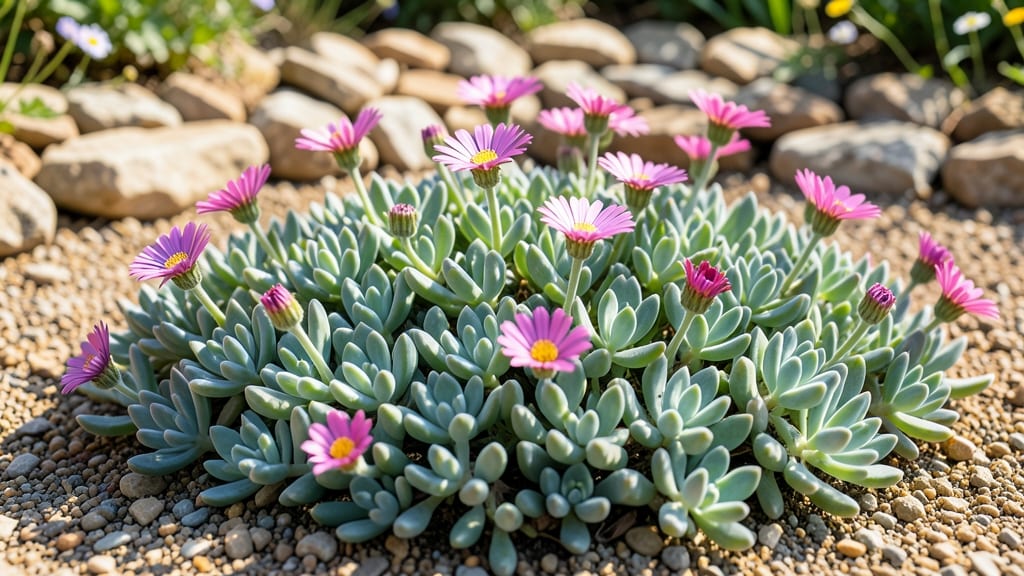
Ice plant blooms transform your garden into a sun-drenched spectacle with their vibrant, jewel-toned flowers that thrive on neglect. 🌵 I’ve grown these drought-resistant succulents for years, and the secret to their relentless blooming lies in mimicking their natural desert conditions—bright light, minimal water, and well-draining soil.
Most gardeners overwater, which drowns the roots and stifles those iconic flowers, but with the right approach, you’ll get months of color with almost no effort.
The key to encouraging blooms starts with full sun exposure—at least 6 hours daily—and a soil mix that drains faster than a camel’s bladder. A blend of cactus/succulent mix with perlite works wonders, and watering only when the soil is bone-dry ensures roots stay healthy.
Prune spent flowers to redirect energy into new blooms, and avoid fertilizing—these plants prefer lean conditions. Within 4-6 weeks, you’ll see a second wave of flowers if you keep conditions right.
What you’ll end up with is a low-maintenance display that outshines most annuals, blooming from early summer through fall in many climates. The flowers attract pollinators like crazy, and the plants themselves stay compact and lush.
Even in Zone 5, they bounce back each year with minimal care. The payoff? A garden that looks effortlessly vibrant without the fuss of high-maintenance annuals.
This method works for both in-ground plantings and containers, making it perfect for rock gardens, slopes, or even hanging baskets. The only real challenge is resisting the urge to water too often—once you master that, your ice plants will reward you with years of reliable color.
Let’s get those blooms going strong!
📚 In This Guide
- What you need
- Instructions
- Tips and common mistakes
- Wrapping up and next steps
What you need
- ● Ice plant (Delosperma spp.) – Choose 3-5 healthy plants (e.g., Delosperma cooperi or Delosperma nubigenum) for a full bloom effect.
- ● Well-draining potting mix – 10-15 lbs of a cactus/succulent blend (or add perlite/pumice for extra drainage).
- ● Containers or garden bed – Containers: 5-6 inch pots (1 per plant) with drainage holes.
- ● Garden bed: Full sun exposure (6+ hours/day) and sandy, rocky soil.
- ● Slow-release fertilizer – 1 cup of balanced 10-10-10 or succulent-specific fertilizer.
- ○ Gravel or decorative stones – 2-3 lbs for mulching (optional but recommended for heat retention).
- ● Garden gloves – To protect hands from sharp succulent edges.
- ● Trowel or small shovel – For planting and soil prep.
- ● Watering can with a narrow spout – 1 gallon capacity for precise hydration.
- ● Pruning shears – For trimming dead blooms or overgrowth.
- ○ Sunlight meter (optional) – To confirm your garden gets full sun.
- ○ Drought-resistant companions (optional) – Echeveria, Sedum, or Lavender for a low-water garden.
- ● Metal or stone edging to define plant beds.
Step-by-step guide to encouraging vibrant ice plant blooms
Here's how to coax those stunning, drought-resistant blooms from your ice plant—no high-maintenance fuss required.
☀️ Step 1: Position for Maximum Sun Exposure
Ice plants (Delosperma spp.) demand full sun—at least 6-8 hours daily. I place mine in the westernmost part of my garden where they get morning sun plus intense afternoon rays. If growing in containers, rotate pots weekly to prevent leaning toward the light.
Watch for color shifts in the foliage—healthy ice plants develop a deep, almost metallic blue-green hue when they're basking in sufficient sunlight. If leaves turn pale or stretch (a sign of "etiolation"), move the plant to a sunnier spot immediately. Partial shade triggers leggy growth and weakens bloom production.
💧 Step 2: Master the Watering Paradox
This is where ice plants defy logic: they thrive on drought conditions. Water deeply once every 2-3 weeks during active growth (spring-fall), then reduce to monthly during dormancy. The key is letting the soil dry completely between waterings—ice plants store moisture in their thick leaves, so soggy soil suffocates roots.
Test soil moisture by sticking your finger 1 inch deep—if it feels dry, it's time to water. Overwatering causes rot, which appears as mushy stems or blackened foliage. I use a drip irrigation system on a timer set for 10 minutes every 3 weeks to avoid guesswork.
✂️ Step 3: Prune Strategically for More Blooms
Deadhead spent blooms weekly during peak flowering (typically late spring to early summer) to encourage continuous reblooming. Use clean, sharp pruners to snip stems just above the next set of leaves—this prevents unsightly stubs and stimulates new growth.
After the first flush of blooms fades in late summer, give plants a light haircut by trimming back one-third of the foliage. This rejuvenates the plant and promotes a second, often more prolific bloom cycle in fall. Avoid heavy pruning in winter when the plant is dormant.
🪴 Step 4: Feed Sparingly for Optimal Blooms
Ice plants are light feeders—too much fertilizer produces lush foliage at the expense of flowers. In early spring, apply a balanced, water-soluble fertilizer (10-10-10) at half-strength. I mix 1 tablespoon per gallon of water and apply it directly to the soil, avoiding contact with leaves.
Stop fertilizing after mid-summer to allow the plant to prepare for dormancy. Yellowing leaves after feeding? You've overdone it. Flush the soil with plain water to leach out excess salts, which can burn roots. Ice plants reward restraint with bigger, brighter blooms.
⏰ Step 5: Time Dormancy Correctly
As temperatures drop below 50°F at night, ice plants enter dormancy. Reduce watering to once every 4-6 weeks and stop fertilizing entirely. The plant will shed some foliage and look dormant, but don't prune it back—new growth emerges from the base in spring.
In USDA zones 8-10, ice plants may stay evergreen with minimal dormancy. Here, I mulch lightly with ½ inch of coarse sand around the base to insulate roots without smothering the plant. In colder zones, protect plants with a thick layer of straw mulch (3-4 inches) and cover with burlap if frost threatens.
Tips & tricks for perfect ice plant blooms
Here's what I've learned after watching my ice plants transform from scraggly survivors to vibrant showstoppers.
Sunlight Strategy: The 6-8 hours of full sun requirement isn't just about quantity—it's about quality. I've found that morning sun plus afternoon rays create the perfect balance. If your plants start stretching toward the light, rotate containers weekly to ensure even exposure. This prevents that leggy, weak growth that kills the compact, succulent look we love.
Watering Wisdom: That 10-minute drip irrigation session every 3 weeks is your secret weapon. The key is complete dryness between waterings—stick your finger 1 inch deep and wait until it feels bone dry. I've ruined plants by watering on schedule without checking moisture, so don't make my mistake: let the soil guide you, not the calendar.
Pruning Precision: When you're deadheading those spent blooms weekly, aim for clean cuts just above the next set of leaves. This might seem like a small detail, but it makes all the difference in preventing unsightly stubs and encouraging new growth. For that late-summer haircut, use sharp pruners and cut back one-third of the foliage—this isn't about being drastic, it's about stimulating that second flush of blooms.
Fertilizer Finesse: The half-strength 10-10-10 mix is your golden ratio. I've learned that ice plants respond beautifully to restraint—too much fertilizer creates lush leaves at the expense of those stunning blooms. After mid-summer, stop feeding completely to let the plant prepare for dormancy. Yellowing leaves? You've overdone it. Flush the soil immediately to prevent salt buildup that can burn delicate roots.
Pro Tips for Ice Plant Bloom
- Here's what I've learned after watching my ice plants transform from scraggly survivors to vibrant showstoppers.
- Sunlight Strategy: The 6-8 hours of full sun requirement isn't just about quantity—it's about quality.
- Watering Wisdom: That 10-minute drip irrigation session every 3 weeks is your secret weapon.
Frequently asked questions
Got questions about coaxing vibrant ice plant blooms from your drought-proof succulents? You’re not alone! Here are answers to the most common queries—from timing tricks to troubleshooting tips—so your garden (or container) bursts with color like a desert sunset.
When do ice plants typically bloom?
Most ice plants (like Delosperma or Lampranthus) bloom in late spring to early summer, triggered by cooler winter temperatures. In warmer climates, they may rebloom in fall. For container plants, ensure they’ve experienced 6+ weeks of cooler temps (50–60°F) before expecting flowers. Pro tip: Deadhead spent blooms to encourage more flowers!
Why isn’t my ice plant blooming?
No flowers? Check these fixes:
- Light: Ice plants need full sun (6+ hours/day). Shady spots = no blooms.
- Water: Overwatering stresses roots. Let soil dry completely between waterings.
- Age: Young plants (under 1 year) may not bloom. Be patient!
- Fertilizer: Use a low-phosphorus succulent mix (like 5-10-10) in early spring.
Still stuck? Try moving your plant to a sunnier spot for 2–3 weeks to reset growth.
Can I grow ice plants in containers?
Use a well-draining mix (cactus/succulent soil + perlite/pumice) and a pot with drainage holes. Containers dry faster, so water less frequently than in-ground plants. Bonus: Trailing varieties (like Delosperma ‘Fire Spinner’) spill over edges beautifully.
What are some ice plant alternatives for blooms?
Love the look but need drought-tolerant swaps? Try:
- Sedum (‘Autumn Joy’): Fiery fall blooms, thrives in heat.
- Echeveria (‘Lola’): Rosette-shaped with occasional flowers.
- Portulaca (‘Moss Rose’): Succulent-like with cheerful pink blooms.
- Aloe (‘Christmas Aloe’): Striking orange-red spikes in winter.
All handle neglect like ice plants but offer different colors/shapes!
How do I revive a struggling ice plant?
Wilting or mushy leaves? Act fast:
- Stop watering immediately and move to bright, indirect light.
- Check roots: Healthy = firm/white; rotten = black/mushy. Trim bad roots with sterilized scissors.
- Repot in fresh, dry soil and let it recover for 1–2 weeks before watering lightly.
- Resist fertilizing until new growth appears!
If >50% of the plant is dead, propagate healthy leaves in dry soil to grow a new one.
Wrapping up and next steps
Watching your ice plant bloom burst into vibrant color is a rewarding experience that brings life to even the driest landscapes! 🌸 These drought-resistant beauties prove that stunning blooms don’t require much—just a little care and patience.
Whether you’re a seasoned gardener or just starting out, your ice plant is a resilient companion that thrives with minimal effort.
Ready to take your succulent showcase to the next level? Experiment with companion plants or try propagating cuttings to expand your collection. Share your progress with fellow plant lovers—your green thumb might inspire someone else to grow their own ice plant bloom oasis!