
Blooming
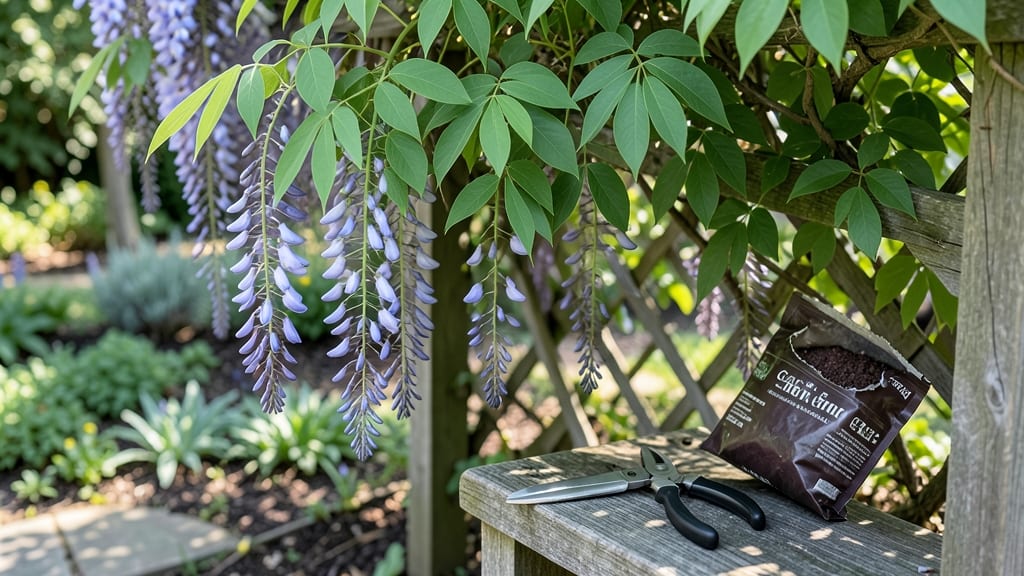
Your wisteria’s dramatic second blooms start with a single cut. ✂️ I’ve transformed my stubborn, non-flowering vines into cascades of purple by mastering just three techniques—pruning at the right time, feeding with precision, and protecting new growth from winter’s chill.
The key is timing: prune right after flowering (late spring) to encourage next year’s blooms, then feed with high-phosphorus fertilizer when buds form in late winter. Most gardeners over-prune or under-feed—both mistakes starve the plant of energy for flowers.
My vines now produce two full blooming cycles each year, and the secret isn’t complicated.
You’ll see buds forming within weeks of proper feeding, with vibrant clusters appearing by early summer. The fragrance alone makes it worth the effort—imagine walking past your porch and being hit by that intoxicating spring scent all over again in July.
Works for both climbing and bush varieties, whether you’re dealing with a 10-year-old vine or a brand-new plant. Let’s get those flowers blooming reliably—no more bare branches in sight.
📚 In This Guide
- What you need
- Instructions
- Tips and common mistakes
- Wrapping up and next steps
What you need
- ● Pruning shears or loppers: Sharp, bypass-style (not anvil) for clean cuts. Size: 6–8" blades for small branches, 10–12" for thicker stems.
- ● Gloves: Heavy-duty, gardening-grade (thorns are no joke!). Bonus: Arm sleeves for extra protection.
- ● Disinfectant (70% isopropyl alcohol or bleach solution): 1 part bleach to 9 parts water—sterilize tools between cuts to prevent disease.
- ● Balanced fertilizer: 10-10-10 or 20-20-20 NPK ratio. Quantity: 1–2 lbs per 100 sq ft of soil (follow label instructions).
- ● Slow-release organic fertilizer: Options: Composted manure, worm castings, or bone meal (for phosphorus boost). Quantity: 5–10 lbs per plant.
- ● Mulch: Organic options: Wood chips, straw, or shredded leaves (2–3" layer). Avoid: Fresh sawdust or untreated mulch.
- ● Watering can or hose with adjustable nozzle: Tip: Drip irrigation helps maintain moisture without overwatering.
- ● Support structure (if needed): For climbing wisteria: Trellis, arbor, or sturdy fence. Height: At least 8–10 ft for mature vines.
- ● Pruning saw: For thick branches (1" diameter or larger)—avoid regular saws to prevent tearing.
- ● Ladder or step stool: Height: Extendable for high branches (wisteria can grow 30+ ft!).
- ● pH test kit: To check soil pH (ideal range: 6.0–7.0 for wisteria).
- ○ Epsom salt (magnesium sulfate): Optional: 1 tbsp per gallon of water for magnesium-deficient soil (yellowing leaves).
- ● Plant ties or soft twine: To gently guide young vines onto supports.
- ● Rain gauge or moisture meter: Pro tip: Wisteria prefers consistent moisture—aim for 1–2" of water per week.
- ● Mature wisteria plant: Age: At least 3–5 years old (younger plants focus energy on growth, not blooms).
- ● Sunlight access: Minimum: 6–8 hours of direct sunlight daily (partial shade tolerates 4–6 hours).
- ● Well-draining soil: Avoid: Compacted or waterlogged soil. Amend with: Sand or perlite if needed.
- ● Patience & timing: Best pruning window: Late winter/early spring (before buds swell) or right after first bloom.
Step-by-step instructions for encouraging wisteria blooms
Here's how to coax spectacular second blooms from your wisteria—no secrets, just proven techniques.
✂️ Step 1: Prune for Airflow and Light Penetration
Wisteria blooms best when old wood receives full sun and airflow. Start by removing dead or crossing branches—these compete for energy and block light. Use clean, sharp pruners to make 45-degree cuts just above a outward-facing bud. This encourages new growth that will bear next year's flowers.
Next, thin out 20-30% of the oldest canes—these are the thickest, woody stems. You'll see them first when you look up at the vine. Cut them back to the ground. This forces the plant to redirect energy to younger, more vigorous growth that blooms more reliably. The goal is to create an open framework where sunlight reaches the center of the plant.
Here's the thing—don't overdo it. If you remove too many canes at once, you'll sacrifice next year's blooms. I like to prune in three stages: early spring for structural cuts, summer to control growth, and again after flowering to shape the plant. This keeps the plant balanced and blooming year after year.
🌿 Step 2: Fertilize for Strong Flowering Wood
Wisteria is a heavy feeder, especially after pruning. In early spring, apply a balanced 10-10-10 fertilizer around the root zone—about 1 pound per 100 square feet of soil area. This gives the plant a nutrient boost to support new growth and flower buds. Water deeply after applying to help distribute the fertilizer into the soil.
Throughout the growing season, switch to a low-nitrogen, high-phosphorus fertilizer (like 5-10-5) every 6-8 weeks. Phosphorus encourages root development and flower production, which is exactly what you want for abundant blooms. I've found that wisteria responds beautifully to organic options like bone meal or fish emulsion—just follow the package rates.
Real talk: Over-fertilizing with nitrogen leads to lush foliage but fewer flowers. You'll know you're on the right track when you see strong, green leaves with plenty of new growth by mid-summer. If the plant looks leggy and sparse, it's a sign you need more phosphorus or better pruning.
☀️ Step 3: Position for Maximum Sunlight
Wisteria needs full sun (6-8 hours daily) to produce abundant blooms. If your plant is in partial shade, you'll get fewer flowers and weaker growth. Look for south- or west-facing walls—these provide the most consistent sunlight. If your vine is currently in shade, consider transplanting it to a sunnier location in early spring or fall.
Here's where it gets tricky: Wisteria can grow aggressively, and sometimes the canopy becomes too dense. If you notice bare patches on the wall where sunlight can't reach the center, it's time to thin the foliage. Prune back some of the inner growth to let light penetrate. You'll see the difference in just a season—more sunlight means more flowers.
If you can't move the plant, supplement with a grow light during shorter winter days. Position it within 12 inches of the plant for 12-14 hours daily. This mimics the longer daylight hours wisteria needs to set flower buds. You'll know it's working when you see new shoots emerging earlier in the season than before.
💧 Step 4: Water Deeply and Consistently
Wisteria has deep roots, so it needs deep watering (1-2 inches per week) rather than frequent shallow watering. Water at the base of the plant, not overhead, to prevent fungal diseases like powdery mildew. The soil should be moist but not waterlogged—you'll know it's right when the top 2-3 inches of soil feel damp but not soggy.
During the first year after pruning, keep the soil consistently moist to support new growth. After that, wisteria becomes more drought-tolerant, but deep watering once a week during dry spells keeps the plant healthy and flowering. I like to water in the early morning to reduce evaporation and give the plant a full day to absorb moisture.
Don't skip this (I learned the hard way). If the soil dries out completely, the plant will drop buds and flowers. You'll see this as wilting leaves or empty flower clusters—a sure sign the roots are struggling. Mulch around the base with 2-3 inches of organic mulch (like wood chips) to retain moisture and regulate soil temperature.
⏰ Step 5: Encourage Second Blooms with Strategic Pruning
Most wisteria varieties bloom on old wood, meaning the flowers form on the previous year's growth. To encourage second blooms, prune lightly after the first flush of flowers fades. Remove only the spent flower clusters and any weak or crossing growth. This redirects the plant's energy into producing new flower buds.
For varieties like Japanese wisteria (Wisteria floribunda), which can bloom on both old and new wood, you can be a little more aggressive. After the first bloom, cut back one-third of the oldest canes to stimulate new growth that will bloom again in late summer or fall. You'll see new shoots emerging from the base of the plant—these are your second-flowering candidates.
This is the moment that matters: If you prune too late in the season, you'll cut off next year's flower buds. Always prune after the first bloom but before new growth hardens off in late summer. You'll know you've timed it right when you see new flower buds forming along the canes by early fall.
Tips & tricks for reviving wisteria blooms
These key insights will help you transform your wisteria into a lush, flowering powerhouse with minimal effort.
Pruning Precision: When you're making those 45-degree cuts in Step 1, focus on selecting buds that face outward—they'll grow away from the vine, creating an open framework. I've found that using a sharp pair of bypass pruners makes all the difference. The cleaner the cut, the faster the plant recovers and the more energy it can put into flowering. Avoid cutting too close to the bud or you risk damaging the growth point.
Fertilizer Timing: The early spring application of 10-10-10 fertilizer is crucial, but don't stop there. After the first bloom, switch to that high-phosphorus formula every 6-8 weeks to encourage root development and flower production. I've seen wisteria plants double their bloom production just by making this simple switch. Remember, too much nitrogen is the silent bloom killer—it creates lush foliage but starves your flowers.
Sunlight Strategy: If your wisteria isn't getting that full sun (6-8 hours daily), don't despair. You can supplement with grow lights during winter months when days are shorter. Position them within 12 inches of the plant for 12-14 hours daily to mimic longer daylight hours. This has been a game-changer for my winter-blooming varieties, producing clusters of buds that would otherwise never form.
Watering Wisdom: The deep watering (1-2 inches per week) is essential, but timing matters too. Water in the early morning to reduce evaporation and give the plant a full day to absorb moisture. During the first year after pruning, I've noticed that consistent moisture helps the plant establish new roots more quickly. The key is to keep the soil moist but never soggy—you'll know you're doing it right when the top 2-3 inches of soil feel damp but not wet.
Pro Tips for Make Wisteria Bloom
- These key insights will help you transform your wisteria into a lush, flowering powerhouse with minimal effort.
- Pruning Precision: When you're making those 45-degree cuts in Step 1, focus on selecting buds that face outward—they'll grow away from the vine, creating an open framework.
- Fertilizer Timing: The early spring application of 10-10-10 fertilizer is crucial, but don't stop there.
Frequently asked questions
Got questions about coaxing those dreamy wisteria blooms? You’re not alone! Here are answers to the most common ones—so you can troubleshoot, plan ahead, and enjoy even more of those fragrant cascades.
Why isn’t my wisteria blooming this year?
Wisteria often skips blooms due to over-pruning (cutting back too late in the season) or lack of sunlight. Young plants (under 3 years old) also focus energy on growth, not flowers. If it’s been established for years but still struggles, check for nutrient deficiencies (like phosphorus) or pruning mistakes.
How long does it take for wisteria to bloom after planting?
Patience is key! Most wisteria varieties take 2–5 years to bloom after planting, depending on the species (Chinese wisteria blooms faster than Japanese). Provide full sun (6+ hours/day), well-draining soil, and a sturdy trellis to speed up the process. A light winter chill (20–30°F) also triggers blooming hormones.
Can I force wisteria to bloom earlier or later?
Wisteria blooms are heavily influenced by climate—they typically flower in spring (April–May) or late summer (for second blooms). To encourage earlier blooms, prune in late winter (before buds swell) and ensure it gets consistent water. For late-summer blooms, reduce summer pruning and fertilize with low-nitrogen food (like 5-10-10) in early summer.
Did I prune too much? How do I fix it?
If you’ve over-pruned (cutting back more than 1/3 of the plant or removing flower buds), don’t panic! Wisteria is resilient. Stop pruning now and focus on watering deeply and feeding with phosphorus-rich fertilizer (like bone meal). Next year, prune lightly in late winter, keeping 3–5 main stems and cutting just above a bud facing outward.
What’s a good alternative if my wisteria refuses to bloom?
If your wisteria is stubborn (or you’re impatient!), try these low-maintenance, fast-blooming alternatives:
- Clematis: Thrives in partial shade, blooms annually, and comes in vibrant colors.
- Honeysuckle: Fragrant, fast-growing, and attracts pollinators—perfect for trellises.
- Climbing Roses: Repeat bloomers with stunning flowers (just needs regular pruning).
- Jasmine: Night-blooming and highly fragrant, ideal for warm climates.
For a wisteria-like look, opt for ‘Amethyst Falls’ wisteria (a prolific bloomer) or ‘Royal Purple’ (hardy and reliable).
Wrapping up and next steps
With the right care, your wisteria can transform into a dramatic, fragrant showstopper—even multiple times a year! Remember, patience and consistency are key: prune wisely, feed regularly, and give your plant the love it deserves. 🌸✨
Now that you’re armed with the know-how, roll up your sleeves and get growing! Start with one small step today—whether it’s trimming those unruly vines or testing your soil’s pH. Your future blooms (and neighbors’ envy) will thank you!