
Blooming
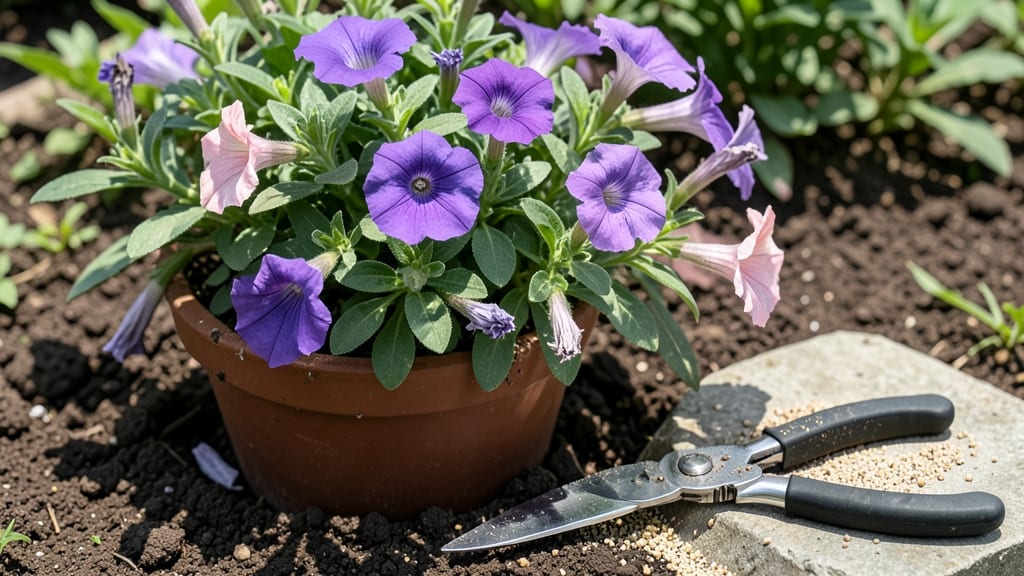
Learn how to keep petunias blooming all summer the easy way—deadhead them daily, or watch your plant turn into a seed pod factory by July. 🌸 The secret isn't complicated: remove spent flowers before they set seed, and your plants redirect energy into fresh blooms instead of seed production.
You'll need sharp pruners (or your fingers), a balanced fertilizer, and consistent watering—about 1 inch per week. Petunias thrive in full sun but wilt fast in afternoon heat, so morning watering keeps roots happy.
Most gardeners overlook fertilizer, but feeding every 2-3 weeks with a bloom booster prevents nutrient burnout.
By mid-July, your plants will look like they're on steroids—dense, bushy, and covered in blooms. The key is staying ahead: check for spent flowers every morning, and pinch back leggy stems to encourage compact growth. This method works for trailing, bush, and grandiflora varieties alike.
Even in humid climates, petunias stay vibrant with proper care. The biggest mistake? Letting flowers go to seed—once that happens, blooming slows to a trickle. With daily deadheading, you'll enjoy that first-frost harvest of fresh-cut flowers for bouquets all season long.
📚 In This Guide
- What you need
- Instructions
- Tips and common mistakes
- Wrapping up and next steps
What you need
- ● Petunia plants: Choose disease-resistant varieties (e.g., Petunia × hybrida) for best results.
- ● Pruning shears or sharp scissors: 1 pair (sterilized with rubbing alcohol to prevent disease).
- ○ Gloves (optional but recommended): Lightweight gardening gloves to protect hands from thorns or dirt.
- ● Watering can or hose with a gentle spray nozzle: 1 unit (for deep but even watering).
- ● Balanced liquid fertilizer (10-10-10 or 20-20-20): 1 bottle (follow label for dilution).
- ○ Mulch (optional but helpful): 2-3 inches of organic mulch (e.g., shredded bark or straw) to retain moisture.
- ● Deadheading tool: A specialized deadheading tool (e.g., Felco pruners) for faster blooms removal.
- ● Slow-release fertilizer granules: 1 bag (apply at planting for long-term nutrition).
- ● Garden kneeler or stool: For comfortable deadheading in large gardens.
- ● Compost or worm castings: To enrich soil and boost plant health.
- ● Shade cloth (30-50% coverage): For hot climates to protect petunias from scorching.
Step-by-Step instructions for deadheading petunias
Here’s how I keep my petunias flowering nonstop—no fancy tools, just consistent care.
✂️ Step 1: Identify and Remove Spent Blooms Immediately
Petunias bloom prolifically, but each spent flower signals the plant to redirect energy into seed production instead of new blooms. I deadhead daily during peak bloom time by pinching off faded flowers with my thumb and forefinger—no shears needed. Look for blooms with wilted petals or those curling at the edges; these are ready for removal.
Work from the outside in, moving inward toward the center of the plant. This prevents overcrowding and ensures you don’t accidentally trim healthy buds hiding behind spent blooms. I’ve found that morning deadheading gives flowers the full day to open fresh blooms before evening.
✂️ Step 2: Trim Back Leggy Stems for Bushier Growth
When stems grow too long and sprawl, petunias produce fewer blooms. I prune leggy stems back to a set of healthy leaves just above a leaf node—this encourages branching and denser foliage. Use clean, sharp pruners for stems thicker than a pencil, or pinch by hand for thinner growth.
After trimming, I give the plant a light shake to redistribute soil around the base, which helps roots establish better. This step is especially important after heavy rain or if the plant looks top-heavy. You’ll notice new side shoots forming within a week—that’s your signal the plant is responding well.
💧 Step 3: Water Deeply at the Base in the Morning
Petunias need consistent moisture, but soggy soil invites rot. I water at the base early in the day, ensuring the top 2 inches of soil feel damp but not waterlogged. Avoid wetting leaves, as this promotes fungal diseases like powdery mildew. A 5-gallon watering can with a narrow spout works best for precision.
Mulch around the base with 1-2 inches of organic mulch (like shredded bark) to retain moisture and regulate soil temperature. This reduces watering frequency by up to 30% while keeping roots cool. Watch for wilting leaves—this is your cue to water immediately, as petunias recover quickly when hydrated.
☀️ Step 4: Provide Balanced Sun and Fertilizer
Petunias thrive in 6-8 hours of full sun, but afternoon shade in hot climates prevents leaf scorch. I place them where they get morning sun and afternoon dappled shade if temperatures exceed 90°F. Move containers to adjust for sun exposure as needed.
Feed every 2-3 weeks with a balanced, water-soluble fertilizer (like 10-10-10) diluted to half-strength. Over-fertilizing leads to lush foliage but fewer blooms. I mix fertilizer with water in a spray bottle for even distribution, avoiding leaf burn. You’ll see vibrant color and stronger stems within a week of consistent feeding.
⏰ Step 5: Monitor for Pests and Adjust Care
Check leaves weekly for aphids or spider mites—common pests that drain plant energy. I spray affected areas with neem oil (mixed 1 tbsp per gallon of water) in the evening to avoid harming bees. Early detection is key; a few minutes of inspection prevents a full-blown infestation.
If blooms slow down mid-summer, it’s often due to heat stress. I increase water slightly and trim back 10-15% of the plant to reduce stress. Petunias are resilient—they’ll bounce back with fresh growth and even more flowers if given the right conditions.
Tips & tricks for nonstop Petunia blooms
These small adjustments make all the difference between occasional blooms and a summer-long floral display.
Timing is Everything: In Step 1, morning deadheading is non-negotiable for peak results. The plant's natural circadian rhythm means it needs that full day to develop new buds after removing spent blooms. I set a reminder on my phone for 8 AM sharp—consistency beats enthusiasm every time. The difference between daily attention and sporadic deadheading is like comparing a well-oiled machine to one that runs hot and cold.
The Pruning Paradox: When trimming leggy stems in Step 2, don't be afraid to be aggressive—cut back to where you see healthy leaf nodes. I've seen petunias double their bloom production after a single aggressive pruning session. The key is to make clean cuts at 45-degree angles just above a leaf node, which encourages new growth from that exact spot. Think of it as giving your plant a haircut that stimulates new growth rather than just trimming wispy ends.
Watering Wisdom: That 2-inch soil depth check in Step 3 is your golden rule. I use my finger to test moisture—if it feels dry halfway down, it's time to water. The narrow spout on my 5-gallon watering can makes all the difference in precision. And here's a pro move: I water the soil, not the leaves, to prevent fungal issues. A light misting of leaves in the morning can actually help prevent powdery mildew, but never at night when humidity is higher.
Fertilizer Finesse: The 2-3 week feeding schedule in Step 4 is perfect, but there's a trick to make it even better. I mix my diluted fertilizer with water in a spray bottle and apply it directly to the soil around the base of the plant. This targeted approach prevents leaf burn and ensures the roots get exactly what they need. And remember—less is more with petunias. You'll see vibrant blooms, not just lush green leaves.
Pro Tips for Keep Petunias Blooming All Summer
- These small adjustments make all the difference between occasional blooms and a summer-long floral display.
- Timing is Everything: In Step 1, morning deadheading is non-negotiable for peak results.
- The Pruning Paradox: When trimming leggy stems in Step 2, don't be afraid to be aggressive—cut back to where you see healthy leaf nodes.
Frequently asked questions
Got questions about keeping your petunias in peak bloom? Here are some common ones—and their answers—to help you enjoy nonstop color all season long!
How often should I deadhead petunias for continuous blooms?
Deadhead every 2–3 days during peak bloom (spring to early fall) to encourage new flowers. If you’re busy, aim for at least 3–4 times per week. Regular deadheading rewards you with longer, fuller blooms and prevents seed pods from draining energy.
What’s the best time of day to deadhead petunias?
Morning is ideal! Deadhead right after sunrise when flowers are dry and dew has evaporated. This reduces stress on the plant and gives it the whole day to recover. Avoid evening deadheading—wet stems can invite fungal issues.
My petunias stopped blooming—what went wrong?
Common culprits include:
- Overcrowding: Petunias need 6–12 inches of space to thrive. Thin plants if they’re competing for sunlight/nutrients.
- Underwatering: Let soil dry 1 inch deep between waterings (more in heatwaves). Wilting = stress = fewer blooms.
- Too much fertilizer: Focus on balanced, low-nitrogen feed (like 10-10-10) every 2–3 weeks. Excess nitrogen = leafy growth, not flowers.
Give them a light trim to encourage bushier growth if they’re leggy!
Can I use petunia blooms in bouquets without hurting the plant?
Yes! Cut 1–2 stems per plant (use clean shears) to arrange in bouquets. Choose stems with 3–4 leaves and trim just above a leaf node. Avoid cutting more than 10–15% of the plant at once—petunias bounce back fast with proper care!
Are there petunia varieties that bloom longer with less maintenance?
Try these low-maintenance superstars:
Variety
Why It Works
Supertunia series
Disease-resistant, prolific bloomers with minimal deadheading needs.
Wave petunias
Heat- and drought-tolerant; self-cleaning (sheds spent blooms easily).
Easy Wave
Trailing habit + long-lasting flowers—perfect for hanging baskets.
Pro tip: Mulch with 1–2 inches of organic matter (like shredded bark) to retain moisture and reduce weeds!
Wrapping up and next steps
With these simple yet powerful tips—deadheading daily, feeding them right, and giving them the perfect home—your petunias will reward you with nonstop blooms all summer long. 🌸✨ Don’t let a little effort stop you; the vibrant show you’ll create is worth every minute!
Ready to transform your garden? Grab your shears and start deadheading today—your petunias (and your neighbors!) will thank you.