
Blooming
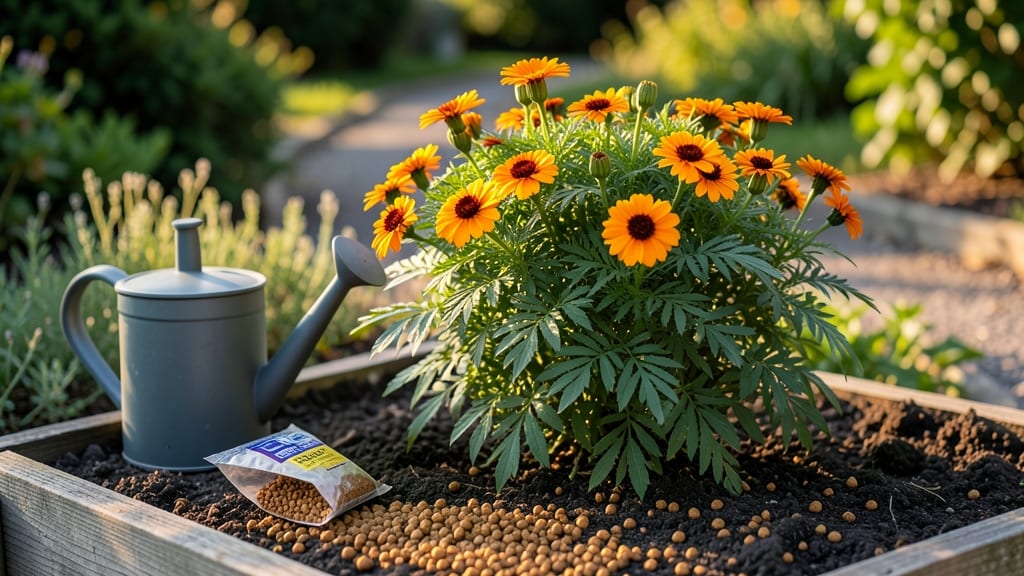
Marigolds refuse to bloom when they're told to—until you deadhead daily. 🌼 I've battled leggy marigolds with tiny buds that never opened, and the fix is simpler than you'd think: consistent care and a few key tricks that turn them into nonstop bloomers.
Sunlight, soil, and water set the stage—marigolds need 6+ hours of direct sun, well-draining soil, and 1-1.5 inches of water per week. But the real secret lies in deadheading spent blooms (pinch them off at the base) and feeding them every 4-6 weeks with a balanced fertilizer.
Skip either, and you'll end up with tall stems and zero flowers.
By mid-summer, your plants will be covered in bright orange and gold blooms that keep coming back if you stay on top of maintenance. The key is consistency—10 minutes of deadheading every few days keeps them flowering until frost.
Even my black thumb can't mess this up once you know the routine.
Works for French, African, and signet marigolds alike, whether you're growing in garden beds, containers, or hanging baskets. Let's get those blooms popping!
📚 In This Guide
- What you need
- Instructions
- Tips and common mistakes
- Wrapping up and next steps
What you need
- ● Marigold plants: Choose French, African, or Signet varieties (10–20 plants for a vibrant bed, depending on space). Start with healthy, disease-free seedlings or seeds.
- ○ Pruning shears or sharp scissors: Sterilized tools (small, sharp blades work best for precision). Optional: gloves to protect hands from sap.
- ● Watering can or hose with a gentle spray nozzle: Aim for 1–1.5 inches of water per week (adjust for rain).
- ● Balanced fertilizer (10-10-10 or 20-20-20): Low-nitrogen formula to encourage blooms over foliage. 1–2 tbsp per plant every 4–6 weeks.
- ● Compost or organic mulch: 2–3 inches to retain moisture and deter weeds (shredded leaves, straw, or coconut coir work well).
- ● Bloom booster: Phosphorus-rich fertilizer (e.g., bone meal) or seaweed extract to give blooms a kick.
- ● Staking or cages: For tall varieties (like African marigolds) to support heavy blooms.
- ● Drip irrigation system: Automates watering for consistent moisture—critical for blooming.
- ● Sunlight meter or app: To track 6–8+ hours of full sun per day (marigolds thrive in sunlight!).
Step-by-step instructions for encouraging marigold blooms
Here’s the method I rely on every season to turn marigolds from leafy stalks into nonstop blooming powerhouses.
🌱 Step 1: Start with Proper Planting Conditions
Marigolds thrive in full sun—at least 6-8 hours daily—and well-draining soil. If your garden soil is heavy clay, mix in 2-3 inches of compost before planting to improve aeration. I always test soil pH first; marigolds prefer 6.0-7.0. If your soil is too acidic, add a handful of lime per planting hole.
Space plants 12-18 inches apart depending on variety. Crowding stresses plants and diverts energy from blooming to leaf production. Watch for the first true leaves—this is when you’ll see their characteristic feathery foliage. Once established, marigolds develop a strong taproot, so avoid transplanting after the first month.
✂️ Step 2: Master the Art of Deadheading
This is the secret weapon for nonstop blooms. The moment a flower fades—when petals turn brown and the center darkens—snip the spent bloom stem just above the next set of leaves or buds. I use clean, sharp pruners to avoid tearing stems. Don’t wait until flowers drop on their own; marigolds will redirect energy to seed production instead of new blooms.
For French marigolds, which have fern-like foliage, deadhead at the base of the flower head. For African marigolds, cut back to the first healthy leaf below the bloom. You’ll notice new buds forming within 3-5 days of consistent deadheading. This keeps plants focused on flowering rather than seeding.
💧 Step 3: Maintain Consistent Watering and Fertilization
Water deeply 1-2 times per week, aiming for 1 inch of water total. Let the top inch of soil dry between waterings—marigolds hate soggy roots but won’t bloom if they’re thirsty. I water in the morning so foliage dries quickly, preventing fungal issues. Mulch around plants with 2-3 inches of straw or shredded leaves to retain moisture and suppress weeds.
Feed plants every 3-4 weeks with a balanced 10-10-10 fertilizer or a low-phosphorus option like 5-5-5. Too much phosphorus encourages leafy growth at the expense of blooms. I stop fertilizing after mid-summer to let plants prepare for dormancy. You’ll see blooms respond within 10-14 days of consistent feeding.
☀️ Step 4: Adjust Light and Prune for Bushier Growth
If your marigolds start looking leggy or flowers are sparse, they need more light. Move them to a sunnier spot immediately—even 2 extra hours of sun daily can trigger more blooms. In containers, rotate pots weekly so plants grow evenly toward the light. You’ll notice stems thicken and leaves darken as they adjust to optimal conditions.
Prune leggy stems back by one-third to encourage bushier growth. Cut just above a leaf node where new branches will form. This redirects energy to lateral shoots, which produce more flowers. Avoid heavy pruning late in the season—it can delay fall blooms. The goal is to maintain a compact, rounded shape with plenty of air circulation.
Tips & tricks for encouraging marigold blooms
Took me a while to figure these out, so here goes—simple tricks that'll transform your marigolds from leafy stalks to blooming powerhouses.
Sunlight Strategy: Those 6-8 hours of daily sun are non-negotiable, but here's the thing: morning sun is gold. Position your plants to catch the first rays—this kickstarts photosynthesis early and gives them energy for blooming. If your garden has afternoon shade, don't panic—just ensure they get that critical morning light. You'll notice the difference in just a week.
Deadheading Discipline: The 3-5 day window after deadheading is when magic happens. I've seen buds form overnight when I'm consistent. Here's my trick: carry a small pair of pruners with you while you garden—snip spent blooms immediately. This prevents seed formation and redirects energy to new flowers. For French marigolds, I make a clean cut at the base; for African types, I leave a tiny stem to encourage bushier growth.
Watering Wisdom: That 1 inch of water per week guideline works, but timing matters more. Water in the morning so foliage dries quickly—this prevents fungal issues that can stress plants. I use a rain gauge to track moisture, but if you don't have one, stick your finger an inch deep in the soil. If it's dry, water; if it's damp, wait. Overwatering is the #1 blooming killer.
Fertilizer Finesse: The 10-10-10 ratio is perfect, but here's what nobody tells you: marigolds hate excess phosphorus. If your fertilizer says "10-10-10," you're safe. If it's higher in phosphorus (like 10-20-10), cut the amount in half. I've seen plants go from blooming to leafy monsters when over-fertilized. And remember—stop feeding after mid-summer to let them prepare for dormancy.
Pro Tips for Get Marigolds To Bloom
- Took me a while to figure these out, so here goes—simple tricks that'll transform your marigolds from leafy stalks to...
- Sunlight Strategy: Those 6-8 hours of daily sun are non-negotiable, but here's the thing: morning sun is gold. Positi...
- Deadheading Discipline: The 3-5 day window after deadheading is when magic happens. I've seen buds form overnight whe...
Frequently asked questions
Got questions about coaxing those vibrant marigold blooms? You’re not alone! Here are answers to the most common concerns—from timing tricks to troubleshooting tips—so you can enjoy nonstop color in your garden.
Why aren’t my marigolds blooming yet?
Marigolds often take 6–8 weeks from seed to bloom, or 4–6 weeks for transplants. If they’re healthy but not flowering, they may need more sunlight (6+ hours/day) or balanced fertilizer (like 10-10-10) to encourage blooms. Patience is key—some varieties (like French marigolds) bloom faster than African types.
Do I really need to deadhead marigolds daily?
Daily deadheading maximizes blooms, but if you’re busy, 2–3 times a week still works! Snip off spent flowers just above a leaf or bud to redirect energy. Pro tip: Morning deadheading gives blooms the full day to open. Overcast days? Skip it—humidity can slow regrowth.
What if my marigolds only have leaves and no flowers?
Leafy marigolds usually need one of these fixes:
- More sunlight: Move to a sunnier spot or thin nearby plants blocking light.
- Less nitrogen: Switch to a low-nitrogen, high-phosphorus fertilizer (like 5-10-5) to boost flowering.
- Stress them slightly: Lightly prune leggy stems to encourage bushier growth and more buds.
Can I force marigolds to bloom earlier?
Yes! Start seeds indoors 4–6 weeks before your last frost under grow lights. Harden off seedlings gradually, then transplant outdoors. For mature plants, reduce water slightly (but don’t drought-stress) and fertilize with bloom-boosting formulas. Bonus: Pinch back tips when seedlings are 4–6 inches tall to encourage branching and more flowers!
What should I do if my marigolds bloom but stop suddenly?
Sudden bloom cessation often signals heat stress, overwatering, or pests. Check for:
- Thrips or aphids: Spray with neem oil or insecticidal soap.
- Root rot: Ensure pots have drainage holes and soil dries slightly between waterings.
- Overcrowding: Thin plants to 12–18 inches apart for airflow.
Are there marigold varieties that bloom nonstop with less effort?
Try these low-maintenance, high-bloom picks:
Variety
Bloom Duration
Key Trait
‘Tangerine Gem’ (French Marigold)
Nonstop from spring to frost
Compact, disease-resistant, and thrives in heat.
‘Bonanza’ Series (African Marigold)
Heavy blooms for months
Drought-tolerant once established; great for cut flowers.
‘Jumbo’ or ‘Gold Coin’
Long-lasting single blooms
Slow to bolt; ideal for containers.
Wrapping up and next steps
Getting marigolds to bloom is all about consistent care—deadheading, proper sunlight, and a little patience go a long way! 🌼 With these tips, you’ll enjoy vibrant blooms all season long.
Now that you’re armed with the know-how, grab those shears and start deadheading today—your garden will thank you with a burst of color!
🌟 Ready for More?
Want to take your gardening skills to the next level? Try experimenting with marigold varieties or explore companion planting to boost your garden’s health and beauty!