
Blooming
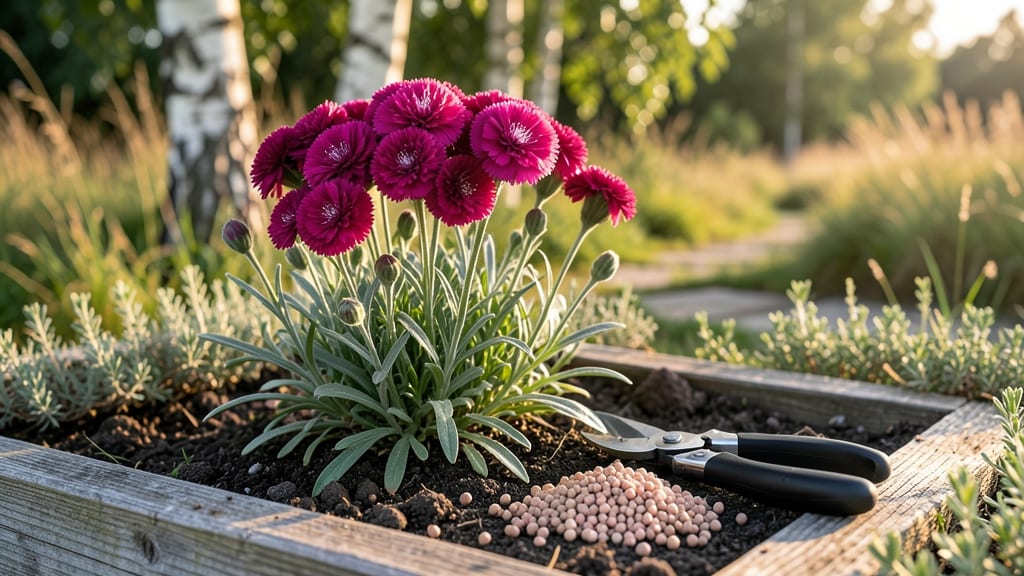
Your dianthus plants are starving for attention—and it’s costing you those pink and magenta blooms you love, but how to get dianthus to bloom more is simpler than you think: deadhead weekly, give them sunlight they crave, and cut back last year’s growth. 🌸 before spring.
I’ve turned my once-sparse dianthus into a cottage-garden showstopper using these same steps.
Start by snipping off spent flowers right at the base with clean shears—this tricks the plant into producing more blooms instead of seed pods. Pair that with 6+ hours of direct sun daily and well-draining soil, and you’ll see the difference in weeks.
Overcrowding? Thin plants to 12 inches apart so air circulates and stems stay strong.
By mid-summer, your dianthus will be covered in blooms, their clove-like fragrance filling the air. The key is consistency: deadhead weekly, water at the base (not overhead), and feed lightly with a balanced fertilizer every 4-6 weeks. Skip the heavy hand—dianthus hates soggy roots.
Works for both perennial and annual varieties, whether in garden beds or containers. The best part? Once you establish this routine, your dianthus will keep blooming until frost—no fancy hacks needed. Let’s get those flowers popping!
📚 In This Guide
- What you need
- Instructions
- Tips and common mistakes
- Wrapping up and next steps
What you need
- ● Dianthus plants – Choose healthy, mature plants (perennials or annuals) with at least 3–6 inches of stem growth. Pro tip: 🌱 Opt for varieties like Dianthus barbatus (Sweet William) or Dianthus chinensis for prolific blooms!
- ● Pruning shears or clean, sharp scissors – A must-have for deadheading. Sterilize with rubbing alcohol between cuts to prevent disease.
- ○ Gloves (optional but recommended) – Protects hands from thorns (especially in Dianthus gratianopolitanus) and dirt.
- ● Compost or balanced fertilizer (5-10-5 or 10-10-10) – 1–2 tablespoons per plant every 4–6 weeks during the growing season.
- ● Watering can or hose with a gentle spray nozzle – Avoid soaking the foliage to prevent fungal issues.
- ○ Mulch (optional) – 1–2 inches of organic mulch (like straw or shredded bark) to retain moisture and suppress weeds.
- ● Full sun exposure – 6–8+ hours of direct sunlight daily. Dianthus thrives in bright, open spaces!
- ● Well-draining soil – Amend heavy clay soil with sand or perlite to prevent root rot.
- ● Regular watering schedule – Water at the base of the plant, keeping soil evenly moist but not soggy.
- ● Patience & consistency – Deadheading weekly (or bi-weekly for slow bloomers) yields the best results over time!
Step-by-Step instructions for encouraging dianthus to bloom more
Here's how to transform your dianthus into a blooming powerhouse with minimal effort.
✂️ Step 1: Deadhead Regularly After Each Flower Fades
Deadheading is the single most important step for encouraging more blooms. The moment you notice a flower wilting or its petals beginning to drop, pinch it off at the base with clean fingers or sharp scissors. This prevents the plant from wasting energy on seed production and redirects it toward new buds.
I like to do this in the morning when flowers are still crisp. You'll see new buds forming within 2-3 weeks if the plant is healthy. Avoid pulling stems—this can damage the plant. Instead, snip just above the next set of leaves or the first leaf pair below the spent bloom.
☀️ Step 2: Ensure Full Sun and Proper Spacing
Dianthus thrives in full sun (6+ hours daily), so position your plants where they'll get the most light. If you notice blooms fading quickly or stems stretching upward, your plant needs more sun. Move it to a sunnier spot or supplement with a grow light for 4-6 hours daily.
Proper spacing is key too. Crowded plants compete for nutrients and light, leading to fewer blooms. Space them 12-18 inches apart in the garden or 6-8 inches apart in containers. You'll see stronger stems and more abundant flowers when they have room to grow.
💧 Step 3: Water Deeply but Infrequently
Dianthus is drought-tolerant once established, but consistent moisture is crucial for blooming. Water deeply once a week during dry spells, ensuring the soil dries out slightly between waterings. Overwatering causes root rot, which stunts growth and reduces flowering.
Check moisture by sticking your finger 1 inch into the soil. If it feels dry, it's time to water. Avoid wetting the foliage—water at the base to prevent fungal diseases. You'll notice healthier plants and more vibrant blooms when the watering routine is consistent.
🌿 Step 4: Fertilize Lightly During the Growing Season
Use a balanced, water-soluble fertilizer (like 10-10-10) every 4-6 weeks during the growing season to encourage blooming. Mix it at half-strength to avoid burning the roots. Fertilize in the morning so the plant has time to absorb nutrients before the heat of the day.
Stop fertilizing in late summer to allow the plant to prepare for dormancy. You'll see a noticeable difference in bloom quantity if you fertilize correctly. Avoid high-nitrogen fertilizers—they promote leafy growth at the expense of flowers.
⏰ Step 5: Prune Lightly After the First Bloom Cycle
After the first flush of blooms, trim the plant back by one-third to encourage a second round of flowers. Use clean scissors to cut just above a leaf node or set of leaves. This pruning stimulates new growth and prevents the plant from becoming woody.
Do this in early summer for a fall rebloom or in late summer for a spring rebloom. You'll see fresh, vigorous growth within 2-3 weeks, leading to another wave of beautiful blooms. Avoid heavy pruning in late fall—let the plant rest for the winter.
Tips & tricks for perfect dianthus blooms
Took me years of trial-and-error to figure out these game-changing tricks for dianthus—here's what actually works.
Timing Secret: In Step 1, don't wait until flowers are completely wilted to deadhead. Remove them when petals start curling at the edges—this is when the plant begins diverting energy away from blooms. I've found that morning deadheading (between 8-10am) gives the best results because flowers are fully hydrated and easier to remove cleanly. The 2-3 week window for new buds to appear is accurate, but only if you're consistent—skip a week and you'll lose that momentum.
Sunlight Strategy: For Step 2, if you're supplementing with grow lights, position them 6-12 inches above the plants for those 4-6 hours daily. I use LED grow lights on a timer to avoid forgetting—just make sure they're not too close, or you'll scorch the leaves. A simple trick: if your dianthus starts stretching upward (a sign of light deprivation), it's time to move it closer to a sunny window or add more light. The 6+ hours of direct sun is non-negotiable for continuous blooming.
Watering Wisdom: The 1-inch soil check in Step 3 is your best friend. I've learned that dianthus roots prefer slightly dry conditions—overwatering is the #1 reason for poor blooming. Use your finger to test moisture at the 1-inch mark, and if it's damp, wait another day. For container plants, I've found that terracotta pots help prevent overwatering because they dry out faster than plastic.
Fertilizer Tip: When fertilizing in Step 4, I mix my 10-10-10 fertilizer at half-strength and add a splash of rainwater (not tap water) to help the nutrients absorb better. The key is to fertilize in the morning—this gives the plant all day to process the nutrients before evening. I've noticed that stopping fertilizers in late summer actually helps dianthus prepare for winter, leading to stronger spring growth.
Pro Tips for Get Dianthus To Bloom More
- Took me years of trial-and-error to figure out these game-changing tricks for dianthus—here's what actually works.
- Timing Secret: In Step 1, don't wait until flowers are completely wilted to deadhead. Remove them when petals start c...
- Sunlight Strategy: For Step 2, if you're supplementing with grow lights, position them 6-12 inches above the plants f...
Frequently asked questions
Got questions about coaxing those stunning dianthus blooms? You’re not alone! Here are answers to the most common queries—so you can enjoy nonstop color without the guesswork.
Why isn’t my dianthus blooming at all?
If your dianthus is putting out leaves but skipping flowers, it’s likely due to overcrowding or poor light. Prune back leggy stems, move it to full sun (6+ hours/day), and fertilize lightly with a low-nitrogen bloom booster. Cold snaps or drought can also stall blooms—keep soil consistently moist but not soggy.
When is the best time to deadhead dianthus for more blooms?
Deadhead weekly (or every 3–5 days in peak bloom season) to encourage more flowers. Use clean pruners to snip spent blooms just above a set of healthy leaves. For perennial varieties, do this throughout the growing season (spring to frost). Annuals? Deadhead until fall to prolong blooms.
Does dianthus need a dormancy period to rebloom?
Yes! Most dianthus varieties (especially perennials) require a rest period to rebloom. After flowering, let foliage yellow naturally and reduce watering. In fall or early winter, cut back stems by half and mulch lightly. This mimics winter conditions, triggering spring regrowth and bigger blooms next season.
Can I force dianthus to rebloom after a long dry spell?
If your dianthus has gone dormant due to drought, revive it with these steps:
- Water deeply (1–2 inches) to rehydrate roots.
- Trim dead or brown stems to encourage new growth.
- Fertilize with a balanced bloom formula (10-10-10) and place in bright, indirect light (if indoors).
- Resume weekly deadheading once new buds form.
What if my dianthus keeps reverting to leaves instead of flowers?
This usually means it’s overfed with nitrogen (leafy growth = happy foliage, sad flowers). Switch to a phosphorus-heavy fertilizer (like 5-10-5) to push blooming. Also check for:
- Root-bound pots? Repot if roots circle the container.
- Pests (aphids/slugs) stealing energy? Treat with neem oil or diatomaceous earth.
- Shade creep? Move to sunnier spot—dianthus needs full sun!
Wrapping up and next steps
Getting your dianthus to burst into nonstop color is totally within reach—just with a little patience and the right care! Remember: pruning, sunlight, and deadheading are your secret weapons for a blooming powerhouse. Start small, track what works, and soon you’ll be rewarded with vibrant, long-lasting flowers that turn heads.
Ready to take it further? Experiment with varieties or share your progress with fellow gardeners—your blooms will thank you! 🌸