
Blooming
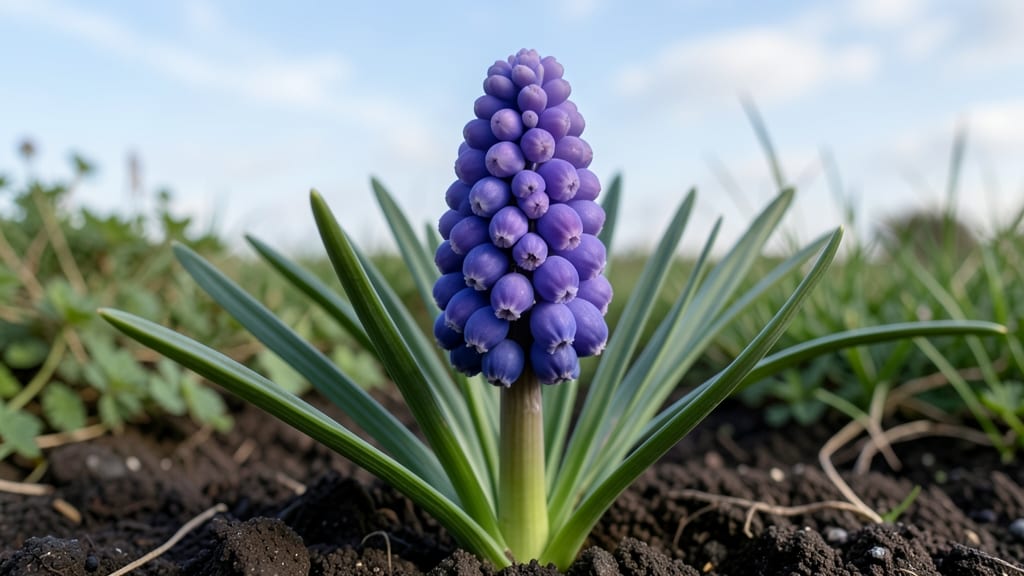
Grape hyacinths before bloom look like nothing special—just clusters of long, grass-like leaves sprouting from the ground. 🌱 But those slender, deep-green blades are the secret to the purple bell-shaped blooms that’ll soon transform your spring garden.
I’ve watched my own grape hyacinths go from unassuming foliage to a carpet of color, and the key is recognizing them early when they’re most vulnerable.
These plants thrive in partial shade, so they’re perfect for spots under trees or along north-facing walls where other bulbs might struggle. The soil should be well-draining but consistently moist—think of it like a damp sponge, not soggy.
Planting in fall gives them time to establish roots before winter, and by early spring, those leaves will be the first sign of life after dormancy.
What sets grape hyacinths apart is how they grow in tight clusters, almost like miniature bamboo. If you see narrow, sword-shaped leaves emerging in late winter or early spring, that’s your cue to protect them from hungry critters or trampled lawns.
A light mulch of shredded leaves keeps the soil moist and discourages weeds, setting the stage for those iconic blooms.
Here’s the best part: once established, grape hyacinths multiply like crazy, spreading to fill gaps in borders or under shrubs. Just avoid overwatering—their leaves can turn yellow if they’re too wet, and that’s a sure sign they’re not happy.
With the right care, you’ll go from unassuming foliage to a sea of purple in just a few weeks.
📚 In This Guide
- What you need
- Instructions
- Tips and common mistakes
- Wrapping up and next steps
What you need
- ● Grape hyacinth bulbs (Muscari spp.) – 6-12 bulbs per square foot (choose varieties like Muscari armeniacum or Muscari botryoides for vibrant color).
- ● Well-draining potting mix or garden soil – Amend with compost for nutrient-rich growth (aim for a pH of 6.0-7.0).
- ● Planting container or garden bed – Containers: 6-8" deep with drainage holes; garden beds should have partial to full sun (3-6 hours/day).
- ○ Slow-release fertilizer (optional but recommended) – 10-10-10 or bulb-specific formula (sprinkle lightly at planting).
- ● Mulch (straw, shredded bark, or pine needles) – 1-2 inches thick to retain moisture and regulate soil temp.
- ● Watering can with a fine rose nozzle – Gentle watering prevents bulb displacement.
- ● Hand trowel or bulb planter – For precise planting depth (2-3x bulb height).
- ○ Garden gloves (optional) – Protects hands from soil and sharp bulb edges.
- ● Epsom salt (magnesium sulfate) – 1 tbsp per gallon of water for greener foliage (apply monthly).
- ● Decorative rocks or pebbles – For a polished container garden look.
- ● Companion plants – Daffodils, tulips, or creeping thyme to enhance early spring displays.
- ● Plant labels – Mark varieties if testing multiple types.
- ● Lightweight row cover (for early planting) – Protects from late frosts.
How to care for grape hyacinths before their purple bloom
Transform those early spring shoots into a dazzling display with these key steps.
🌱 Step 1: Identify and Prepare the Planting Site
Grape hyacinths (Muscari) thrive in partial shade with 6-8 hours of morning sun—this prevents leaf scorch before blooms emerge. Check your site now: the soil should drain well but retain moisture, as soggy conditions cause bulb rot. If your soil feels compacted, loosen it to a depth of 6 inches with a fork or trowel.
Here's the thing—grape hyacinths multiply aggressively. If you're planting new bulbs, space them 3-4 inches apart in clusters of 5-7. This mimics their natural growth pattern and ensures a dense, uniform display. I always plant mine in drifts rather than straight rows for a more natural look.
💧 Step 2: Water and Fertilize for Strong Growth
Water deeply once a week until the soil feels 2 inches damp—this encourages deep root growth. You'll notice the leaves start to thicken and stand upright within 2-3 weeks of consistent moisture. Once they reach 4-6 inches tall, switch to every 10-14 days unless your area experiences dry spells.
Apply a low-nitrogen bulb fertilizer (like 5-10-10) at half-strength when shoots are 2 inches tall. The key is timing: too early and you'll promote leafy growth at the expense of blooms; too late and the plant won't have enough nutrients. I mix mine into the top 2 inches of soil and water it in immediately to prevent root burn.
☀️ Step 3: Monitor for Pests and Adjust Light
Watch for slugs and snails—they adore young grape hyacinth leaves. I place diatomaceous earth around the base of plants in the evening (their active time) and refresh it after rain. You'll see damage as jagged edges or missing leaf sections. For severe infestations, handpick pests at dusk when they're sluggish.
If your plants start leaning toward the light, they're not getting enough bright, indirect light. Gradually move them to a sunnier spot over 3-5 days to avoid shocking the foliage. The ideal position is where leaves stay upright and deep green, not stretched or pale. This ensures the energy goes toward strong stems and vibrant blooms.
⏰ Step 4: Prune and Prepare for Bloom
When one-third of the leaves turn yellow (usually 6-8 weeks before blooming), it's time to reduce watering to every 2-3 weeks. This signals the bulb to shift energy from foliage to flower production. You'll see the stems thicken and develop small buds—this is your cue that blooming is imminent.
Remove any brown or damaged leaves with clean pruners, cutting just above the soil line. Never pull leaves—this can damage the bulb's neck. I also remove any offset bulbs (small bulbs forming at the base) if you want to control spread, or leave them to create a naturalized look. The goal is to keep the parent plant's energy focused on those stunning purple bells.
Tips & tricks for perfect grape hyacinth care before blooming
Here's what nobody tells you about nurturing grape hyacinths to their full purple potential.
Light Balance: The 6-8 hours of morning sun is your golden window—any more direct afternoon sun risks scorching those delicate leaves before blooms even appear. I've seen grape hyacinths in full shade produce sparse blooms, while those with morning light develop dense, vibrant clusters. If your garden gets intense afternoon sun, consider a 50% shade cloth during peak hours (1-4 PM) to protect emerging foliage.
Soil Prep Secret: Before planting, I always mix in 1 inch of compost into the top 6 inches of loosened soil. This creates the perfect moisture-retentive environment grape hyacinths crave without risking bulb rot. The compost also provides slow-release nutrients that support early growth when those first shoots emerge. For clay soils, add a handful of perlite to improve drainage—grape hyacinths hate soggy conditions.
Pest Prevention: The diatomaceous earth trick works wonders, but here's the follow-up: reapply it after every heavy rain since water washes it away. For organic gardens, I also sprinkle crushed eggshells around the base—slugs and snails avoid the sharp edges. The key is consistency: check plants every morning for damage, especially after overnight dew when pests are most active.
Bloom Timing: That 6-8 week countdown to blooming is your critical window. I mark my calendar when I see the first yellowing leaves—this is your plant's way of saying "I'm redirecting energy to flowers!" If you're in a cooler climate, extend this period slightly (up to 10 weeks) as growth slows. The buds will form more slowly but produce stronger stems that support those bell-shaped blooms better.
Pro Tips for Grape Hyacinth Before Bloom
- Here's what nobody tells you about nurturing grape hyacinths to their full purple potential.
- Light Balance: The 6-8 hours of morning sun is your golden window—any more direct afternoon sun risks scorching those...
- Soil Prep Secret: Before planting, I always mix in 1 inch of compost into the top 6 inches of loosened soil. This cre...
Frequently asked questions
When should I expect grape hyacinths to bloom?
Grape hyacinths typically bloom 4–6 weeks after planting in early spring, often between March and April (varies by climate). If planted in fall, they may bloom earlier the following spring. Cold stratification (exposure to winter chill) triggers blooming—if your region has mild winters, consider pre-chilling bulbs indoors for 6–8 weeks before planting.
Why aren’t my grape hyacinths blooming yet?
Several factors can delay blooms:
- Insufficient sunlight: They thrive in full sun to partial shade—move to a sunnier spot if needed.
- Overcrowded bulbs: Dig up and separate bulbs if they’re packed too tightly (every 3–4 years).
- Poor soil: Amend with compost for better drainage and nutrients.
- Lack of winter chill: In warm climates, mimic winter by storing bulbs in a cool, dark place (40–50°F) for 8–10 weeks before replanting.
If bulbs are soft or mushy, they may be rotting—check for overwatering or fungal issues.
Can I plant grape hyacinth bulbs in late fall or early spring?
Both work, but fall planting (8–10 weeks before frost) is ideal for established blooms the following spring. Spring planting (after soil thaws) still yields flowers but may take 1–2 years to fully naturalize. For late fall plantings, water thoroughly after planting to encourage root growth before winter.
Are there alternatives to grape hyacinths for early spring color?
Yes! Try these low-maintenance, early-blooming bulbs:
- Crocus: Blooms even under snow (February–March).
- Snowdrops (Galanthus): Hardy and deer-resistant (January–March).
- Daffodils (Narcissus): Bright yellow/orange blooms (March–April).
- Scilla (Blue Squill): Similar to grape hyacinth but with blue flowers.
Mix them in containers or borders for layered spring interest!
Are grape hyacinths toxic to pets or children?
Yes, grape hyacinths (Muscari spp.) are toxic if ingested, containing alkaloids that can cause:
- Salivation, vomiting, or diarrhea in pets.
- Skin irritation if handled excessively.
Plant them in pet-safe areas or opt for non-toxic alternatives like windflowers (Anemone) or snowdrops if you have curious kids or pets. Always supervise interactions with bulbs.
Wrapping up and next steps
Watching grape hyacinths before bloom is like unwrapping a tiny purple surprise—each leaf and nodding stalk holds the promise of early spring magic! 🌱 These delicate charmers thrive with minimal fuss, rewarding patience with clusters of bell-shaped blooms that brighten even the chilliest gardens.
Whether you’re a seasoned gardener or a curious beginner, now’s the perfect time to plant, nurture, or simply admire their quiet beauty.
Ready to bring more color to your space? Start small: grab a few bulbs, choose a sunny spot, and let nature do the rest. Your future blooms—and the pollinators that love them—will thank you! 🌸