
Aphids
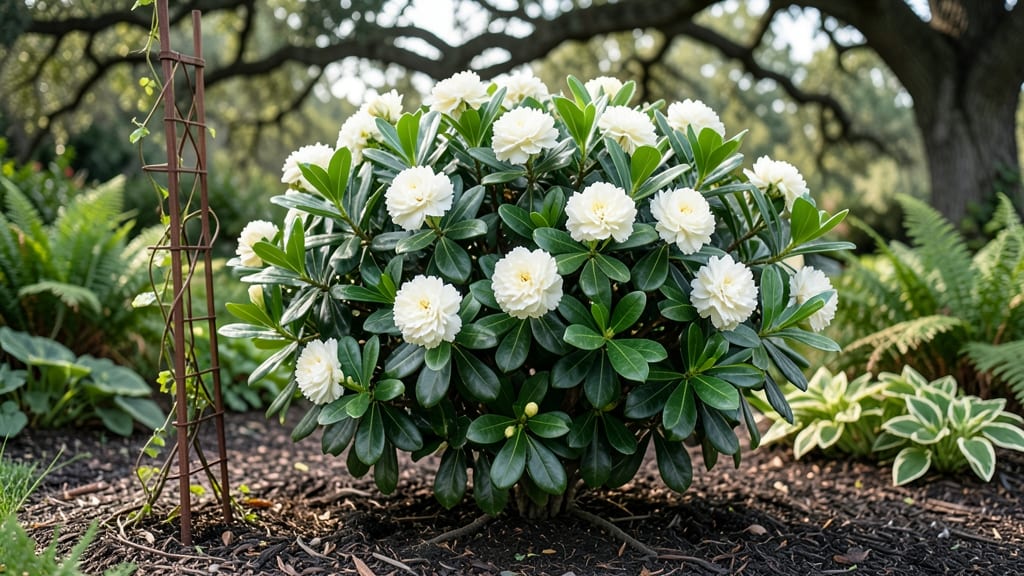
Gardening with everblooming Gardenia veitchii means fragrant white blooms from spring to frost—no dead zones, no waiting. 🌸 I’ve grown this cold-hardy gardenia for five years, and it’s the only one that keeps blooming reliably through summer heat and early fall chills, unlike its finicky cousins.
The secret lies in mimicking its natural habitat: rich, acidic soil, consistent moisture, and just the right amount of winter protection.
This isn’t your grandmother’s gardenia—it’s a perennial that thrives in zones 7-9 without the fuss of annual replanting. You’ll need a spot with morning sun and afternoon shade, well-draining soil amended with peat moss or pine fines, and a watering routine that keeps roots moist but never soggy.
The payoff? Six months of blooms, not just a single flush in summer, with that intoxicating jasmine-like scent filling your yard.
Pruning comes down to two simple cuts: light shaping after blooms fade and harder winter pruning to protect tender growth. Over-fertilizing kills blooms, so I use a balanced 10-10-10 in early spring and acid-loving plant food in summer—never the heavy bloom boosters that work on annuals.
Pests? Aphids are the usual culprits, but a strong spray of water or neem oil keeps them off without harming bees.
Here’s the game-changer: winter care. Mulch heavily with pine straw or oak leaves in late fall, and wrap young plants in burlap if temps dip below 20°F. With this routine, my Veitchii gardenia reblooms within weeks of spring’s first warm day—no waiting, no disappointment.
Ready to grow one that actually performs?
📚 In This Guide
- What you need
- Instructions
- Tips and common mistakes
- Wrapping up and next steps
What you need
- ● Gardenia Veitchii Plant: 1 healthy, cold-hardy nursery-grown plant (ensure it’s labeled or confirmed as Veitchii for reliable reblooming). Well-draining Soil Mix: 2-3 bags (10-15 lbs each) of acidic potting soil (pH 5.0–6.5) or a blend of: 50% peat moss or coconut coir
- ● 30% perlite or pumice
- ● 20% pine bark fines
- ● Container or Garden Bed: For containers: 1–2 large pots (12–18 inches in diameter) with drainage holes.
- ● For in-ground planting: A partially shaded, sheltered spot with loose, well-draining soil.
- ● Organic Fertilizer: 1 lb of acid-loving plant fertilizer (e.g., 8-3-9 or 10-10-10 with sulfur) or fish emulsion. Mulch: 1 bag (5–10 lbs) of pine straw or pine bark mulch to retain moisture and acidity. Watering Can or Hose: With a gentle spray nozzle for hydration.
- ● Pruning Shears: Sharp, sterilized shears for shaping and deadheading.
Step-by-step instructions for planting and cultivating gardenia Veitchii
Here's how to establish these fragrant, cold-hardy perennials for reliable reblooming season after season.
🌱 Step 1: Select and Prepare the Planting Site
Choose a location with partial shade—at least 4-6 hours of morning sun and afternoon shade protection. Gardenia Veitchii thrives in acidic soil (pH 5.0-6.5) and well-draining conditions. Test your soil first—amend with peat moss or sulfur if needed to lower pH. I dig a hole twice as wide as the root ball but only as deep as the container's base to prevent root damage.
Work in 2-3 inches of organic matter (like compost or leaf mold) into the native soil. This improves drainage while maintaining acidity. Avoid fresh manure—it raises pH and burns delicate roots. Water the hole thoroughly before planting to settle the soil and create a moisture-rich environment for new roots.
🪴 Step 2: Plant with Proper Spacing and Mulching
Remove the plant from its container and gently loosen the roots if they're circling. Position the root ball so the top sits 1 inch below soil level—this prevents stem rot while encouraging strong root growth. Space plants 6-8 feet apart to allow airflow and future bushiness. I always plant in early spring after the last frost date, giving roots 6-8 weeks to establish before summer heat.
Backfill with the amended soil, pressing lightly to eliminate air pockets. Water deeply to settle everything, then apply 3-4 inches of pine bark mulch around the base (but not touching the stem). This mimics the plant's natural acidic forest floor habitat. Replenish mulch annually to maintain soil moisture and temperature stability.
☀️ Step 3: Establish Watering and Fertilizing Routines
Water deeply 2-3 times per week during the first growing season, keeping the soil evenly moist but never soggy. Gardenia Veitchii roots are shallow and sensitive to both drought and waterlogging. You'll know you're doing it right when the top 2 inches of soil feel damp but not wet. Reduce watering in winter to once weekly unless temperatures drop below 20°F.
Feed with an acid-loving plant fertilizer (like 8-3-9 with micronutrients) every 4-6 weeks from spring through summer. I mix it at half-strength to prevent salt buildup. Prune back 1/3 of the oldest stems after flowering to encourage bushier growth next season. This plant rewards patience—consistent care leads to continuous blooms from midsummer through fall.
✂️ Step 4: Prune and Protect for Long-Term Health
Prune in late winter or early spring before new growth begins. Remove dead, crossing, or weak branches first, then cut back 1/3 of the oldest stems to the nearest outward-facing bud. This stimulates vigorous new growth from the base. I always sterilize my pruners with rubbing alcohol between cuts to prevent bacterial spread.
For cold-hardy varieties, provide light winter protection if temperatures drop below 10°F. Wrap the base with burlap and mound 4-6 inches of mulch around the plant. Avoid heavy snow loads—gently brush off accumulation. In USDA zones 7-9, these plants handle winter well with minimal protection, but zone 6 gardeners should use frost blankets on extreme nights.
🌿 Step 5: Monitor for Pests and Disease Prevention
Watch for scale insects or whiteflies—common gardenia pests that thrive in dry conditions. I treat early infestations with neem oil spray applied in the evening when bees aren't active. For fungal issues like powdery mildew, improve airflow by pruning dense areas and avoid overhead watering. Healthy plants develop a thick, waxy leaf surface that naturally repels many pests.
Rotate fertilizers annually to prevent nutrient deficiencies. Yellowing leaves often signal iron chlorosis—address by applying chelated iron and ensuring proper soil acidity. Gardenia Veitchii's dark green, glossy foliage is your best indicator of overall plant health. When cared for properly, these perennials reward you with fragrant blooms that last months longer than their tropical cousins.**
Tips & tricks for perfect everblooming gardenia Veitchii cultivation
These tried-and-true insights will help you coax the most vibrant, fragrant blooms from your cold-resistant gardenia.
Soil Preparation Insight: Don't just amend the planting hole—test your entire garden bed's pH first. I use a simple soil test kit to confirm acidity before digging. If your soil tests above pH 6.5, mix in 1 part sulfur to 10 parts soil and re-test in 2 months. The goal is gradual adjustment—sudden pH drops can shock roots. For container gardening, use a pre-mixed acid-loving potting mix and top-dress with finely ground pine needles annually to maintain acidity.
Planting Depth Secret: The 1-inch depth recommendation isn't just about stem rot prevention—it's about creating an ideal root environment. When positioning your plant, make sure the root flare (where roots meet stem) sits just above soil level. This prevents water pooling while encouraging strong root development. I always use a level to check depth, especially when planting multiple bushes. Uneven planting leads to inconsistent growth and flowering.
Watering Technique: The 2-3 times weekly watering guideline assumes average conditions, but your actual needs depend on rainfall and temperature. I check moisture by inserting my finger 2 inches deep—if it feels dry, water thoroughly. For container plants, water until it drains from the bottom. The key is consistency: Gardenia Veitchii roots are shallow but hate both drought and soggy conditions. Mulch helps maintain even moisture, but don't let it touch the stem to prevent rot.
Fertilizing Strategy: The 4-6 week feeding schedule works for established plants, but young gardenias need more frequent feeding. For the first year, I fertilize every 3-4 weeks at half-strength to support root development. In late summer, reduce to monthly feedings to encourage winter hardening. Always water before fertilizing to prevent root burn. I've found that liquid fertilizers work better than granules for these acid-loving plants—granules can create localized pH spikes.
Pro Tips for Everblooming Gardenia Veitchii
- These tried-and-true insights will help you coax the most vibrant, fragrant blooms from your cold-resistant gardenia.
- Soil Preparation Insight: Don't just amend the planting hole—test your entire garden bed's pH first.
- Planting Depth Secret: The 1-inch depth recommendation isn't just about stem rot prevention—it's about creating an ideal root environment.
Frequently asked questions
Got questions about growing Gardenia veitchii?
This everblooming beauty is stunning but comes with unique care needs. Below, we’ve answered the most common questions to help you cultivate thriving plants—even in cooler climates!
How cold-hardy is Gardenia veitchii compared to other gardenias?
Gardenia veitchii is one of the hardiest gardenias, surviving USDA zones 6-9 with proper winter care. Unlike tropical gardenias (like Gardenia jasminoides), it tolerates light frosts down to 10°F (-12°C) when mulched heavily. For extra protection, wrap the base in burlap or use frost blankets in early winter.
When and how often does Gardenia veitchii rebloom?
This variety is a reblooming superstar! With ideal conditions, it produces continuous blooms from late spring through fall, peaking in summer. Deadhead spent flowers promptly to encourage new buds. For best results, fertilize lightly every 4-6 weeks during the growing season with an acid-loving plant food.
Why aren’t my Gardenia veitchii flowers opening, and how can I fix it?
Bud drop or failure to open is usually due to stress. Check these fixes:
- Light: Ensure it gets bright, indirect light (morning sun is ideal). Too much direct sun can scorch buds.
- Water: Keep soil consistently moist but not soggy. Overwatering or drought stress causes buds to abort.
- pH: Test soil—Gardenia veitchii thrives in acidic soil (pH 5.0-6.5). Amend with sulfur or peat moss if needed.
- Humidity: Low humidity (common indoors) can stunt blooms. Use a humidifier or place the plant on a pebble tray.
If buds form but don’t open, it may also signal nutrient deficiency. A balanced, acidic fertilizer can help.
Can I grow Gardenia veitchii in containers, and what’s the best pot size?
Containers are perfect for Gardenia veitchii, especially in colder zones. Choose a pot at least 12-15 inches wide with drainage holes to prevent root rot. Use a well-draining, acidic potting mix (like a 50/50 blend of peat moss and perlite). For container plants, winterize by moving pots to a sheltered location or wrapping them in insulation.
What pests commonly attack Gardenia veitchii, and how do I treat them?
While resilient, Gardenia veitchii can attract:
- Aphids: Wipe off with soapy water or spray with neem oil.
- Spider mites: Increase humidity and treat with insecticidal soap.
- Scale insects: Scrape off manually or use horticultural oil.
- Whiteflies: Use yellow sticky traps or insecticidal soap.
Prevention tip: Keep plants healthy with proper watering and fertilization to deter pests!
Wrapping up and next steps
Growing Everblooming Gardenia Veitchii is a rewarding journey that brings year-round fragrance and beauty to your garden—even in colder climates! 🌿 With the right soil, sunlight, and care, this cold-resistant perennial will thrive and rebloom season after season, offering a low-maintenance yet stunning addition to your landscape.
Ready to transform your outdoor space? Start by selecting a prime spot, gathering your supplies, and following the steps outlined above. Soon, you’ll be enjoying the intoxicating scent and lush blooms of this evergreen superstar—one that keeps giving back, year after year! 🌸