
Blooming
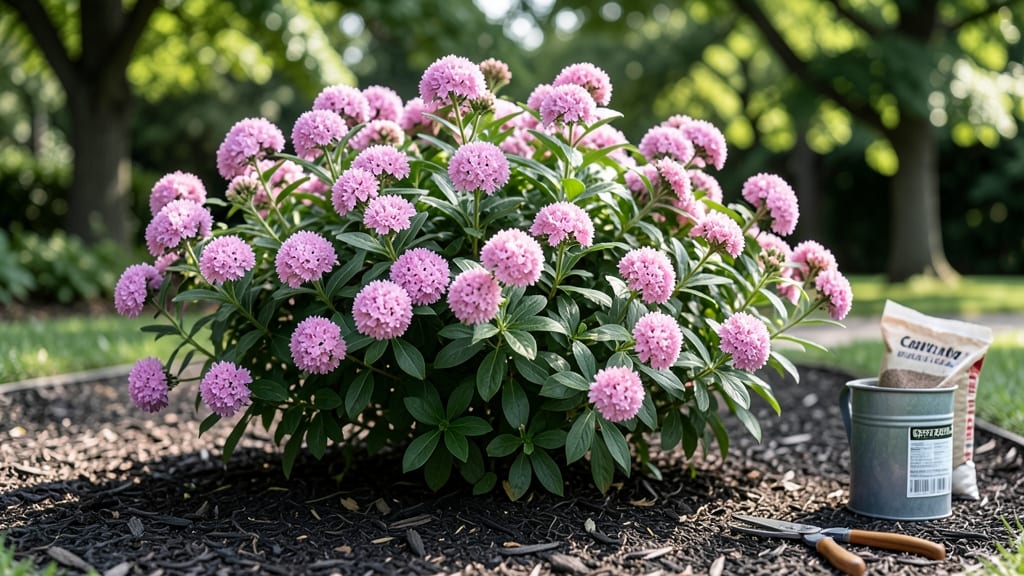
When you plant Double Play Doozie reblooming spirea, you’re getting a cold-hardy shrub that blooms twice—once in spring and again in fall—with double flowers that look like tiny pink pom-poms. 🌸 Honestly, I’ve never seen a shrub this reliable in my Zone 5 garden, where winters can be brutal.
It thrives in full sun to part shade, grows 3–4 feet tall and wide, and handles drought once established, making it perfect for low-maintenance landscapes.
The secret to its reblooming magic lies in a single pruning session each year. After the first flush of spring blooms fades, cut back about one-third of the oldest stems to encourage fresh growth and a second wave of flowers in late summer or fall.
It’s foolproof—no need for complicated schedules or fancy tools. Just a pair of clean pruners and a little patience. The result? A shrub that stays lush, blooms longer, and looks stunning in borders, foundation plantings, or even as a standalone specimen.
You’ll love how this spirea transforms your garden with its vibrant pink blooms and glossy green foliage, even in tough conditions. It’s resistant to deer and rabbits, which is a bonus if you’re dealing with hungry critters in your yard.
Plus, it’s one of the few shrubs that actually gets more beautiful as it ages, with a natural, rounded shape that fits seamlessly into any design. Ready to add some cold-hardy, double-blooming drama to your landscape?
For best results, plant it in well-draining soil with a pH between 6.0 and 7.0, and water deeply after planting to help it establish roots. Once settled, it’s drought-tolerant, so you won’t need to fuss over watering—just enjoy the show.
If you’re new to pruning or want to see how it’s done, I’ve included a simple diagram in the next section to guide you through the process step by step. No guesswork, just gorgeous blooms all season long.
📚 In This Guide
- What you need
- Instructions
- Tips and common mistakes
- Wrapping up and next steps
What you need
- ● Reblooming Spirea Plant: 1-3 Double Play Doozie shrubs (choose 3-4 ft. mature plants for instant impact).
- ● Well-draining Soil Mix: 50% native soil + 50% compost or peat moss (1 cubic yard per 3 plants).
- ● Organic Mulch: 2-3 inches of shredded bark or pine needles (cover the root zone).
- ● Slow-Release Fertilizer: 10-10-10 or 5-10-5 blend (1 lb. per plant).
- ● Watering Can or Hose with Soaker Nozzle: For deep, even hydration.
- ● Bypass Pruners: 1 pair (sharp, sterilized—dull blades crush stems!).
- ● Loppers: 1 pair (for thicker stems, 1.5"–2" cut capacity).
- ● Hand Pruners: 1 pair (for delicate trimming).
- ● Disinfectant (70% Isopropyl Alcohol or Bleach Solution): To clean tools between cuts.
- ● Garden Gloves: 1 pair (cut-resistant for safety).
- ● Epsom Salt: 1 tbsp. per gallon of water (for magnesium boost post-pruning).
- ● Plant Support Stakes: 2-3 bamboo stakes (if planting in windy areas).
- ● Pruning Paint: For sealing large cuts (prevents disease).
- ● Garden Journal: To track bloom cycles and pruning dates!
How to prune Double Play Doozie reblooming spirea for maximum blooms
Here's the simple, foolproof method I use every year to keep my reblooming spirea flowering like crazy—no complicated steps, just smart cuts.
✂️ Step 1: Time Your Pruning Perfectly
Prune your Double Play Doozie reblooming spirea in late winter or early spring, just as new growth begins but before buds swell. This timing ensures you remove last year's spent stems while leaving this year's flower buds intact. I always check for tight, plump buds—if they're still closed, it's not too early.
Never prune in fall or during bloom season. Fall cuts remove next year's flower buds, and summer pruning sacrifices current blooms. The goal is to shape while preserving the plant's energy for another spectacular show.
✂️ Step 2: Cut Back to Healthy Wood
Use clean, sharp pruners to cut each stem back to 1/3 of its height from the previous year's growth. Look for healthy, outward-facing buds—these will become your new branches. I make my cuts just above a bud at a 45-degree angle to prevent water from pooling.
Remove any dead, diseased, or crossing branches first. These compete with healthy growth and reduce air circulation. You'll know a branch is dead if it's brittle, hollow, or doesn't snap green when broken. Thin out crowded areas to improve airflow and reduce pests.
☀️ Step 3: Shape for Airflow and Sunlight
Step back and visualize the plant's natural shape—reblooming spirea thrives when it has an open, airy form. Cut back the longest stems first to create balance. Aim for a rounded, vase-like silhouette that lets sunlight reach the center.
Don't overthink it—this isn't about perfection, it's about removing 1/3 of the oldest wood while keeping the plant's energy focused on new growth. If you're unsure, err on the side of less cutting. You can always prune more next year, but you can't un-cut dead branches.
🌱 Step 4: Clean Up and Fertilize
After pruning, remove all clippings from the area to prevent disease. I rake up the debris and dispose of it in the trash—never compost diseased plant material. Then, apply a balanced, slow-release fertilizer (10-10-10) around the base, keeping it 3-4 inches away from the trunk to avoid burning roots.
Water deeply right after pruning to help the plant recover. The roots will need moisture to support new growth, especially if you've cut back significantly. Keep the soil evenly moist but not soggy for the first 4-6 weeks post-pruning.
⏰ Step 5: Monitor for New Growth
Within 2-3 weeks, you should see new green shoots emerging from the buds you left behind. These are your plant's way of telling you it's happy with the pruning. If growth is slow, check for adequate sunlight—reblooming spirea needs full sun (6+ hours daily) to perform its best.
Watch for new flower buds forming in late spring. These will develop into your second bloom cycle later in the season. If you see leggy growth or sparse foliage, it's a sign to increase sunlight or adjust your pruning next year.
Tips & tricks for pruning reblooming spirea
Here's what I've learned after years of pruning my Double Play Doozie—these tricks make all the difference in getting that second bloom.
Timing is Everything: The late winter/early spring window is critical because that's when the plant's energy is shifting from dormancy to growth. I check for tight, plump buds that haven't started swelling yet—this is your cue that it's time. If you prune too early, you're cutting back healthy stems; too late, and you risk removing next year's flower buds. Pro tip: Set a reminder for late February in colder zones or early March in warmer areas to stay on schedule.
Cutting Technique Matters: That 45-degree angle isn't just for looks—it prevents water from pooling at the cut site, which can lead to rot. I make sure my pruners are sharp first (dull blades crush stems) and always cut just above a healthy, outward-facing bud. This creates the perfect foundation for new growth. For thicker stems, I make two cuts: first to remove the bulk, then a final cut at the right angle.
Shape with Purpose: The rounded vase shape isn't arbitrary—it's about creating an open center that lets sunlight reach all parts of the plant. I start by removing the longest stems first to establish balance, then work on thinning out crowded areas. Think of it like giving your spirea a spa treatment: you're removing what's holding it back to let it shine. Remember, you can always prune more next year, but you can't undo dead wood cuts.
Post-Pruning Care: The first 4-6 weeks after pruning are crucial for recovery. I've found that a deep watering right after pruning helps the roots adjust, and keeping the soil evenly moist (but not soggy) gives the plant the energy it needs to bounce back. That 10-10-10 fertilizer application is key too—it provides balanced nutrition without overwhelming the plant as it recovers. I always water in the fertilizer to help it reach the roots.
Pro Tips for Double Play Doozie Reblooming Spirea
- Here's what I've learned after years of pruning my Double Play Doozie—these tricks make all the difference in getting...
- Timing is Everything: The late winter/early spring window is critical because that's when the plant's energy is shift...
- Cutting Technique Matters: That 45-degree angle isn't just for looks—it prevents water from pooling at the cut site, ...
Frequently asked questions
Got questions about growing and maintaining your Double Play Doozie reblooming spirea? You’re not alone!
Here are answers to the most common queries—so you can enjoy double the blooms with minimal fuss.
When is the best time to prune reblooming spirea for maximum blooms?
Prune your Double Play Doozie right after the first flush of spring blooms (late April to early May in most zones). This encourages the second round of flowers in summer. Avoid pruning in fall—it removes next year’s blooms! Pro tip: Use clean, sharp shears to avoid damaging stems.
Is this plant truly cold-hardy? How do I protect it in harsh winters?
Yes! Double Play Doozie thrives in USDA Zones 3-8 and handles winter well. For extra protection in extreme cold (<10°F), add a 2-3 inch layer of mulch around the base. Avoid heavy snow buildup—gently brush it off to prevent stem damage.
Why isn’t my reblooming spirea flowering a second time?
Missing the second bloom? Check these fixes:
- Pruned too late: Prune after spring blooms, not in fall.
- Over-fertilized: Too much nitrogen = leafy growth, fewer flowers. Use a balanced 10-10-10 fertilizer in early spring.
- Poor sunlight: Ensure 6+ hours of sun daily—partial shade may reduce blooms.
Give it time—established plants (3+ years) bloom best!
Are there alternatives to reblooming spirea with similar low-maintenance charm?
If you love Double Play Doozie’s ease, try these reblooming shrubs:
- Dwarf Fountain Grass (Pennisetum ‘Little Bunny’) – Airy texture, drought-tolerant.
- Butterfly Bush (Buddleia ‘Lo & Behold Blue Chip’) – Pollinator magnet, heat-loving.
- Hydrangea ‘Endless Summer’ – Reblooms with proper pruning.
Pro tip: All three handle pruning similarly—cut back 1/3 of old stems annually!
Can I grow Double Play Doozie in containers? What’s the secret?
Use a 5-gallon+ pot with drainage holes and a well-draining potting mix. Prune annually in spring to control size, and fertilize monthly during growing season. Watch for: Overwatering (containers dry faster!) and root-bound plants (repot every 2-3 years).
Wrapping up and next steps
The Double Play Doozie Reblooming Spirea is a gardener’s dream—packing a double punch of beauty with minimal effort! Its cold-hardy nature and stunning, repeat blooms make it a standout for any landscape, while smart pruning keeps it thriving year after year. 🌸
Ready to transform your garden? Grab your shears, mark your calendar, and give this resilient shrub the care it deserves. Start small—plant one this season and watch your outdoor space bloom with confidence!