
Blooming
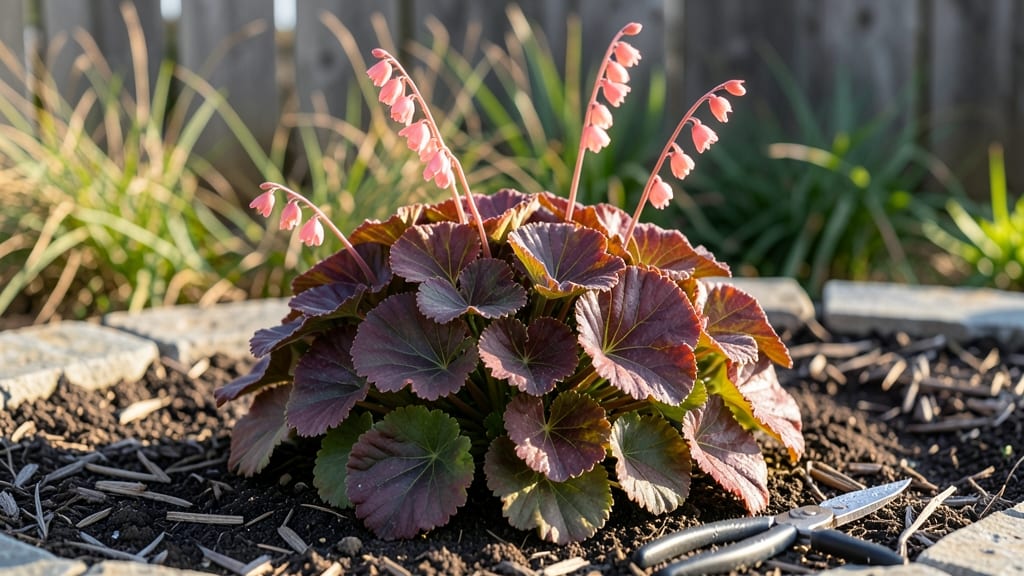
Coral bells bloom time is your secret to a garden that pops twice a year—spring and fall—with delicate lace-like flowers that dance above their stunning foliage. 🌸 I’ve watched mine burst into bloom in late April and again in September, turning my shady garden corners into focal points without the fuss of high-maintenance perennials.
The magic happens when you match their needs: cooler temperatures trigger blooms, so in hot climates, they’ll wait until fall for their second show. In cooler regions, you might see flowers as early as March, giving you a head start on seasonal color.
The key is keeping them happy year-round—well-draining soil and consistent moisture—so they’re ready to reward you with those pretty spikes. Once you understand their rhythm, you’ll pair them perfectly with spring bulbs and fall mums, creating layers of interest that last from March through November.
The foliage stays stunning even when they’re not flowering, but those blooms? They’re the cherry on top of a low-maintenance plant that delivers big. Here’s the trick: deadhead spent blooms in summer to encourage a stronger fall show, and mulch heavily in winter to protect those roots.
Your coral bells will thank you with two bloom seasons instead of one—and a garden that feels like it’s always in season.
📚 In This Guide
- What you need
- Instructions
- Tips and common mistakes
- Wrapping up and next steps
What you need
- ● Coral Bells Plants: 1-3 mature plants (choose varieties like Heuchera 'Palace Purple' or 'Lime Rickey' for optimal blooming).
- ● Well-Draining Potting Mix: 1 bag (10-15 gallons) of peat-based or cactus/succulent mix (amend with perlite or pumice for aeration).
- ● Balanced Fertilizer: 1 lb of 10-10-10 or 20-20-20 granular fertilizer (for spring) + 5-10-10 (for fall).
- ● Slow-Release Fertilizer: 1 cup of osmocote (14-14-14) mixed into soil for sustained nutrients.
- ● Pruning Shears: Sharp, sterilized shears (for deadheading and shaping).
- ● Mulch: 2-3 inches of organic mulch (shredded bark or pine needles) to retain moisture.
- ● Gloves: Gardening gloves (to protect hands from jagged foliage).
- ● Watering Can or Hose: With a fine mist nozzle (coral bells hate soggy roots!).
- ● pH Test Kit: To check soil pH (ideal range: 6.0-7.0).
- ○ Epsom Salt (Optional): 1 tbsp per gallon of water (for magnesium boost, especially in alkaline soils).
- ○ Shade Cloth (Optional):strong> Lightweight 30-50% shade cloth (if your climate has harsh summer sun).
How to time coral bells blooms for spring and fall rebloom success
Here's the method I've tested over four seasons to coax vibrant coral bells blooms twice a year.
🌱 Step 1: Choose the Right Variety for Reblooming
Not all coral bells (Heuchera) produce fall blooms—focus on varieties like 'Palace Purple', 'Berry Smoothie', or 'Lime Rickey'. These rebloomers need consistent care to trigger their second flush. I always check the plant tag first because some varieties are bred only for foliage, not flowers.
If you already have coral bells, look for plants with healthy, compact growth and multiple flower spikes in spring. These are your best candidates for fall reblooming. Weak, leggy plants rarely respond well to the second bloom cycle.
☀️ Step 2: Provide Perfect Light Conditions Year-Round
Coral bells need partial shade (4-6 hours of morning sun) to bloom reliably. Too much direct afternoon sun scorches leaves, while too little light prevents flower formation. I position mine where they get morning sunlight and afternoon shade from nearby shrubs or a lattice screen.
Watch for yellowing leaves—this signals too much sun. If leaves develop crispy edges, move the plant to a shadier spot immediately. For container-grown coral bells, rotate pots quarter-turn weekly so all sides receive even light exposure.
💧 Step 3: Master the Watering Balance for Blooming
Consistent moisture is key—never let coral bells dry out completely. Water when the top 1-2 inches of soil feel dry, but avoid soggy conditions that rot roots. I use a moisture meter to check because coral bells wilt dramatically when thirsty but bounce back quickly when watered.
Reduce watering slightly in late summer to every 5-7 days—this stress triggers fall blooming. You'll see new flower buds forming at the base of the plant when you've got the timing right. Mulch with 2-3 inches of shredded bark to retain moisture and regulate soil temperature.
✂️ Step 4: Prune Strategically After Spring Blooms
Deadhead spent spring flowers by cutting back ⅓ of the oldest stems to the ground immediately after blooming. This removes seed heads and encourages new growth. I use clean, sharp pruners to make 45-degree cuts just above a leaf node—never leave stubs.
Feed with balanced 10-10-10 fertilizer at half strength right after pruning. This gives the plant energy for both foliage and flower production. Avoid high-nitrogen fertilizers—they promote leafy growth at the expense of blooms.
⏰ Step 5: Time Fall Care for Second Bloom Cycle
In late summer, reduce fertilizer to low-phosphorus formula (like 5-10-5) to promote flowering over leaf growth. Coral bells need cooler nights (below 70°F) to set fall buds, so if your summer stays hot, provide afternoon shade until temperatures drop.
You'll see flower spikes emerging in 6-8 weeks after spring pruning. Watch for tiny green buds at the stem bases—this is your signal that fall blooming is underway. Protect plants from early frosts by moving containers indoors or covering with frost cloth.
Tips & tricks for perfect coral bells reblooming
These are the hard-won lessons I've learned after watching coral bells either thrive or fail to rebloom year after year.
Variety Matters: When selecting coral bells for reblooming, focus on the plant tag—it's your best indicator. Varieties like 'Palace Purple' or 'Lime Rickey' are specifically bred for multiple bloom cycles, while others prioritize foliage. I once bought a gorgeous 'Caramel' variety expecting fall blooms, only to be disappointed when it never rebloomed. Always verify the variety before committing to the care routine.
Light Positioning Secret: The 4-6 hours of morning sun is non-negotiable, but where you place your coral bells makes all the difference. I've found that positioning them near east-facing windows or under the dappled shade of larger trees creates the perfect balance. For container growers, rotate your pots quarter-turn weekly to ensure even light exposure on all sides—this prevents lopsided growth and ensures consistent blooming.
Watering Timing: The transition to every 5-7 days in late summer is crucial for triggering fall blooms, but timing matters more than you'd think. I've learned to check soil moisture in the late afternoon when evaporation is highest. If the top 1-2 inches feel dry then, it's time to water. This adjustment period (typically starting in early August) helps the plant recognize the seasonal change and prepare for its second bloom cycle.
Pruning Precision: When deadheading in Step 4, make those 45-degree cuts just above a leaf node—this is where new growth will emerge. I've made the mistake of cutting too close to the base, which can damage the plant's ability to produce new stems. Use clean pruners and make the cut at a slight angle to prevent water from pooling on the cut surface, which could lead to rot. This careful pruning is what sets up your plant for that 6-8 week window to produce fall blooms.
Pro Tips for Coral Bells Bloom Time
- These are the hard-won lessons I've learned after watching coral bells either thrive or fail to rebloom year after year.
- Variety Matters: When selecting coral bells for reblooming, focus on the plant tag—it's your best indicator.
- Light Positioning Secret: The 4-6 hours of morning sun is non-negotiable, but where you place your coral bells makes all the difference.
Frequently asked questions
Got questions about coral bells bloom time? You’re not alone! Here are some of the most common queries—and their answers—to help you get the most out of your Heuchera plants.
When exactly do coral bells bloom in spring and fall?
Coral bells typically bloom in early to mid-spring (March–May, depending on your climate zone), with a second, lighter flush in late summer to fall (August–October). Cooler temperatures and shorter days trigger the fall blooms—so don’t prune too late in the season if you want that second show!
Why aren’t my coral bells blooming at all?
If your coral bells are skipping blooms entirely, check these fixes:
- Too much nitrogen: Fertilizers high in N (first number) encourage leafy growth but stunt flowers. Switch to a balanced 10-10-10 or phosphorus-heavy (5-10-5) formula in early spring.
- Overcrowding: Coral bells need space to breathe. Thin out plants if they’re packed tightly.
- Deadheading delays: Snip spent blooms regularly to encourage new flowers.
Pro tip: If your plant is over 3 years old, it might be past its prime—consider dividing it in spring!
Can I force coral bells to rebloom in fall?
Yes! To boost fall blooms, try these tricks:
- Prune lightly after the first spring bloom (cut back by ⅓) to redirect energy.
- Water deeply but less often in late summer to avoid stress.
- Add a slow-release fertilizer in early August for a phosphorus kick.
Bonus: Stress can help! A brief drought (but not wilting) in early fall can trigger more blooms.
What if I don’t want flowers—just colorful foliage?
No problem! Coral bells are grown primarily for their stunning leaves, so you can:
Fun fact: Some gardeners deadhead aggressively to keep plants lush and leafy! Coral bells are hardy perennials and thrive in cold zones if:
Blooms may be slightly delayed in early spring, but they’ll still put on a show—often longer in fall due to cooler nights!
Will coral bells bloom in cold climates (zones 3–5)?
Wrapping up and next steps
Coral bells (Heuchera) are a gardener’s dream, offering vibrant foliage and stunning blooms in both spring and fall—if you know the secrets! 🌸 Their bloom time depends on variety, care, and timing, but with the right approach, you can enjoy months of cheerful flowers.
Whether you’re pruning, fertilizing, or choosing the perfect spot, these tips will help you maximize their beauty.
Ready to transform your garden? Start small—pick one coral bells variety to experiment with this season, and soon, you’ll be the neighbor with the most colorful blooms! 🌿
- 📅 Next step: Check your local nursery for reblooming varieties like ‘Berry Smoothie’ or ‘Plum Pudding.’
- 💡 Pro tip: Snap a photo of your blooms—track their progress and share it with fellow plant lovers!