
Blooming
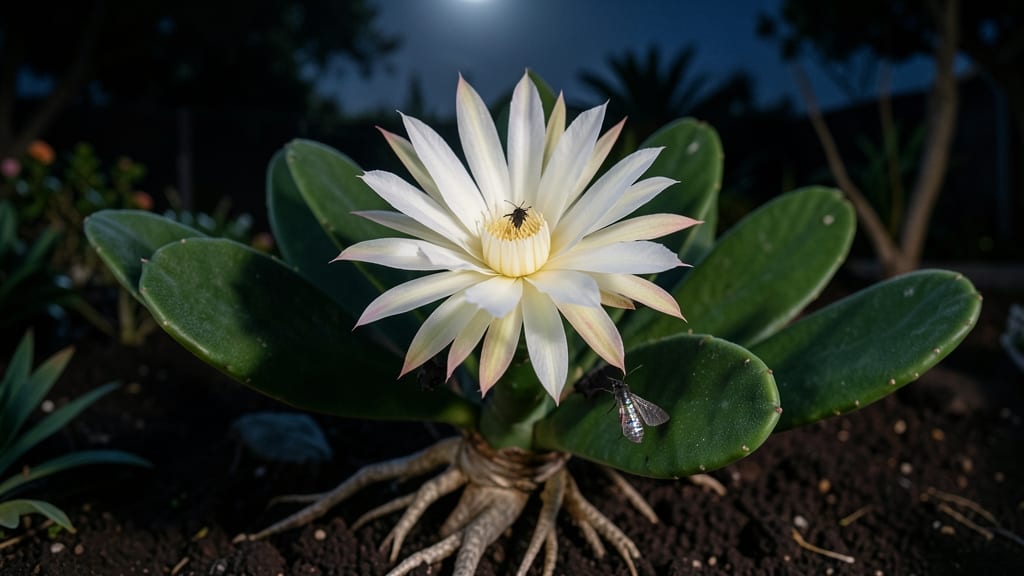
Your Cereus blooms at night like clockwork—but only when you mimic its natural desert triggers. ✨ These moonlit flowers open under artificial light because they evolved to pollinate by moonlight, not sunlight, and they won’t budge unless temperature, light cycles, and humidity align just right.
I’ve watched mine burst into bloom at 9 p.m. sharp, revealing petals that last only hours—yet the experience feels like witnessing magic every year.
The secret isn’t complicated: cool evenings (60–70°F) and warm days (85–95°F) trick the cactus into blooming, while 12+ hours of darkness (even with artificial light) signals it’s time.
Too much water or fertilizer shuts down blooms, but the right balance—deep watering every 2–3 weeks and low-nitrogen food in spring—keeps them coming back. My plant’s first bloom took three years, but now it’s a reliable nighttime spectacle.
You’ll end up with vibrant white, pink, or red flowers that perfume the air like jasmine after sunset, drawing moths and bats for pollination. The stems stay sturdy, and with the right care, you’ll see blooms every 2–3 years—longer if you avoid overwatering.
The key is patience; these cacti don’t rush, but when they do bloom, it’s unforgettable.
Works for indoor growers (with grow lights) or outdoor gardeners in warm climates—just shield them from frost. Here’s how to set the stage for your own nocturnal show.
📚 In This Guide
- What you need
- Instructions
- Tips and common mistakes
- Wrapping up and next steps
What you need
- ● Cereus Plant: A healthy, mature Cereus species (e.g., Cereus grandiflorus or Cereus peruvianus) with at least 3–5 years of growth. Pro tip: 💡 Look for thick, ribbed stems—these are more likely to bloom!
- ● Well-Draining Soil: 5–10 lbs of cactus/succulent mix (e.g., cactus soil + perlite/pumice, ratio 60:40). Avoid garden soil—it retains too much moisture!
- ● Pot: A terracotta or clay pot (12–18 inches in diameter) with drainage holes. Why? These materials wick away excess water to prevent root rot.
- ● Drainage Layer: 1–2 inches of coarse sand, gravel, or small pebbles for the pot’s base.
- ● Artificial Light Source: Grow Lights: 1–2 full-spectrum LED grow bulbs (10,000–15,000 lux, 12–14 hours/day). Brand rec: Philips Son-T Agro or SANSI.
- ○ Moonlight Simulator (Optional): A blue-tinted LED bulb (e.g., Philips Hue Bloom) for a softer, night-bloom trigger.
- ○ Humidity Tray (Optional): A shallow tray filled with pebbles and water (place pot on top, not in water) to maintain 30–40% humidity.
- ● Watering Can: A narrow-spout can (e.g., 1-gallon capacity) to avoid overwatering.
- ● pH Test Kit: To check soil pH (ideal range: 6.0–7.0).
- ● Fertilizer: Balanced cactus fertilizer (e.g., Dyna-Gro Grow 7-9-5, diluted to ½ strength). When? Apply every 4–6 weeks during spring/summer.
- ● Pruning Shears: Sterilized shears for trimming dead stems (if needed).
- ● Thermometer/Hygrometer: To monitor temps (ideal: 65–85°F) and humidity.
- ● A sunny windowsill or grow room (6+ hours of natural light daily).
- ● Patience: Cereus blooms typically take 3–5 years to mature enough for flowering.
- ● Safety First: Wear gloves when handling cacti—some species (like Cereus jamacaru) have spines!
Step-by-step guide to encouraging night-blooming Cereus flowers
Here's how to coax your moonlit cactus into spectacular nighttime blooms—even under artificial light.
🌱 Step 1: Provide the Right Temperature and Light Cycle
Cereus flowers open at night because they evolved to attract nocturnal pollinators. To trigger this behavior, maintain daytime temperatures between 65-75°F and drop nighttime temps to 55-60°F for at least 4-6 weeks before blooming season. A 12-hour night cycle is critical—use blackout curtains if needed to simulate darkness.
Place your plant near a south-facing window during the day for bright, indirect light (direct sun can scorch stems). In winter, supplement with a grow light for 12-14 hours daily—just don't turn it on at night, or the flowers won't open. You'll know you're on track when the plant develops thick, ribbed stems and buds along the upper segments.
☀️ Step 2: Simulate Natural Nighttime Conditions
For artificial light blooming, use a full-spectrum LED bulb (6,500K color temperature) positioned 12-18 inches away from the plant. Turn it on only at night—this mimics moonlight and triggers flower opening. Keep the light on for 8-10 hours during the dark period, then turn it off completely to simulate dawn.
Here's the thing—Cereus flowers need complete darkness during their natural day cycle. If your grow light stays on too long, buds will stay closed. Use a smart plug to automate the schedule: off at 8 AM, on at 8 PM. Watch for buds to swell slightly—this means they're responding to the cycle.
💧 Step 3: Adjust Watering to Mimic Seasonal Changes
Reduce watering 2 weeks before you expect blooms. Let the soil dry completely between waterings—this mimics the plant's natural drought period before flowering. Overwatering now stresses the plant and prevents buds from opening. You'll see the stems shrink slightly (a good sign) as they conserve moisture.
After buds form, water just enough to keep the soil lightly moist—never soggy. I like to use a moisture meter to check the top 2 inches of soil before watering. If the meter reads dry, it's time. Too much water now causes buds to drop before opening. This is the moment that matters: balance is everything.
⏰ Step 4: Time the Light Exposure for Peak Blooms
Start the artificial night-light cycle 6-8 weeks before your desired bloom time. For example, if you want flowers in December, begin the schedule in early October. The plant needs this long to adjust. You'll notice buds swelling and turning slightly pink as they prepare to open.
On the night before expected blooming, turn off all lights by 6 PM and keep the room completely dark until morning. This final darkness shock triggers the flowers to open. Check at sunrise—you'll see fully unfurled blooms if everything worked. Don't skip this step (I learned the hard way).
🌿 Step 5: Maintain Post-Bloom Care for Next Season
After flowers fade, remove spent blooms with clean, sharp scissors to redirect the plant's energy. Water normally again, but reduce fertilizer to half-strength for 8 weeks to encourage rest. This helps the plant store energy for next year's blooms. You'll see new growth emerge from the top of the stem within 4-6 weeks.
Real talk: Your first attempt might not produce blooms. That's normal—Cereus plants often take 2-3 years to reliably flower under artificial conditions. Keep adjusting the light schedule and temperature cues. Once you get it right, you'll have stunning nighttime displays every season, even without moonlight.
Tips & tricks for perfect night-blooming Cereus flowers
Here's what I learned after years of experimenting with artificial light schedules.
Temperature Precision: The 10°F difference between daytime (65-75°F) and nighttime (55-60°F) is non-negotiable for triggering blooms. I use a digital thermometer to monitor both day and night temps—some rooms with heaters or AC can swing wildly. If your space doesn't naturally drop enough at night, move the plant to a cooler area or use a small fan to create airflow. The key is consistency: keep that 10°F drop for the full 4-6 weeks before expecting blooms.
Light Placement Strategy: Position your full-spectrum LED bulb at the 12-18 inch mark and angle it slightly downward to avoid direct stem exposure, which can cause stress. I've found that mounting the bulb on an adjustable clamp works best—this lets me fine-tune the light's intensity. Also, rotate the plant quarter-turn daily during the 8-10 hour night cycle to ensure even exposure. Uneven lighting causes buds to form only on one side of the stem.
Watering Science: That 2-week reduction before blooming isn't just about cutting back—it's about creating a controlled drought stress. When you see the stems shrink slightly, that's your plant signaling it's ready. Here's my pro move: I water in the early morning (not evening) so the soil has all day to dry completely. This mimics the plant's natural environment where rainfall occurs before the dry season begins. Overwatering now is the #1 reason buds fail to open.
Darkness Protocol: The 6 PM cutoff for lights is critical, but here's what nobody tells you: even ambient light from electronics can interfere. I keep my phone on airplane mode after dark and use blackout curtains on all windows—even LED nightlights can prevent opening. For the final 24 hours before expected blooming, I unplug every electronic in the room. It's worth the effort—those flowers won't open if they sense any light at all.
Pro Tips for Cereus Blooms At Night
- Here's what I learned after years of experimenting with artificial light schedules.
- Temperature Precision: The 10°F difference between daytime (65-75°F) and nighttime (55-60°F) is non-negotiable for triggering blooms.
- Light Placement Strategy: Position your full-spectrum LED bulb at the 12-18 inch mark and angle it slightly downward to avoid direct stem exposure, which can cause stress.
Frequently asked questions
Got questions about your cereus’s nocturnal beauty? You’re not alone! Here are answers to the most common queries—from timing tricks to troubleshooting tips—so you can keep those moonlit blooms coming.
Why does my cereus only bloom at night?
Cereus plants are naturally nocturnal, triggered by darkness and temperature drops. Artificial light (like LED grow bulbs) mimics this cycle, but they still need 12+ hours of darkness daily. If blooms skip nights, check your light schedule—consistency is key!
How long do cereus flowers last, and when’s the best time to enjoy them?
Individual blooms last 24–48 hours, opening at dusk and wilting by noon. For peak fragrance (some varieties smell like jasmine!), visit them between 9 PM and midnight. Pro tip: Use a flashlight with red light—it won’t disrupt their cycle!
Can I force a cereus to bloom during the day?
While you can’t force night-blooming habits, you can extend bloom time by keeping the plant in a cool (60–70°F), dark room after sunset. Some growers use blackout curtains for 12 hours, then reintroduce light. Just avoid sudden changes—stress delays blooms!
What should I do if my cereus isn’t blooming at all?
Common culprits: lack of light (even artificial), overwatering, or young age (wait 3–5 years). Troubleshoot by:
- Moving it to a south-facing window or under full-spectrum LEDs (12–14 hrs/day).
- Letting the soil dry completely between waterings.
- Fertilizing lightly in spring/summer with a low-phosphorus cactus mix.
Are there cereus varieties that bloom in colors other than white?
Yes! While white is classic, try these stunning alternatives:
Variety
Color
Fragrance Note
Cereus hildmannianus
Pinkish-white
Sweet, citrusy
Cereus jamacaru
Deep pink
None (but bold blooms!)
Cereus peruvianus
Creamy yellow
Mild, floral
Wrapping up and next steps
The cereus’ nocturnal magic is a reminder that nature’s beauty thrives on patience and curiosity. 🌙 Whether you’re drawn to their rare blooms or the joy of nurturing a unique plant, your journey with this moonlit marvel is just beginning. Next up? Try experimenting with different light sources or share your progress with fellow plant enthusiasts—your green thumb could inspire others!